Buying an Engagement Ring Online Without Losing the Human Checks
Online engagement ring shopping is useful because it gives you time and comparison. You can look at stones without a salesperson across the counter, compare similar diamonds by measurements and reports, revisit settings after the first excitement fades, and learn what the same budget does across different combinations. For buyers who dislike pressure, that distance can be a relief.
The danger is that online shopping can make a deeply physical object feel solved by images and filters. A ring is not only a listing. It has weight, height, prongs, edges, metal color, finger coverage, stone movement, and comfort. A diamond video can be helpful, but it is still a video. A return policy can be generous, but it is useful only if you understand the clock and inspect the ring quickly. Buying online works best when you keep the human checks in the process instead of replacing them with screen confidence.
Start With the Kind of Online Purchase You Are Making
Not every online purchase carries the same risk. A finished ring from a retailer’s standard collection is different from choosing a loose diamond and pairing it with a made-to-order setting. A simple solitaire is different from a custom ring with hidden details, pave shoulders, engraving, or a shaped wedding band plan. A graded round diamond is easier to compare online than a one-of-a-kind colored gemstone whose beauty depends on tone, extinction, windowing, and treatment disclosure.
The more standard the ring, the easier the online path. A classic setting, a well-documented center diamond, and a known ring size can move smoothly if the seller offers clear photos, videos, measurements, and returns. The more individual the ring, the more you need conversation. Custom work, heirloom resets, unusual gemstones, and delicate settings deserve a jeweler who can answer specific questions and show the design from the side, not only from the most flattering angle.
This does not mean online sellers are less trustworthy than local jewelers. It means the format removes some natural friction. In a store, you can see whether a ring sits too high or whether an oval’s bow tie bothers you. Online, you have to ask for that information deliberately. The best online buying process is slower than scrolling and more structured than a normal checkout.
Use Filters as a Beginning, Not a Decision
Search filters are useful because they reduce noise. They can help you focus by shape, carat weight, color, clarity, lab report, metal, setting style, or budget. The problem begins when the filtered result becomes the decision. A diamond is not better because it barely clears every checkbox. A ring is not right because the website ranked it first.
For diamonds, the report gives a common language. It tells you the stone’s identity, measurements, weight, color, clarity, fluorescence, and other details. The diamond grading reports guide explains how to read that document without treating it as a beauty certificate. Online, this distinction matters even more because the report can feel like the only solid thing on the page. It is solid, but it is incomplete.
Videos and photos should answer visual questions that reports cannot. For round diamonds, look for lively brightness and balanced contrast. For ovals, pears, marquises, and cushions, watch the center and ends as the stone moves. For emerald and Asscher cuts, look through the stone for clean, pleasing flashes rather than judging only a face-up still. If the seller provides only highly processed images or refuses basic visual information, keep moving.
Read the Return Policy Before You Fall in Love
The return policy is part of the product. Read it before you buy, not after the box arrives. The important details are the length of the return window, whether the clock starts at purchase or delivery, whether resized or engraved rings are returnable, who pays return shipping, what insurance is required for return shipment, and whether custom or made-to-order settings have different rules.
This is not legal advice, and policies vary, so the practical habit is to save the policy as it appeared when you purchased and ask unclear questions in writing. If a seller says a ring is returnable, make sure that includes the exact version you are buying. A stock ring may be returnable. The same ring after resizing, engraving, or customization may not be. A loose diamond may have one rule, while a finished ring has another.
The return window also shapes your inspection plan. Do not let the box sit unopened because the proposal is weeks away. The ring should be checked soon after delivery, while there is still time to return or correct it. If the ring is a surprise, inspect it yourself and consider arranging a local jeweler’s review. If the wearer is involved, schedule time for fit and comfort checks immediately.
Inspect the Ring Like It Will Be Worn
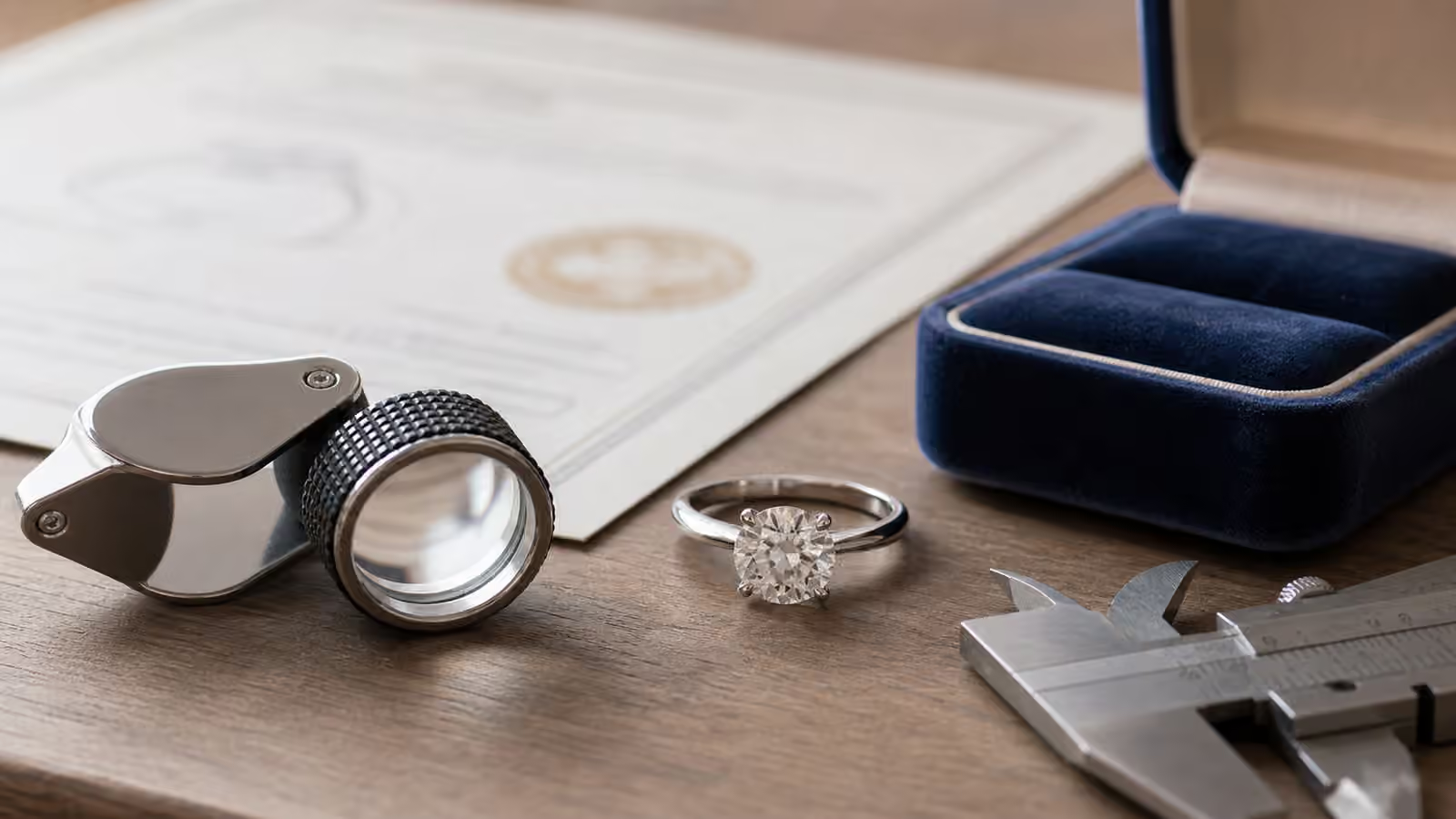
Online buyers need a practical arrival ritual. Open the package carefully, save every document, and photograph the ring in the condition received. Confirm that the ring matches the receipt and any grading report. If the diamond has a report number and laser inscription, a jeweler can help verify it under magnification. Look for obvious shipping damage, loose stones, bent prongs, rough edges, missing paperwork, or a setting that differs from the images.
Then move away from the desk. Look at the ring near a window, under ordinary indoor light, and in a softer evening room. Jewelry photography often makes everything look brighter and larger than life. Normal light tells you whether the stone still has life and whether the metal color suits the design. A ring that looks good only under ideal lighting may disappoint in the places it will actually be worn.
Comfort needs a physical check. A high setting may catch. A low basket may block a straight wedding band. A thin shank may feel delicate in a way the wearer loves, or flimsy in a way that feels wrong. A ring with pave shoulders may feel textured between the fingers. If the wearer can try it on, let the ring sit for more than a few seconds. Close the hand, pick up a phone, and notice whether the head spins. The low-profile engagement rings and shank width guides help turn those sensations into useful design questions.
Keep a Local Jeweler in the Loop
Even when you buy online, a local jeweler can still be part of ring ownership. They may verify fit, inspect prongs, confirm that stones feel secure, clean the ring, discuss future resizing, or help with an appraisal. Some jewelers are happy to service rings bought elsewhere. Others are more limited, especially if the ring has proprietary settings, unusual construction, or warranty terms tied to the original seller.
Ask before you need help. If you expect to use a local jeweler for resizing or maintenance, make sure they are willing to work on the ring and understand whether that affects the seller’s warranty or service plan. A ring can be beautiful and still inconvenient if no local professional wants to touch it without voiding coverage or taking on risk.
The choosing an engagement ring jeweler guide is written for in-person selection, but its trust signals still apply online. Good sellers explain clearly, document claims, answer practical questions, and avoid pressure. They tell you what a policy covers and what it does not. They describe setting details in ordinary language. They do not turn every concern into a sales obstacle.
Size and Service Are Part of the Online Price
A low price can become less impressive if resizing is slow, returns are restrictive, repairs are awkward, or the ring arrives with unresolved fit issues. Before buying, understand how sizing works. Some sellers include one resize within a period. Some settings cannot be resized much because of stones around the band or intricate details. Some rings must be remade rather than adjusted. If the proposal is a surprise, this matters because even a careful guess can be wrong.
Service plans deserve the same attention. A seller may offer cleaning, inspection, small stone replacement, prong work, rhodium replating, or resizing, but the terms may require shipping the ring back. That can be fine if you are comfortable mailing the ring and being without it for a period. It can be frustrating if the wearer expected easy local service. The service plan is not just a perk. It is a description of how ownership will feel.
Insurance and documentation should be handled as soon as the ring arrives and passes inspection. Save the receipt, report, appraisal if needed, and photos. If a return is possible, you may wait to finalize certain coverage details until you know the ring is staying, but do not carry an uninsured ring casually for weeks. The ring insurance guide explains why the paper trail matters beyond the purchase itself.
Online Works When You Restore Touchpoints
The best online purchase still has touchpoints. You compare with patience. You read the report. You watch the stone move. You ask questions in writing. You inspect quickly after delivery. You use a return window as an active tool rather than a vague comfort. You involve a local jeweler when a trained eye would help.
Buying online should make you calmer, not more passive. It should give you space to think, not an excuse to trust a filter more than your own eyes. When the documentation is clear, the seller is responsive, the ring checks out in normal light, and the fit and service plan make sense, online shopping can produce a ring as thoughtful as any bought across a counter.
The ring still has to leave the screen. It has to sit on a hand, move through a day, and be cared for over time. If your online process respects that physical life from the beginning, the box that arrives at your door can feel less like a gamble and more like a decision you already know how to stand behind.