My partner and I had a budget of $2,500. Not $2,500 as a starting point that would inevitably creep to $5,000. Not $2,500 with a secret reserve. Just $2,500, because we were also saving for a house, and a ring that jeopardized a down payment wasn’t romantic—it was reckless.
The internet was not encouraging. Forums were full of people spending $8,000, $15,000, $25,000. Magazine articles casually referenced “modest” budgets of $5,000. The old “two months’ salary” myth—invented by a diamond marketing campaign in the 1930s—floated around like a ghost that wouldn’t stay dead.
But here’s what nobody on those forums mentioned: the most complimented engagement ring in our friend group cost $2,200. And the least complimented one cost $18,000. Price and beauty are not the same axis.
This is the story of how we made $2,500 look like $15,000, and the lessons that apply no matter what your budget actually is.
Lesson one: Nobody can tell the price
This is the foundational truth of engagement ring shopping, and the jewelry industry works very hard to make you forget it.
When someone looks at a ring on a hand—across a dinner table, in a meeting, at a party—they see sparkle, size relative to the hand, and design. They do not see a GIA certificate. They do not see a price tag. They cannot distinguish a $3,000 diamond from a $12,000 diamond at conversational distance.
This isn’t an opinion. It’s physics. The visual differences between diamond color grades (say, G vs. J) or clarity grades (VS2 vs. SI1) are invisible at arm’s length. The differences that are visible—brilliance, fire, and overall presence—are primarily determined by cut quality and setting design, not by the metrics that drive price.
Understanding this frees you to shop differently. Instead of chasing specs on paper, you chase the visual result.
Lesson two: The stone hierarchy of value
If you want maximum visual impact per dollar, here’s the hierarchy we discovered:
Moissanite: The value champion
Moissanite is a lab-created gemstone (silicon carbide) that is nearly as hard as diamond (9.25 vs 10 on Mohs scale) and actually has more fire (rainbow light dispersion) than diamond. A 1.5-carat equivalent moissanite costs $300-$600. A comparable diamond costs $6,000-$10,000.
The visual difference? In person, most people cannot tell moissanite from diamond. The extra fire in moissanite actually makes it more eye-catching in many settings. Under direct sunlight, moissanite throws more rainbow flashes—some people love this, others prefer diamond’s whiter sparkle. But at dinner, indoors, in daily life? They look functionally identical.
We seriously considered moissanite. If your primary goal is “biggest, most sparkly stone for the budget,” moissanite is the answer and it’s not close.
Lab-grown diamond: The middle ground
Lab-grown diamonds are chemically, physically, and optically identical to mined diamonds—they are diamonds, just grown in a reactor instead of in the earth. They cost 60-80% less than mined diamonds of equivalent quality.
A 1-carat lab-grown diamond with excellent cut costs $800-$1,500. A comparable mined diamond costs $4,000-$8,000.
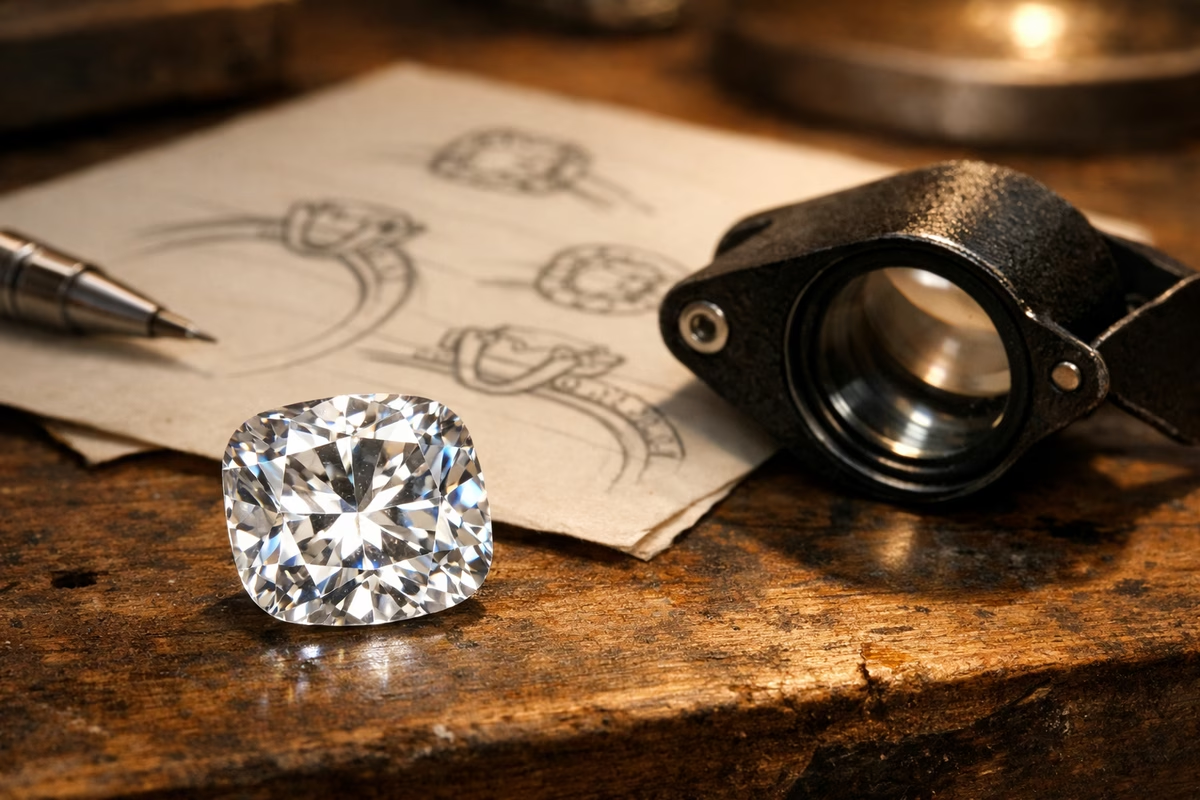
We chose this route. For our budget, we could afford a lab-grown diamond large enough to have real presence, with excellent cut quality, in a setting we loved.
Mined diamond: The traditional choice
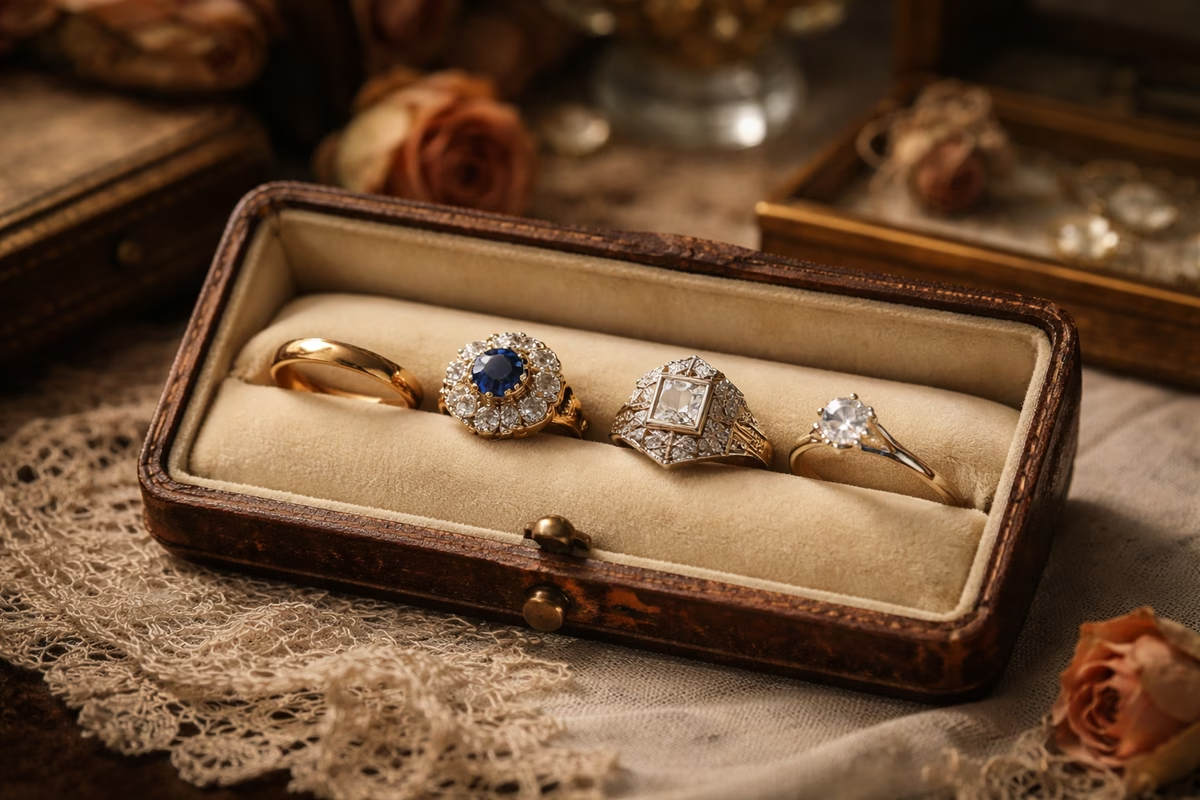
Mined diamonds hold their emotional and cultural weight. If you or your partner feels strongly about a natural stone, you can still get a beautiful ring on a budget—you just need to be strategic about the Four Cs.
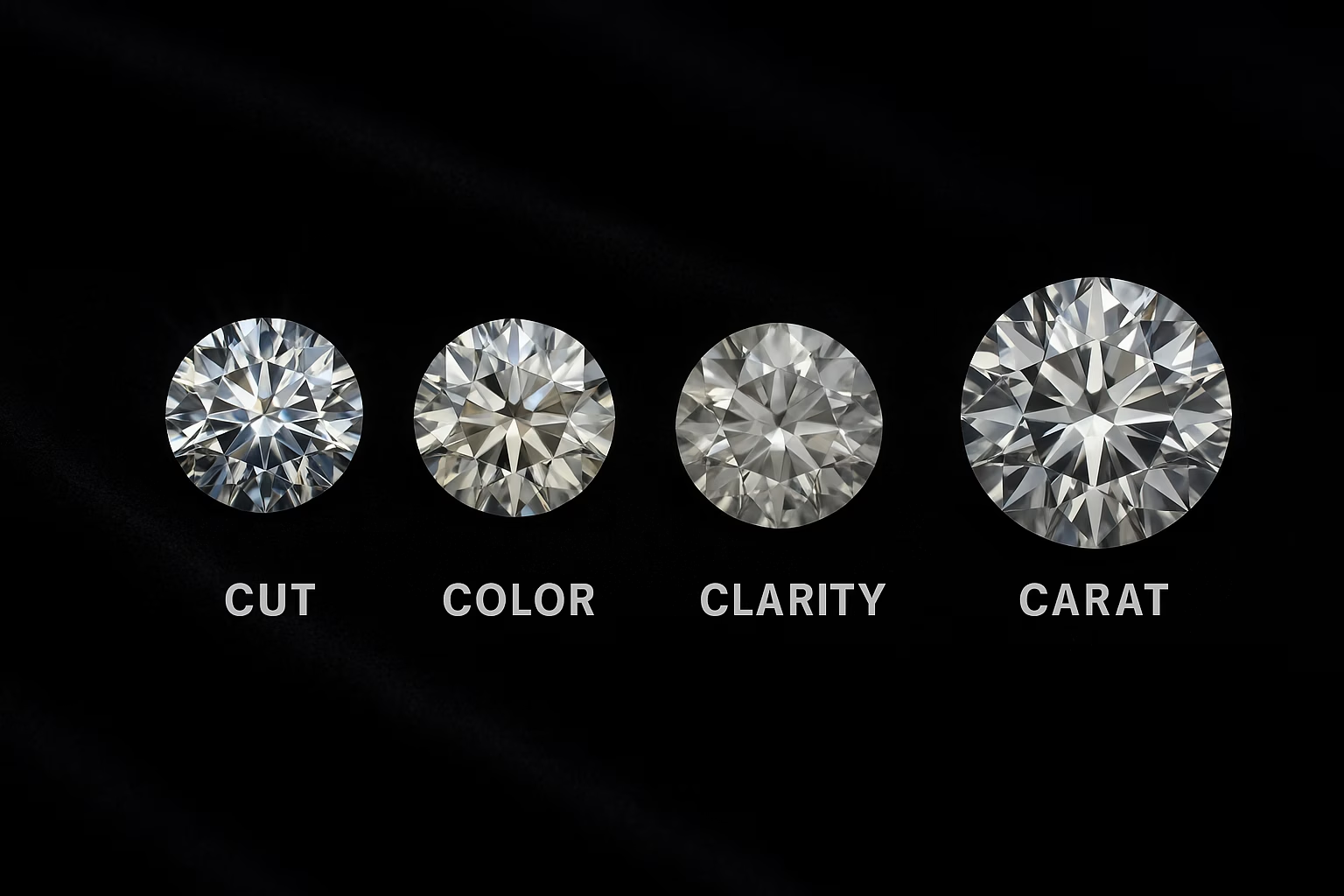
If buying a mined diamond on a budget:
- Cut: Never compromise. Excellent or Ideal cut is where sparkle lives.
- Color: Drop to G, H, or even I. These look white in a setting but cost 20-40% less than D-F.
- Clarity: Drop to SI1 or even SI2 if the inclusions aren’t visible through the table. “Eye-clean” is the only clarity standard that matters on a finger.
- Carat: Buy just below threshold weights (0.9 instead of 1.0, 1.4 instead of 1.5). The visual difference is negligible; the price difference is 15-20%.
Lesson three: The setting does more work than the stone
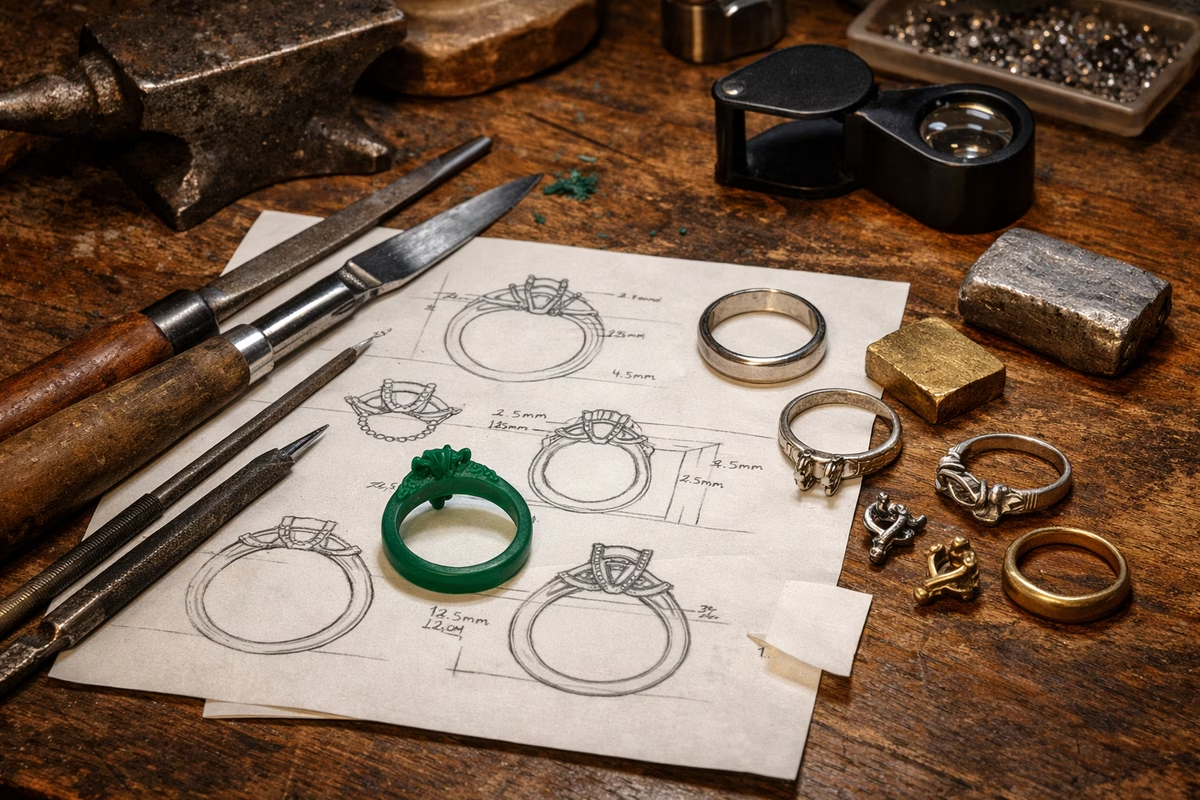
This was our biggest revelation. The setting—the metal framework that holds the stone—can make a 0.8-carat stone look like 1.2 carats or make a 1.5-carat stone look unremarkable. Setting design is the highest-leverage move in budget ring shopping.
Halo settings add perceived size
A halo of tiny accent diamonds around the center stone adds 0.3-0.5 carats of visual size for $200-$500 in additional cost. A 0.7-carat diamond in a halo looks comparable to a 1.0+ carat solitaire. The total diamond weight increases, but the cost of small melee diamonds is a fraction of a single larger stone.
Thin bands make stones look bigger
A thinner band (1.5-2mm) creates more contrast between the metal and the stone, making the stone appear larger. Thick bands can visually dwarf a smaller center stone.
Three-stone settings spread the budget
Instead of one large center stone, a three-stone setting uses a center stone flanked by two smaller stones. You get more total sparkle and a wider visual footprint. A 0.5-carat center with two 0.25-carat sides looks substantial and costs far less than a single 1-carat solitaire.
East-west settings are unexpected
Setting an oval, marquise, or pear stone horizontally (“east-west”) creates a fashion-forward look that covers more finger area than a traditional vertical orientation. It’s a designer trick that costs nothing extra.
Cathedral settings lift the stone
A cathedral setting uses sweeping arches of metal from the band to lift the center stone higher. This catches more light from the sides and makes the stone more prominent. It’s an engineering detail, not an expensive upgrade.
What we actually bought
After two months of research and three store visits, here’s what we assembled:
Stone: 1.1-carat lab-grown diamond, round brilliant, Excellent cut, G color, VS2 clarity. Cost: $950.
Setting: 14K white gold cathedral solitaire with a thin band (1.8mm) and hidden halo (small diamonds set underneath the center stone, invisible from above but adding sparkle from the side). Cost: $1,200.
Sizing, finishing, and insurance setup: $350.
Total: $2,500.
The ring looks—and I say this without exaggeration—like a $12,000-$15,000 ring. The stone is large enough to have genuine presence. The cut quality means it throws light aggressively in any lighting. The hidden halo adds sparkle without the “halo look” that some people find trendy. The thin band makes the stone appear even larger.
My partner has received more compliments on this ring than she has on any piece of jewelry she’s ever owned. Nobody has ever guessed the price. Several people have guessed it cost five figures.
The compliment test
Here’s a simple framework for budget ring shopping that we wish someone had told us upfront:
The Compliment Test: A good ring gets complimented for how it looks, not for how much it cost. If people say “that’s beautiful,” you succeeded. If people say “that must have cost a fortune,” you may have optimized for the wrong variable.
The factors that drive compliments:
- Sparkle (cut quality → this is free to prioritize)
- Proportion to hand (the stone should look right on your partner’s hand, not biggest-possible)
- Design coherence (setting and stone should look intentional together)
- Condition (a well-maintained ring always looks better than a neglected expensive one)
The factors that don’t drive compliments:
- Clarity grade on a certificate
- Color grade on a certificate
- Whether the stone is mined, lab-grown, or moissanite
- Brand name of the jeweler
Common budget mistakes
Mistake: Spending everything on the stone, nothing on the setting
A gorgeous diamond in a flimsy setting looks cheap. A modest diamond in a beautifully crafted setting looks expensive. Allocate 40-50% of budget to the setting and craftsmanship.
Mistake: Chasing carat weight over cut quality
A poorly cut 1.2-carat diamond sparkles less than a well-cut 0.9-carat diamond. Cut determines brilliance. If the stone doesn’t sparkle, size doesn’t matter.
Mistake: Buying online without seeing the stone
Online prices are better, but you’re buying a stone you’ve never held. Either buy from a vendor with good return policies and video, or use online research to negotiate at local stores.
Mistake: Ignoring the ring box moment
The presentation matters. A nice ring box, a clean ring, and a genuine moment are worth more than an extra $500 of diamond. Budget a small amount for presentation.
Mistake: Going into debt
No ring is worth consumer debt at 20%+ interest. A ring financed over three years at credit card rates costs 50-60% more than its sticker price. Set a cash budget and honor it. Your future self will thank you.
The conversation that matters most
Before you shop, have the conversation. Not about ring specs—about values.
Ask your partner:
- “Do you care whether the stone is mined, lab-grown, or something else entirely?”
- “Is size or design more important to you?”
- “Do you want something classic and timeless, or would you love something unexpected?”
- “How do you feel about the budget for this, honestly?”
Most partners, when asked directly, care far less about carat weight and far more about thoughtfulness. A ring chosen with attention to their actual taste—their style, their comfort, their values—says more than a ring chosen to impress observers.
The best $2,500 ring is better than the worst $10,000 ring. And the difference is never the money. It’s the attention.
Next steps
- Read The Four Cs of Diamonds to understand which specs matter and which to deprioritize
- Explore Lab-Grown vs Natural for the detailed comparison
- See Ring Settings for setting styles that maximize visual impact
- Read Ring Metals to choose between gold, platinum, and alternatives
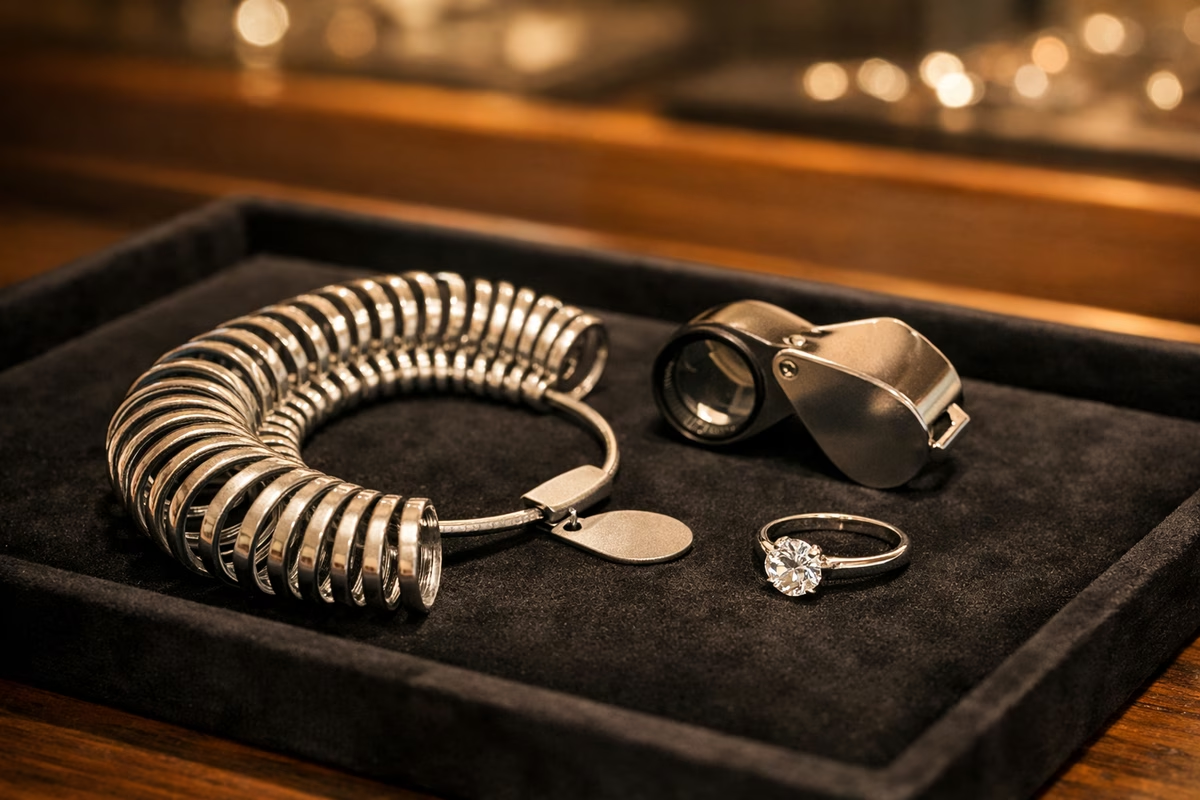
- Check Ring Sizing to get the fit right the first time