Asscher-Cut Engagement Rings: Step Facets, Square Shape, and Quiet Drama
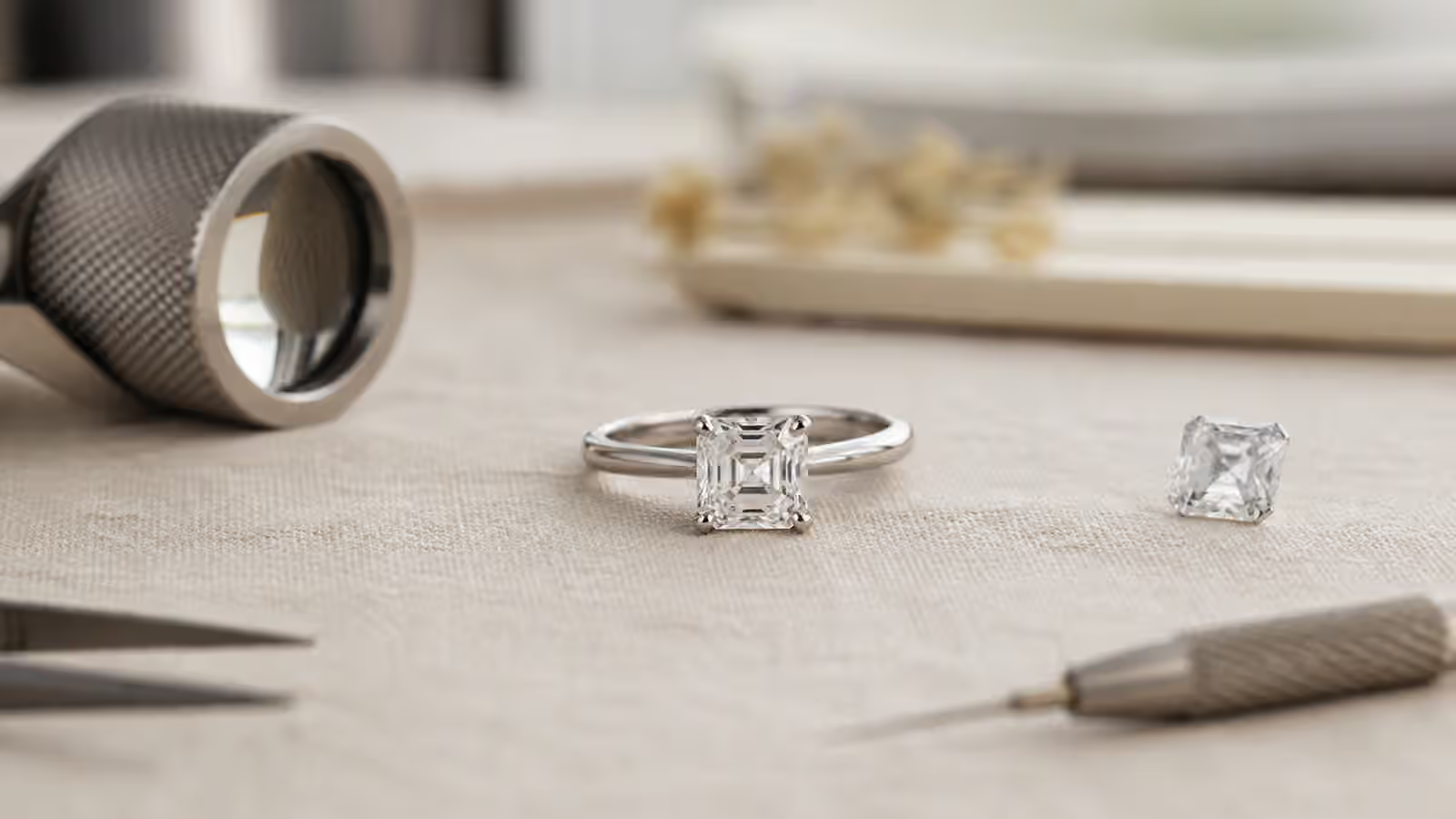
Asscher-cut engagement rings have a different kind of presence from brilliant-cut rings. They do not try to scatter light in every direction. They draw the eye inward through clipped corners, square symmetry, and broad step facets that behave like a small hall of mirrors. The result can feel calm, architectural, and a little old-world without needing heavy decoration around it.
The broader diamond shapes guide introduces Asscher cuts beside rounds, ovals, emeralds, cushions, and other outlines. Asschers deserve their own closer look because their beauty is tied to restraint. A strong Asscher looks crisp because the outline, facet pattern, clarity, color, and setting all work together. A weak one can look glassy, dark, or smaller than expected if the shopper judges it by carat weight alone.
The first thing to understand is that an Asscher is not just a square emerald cut. The two belong to the same step-cut family, but the Asscher’s clipped corners and nearly square proportions give it a centered, geometric personality. Where an emerald cut stretches across the finger and often reads elegant in a long line, an Asscher sits more like a window. It invites the viewer to look into the stone rather than across it.
The Shape Is About Balance
Most shoppers notice the square outline first, but the best Asscher cuts are not simple squares. The clipped corners matter because they create the octagonal frame that gives the shape its character. If the corners are too small, the stone can feel like a square with missing tips. If they are too large, it may lose the strong square identity that made the shape appealing in the first place.
Length-to-width ratio is usually easier here than with ovals, cushions, or radiants. Many buyers want an Asscher that looks close to square. A slight variation may not matter once the stone is set, but a visibly rectangular Asscher starts to behave more like an emerald cut. That can still be beautiful, but it should be chosen intentionally rather than discovered after purchase.
Face-up size deserves attention. Asscher cuts often carry more depth than brilliant shapes, so a one-carat Asscher may look smaller from above than a one-carat oval or marquise. The diamond carat weight and face-up size guide is useful before comparing stones because it separates weight from visual spread. With Asschers, measurements can tell a more honest story than carat alone.
Step Facets Reveal Rather Than Hide
Asscher cuts use step facets, which are long, parallel facets arranged in tiers. They produce flashes and reflections rather than the busy sparkle of a round brilliant. This is why Asschers feel composed. It is also why they require more careful selection. The stone has fewer hiding places.
In a brilliant cut, tiny inclusions can disappear into a field of scintillation. In an Asscher, a dark crystal or feather near the center may be easier to notice because the facets are broad and open. That does not mean every Asscher needs a very high clarity grade. It means the inclusion map matters. The diamond clarity and eye-clean guide gives the right principle: judge the actual visibility of the features, not the grade in isolation.
The same openness affects cut quality. A pleasing Asscher should have a clear, balanced pattern when viewed face-up. The steps should feel organized, and the center should not collapse into a dull patch. Some contrast is part of the beauty. Too much darkness, especially through the middle, can make the stone feel lifeless. Video helps because the charm of a step cut appears as the reflections move in broad flashes.
Color, Metal, and the Quiet Stone
Asschers can show body color more readily than many brilliant-cut diamonds. Their open facets and broad reflections give warmth fewer places to hide. A lower color grade may still look beautiful, especially in yellow or rose gold, but it should be viewed in the metal color the wearer actually wants. A stone that looks softly warm in yellow gold may look more tinted in a white-metal head.
This is where the diamond color grades guide becomes practical rather than abstract. Color is not only a letter on a report. It is a relationship between the diamond, the metal, the setting height, and the viewer’s expectations. If the wearer wants a crisp, icy look in platinum, it may be worth prioritizing color more than you would for a round brilliant. If the wearer likes antique warmth, the same sensitivity can become an advantage.
Fluorescence also deserves calm judgment. Some stones with fluorescence look perfectly normal in ordinary light, while others may appear hazy. With an Asscher, haze is more noticeable because the design depends on transparency and clean reflections. The diamond fluorescence guide explains why this should be checked in person or through reliable video rather than treated as automatically good or bad.
Settings That Suit an Asscher
Asschers often look strongest in settings that respect their geometry. A simple solitaire can let the step pattern speak clearly. Four corner prongs or double claw prongs can frame the clipped corners without making the stone look rounder than it is. The engagement ring prongs guide is especially relevant because a square step cut depends on clean corner protection and balanced metal placement.
Bezel settings can work beautifully when the bezel is thin and precise. A bezel emphasizes the octagonal outline and gives the ring a low-profile, architectural feeling. It can also make the stone appear slightly more enclosed, which some wearers love and others find too quiet. The bezel engagement rings guide is useful if daily wear and stone security are central concerns.
Halos require more judgment. A delicate geometric halo can make an Asscher look larger and more formal, but a heavy halo may overwhelm the center. Small accent diamonds sparkle differently from the step-cut center, so the contrast can either frame the Asscher or make it look subdued by comparison. A shopper considering a halo should read halo engagement rings and then look at the actual ring from normal viewing distance, not only in close-up photography.
Vintage-inspired settings feel natural with Asschers because the shape carries Art Deco associations. Milgrain, engraving, tapered baguettes, and geometric shoulders can all suit the stone. The risk is turning a disciplined shape into a busy ring. One or two strong design details usually serve an Asscher better than every antique cue at once.
Wedding Band Fit and Daily Wear
Asscher rings are often chosen for style, but they still have to live on a hand. A square stone can feel wider across the finger than its measurements suggest because the corners create a strong visual boundary. A raised basket may allow a straight wedding band to sit flush. A lower basket may feel more practical but create a gap. The wedding band pairing guide helps make that decision before the engagement ring is treated as a finished object.
Daily wear also depends on the head. The clipped corners need protection, and the prongs should sit smoothly enough not to catch on fabric. A very thin shank can make a square center look top-heavy, especially if the stone has strong presence. The engagement ring shank width and comfort guide explains why the band under the stone is part of the ring’s long-term stability, not merely a style choice.
An Asscher is a good choice for someone who likes order, symmetry, and a quieter form of drama. It is not usually the best choice for someone who wants maximum sparkle per dollar or the largest possible look from a given carat weight. Its appeal is subtler. When the cut is lively, the clarity is thoughtfully chosen, the metal supports the color, and the setting protects the corners without crowding them, an Asscher engagement ring feels exacting in the best sense: clear, composed, and deeply intentional.