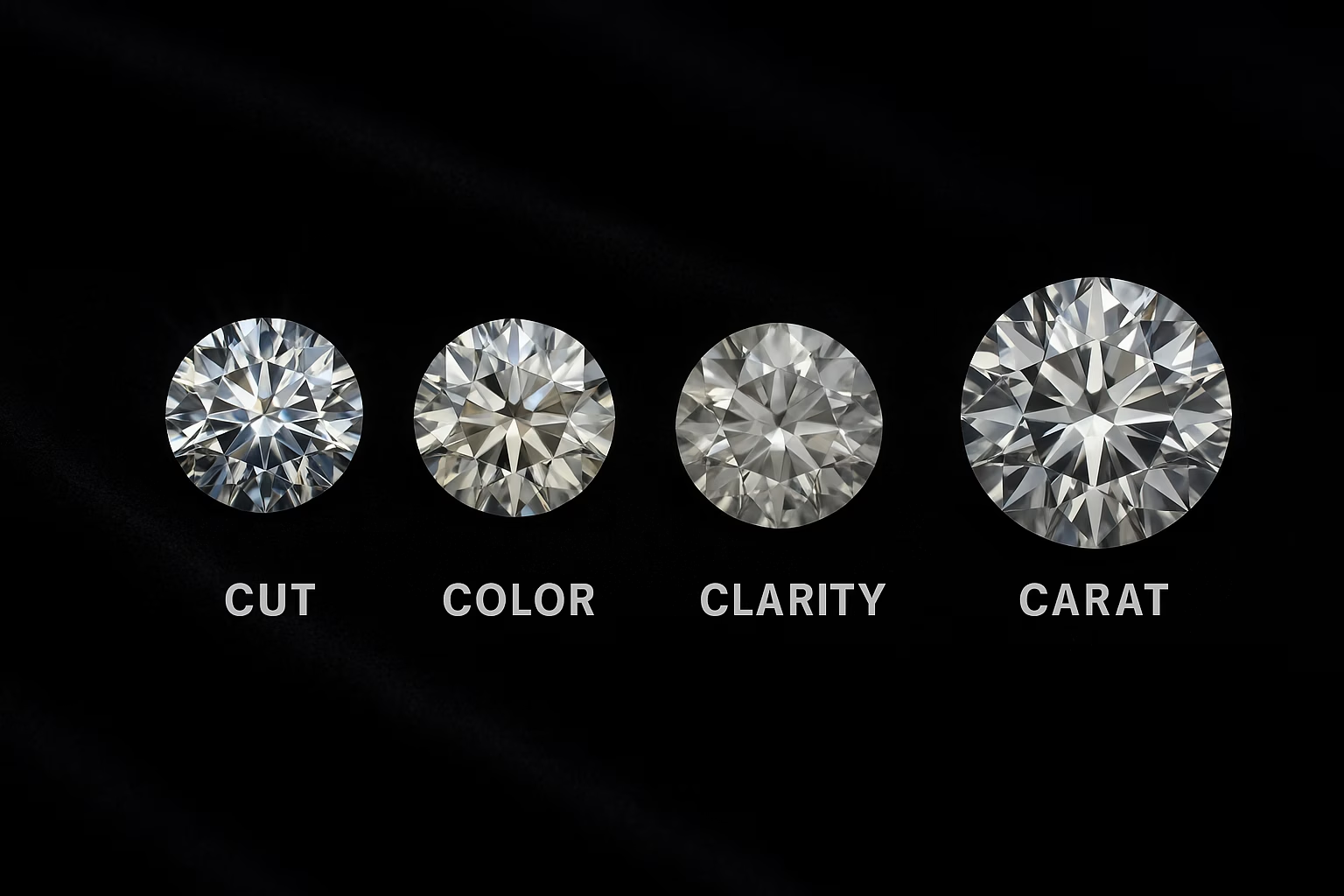
We had been to four jewelry stores. Four polished showrooms with bright halogen lights and rows of identical solitaires rotating slowly under glass. Every ring was beautiful. Every ring was interchangeable. My partner leaned over and whispered the thing neither of us had been willing to say: “They all look the same.”
She wasn’t wrong. Modern brilliant-cut diamonds are engineered for maximum light return, and they do that job magnificently. But standing in the fourth showroom, we realized we weren’t looking for maximum light return. We were looking for character. We were looking for something that felt like it belonged to us specifically, not to everyone who walked through the door.
That’s when a friend mentioned estate rings. “Go look at the antique dealers,” she said. “The stones are different. The settings are different. And the prices will surprise you.”
She was right about all three.
What makes an antique ring different
An antique engagement ring is generally defined as a piece that’s at least 50 years old, though the most sought-after eras go back much further. Estate rings are simply pre-owned—they might be antique or they might be from the 1990s. The distinction matters because age alone doesn’t create character; the era of craftsmanship does.
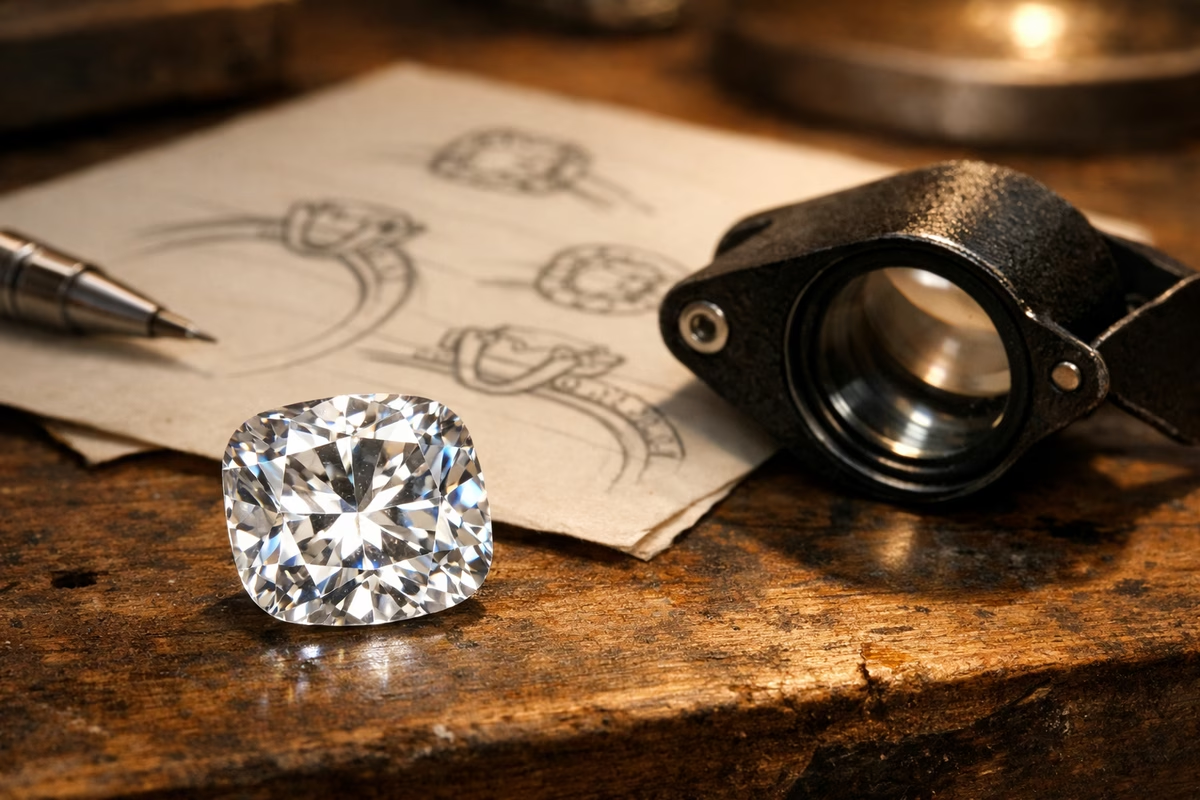
The first thing you notice when you hold an antique ring is the diamond. It doesn’t look like a modern stone. It looks warmer. Softer. The facets are larger, the light return is broader, and there’s a quality jewelers sometimes call “inner fire”—a slow, rolling sparkle rather than the sharp disco-ball flash of a modern brilliant cut.
This is because antique diamonds were cut by hand, not by laser. Each facet was placed by a craftsman’s eye, not by a computer optimization algorithm. The result is a stone with personality—slight asymmetries, broader flashes, and a warmth that comes from era-appropriate cutting.
Old Mine Cut (1700s-1800s): The earliest standardized cut. Cushion-shaped with a small table, high crown, large facets, and an open culet (flat bottom facet visible through the top). Warm, candlelit sparkle. Think of the diamond your great-great-grandmother might have worn.
Old European Cut (1890s-1930s): The predecessor to the modern round brilliant. Round with a smaller table than modern stones, higher crown, and an open culet. These are the diamonds of the Art Deco era—more fire and warmth than modern brilliants, with larger, flashier facets.
Rose Cut (1500s-1700s, revived recently): A flat bottom with a domed, faceted top that looks like a rose bud from above. Subtle, glowy, and unusually elegant. Lower profile than other cuts, which means a more streamlined ring.
Single Cut / Eight Cut: A simplified round with only 8 crown facets and 8 pavilion facets. Often used as accent stones in antique pieces. Simple geometry, quiet sparkle.
Transitional Cut (1930s-1940s): Halfway between Old European and modern brilliant. The bridge era. These stones combine warmth with more light return than earlier cuts.
The Art Deco moment
The first antique ring I held was Art Deco. The dealer placed it on a velvet pad and I understood instantly why people collect these things.
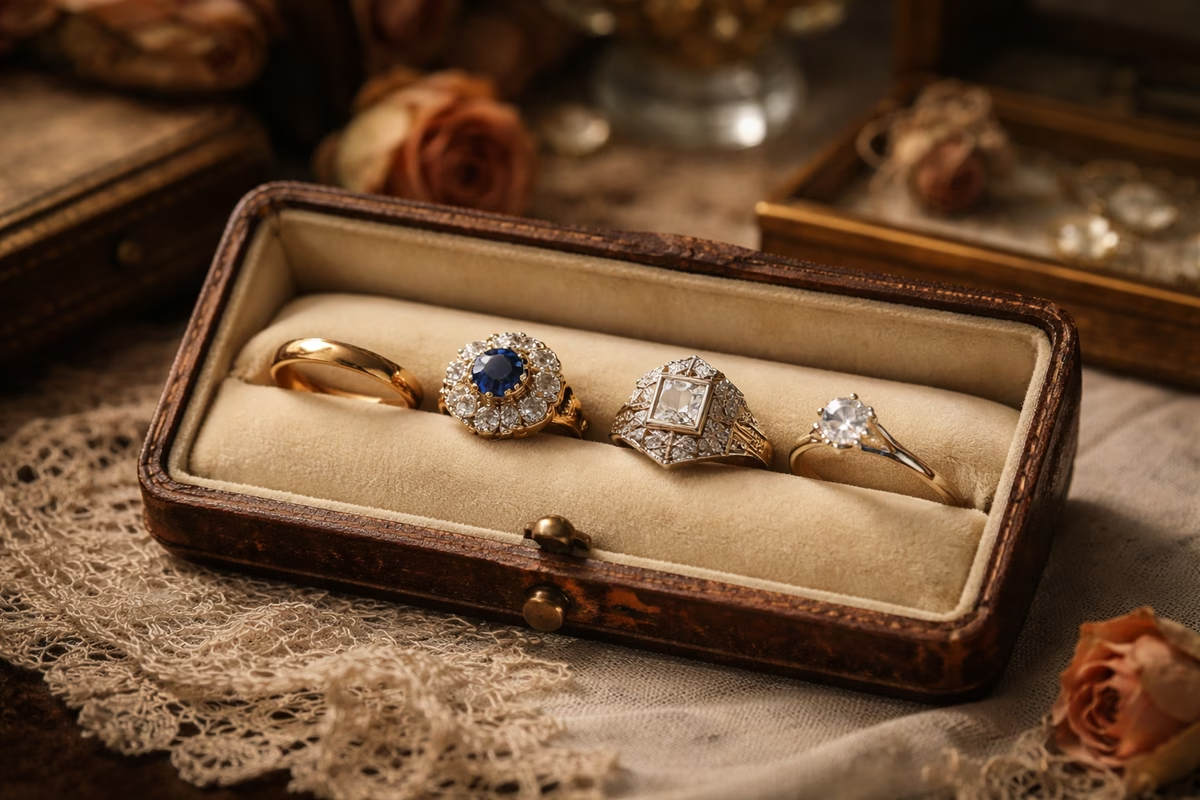
Art Deco engagement rings (roughly 1920-1940) are defined by geometry. Where modern rings tend toward organic curves and minimal settings, Art Deco rings are architectural. They use stepped lines, hexagonal halos, milgrain edges, and filigree metalwork that looks like it was designed by an engineer who moonlights as a jeweler.
The center stone in this particular ring was an Old European cut diamond, about 0.8 carats. Under the showroom lights, it threw broad, lazy flashes of white and spectral color—not the frantic scintillation of a modern stone, but something more like firelight. The setting was platinum, with calibré-cut sapphire accents in a geometric channel along the shoulders. The milgrain detailing on the edges was so fine it looked like tiny beads of metal had been individually placed (because they had been).
It cost less than a comparable new ring would have. That’s the strange economics of antique jewelry: you often get more craftsmanship, more character, and a more unique piece for less money, because the secondary market doesn’t follow the same pricing logic as retail.
How to evaluate an antique ring
Buying vintage requires different skills than buying new. Here’s what we learned:
Check the setting integrity
Antique settings have been worn for decades. Prongs may be thin. Gallery work may have worn spots. This doesn’t mean the ring is damaged—it means it needs a professional evaluation. A good jeweler can re-tip prongs, tighten stones, and reinforce settings without destroying the character of the piece. Budget $100-$400 for restoration work on most antique rings.
Understand the stone honestly
Antique diamonds weren’t graded by GIA. Many don’t come with certificates. This means you’re evaluating the stone with your eyes, which is—ironically—how diamonds were always meant to be evaluated. Look at the stone in multiple lighting conditions: daylight, indoor light, candlelight. An Old European cut that looks merely okay under fluorescent store lighting may look extraordinary at a dinner table.
Learn the eras
Each era has a visual signature:
- Georgian (pre-1837): Extremely rare. Silver-topped gold settings, rose cuts, closed backs.
- Victorian (1837-1901): Romantic motifs—flowers, snakes, hearts. Yellow gold. Old Mine cuts.
- Edwardian (1901-1920): Lace-like platinum filigree. Delicate, airy settings. Old European cuts.
- Art Deco (1920-1940): Geometric, architectural. Platinum. Calibré-cut accent stones. Bold and graphic.
- Retro (1940-1960): Rose gold, oversized, Hollywood glamour. Transitional cuts.
Verify the metal
Antique platinum is usually 90-95% pure (compared to modern 85-95%). Antique gold may be higher karat than modern standards. A quick acid test or XRF analysis by a jeweler confirms the metal composition.
Under a 10x loupe, look for:
- Open culet: A visible flat facet at the bottom of the stone, seen as a small circle through the table. This is normal and expected in Old European and Old Mine cuts—it’s not a flaw.
- Hand-cut facet symmetry: Slight variations in facet size and alignment indicate hand cutting. This is a feature, not a defect.
- Warmth: Most antique diamonds fall in the J-M color range by modern standards. This warmth is part of their beauty, especially in yellow gold settings.
- Wear marks: Surface wear on facet edges can indicate age. Minor wear doesn’t affect beauty but confirms authenticity.
Where to find antique rings
The hunt is part of the experience, and it’s genuinely different from walking into a mall jewelry store.
Estate jewelers: These are specialists who buy, authenticate, and restore pre-owned jewelry. They’re the most reliable source for antique rings because they verify provenance and condition. Most major cities have at least a few.
Auction houses: From major houses like Christie’s and Sotheby’s to regional auctions. Prices can be exceptional, but you need to know what you’re looking at (or bring someone who does). Online auctions through platforms like Worthy or The RealReal have expanded access.
Antique shows and fairs: Traveling shows and antique fairs often have jewelry dealers with deep collections. The advantage is variety—you might see fifty rings in an afternoon from different eras and price points.
Online specialists: Companies like Trumpet & Horn, Victor Barboné, and Erie Basin specialize in antique engagement rings with detailed photography, measurements, and return policies. This is where many people find their rings today.
Family pieces: The most meaningful antique ring is one that’s already in your family. Resetting a grandmother’s stone in a new setting, or wearing an heirloom ring as-is, connects the engagement to a longer story.
The sustainability argument
There’s a quieter reason to consider antique rings: they’re the most sustainable option in jewelry. No new mining. No new manufacturing emissions. No new supply chain. The diamond already exists; you’re simply giving it another chapter.
This isn’t a marketing angle—it’s just math. A diamond mined in 1920 and worn for a century has a cumulative environmental impact that ended the day it left the ground. Buying it secondhand generates zero new extraction, zero new cutting waste, and zero new retail packaging.
For couples who care about environmental impact but want a natural diamond (not lab-grown), antique stones are the answer that doesn’t require compromise.
The ring we chose
We ended up with an Edwardian ring from about 1915. The center stone is a 0.72-carat Old European cut, set in a platinum filigree mounting with tiny single-cut accent diamonds. The filigree work is so delicate it looks like metal lace.
The stone has warmth—probably K or L color by modern standards—and it looks absolutely perfect in the yellow-tinged light of our apartment. Under the bright showroom lights, a modern jeweler might call it “tinted.” Under actual life lighting, it looks like captured candlelight.
It cost about 40% less than a comparable new ring would have. But cost wasn’t why we chose it. We chose it because it had already survived 110 years and it looked like it planned to survive 110 more. There’s something about wearing a stone that was cut by hand in someone’s workshop a century ago—some craftsman I’ll never know—that makes the ring feel less like a purchase and more like an inheritance.
My partner wears it every day. It catches the light differently than any modern ring I’ve seen—slower, warmer, more patient. People notice it constantly. “That’s an unusual stone,” they say. And she smiles and tells them its story.
Next steps
- Read The Four Cs of Diamonds to understand how modern grading applies (and doesn’t apply) to antique stones
- Explore Ring Settings for understanding prong styles and mounting types
- See Ring Care for special maintenance considerations for antique pieces
- Read Ring Insurance to protect your vintage investment
- Check History of Engagement Rings for the full timeline of ring eras