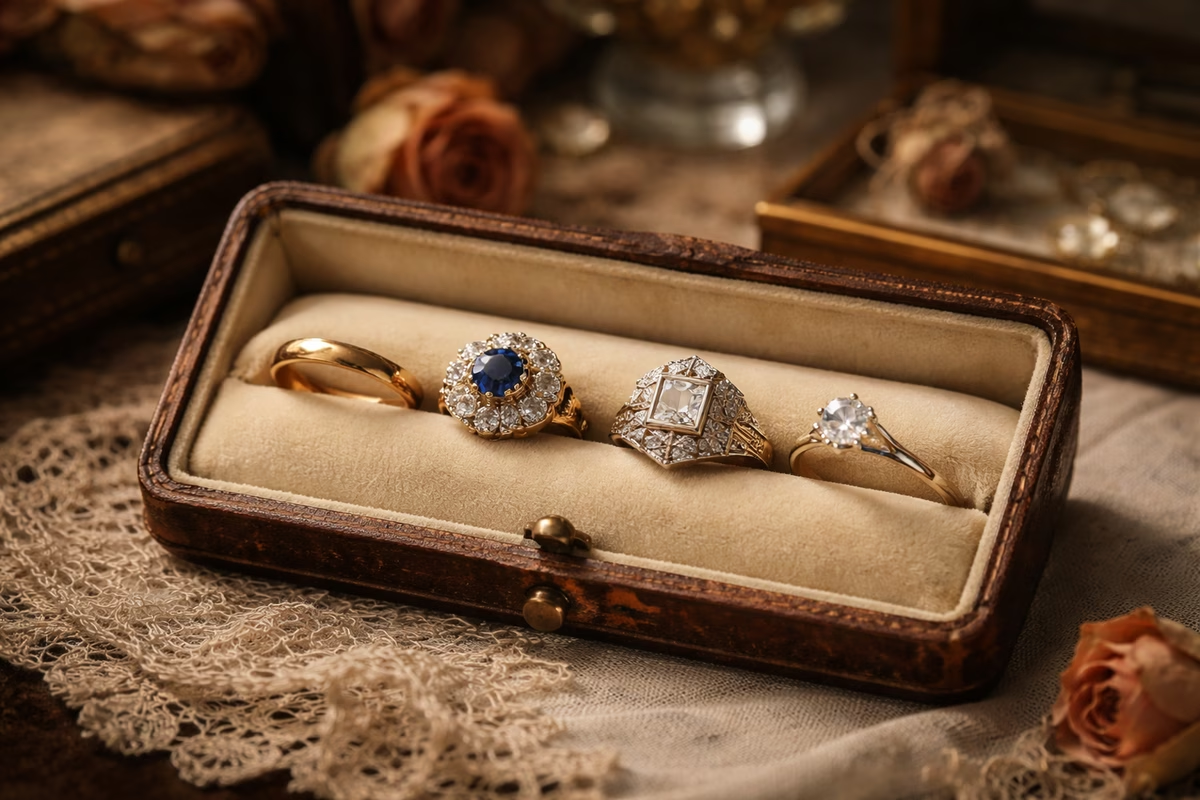
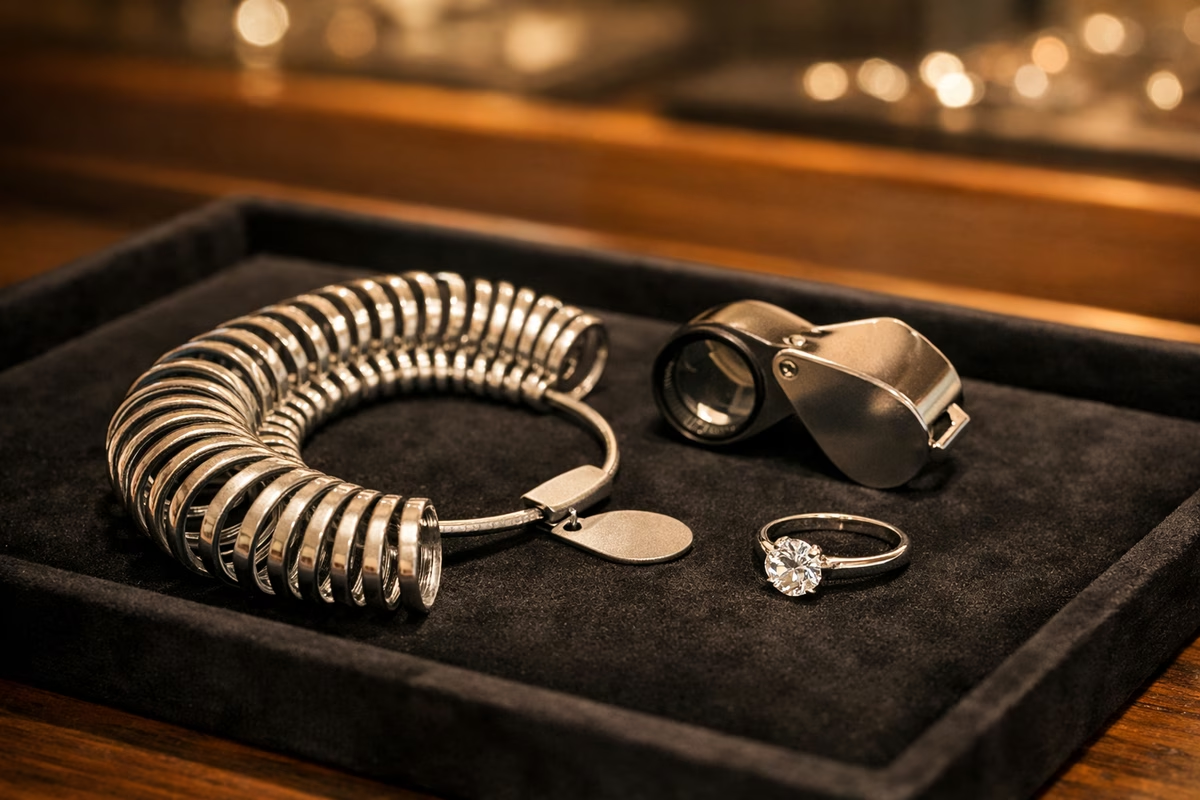
Sharpen your ring knowledge with exercises drawn from The Heirloom That Found Its Setting. From diamond cuts to metal choices, these games help you master the fundamentals.
Quiz: Settings, Stones, and Design
What distinguishes an Old European Cut (OEC) diamond from a modern round brilliant?
What is the main advantage of a bezel setting?
Why might a jeweler recommend a platinum head with a yellow gold band?
What is a 'culet' in a diamond?
How often should prongs on a ring be professionally checked?
Flashcards: Diamond and Ring Terminology
Ring & Gemstone Vocabulary
Flip each card to learn essential terms for understanding engagement rings.
Metal claws (typically 4 or 6) that grip the stone. Maximizes light entry but leaves the stone more exposed than a bezel.
A metal rim that completely surrounds the stone's girdle. Very secure and sleek, but reduces light entry from the sides.
A ring of small accent diamonds surrounding the center stone, making it appear larger. Adds sparkle but changes the aesthetic from classic to modern.
A diamond cut popular from 1890–1930. Hand-cut, with a smaller table, higher crown, broader facets, and a visible culet. Produces warm, broad light flashes.
The bottom point (or small flat facet) of a diamond. In modern cuts, it's a sharp point. In antique cuts, it's often a visible small facet.
The large flat facet on top of a diamond. Modern brilliants have ~57% table; old European cuts have ~53% table.
The upper portion of a diamond, above the girdle. A higher crown (as in OECs) produces broader light dispersion.
A dense, white, hypoallergenic precious metal. Harder than gold but wears differently—develops a patina rather than losing material. The strongest setting metal.
75% pure gold mixed with alloy metals. Warm color, traditional, softer than platinum. Prongs require more frequent checking.
A band with a slightly domed interior that reduces contact friction. More comfortable for daily wear than a flat-interior band.
Timed Trivia: Ring Knowledge Speed Round
60-Second Ring Challenge
How fast can you identify ring and diamond facts? Race the clock!
Which setting type offers the most stone security?
What does the 'J' in a diamond's color grade mean?
Which metal is denser: platinum or 18k gold?
How many prongs does a classic Tiffany setting have?
What does VS2 mean in diamond clarity?
What era were Old European Cut diamonds most common?
What should you do before resetting an heirloom stone?
Which is harder: diamond or platinum?
Matching Pairs: Settings and Their Characteristics
Match the Setting Style to Its Key Feature
Find matching pairs—click a setting type, then click its defining characteristic.
Explore the full story in The Heirloom That Found Its Setting or dive into the Ring Settings Visual Guide.