Most home grilling is mixed-menu grilling. A few guests want chicken, someone brought mushrooms, a child wants a hot dog, another person is eating vegetables and tofu, and the cook still wants the onions, buns, and corn to land at the table warm. One grill can handle that spread, but only if the cook stops treating the grate as one shared pile. Mixed-menu grilling is about sequencing, lanes, tools, heat zones, and respect for flavor. It is not complicated, but it has to be intentional before the first food goes down.
The grill needs lanes
Mixed cooking starts with the same idea as Grill Food Safety Workflow : raw food, cooked food, clean tools, cold storage, and serving space should have visible lanes. On a mixed menu, those lanes also protect flavor and preference. Raw chicken should not drip onto vegetables. A mushroom meant as a main dish should not taste like sausage grease unless the guest asked for that. A clean bun should not be parked where raw skewers were resting five minutes earlier.
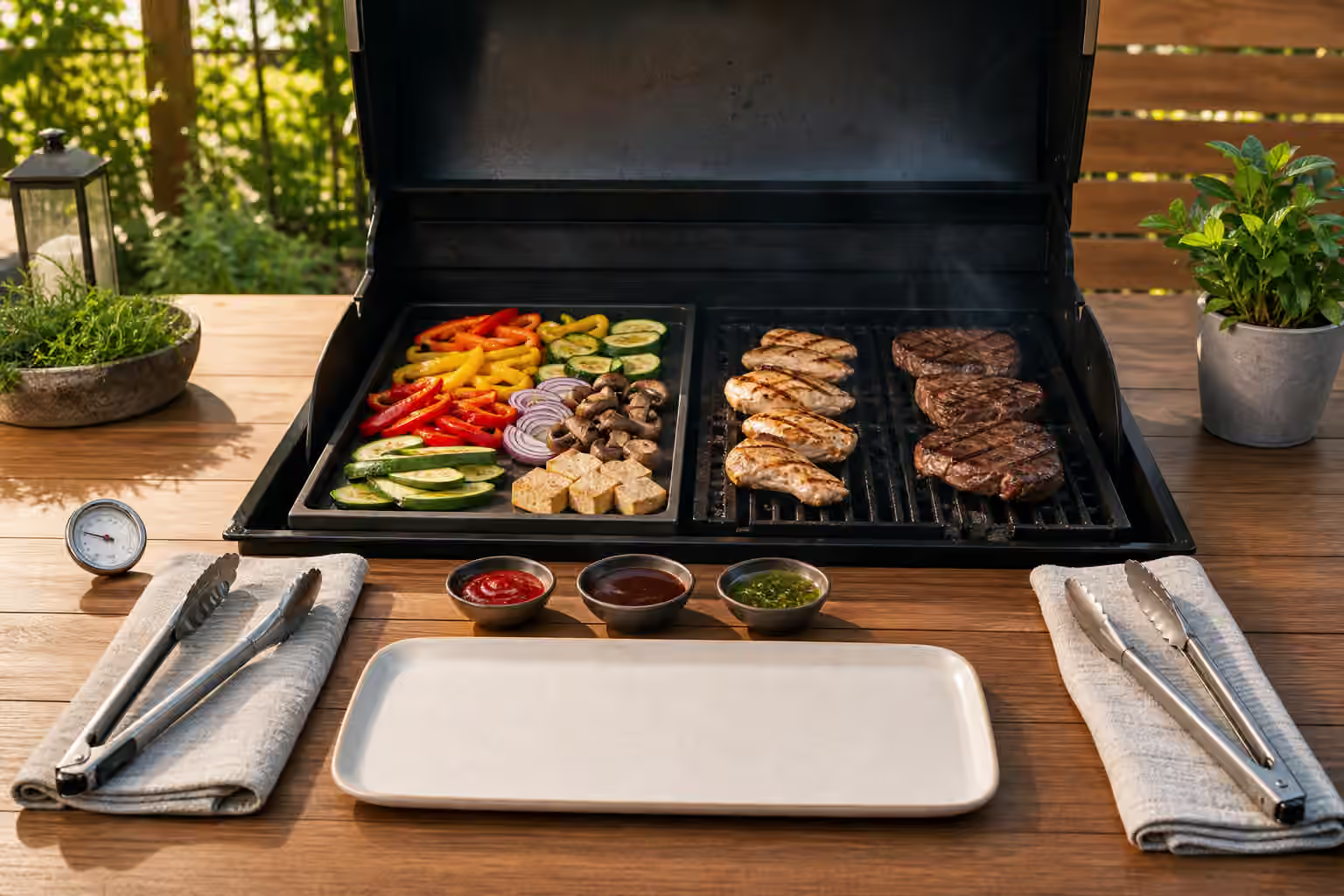
The lanes do not have to be elaborate. A raw tray, a clean tray, separate tongs, a thermometer, and a clear landing space solve many problems. If plant-forward foods are part of the meal, give them a surface and tool path that does not depend on whatever happened to the meat first. This is both practical and hospitable. Guests should not need to interrogate the cook to know whether the vegetable platter was treated as an afterthought.
Sequence by risk, heat, and patience
The order of cooking matters. Foods that require careful doneness and clean handling need attention when the cook is fresh and the station is orderly. Foods that reheat or hold well can go earlier. Foods that dry quickly or collapse should go later. Bread and tortillas usually belong near the end. A mixed menu fails when everything goes on the grate at once because the grill looks spacious before the food starts releasing moisture and fat.
Chicken pieces, fresh sausages, thick pork, and larger cuts often need a longer indirect path and thermometer checks. Vegetables can cook early if they will be served warm or room temperature, but delicate vegetables may lose texture if finished too soon. Steaks and chops may need rest, which creates a useful window for bread, tortillas, or quick sides. Fish and shrimp usually need the cook’s full attention and should not be squeezed into the corner while other food flares. Cookout Planning is helpful because the menu order is a hosting decision, not only a cooking decision.
Use zones instead of hope
A two-zone grill is the mixed-menu cook’s best tool. The hot side gives browning. The cooler side gives finishing, holding, and rescue. Without zones, every food is forced to accept the same heat, even when one item needs a hard sear and another needs time. Two-Zone Grilling and Direct vs. Indirect Heat explain the base method, but the mixed menu makes the value obvious. The grill becomes a small traffic system instead of a single hazard.
Zones also reduce arguments with timing. Chicken can finish away from the flame while peppers blister over direct heat. Tofu can brown on a griddle while corn sits at the edge. Steak can rest while buns toast quickly. If the fire flares under sausages, vegetables do not have to suffer beside them. If the plant-forward food is finished first, it can move to a clean platter instead of waiting under meat smoke.
Surfaces can separate jobs
The grate is not the only surface available. A basket can hold vegetables or shrimp. A griddle can keep mushrooms, onions, tofu, or sandwiches away from raw-meat drips. Foil packets can protect potatoes or saucy beans. A plank can support fish. A cast-iron skillet can warm toppings. These tools are not signs of weakness. They let one grill behave like several work areas.
Grill Baskets, Foil Packets, and Planks is useful for containment, while Plancha and Griddle Cooking on the Grill is useful for broad browning and separation. If a mixed table includes vegetarian or vegan food, a clean griddle or dedicated basket can make the cook’s promise visible. It also protects the food’s own texture. Mushrooms brown better on a surface that is not crowded under chicken thighs.
Flavor transfer is real
Some flavor sharing is welcome. Onions cooked near burgers may taste better. Peppers beside sausages can pick up a savory edge. Bread warmed at the edge of a clean grill can carry a little smoke. But flavor transfer becomes a problem when strong marinades, fish, lamb fat, heavy smoke, or sweet sauce coats food that was meant to taste different. A mixed menu should not make every item taste like the loudest item on the grate.
Smoke needs special restraint. Wood for Smoke and Smoke Flavor Without Bitterness both matter more when the menu is varied. A chunk of assertive wood that flatters pork may overwhelm vegetables, cheese, or fish. If the table includes delicate foods, keep smoke clean and modest. Let sauces, relishes, herbs, and acid carry variety instead of forcing one smoke profile onto everything.
Sauces need their own discipline
Mixed menus often come with mixed sauces: sweet barbecue glaze, hot sauce, yogurt sauce, mustard, salsa, herb oil, and marinades. The danger is not only flavor confusion. It is tool confusion. A brush that touched raw chicken marinade should not become a finishing brush for grilled vegetables. A sweet sauce should not burn onto the grate before fish arrives. A creamy sauce should not sit in the sun beside a hot grill for the whole meal.
BBQ Sauces, Glazes, and When to Apply Them gives the timing logic. For mixed menus, add the station logic. Keep raw marinades separate. Use clean spoons for finished sauces. Add sugary sauces late. Bring cold sauces out close to serving. If several sauces are on the table, the simplest labels may be spoken rather than written: this one is for vegetables, this one is hot, this one stayed away from raw food. The cook’s organization becomes part of the hospitality.
Serving should not undo the cook
The clean serving plan should be ready before the grill fills. Plant-forward food needs a platter that does not first receive raw meat. Finished chicken needs room to rest. Steak needs a board for slicing. Buns, tortillas, salads, and toppings need space away from raw tools. If the cook waits until the first batch is done to find serving pieces, the mixed menu will collapse into improvisation.
Resting, Holding, and Serving helps with the final rhythm. Some foods benefit from a rest. Some foods suffer from waiting. Some foods can be served room temperature. Some should move promptly toward storage if they are not eaten. A mixed menu does not need everything piping hot at once. It needs each item served in the condition that makes sense for that food.
Start smaller than the grate
The practical rule is to cook less at one time than the grill seems to allow. Air needs room to move. Tools need room to turn food. Foods need space to brown instead of steam. Separate lanes need actual distance. A crowded grate makes every mistake harder to correct. If the menu is large, cook in waves and treat each wave as a small, clear project.
Begin with the foods that need the most controlled path. Move finished foods to clean landing zones. Clean or scrape surfaces when a strong sauce or fatty food has left residue. Warm bread and tortillas late. Bring fresh finishes to the table after the hot work is stable. When the station is quiet, a single grill can handle a generous mixed menu without making every item taste or feel the same.
Mixed-menu grilling is not about pleasing everyone with one compromise. It is about giving each food a fair path across the same fire. With lanes, zones, clean tools, and a little sequencing, vegetables can taste grilled instead of incidental, meat can be cooked with proper attention, and the table can feel abundant without turning the cook into a traffic officer.