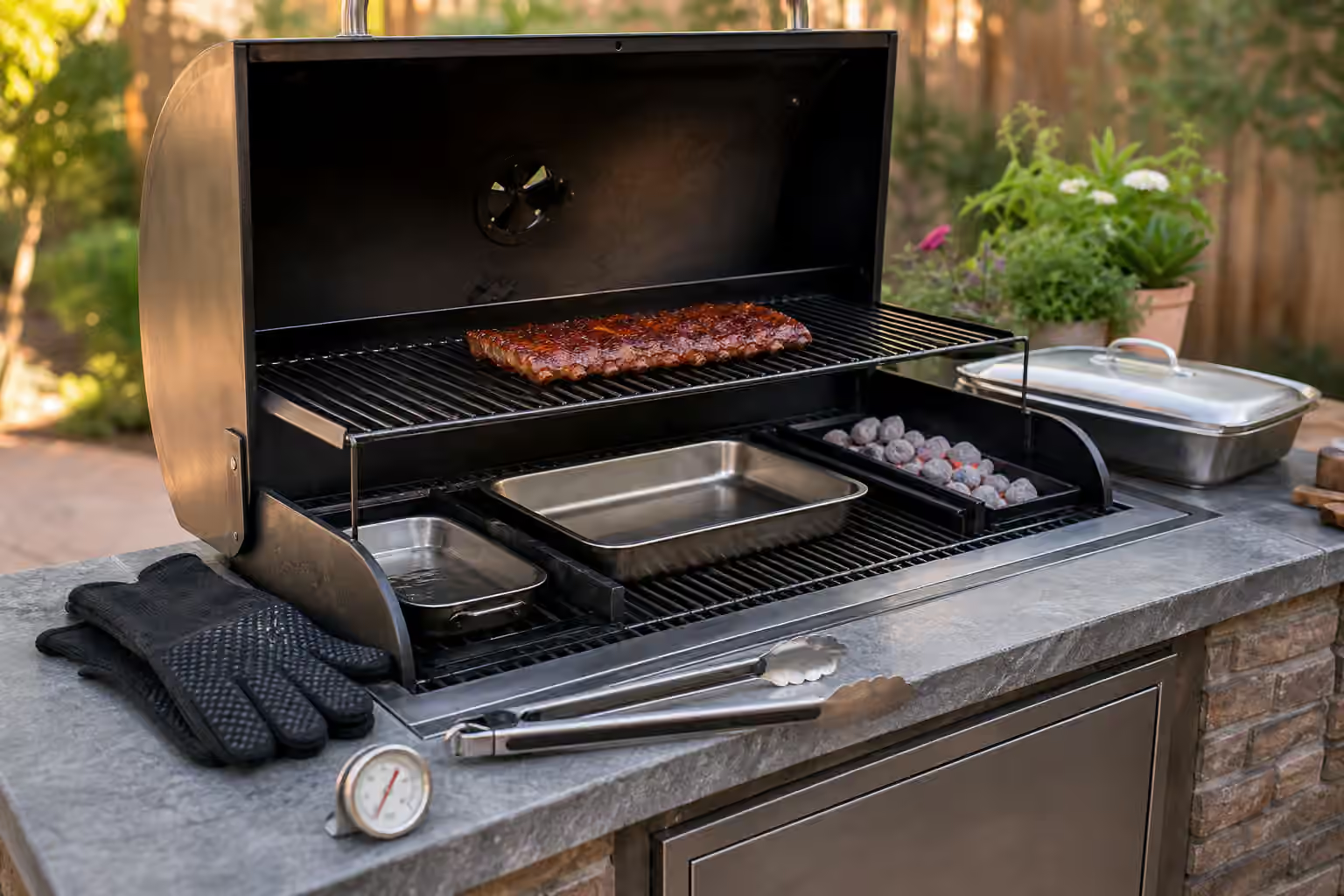
The lid is the most underused control on a grill, quietly treated by many cooks as a cover you lift to check on things and drop back down out of habit. It is far more than that. Raising and lowering the lid changes what kind of appliance you are cooking on, and understanding that change answers a surprising number of the questions beginners ask, from why thick chicken takes forever to why thin shrimp overcook in a blink. Once you see the lid as a switch between two fundamentally different cooking modes rather than a passive shield, you stop opening and closing it by reflex and start using it on purpose.

Open and closed are two different machines
With the lid open, a grill is essentially a searing surface. Heat rises off the coals or burners, hits the underside of the food, and the rest escapes into the air, so almost all the cooking energy arrives from below. That is wonderful for browning a face fast and terrible for driving heat into anything thick, because the top and center of the food are exposed to open air rather than trapped warmth. Close the lid and the grill transforms into something much closer to an outdoor oven. Heat surrounds the food on all sides, hot air circulates in a rough convection, smoke lingers and works its way into the surface, and the whole environment cooks the food through rather than just scorching its bottom. Neither mode is better in the abstract. They are tools for different jobs, and the skill is knowing which job you have.
Thin and fast wants the lid up
When food is thin enough to cook through in a couple of minutes, the open lid is usually the right call, because the danger with such food is not underdone centers but overcooked everything. Shrimp, thin asparagus, quick-cooking vegetables, skewers, and delicate fillets all cross from perfect to overdone in seconds, and an open lid lets you stand right over them, watch the color turn, flip at the exact moment, and pull them before they dry out. The constant escape of heat is not a problem here, because the food does not need the center driven up to temperature; it needs attentive, visual timing. The tradeoff is that this same open-lid heat loss means anything thick will brown on the bottom while its interior lags stubbornly behind, which is exactly the wrong outcome for a chicken thigh.
Thick and slow wants the lid down
Chicken pieces, sausages, bone-in pork chops, potatoes, ribs, whole vegetables, and thick steaks all benefit from the lid closed for at least part of the cook, because they need heat to reach a center that open-lid searing simply cannot penetrate without burning the outside first. Closing the lid surrounds the food with heat and lets it finish through convection, which is why pairing a closed lid with an indirect zone is the standard move for anything dense: you brown over direct heat with the lid up or briefly down, then move the food to the cooler side, close the lid, and let the covered environment carry the interior to doneness. That combination is the heart of Direct vs. Indirect Heat and Two-Zone Grilling , and it is the answer to nearly every “why won’t this cook through” frustration. One caution worth keeping: a closed lid does not automatically mean moist food. It means surrounding heat, and surrounding heat still overcooks and dries anything left in it too long.
The fuel you burn changes how much the lid matters
Lid strategy is not identical across cookers. On a gas grill, closing the lid lets the burners behave like an oven, trapping their heat and building the ambient temperature you need for thick food, which is why gas cooks lean on the lid to reach anything beyond a quick sear. On charcoal, the lid interacts tightly with the vents, because closing it changes the airflow path and therefore how the fire breathes and where the smoke travels, so the lid is part of a larger conversation with the intake and exhaust. On a pellet grill the lid is close to sacred, since the whole cooker is engineered around fan-driven convection with the lid down, and every time you open it the machine dumps its built environment and has to fight its way back through a recovery cycle. That last point drives the most important habit of all: open the lid only when you have a reason.
Open with a task, not out of curiosity
Every time the lid comes up on a covered cook, heat escapes, the ambient temperature drops, smoke rushes out, and a pellet or ceramic cooker in particular pays for it with a recovery period. So the discipline is to lift the lid only when you have an actual job to do, whether that is flipping, probing with a thermometer, moving food between zones, or applying sauce near the end, and then to close it again promptly rather than standing there watching. The temptation to peek every couple of minutes, especially during a long smoke, is the enemy of a steady cook, and the old pitmaster’s line that if you’re looking you’re not cooking is exactly right. Cluster your tasks so each lid opening accomplishes several things at once, and let the closed lid do its quiet work in between.
None of this replaces checking the inside of the food. A closed lid that cooks food through, and an open lid that browns it fast, both leave you needing to confirm the interior is safe with a thermometer, because neither mode tells you the center’s temperature on its own. Use thermometer-based doneness for meat, poultry, seafood, leftovers, and reheating, keep raw and cooked foods separate, and move perishables toward chilling rather than leaving them in the outdoor warmth while everyone lingers. For current reference, keep FoodSafety.gov’s safe minimum internal temperatures and its clean, separate, cook, chill guidance nearby, along with the USDA FSIS grilling food safely resource.
Treat the lid, then, as the control it truly is. Up for thin food that needs your eyes and fast timing, down for thick food that needs surrounding heat, and matched to your fuel and its recovery quirks along the way. The same variable-by-variable thinking shows up wherever heat and time meet, from the extraction balance in Coffee Mastery to the temperature-and-time habits in The Tea House , and once cooking past daylight or into rough conditions, the Outdoor Cooking Weather Guide shows how the lid earns its keep against wind and cold.