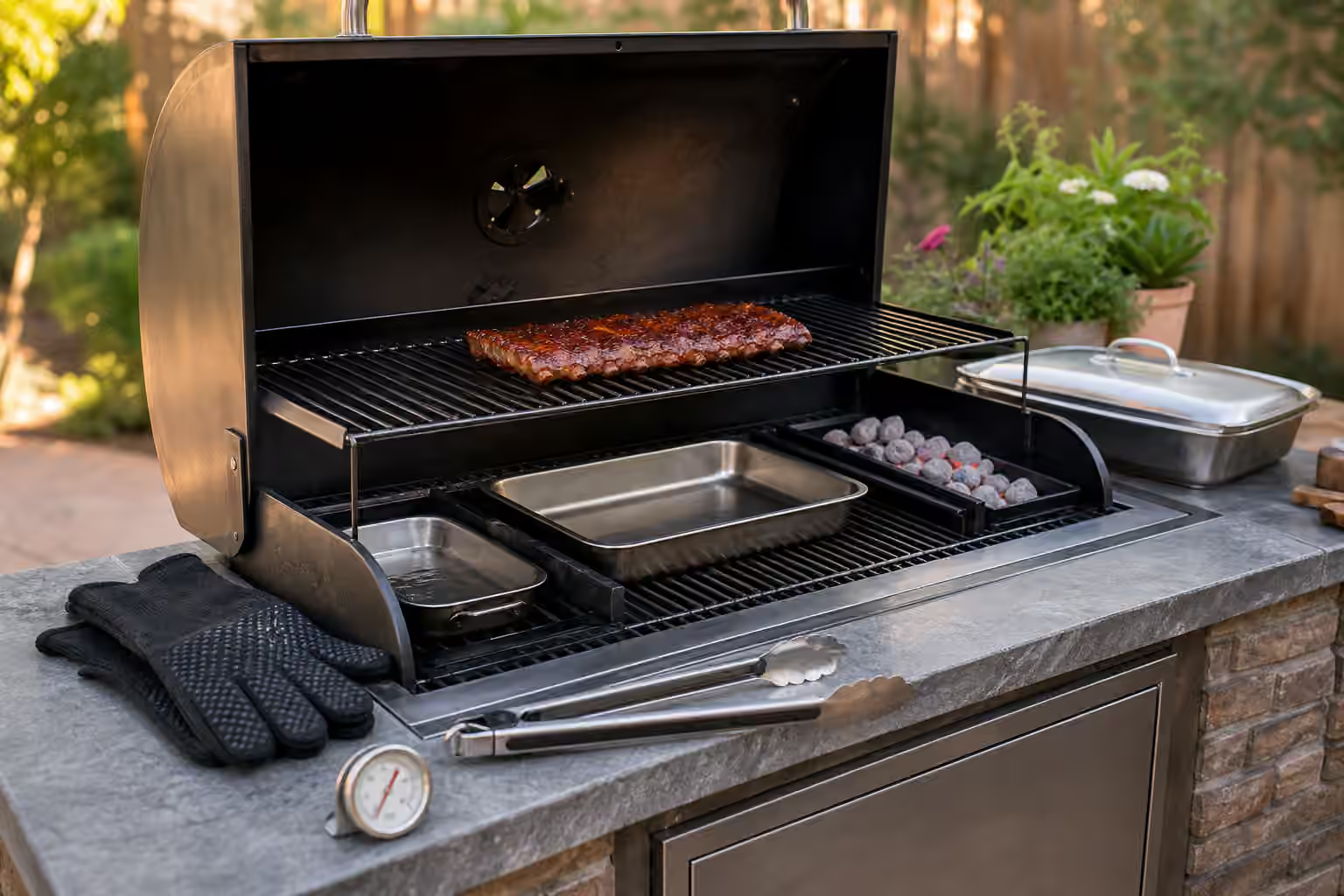
Most grill trouble feels sudden because it becomes visible all at once. The chicken skin darkens too fast. The burgers flare. The fish sticks. The vegetables are pale after ten minutes. The smoke smells sharp. The guests are ready before the food is. In practice, the problem usually started earlier, when heat, food, time, smoke, surface contact, or station setup drifted away from the plan. Troubleshooting gets easier when you name the variable before reaching for a dramatic fix.
Stop changing everything at once
A panicked cook changes heat, lid position, food placement, sauce timing, and turning frequency in the same minute. That can save a meal by accident, but it teaches nothing. A calmer approach is to ask what moved first. Is the fire hotter than expected, or is the food too sugary for that heat? Is the grill weak, or did the lid stay open while thick food needed covered heat? Is fish sticking because the grate is dirty, because the fish was wet, because it was moved too soon, or because the tool is wrong?
The beginner mental model from The Ember Table for Beginners is useful here because it keeps the diagnosis short. Heat is the fire and zone. Food is thickness, moisture, fat, and seasoning. Time is the cook plus rest. Smoke is fuel and airflow. Rest is the finish. Add surface contact and station setup, and most problems have a place to live.
When the grill is too hot
Too much heat is not always bad. Searing needs intensity. Thin vegetables may need hard contact. Pizza and flatbreads often want a strong preheated surface. Trouble starts when the food cannot survive the heat long enough to cook through or taste good. Chicken pieces burn before the thickest part is ready. Sausages split and leak fat. Sugary rubs blacken. Sauce turns bitter. Oil smokes hard before food hits the grate.
The first rescue is distance. Move food to an indirect zone, a cooler edge, an upper rack, a griddle area with lower heat beneath it, or a clean platter if it needs a full pause. Managing Flare-Ups explains this in the most urgent version: flames are a signal to move food, close the lid only when appropriate, and starve the flare of drippings rather than waving tools at it. For ordinary overheating, the same principle applies without the drama. Give the food somewhere else to go.
Then reduce the cause. On gas, lower the burner under the problem area or turn one burner off to restore a zone. On charcoal, close vents partially if the cooker is racing, but do not choke the fire into dirty smoke. On a kettle, rotate the grate or food if one side is hotter than expected. On a pellet grill, remember that the temperature set point is not the same as grate-level heat at every moment. Heat control is a conversation with the cooker, not a number you set once.
When the grill is too cool
A cool grill creates the opposite pressure. Food stays pale, sticks longer, leaks moisture, and takes enough time that guests begin to hover. The mistake is to keep flipping and pressing because nothing seems to happen. That makes browning even harder. If the grill is too cool, close the lid when the food benefits from oven-like heat, give the cooker time to recover after loading, and stop crowding the grate so moisture can leave.
Charcoal may be too cool because the coals were poured before they caught well, the ash bed is choking airflow, vents are closed too far, or there simply is not enough fuel for the job. Gas may be too cool because the grill was not preheated, the lid has stayed open, the food load is too large, or one burner is underperforming. A plancha may be too cool because it is thick and did not preheat fully. The repair depends on the machine, but the diagnosis starts with the same question: is the heat source weak, or is the food stealing heat faster than the grill can replace it?
Direct vs. Indirect Heat helps because direct heat is not only about intensity. It is also about contact and recovery. A crowded grate full of cold food can turn a direct setup into a steaming surface. If you need browning, cook in batches, dry the surface of the food, and let the grill regain heat between loads.
When food sticks
Food usually sticks because it is not ready to release, the surface was not clean and hot enough, the food was too wet, or the cook chose the wrong tool. Protein bonds to metal early in the cook, then releases more easily after a crust forms. If the cook attacks too soon, the crust tears and the next turn becomes worse. This is especially true for fish, tofu, chicken skin, and delicate vegetables.
A clean, preheated grate gives food a better chance. So does a light coating of oil on the food, not a dangerous amount of oil poured onto the fire. A thin fish spatula can slide under delicate pieces better than tongs. A grill basket, plank, foil packet, or griddle can solve the contact problem for foods that are too small or fragile for open bars. The guide to Grill Baskets, Foil Packets, and Planks is really a troubleshooting guide for foods that do not want bare grate contact.
The hardest advice is also the simplest: wait. If food resists, give it a little more time unless the surface is burning. If it is burning and sticking, the heat is too high for that food, and the problem is heat rather than patience.
When smoke tastes harsh
Good smoke smells clean, warm, and appetizing. Harsh smoke smells sharp, stale, chemical, or sooty. The cause may be dirty fuel, poor airflow, old grease, damp wood, too much wood, or food dripping into a struggling fire. Beginners sometimes assume more smoke means more barbecue flavor. The guide to Smoke Flavor Without Bitterness makes the better point: smoke is seasoning, and seasoning can be overdone.
Let starter smoke clear before food goes on. Avoid smothering charcoal until it produces thick gray smoke. Use less wood than ego suggests. Keep grease management under control. Clean old residue. If smoke turns unpleasant during the cook, improve airflow if it is safe to do so, remove excess smoking wood if possible, and move food away from the dirtiest part of the fire. If the food has already absorbed a harsh layer, a bright sauce, acid, herbs, or fresh sides may help at the table, but the real fix is for next time.
When timing falls apart
Timing trouble is often a menu problem disguised as a grill problem. Thick chicken, delicate fish, skewers, corn, flatbread, and sauced ribs do not all want the same heat at the same moment. If everything must finish together, the cook needs a holding plan, a rest plan, and a serving plan. Resting, Holding, and Serving matters because food can leave the grill before the table is ready, but only if the cook protects texture and safe handling.
When timing is already slipping, simplify. Serve the food that is ready instead of letting it decline while waiting for the laggard. Move finished food to a clean platter and hold it intentionally. Shift thick pieces to indirect heat and close the lid if they need time. Stop adding new food until the current batch is under control. A grill can handle many foods, but not if every surface is treated as urgent.
Keep a short memory of the cook
Troubleshooting becomes skill when the cook remembers what changed. You do not need a formal log. A few notes after dinner are enough: too much charcoal for the food, lid open too long, fish moved early, sauce added over hard heat, mushrooms crowded, ribs needed more rest, windy day changed the kettle. Those notes turn the next cook into an adjustment rather than a fresh guess.
The useful question is not whether the cook was good. It is what the grill was trying to tell you. If you can name the signal, you can choose the next move with less noise. Move food, adjust airflow, change contact, wait for release, reduce crowding, check with a thermometer, or simplify the menu. Most grill problems are recoverable when the cook gives the food an escape route before the fire makes the decision.