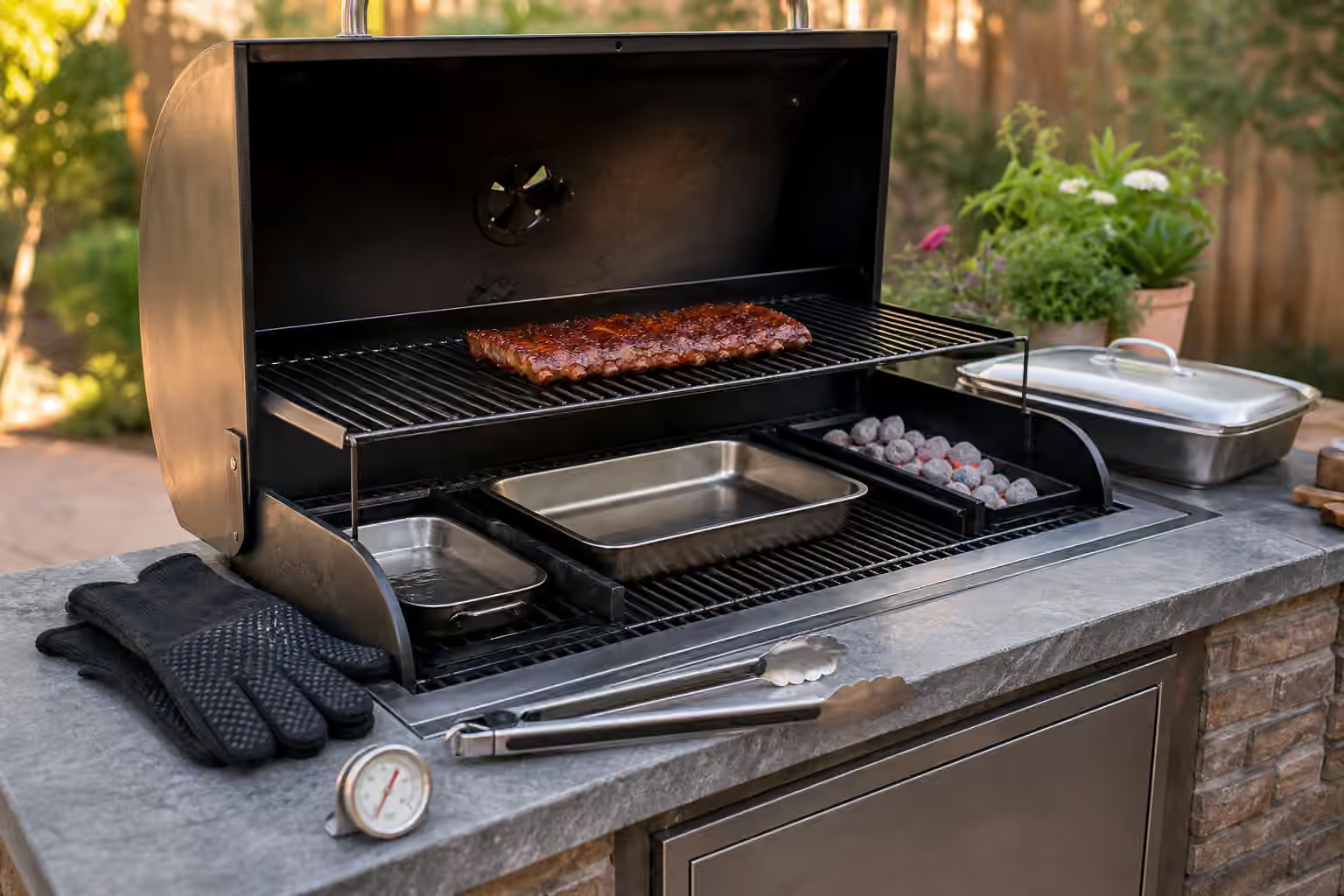
Some foods need help reaching the grill without falling apart. A fish fillet may stick before it releases. Zucchini coins can slip through the grate. Potatoes may need steam before browning. A saucy bean side can bubble and scorch if it sits directly over flame. Grill baskets, foil packets, and planks are not signs that the cook has failed at real grilling. They are different ways to control contact, airflow, moisture, and movement.
The tool should solve the food problem
The simplest way to choose among basket, foil, and plank is to ask what the food cannot handle on its own. Small pieces need containment. Delicate pieces need support. Dense pieces may need moisture and time. Foods with sugar, cheese, or sauce may need protection from direct flame. Once the problem is named, the tool becomes obvious rather than decorative.
A grill basket keeps food exposed to heat while preventing loss through the grate. It is best for vegetables, shrimp, small mushrooms, sliced onions, green beans, peppers, cubed potatoes that have already been par-cooked, and other pieces that benefit from tossing or turning as a group. A basket still grills. Steam escapes through the holes, surfaces can brown, and the food can pick up clean smoke if airflow is good.
A foil packet behaves differently. It traps moisture and turns part of the cook into steaming or braising. That can be useful for potatoes, onions, beans, cabbage, saucy vegetables, fruit, or fish that would dry before it released from the grate. It is not the right tool when the goal is a crisp crust. A packet can finish tender food, then the cook can open it carefully and move pieces to direct heat if browning is still wanted.
A plank creates a supported platform with gentle smoke and insulation. It is common with fish, but the same logic can help with mushrooms, sturdy vegetables, small cheeses meant for heat, and foods that benefit from a slower, aromatic cook. A plank is not a magic flavor stamp. It works best when the food is seasoned clearly, the plank is prepared sensibly, and the grill has enough heat to cook without burning the board into bitterness.
Baskets keep small food honest
The main mistake with baskets is overcrowding. If the basket is packed full, the bottom layer browns while the upper layer steams, and the cook keeps shaking the basket in frustration. Use enough space for moisture to leave. A basket should make food easier to manage, not turn the grill into a lidded pan. When cooking for a crowd, two smaller basket runs often taste better than one overfilled load.
Preheat the basket when browning matters, especially for mushrooms, onions, peppers, and par-cooked potatoes. A cold basket steals heat and delays color. Oil the food lightly before it goes in, then season with enough restraint that herbs and spices do not fall through and burn. If the food is wet from washing, salting, or marinade, dry it first. The lesson from Searing Without Scorching applies here: water has to leave before browning can begin.
The basket should have its own place in the heat plan. Direct heat gives color. Indirect heat gives time. A basket of asparagus may need only a quick direct cook. A basket of thick mushrooms may start hot for browning and then move away from the strongest heat. A basket of shrimp needs close attention and usually less time than vegetables sharing the station. Fish and Seafood on the Grill is a useful companion because seafood basket cooking is mostly a timing problem.
Foil packets are controlled steam
Foil packets are most valuable when the cook wants tenderness, moisture, or containment. Potatoes with onions and butter, beans with sauce, cabbage wedges, corn with herbs, delicate white fish, and fruit with a little acid can all make sense. The packet keeps juices close to the food and prevents small pieces from disappearing. It also hides the food from the cook, so timing and heat placement matter.
Build packets with room for steam. A packet wrapped too tightly can press against the food and leak at the seams. A packet with too much liquid can become a sloshing pouch that is hard to move safely. Place the seam where it can be opened without pouring steam toward your hand. Use long tongs or a spatula underneath for support. Steam burns are a real part of foil cooking, even when the grill itself feels under control.
Foil also softens grill character. That is not always bad. A packet of potatoes can become tender before being opened and finished over direct heat. Fish can cook gently in a packet with lemon and herbs, then be served as a softer dish rather than pretending to have a hard sear. The important thing is to be honest about the method. Foil packets are not a shortcut to char. They are a way to cook foods that need moisture, containment, or protection.
Planks add support and restraint
Plank grilling sits between direct grilling and baking. The food rests on wood, so it is protected from the grate. Heat surrounds it with the lid closed. The plank may smolder at the edges, adding a light aroma. This can be lovely with salmon, trout, mushrooms, eggplant, onions, or mild foods that would be overwhelmed by heavy smoke from chunks tossed directly onto coals.
The plank should be food-safe and intended for cooking. Soaking is often recommended because it slows ignition and buys time, though the surface will still dry and char. Keep the plank over moderate heat, not a roaring inferno. If the edges catch, move it to a cooler zone or reduce the burner beneath it. A spray bottle should not be the main strategy; better heat placement is. The same clean-smoke restraint from Smoke Flavor Without Bitterness applies even when the wood is a plank.
Plank foods still need doneness checks. A fish fillet on wood can look glossy and dramatic while the center is not where it should be. Thick vegetables can look browned at the edges while the middle remains firm. Ground or stuffed foods bring their own safety expectations. The plank changes contact and flavor, not the need for thermometer habits when they apply.
Heat, cleanup, and serving
All three tools work better with a two-zone grill. The hot zone provides browning and momentum. The cooler zone provides rescue, finishing, and safer packet opening. Direct vs. Indirect Heat gives the base method, and Managing Flare-Ups becomes important when oil, butter, marinade, or plank edges begin feeding the fire.
Cleanup should be part of the choice. Baskets need a real scrub because small browned bits cling to perforations. Foil packets create less cookware cleanup but more disposable waste, so use them when their cooking advantage is real. Planks are usually single-use once charred deeply, and the ash or board should be cooled and discarded safely. None of these tools removes the need to clean the grate, empty grease, or keep raw and cooked tools separate.
The serving moment is where these methods prove themselves. A basket can deliver browned vegetables that still taste grilled. A packet can open into tender potatoes or fish without tearing. A plank can arrive at the table with aroma and support, as long as it is placed on a heat-safe surface. Used thoughtfully, these tools let the grill handle food that would otherwise be too small, fragile, wet, or slow. The goal is not to avoid the grate forever. The goal is to choose the kind of contact the food deserves.