Charcoal choice is often treated like a personality test. Some cooks defend briquettes because they are predictable. Others prefer lump charcoal because it feels closer to wood and responds quickly to air. The more useful question is quieter: what job does this fire need to do? A weeknight batch of burgers, a long kettle roast, a hot sear, and a low smoking session all ask different things from fuel. The better cook learns how each fuel behaves, then chooses the one that makes the heat plan easier.
Briquettes are a measured heat source
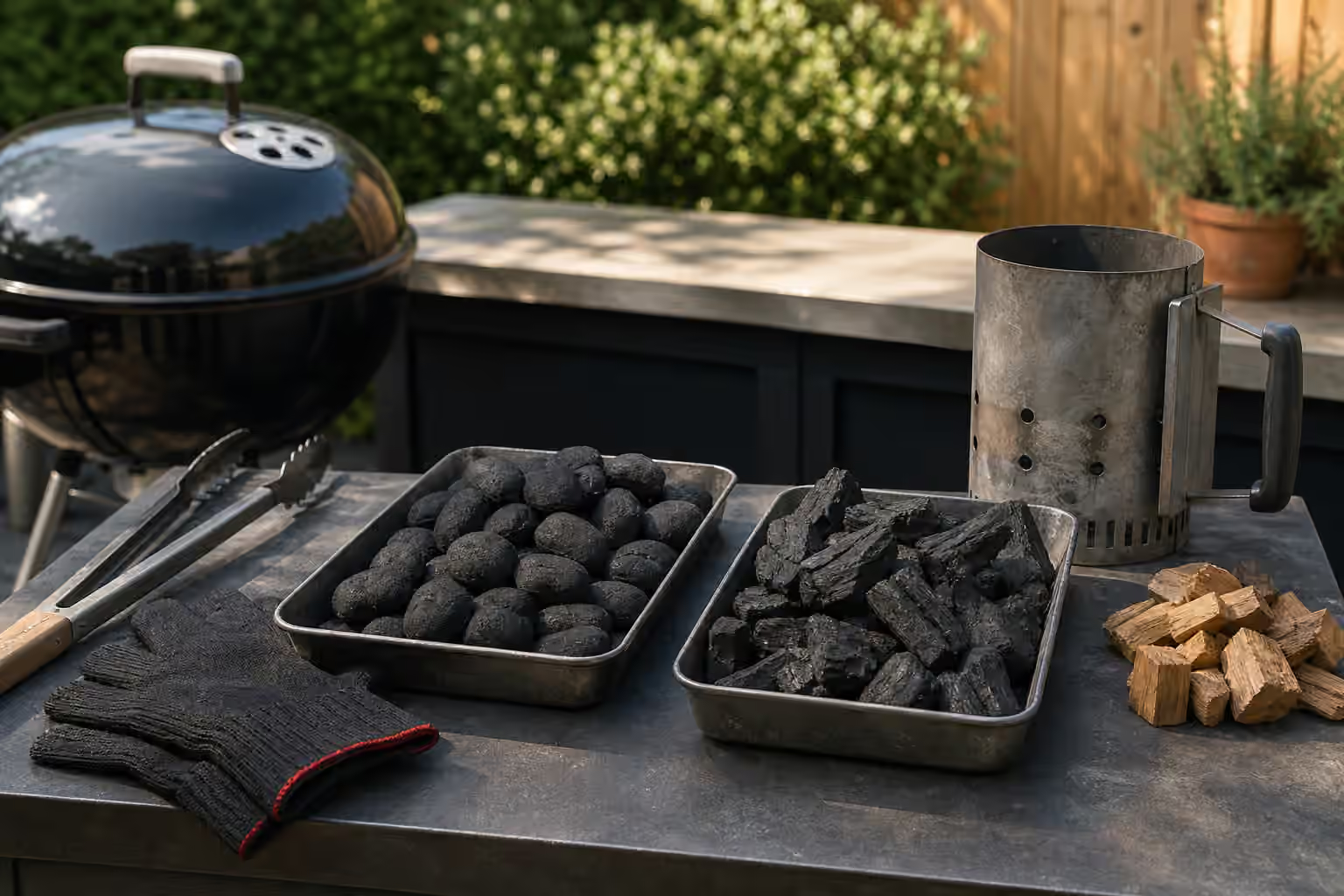
Briquettes are made to be uniform. That is their main virtue. Their size, shape, and density help a cook build repeatable fires, especially in a kettle grill, charcoal basket, or long-cook setup. When a recipe or habit says half a chimney, a full chimney, a two-zone bank, or a charcoal snake, briquettes make that instruction easier to repeat. They are not automatically plain or inferior. They are controlled.
That control matters when the cook needs endurance more than drama. A Charcoal Snake and Minion Method works because unlit briquettes catch gradually and predictably. A two-zone kettle cook becomes easier when the coal bed does not collapse into odd hot pockets. A long pork shoulder or rib cook benefits from fuel that does not demand constant rearranging. Briquettes can leave more ash than lump, so the grill needs enough airflow and ash space, but that is a management issue, not a fatal flaw.
Briquettes are also forgiving for beginners because they make learning visible. If the grill ran too hot, the cook can reduce the number next time. If the indirect side faded, the cook can add a known amount. That repeatability supports the wider lessons in Fire, Airflow, and Fuel , where the goal is to make changes deliberately instead of guessing under a lid full of smoke.
Lump charcoal is responsive and irregular
Lump charcoal is charred wood in irregular pieces. It often lights quickly, reacts strongly to airflow, and can produce excellent high heat. Its irregularity is both its appeal and its challenge. A bag may contain large chunks, small shards, dust, and pieces that do not stack neatly. That means one load can behave differently from another unless the cook sorts or at least notices what is going into the chimney.
Lump is useful when the cook wants quick heat, a lively fire, or direct grilling with strong browning. It can be especially satisfying for Live-Fire Grilling Without Losing Control when the cook is already paying attention to coal quality and grate height. It can also work in kamado cookers, where tight airflow control can stretch a modest amount of fuel for a long time. The same responsiveness that makes lump attractive can make it jumpy in a thin metal cooker on a windy day.
Do not assume lump always means cleaner flavor. Clean flavor comes from dry fuel, enough oxygen, a cooker that can breathe, and smoke that is not trapped and stale. Poorly managed lump can taste harsh. Well-managed briquettes can taste clean. The cook matters more than the slogan.
Match the fuel to the heat map
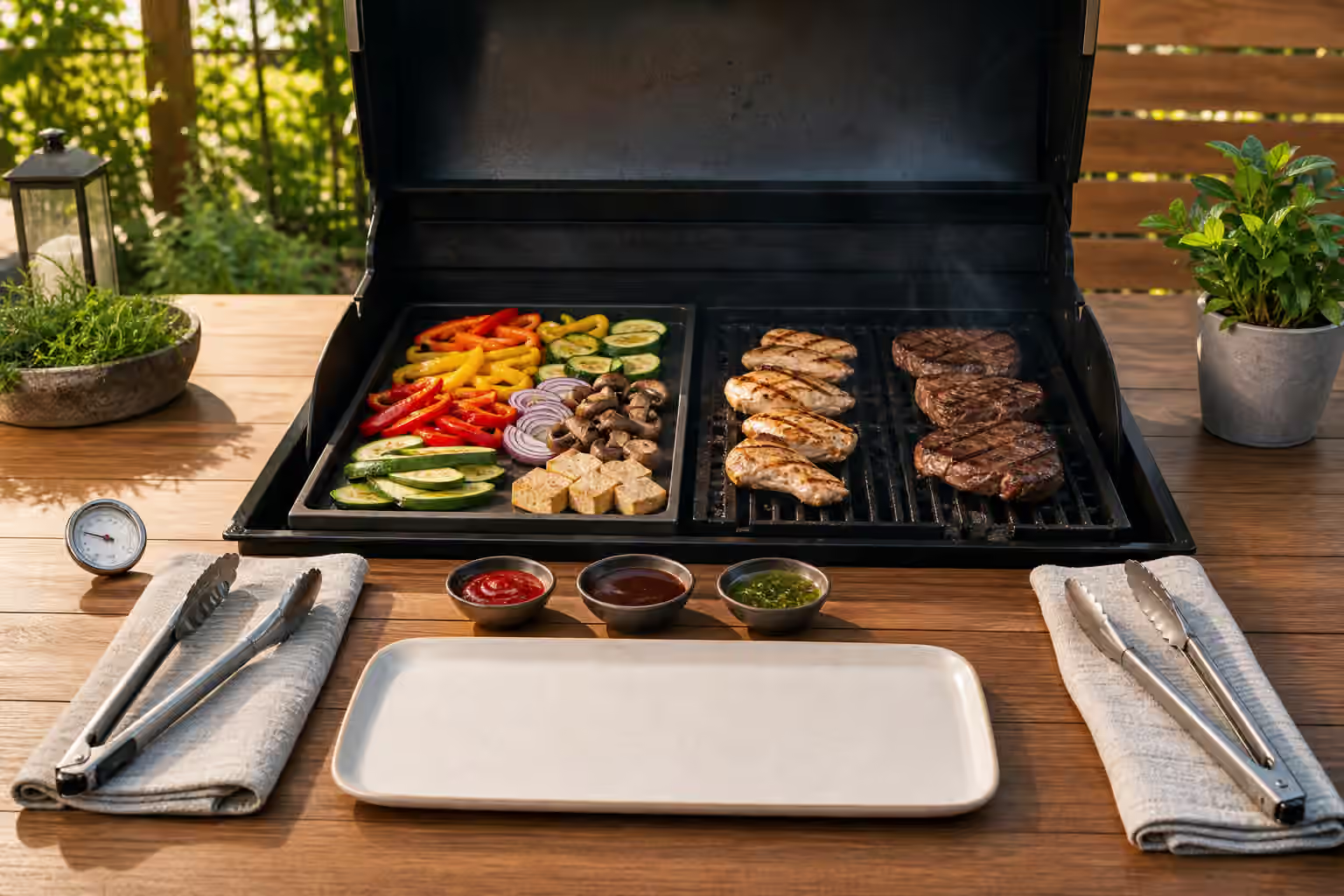
For fast direct grilling, lump can be excellent because it builds heat quickly and responds when vents open. Steak, chops, skewers, sturdy vegetables, and quick seafood may benefit from that lively fire, provided there is still an escape zone. Two-Zone Grilling remains useful even with hot fuel. A cooler side prevents one strong coal bed from turning every decision into a race.
For controlled indirect cooking, briquettes often make the map easier. A bank of briquettes on one side of a kettle gives steadier heat for chicken, roasts, ribs, or bread. The cook can use a drip pan in the open space and know roughly how the fuel will settle. That does not mean lump cannot be used for indirect grilling. It means lump asks for more attention to piece size, coal placement, and vent adjustment.
For smoking, either fuel can work if the smoke wood is restrained and airflow is clean. A common mistake is to blame the charcoal when the real issue is too much wood, wet fuel, poor draft, or a dirty cooker. Smoke Flavor Without Bitterness is the better starting point when the food tastes acrid. Charcoal is the heat source. Wood chunks or chips are seasoning. Treat them differently.
Mixing fuel is normal
There is no rule that a cook must choose one fuel for life. A base of briquettes can provide structure while a smaller amount of lump adds quick heat. A few pieces of lump can wake up a fading bed. A small chimney of briquettes can stabilize a live-fire cook that is running out of coals. Mixing fuel makes sense when each part has a job.
The danger is mixing without a plan. If a cook dumps a random pile of lump onto a delicate low cook, the fire may spike. If a cook adds unlit briquettes late in a short cook, they may not catch in time to help. If a cook adds too many wood chunks because the fire looks plain, smoke can become the loudest flavor. Fuel changes should be small enough to read. Outdoor cooking improves when adjustments are observable.
Storage changes performance
Charcoal is not fragile, but it is not immune to storage. Damp fuel lights poorly, smolders more readily, and makes the cook work harder before food appears. Bags stored open in humid corners, garages, sheds, or uncovered patios can collect enough moisture to change the start. Keep fuel dry, close bags, and avoid letting charcoal dust become the main ingredient in a chimney.
The lighting guide, Charcoal Lighting Without Lighter Fluid , matters here. A chimney starter can only do so much if the fuel is wet, packed too tightly, or buried under dust. Lump may need sorting so tiny pieces do not block airflow at the bottom of the chimney. Briquettes may need enough time for the top layer to catch. A clean start is part of fuel choice.
Ash and airflow decide the finish
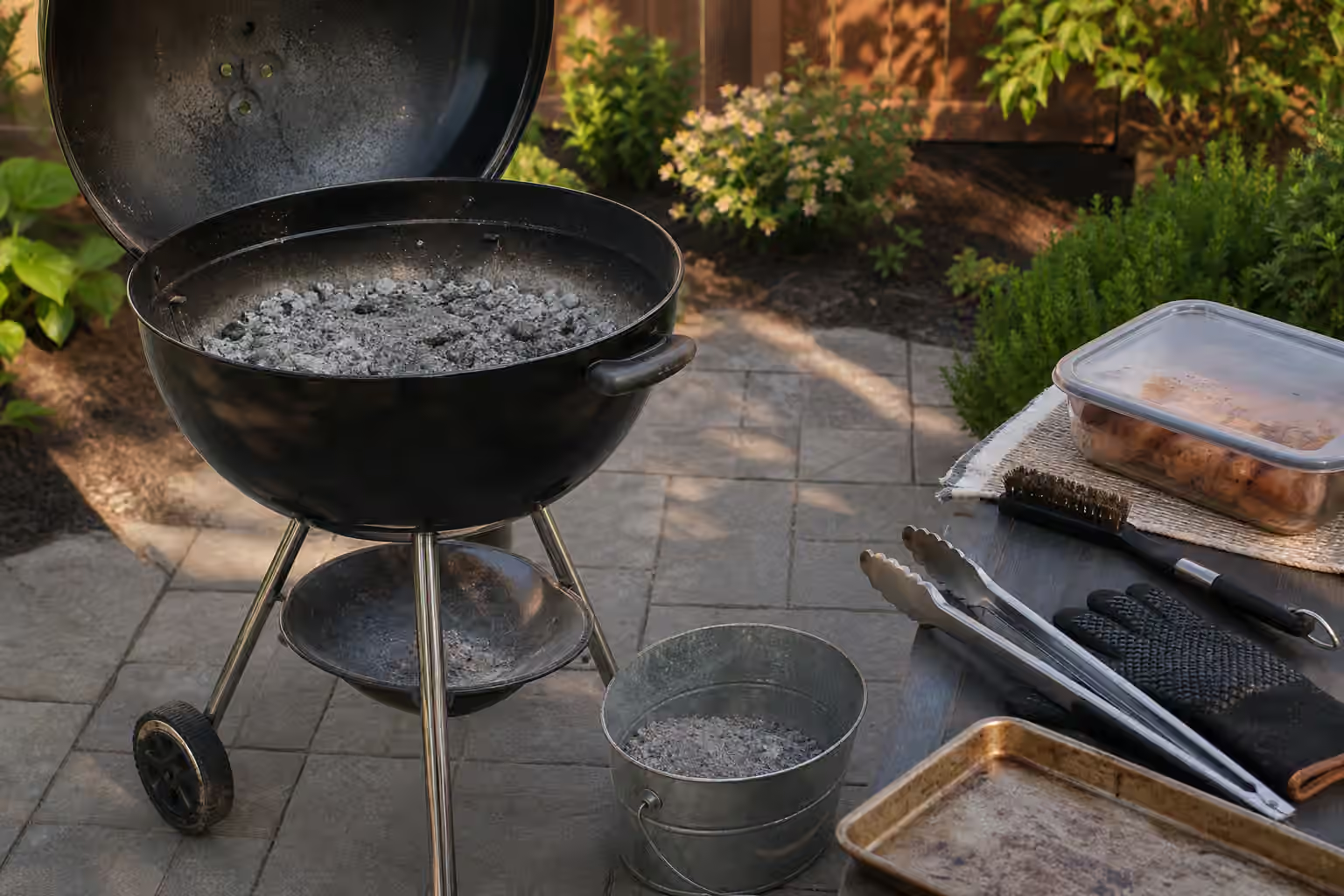
Briquettes generally create more ash than lump, and ash can choke a charcoal fire if the cooker has limited space below the charcoal grate. On a long cook, ash management may matter as much as the original fuel. If the grill slowly loses heat even though fuel remains, the lower vents or coal grate may be buried. If the fire smells stale, airflow may be restricted. If the cook keeps opening the lid to rescue the fire, the fuel plan was not matched to the cooker.
Lump often creates less ash but can leave irregular pieces that fall through grates or burn away faster than expected. A basket, charcoal rail, or tighter coal grate can help keep the fire organized. None of these tools replaces attention. They simply keep the fuel where the heat map needs it.
Choose by repeatability, not identity
The best charcoal is the one that makes the cook more repeatable for the food at hand. If the goal is a calm rib cook on a kettle, briquettes may be the easier partner. If the goal is quick high heat for skewers or steak, lump may make the fire feel alive. If the goal is learning, choose one fuel for several cooks and write down what changes. Switching fuel every time makes heat control harder to understand.
Charcoal cooking becomes less mysterious when fuel is treated as a tool rather than a badge. Briquettes give structure. Lump gives responsiveness. Wood gives smoke flavor in small, deliberate amounts. Air gives all of them life. The food does not care which fuel sounded more impressive in the bag. It responds to heat, time, smoke, and the cook’s ability to adjust without panic.