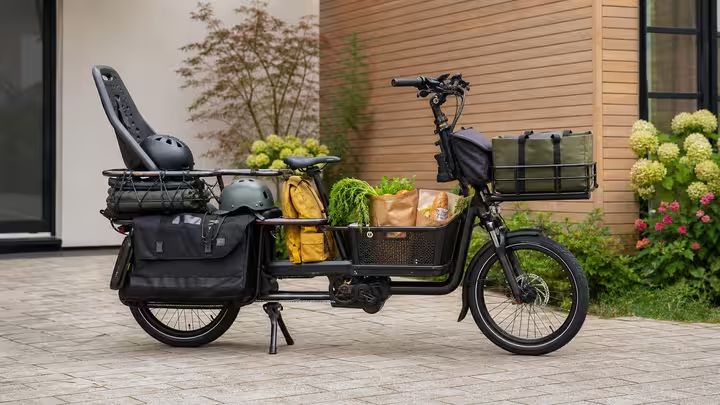
The most tempting cargo-bike mistake is treating empty space as permission. A long rear deck, a big front box, a roomy basket, or a pair of deep panniers can make a bike look ready for anything. The useful question is smaller and less exciting: what parts of this bike are actually rated to carry the load, and can the rider still start, steer, stop, park, and unload it calmly?
Payload math is not about turning every grocery run into engineering homework. It is about noticing that a cargo bike is a system. The frame has a maximum load. The rear rack may have its own rating. A front basket may have a different one. A child seat, trailer hitch, kickstand, tire, wheel, and brake setup all carry different kinds of stress. The motor may make the bike feel powerful, but it does not make weak hardware stronger.
Start with total system weight
Many bikes describe a maximum total weight or maximum system weight. That number may include the rider, bike, cargo, accessories, battery, passenger seat, child, lock, bags, and anything else attached. It is easy to think of cargo as only the groceries, but the bike does not feel categories. It feels weight. A heavy lock, a large child seat, winter clothing, a laptop bag, and a full water bottle all count.
The safest way to use the number is conservatively. If a bike is already near the limit with the rider and everyday accessories, the remaining cargo margin may be smaller than the size of the rack suggests. If two riders share one bike, the payload plan may change with the rider. If a child grows, last year’s passenger setup may no longer fit the same margin. The point is not embarrassment or blame. It is making the load visible before the bike has to explain it through wobble, brake fade, tire squirm, or a stand that suddenly feels weak.
Separate the bike rating from the rack rating
A total bike rating does not automatically mean every part of the bike can carry that amount. The rear deck may be rated for one load, the side rails for another, the front basket for much less, and a child seat for a specific passenger range. A frame can be strong while an accessory mount is not the right place for a heavy box. A rack can be rated for cargo but not for a passenger. A basket can hold bulky light items but become unsafe with dense weight.
Read the markings and manuals before building the habit. If the accessory came with small hardware, spacers, or brackets, those details matter. If a rack bolt is missing, a mount is cracked, a weld looks damaged, or the rack moves when pushed by hand, do not solve that with hope or an extra strap. Straps can help cargo stay quiet, but they are not a repair for structural uncertainty.
Put dense weight low and quiet
Payload math is not only arithmetic. It is also placement. A small bag of canned food can be harder to manage than a larger bag of paper towels because dense weight changes handling. Low panniers usually behave better than a tall stack on a rear rack. Balanced side loads are easier than one heavy bag swinging from one side. A front basket can be convenient, but heavy front loads can change steering quickly.
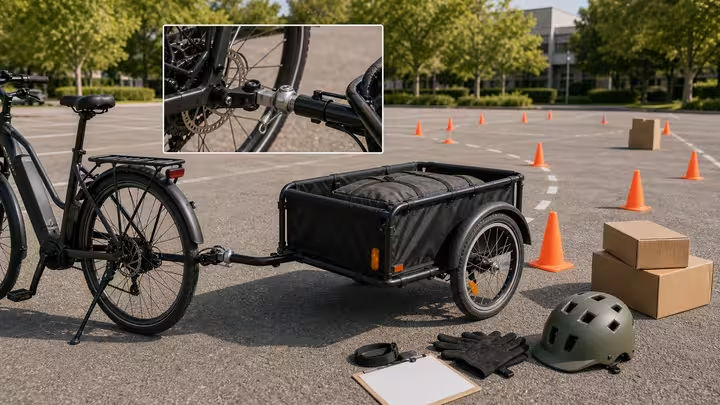
Before carrying anything valuable, fragile, or living, practice with harmless weight. Books, folded towels, water bottles, or sealed bags can teach you how the bike starts, turns, brakes, and goes onto the stand. The lesson may be that the bike is fine, or it may be that the load needs to move lower, split between sides, shrink, or stay off that route. The Grocery Hauling Without Wobble guide is a good next stop when the load is ordinary shopping rather than a passenger or large object.
Let tires and brakes vote
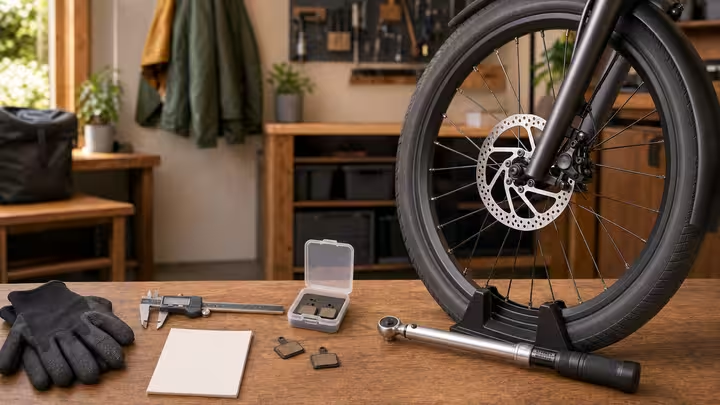
Cargo makes tires and brakes more important. A tire that felt acceptable unloaded may squirm with weight, lose air faster, or sit below the pressure needed for that load. A brake that felt fine on a flat solo ride may feel weak on a wet downhill with groceries. E-bikes are often heavier than acoustic bikes, and cargo e-bikes can make that difference large enough to change stopping distance and heat.
Use the tire pressure range and the bike or tire maker’s instructions. Do not exceed marked limits, and do not assume the highest number is always best. The right pressure depends on tire size, load, surface, comfort, and the manufacturer’s guidance. If the bike feels vague, bottoms out, rubs, pulses, squeals, or needs more lever pull than usual, treat that as information. The Tire Pressure and Puncture Readiness and Brake Pad Wear and Shop Boundaries guides help keep those checks grounded.
Passenger loads deserve stricter rules
Passenger carrying is not just heavier cargo. A child or adult passenger moves, reacts, leans, climbs on and off, and depends on hardware that must fit the person and the bike. The seat, footrests, rails, handholds, helmets, wheel guards, and clothing management all matter. Passenger setups also depend on local rules and manufacturer instructions, which can vary by bike and accessory.
Do not use a cargo deck as a passenger seat unless the bike and accessory maker say it is designed for that use. Do not rely on a crate, cushion, or improvised strap to solve a missing passenger system. Do not let a child climb onto a loaded bike before the bike is stabilized and the loading sequence is rehearsed. The Child Seat and Passenger Readiness guide is intentionally conservative because passenger confidence should come from fit, ratings, practice, and calm loading, not from a photo of someone else’s setup.
The kickstand is not the frame
Many cargo riders learn this the awkward way. A stand that holds an empty bike may not be meant to hold a child climbing, a heavy grocery load swinging, or a bike on a sloped surface. Some cargo bikes have strong center stands, but even then the surface, technique, and hardware condition matter. A weak stand can make loading feel safe until the moment weight shifts.
Stabilize before packing. Choose a flat place, keep a hand on the bike when needed, and load dense items first in the position where they will ride. If the bike rocks, creeps, tips, or twists while stationary, do not treat that as normal. Revisit the load, the surface, or the stand. The Cargo Bike Stand and Loading Safety guide gives this part the attention it deserves because many mistakes happen before the wheels move.
Make the margin a household habit
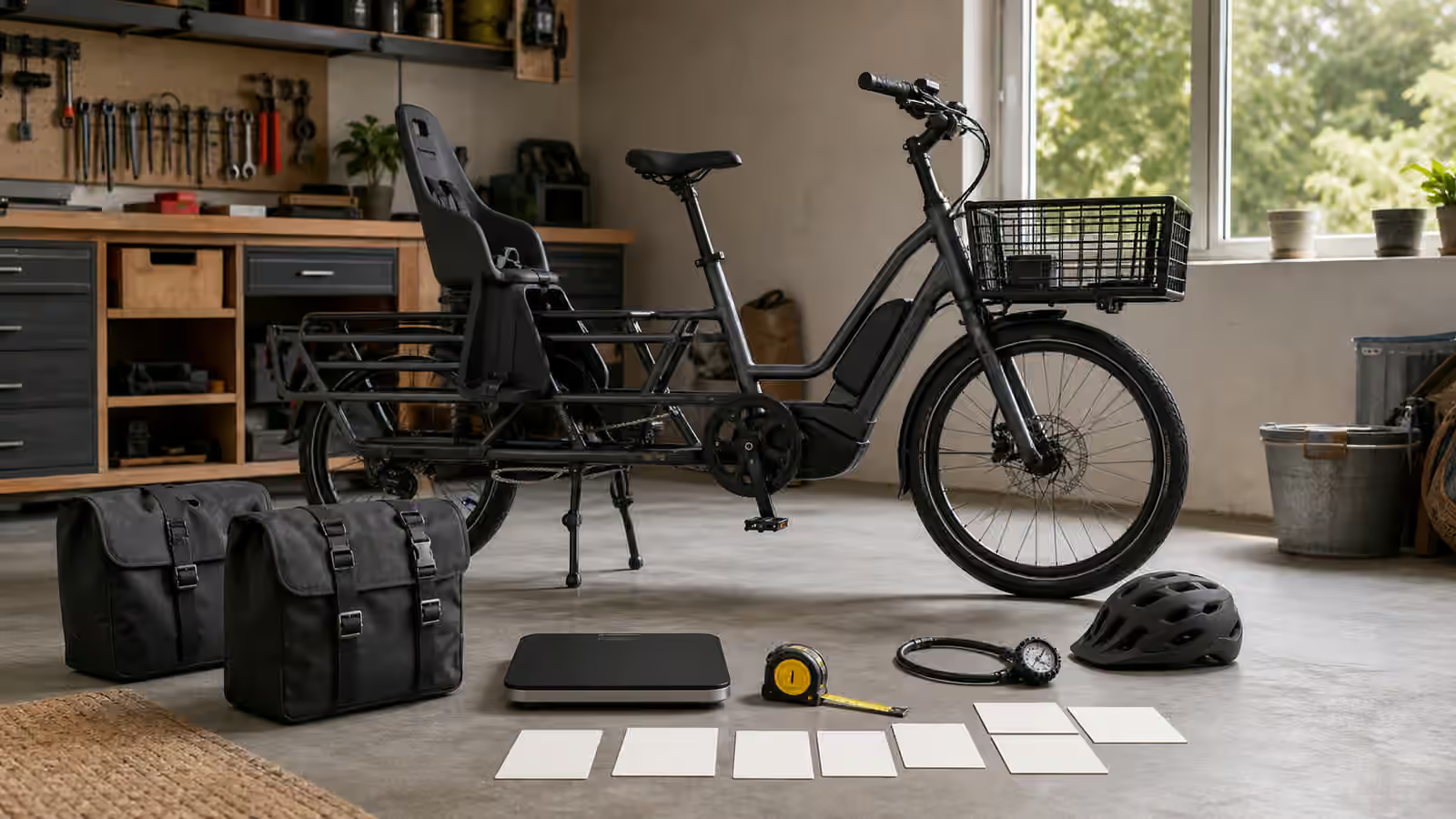
Payload planning becomes easier when the common loads are known. Weigh the school bag once. Notice how much the weekly grocery run usually adds. Keep the heavy lock in the same place. Know which pannier gets the dense items. If two adults use the bike, agree on the cargo limit for the routine ride rather than leaving every decision to the person rushing out the door.
The goal is not to use every pound of a rating. The goal is a bike that still feels ordinary when loaded. If the bike becomes hard to walk, hard to park, slow to stop, vague in corners, or stressful on the stand, the load is already teaching you something. Respect that lesson early. A cargo e-bike earns its place by making errands calmer, not by proving that a single ride can carry the entire house.
For related planning, use the Cargo Setup Picker when comparing accessories, then read Pannier, Basket, or Crate and Front-Load vs. Rear-Load Handling when the load placement itself is the question.