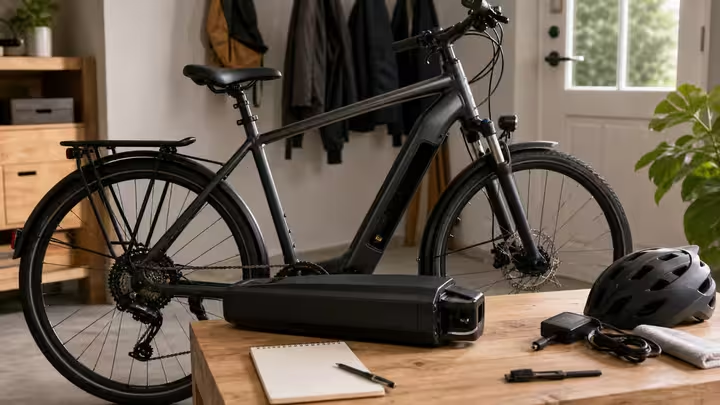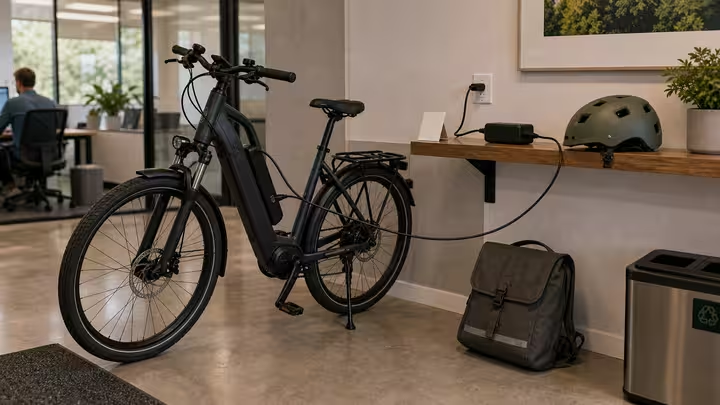
Travel makes e-bike routines less obvious. At home, the charger has a place, the lock habit is familiar, the battery temperature is known, and the route has been tested. In a hotel, guest room, vacation rental, friend’s garage, or rented cabin, every one of those assumptions can change. The outlet may be in the wrong place. The host may not allow indoor bike storage. The stairs may be narrow. The local path may have different e-bike rules. The safest plan is made before arrival, not after the battery is nearly empty.
This guide is for ordinary travel with a personal e-bike or rented e-bike, not for air transport rules or battery shipping. Those rules can be strict and carrier-specific. The practical lodging question is narrower: can the bike be stored and charged with permission, clear exits, the right charger, sensible surfaces, and enough route margin that the rider is not bargaining with an unfamiliar building?
Ask before the trip depends on it
Do not assume that lodging allows e-bikes indoors, batteries in rooms, charging in garages, or bikes in elevators. Hotels, rentals, campuses, ferry cabins, resorts, and guest houses may have their own rules. Some hosts worry about floors and walls. Some buildings have fire policies. Some storage rooms are locked overnight. Some places allow ordinary bicycles but not battery charging.
Ask specific questions before arrival. Where may the bike be stored? Is charging allowed? Is there a hard clear surface near an outlet? Are there stairs, narrow halls, elevators, or outdoor racks? Is the bike allowed through the lobby? Is there a place to dry wet gear? Vague permission can become conflict at check-in. A short message before booking or arrival is less awkward than negotiating with a loaded bike in a doorway.
Bring the correct charging habit with you
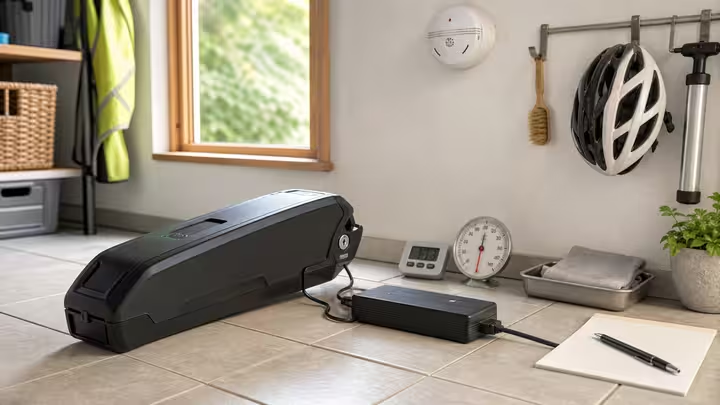
Travel is not a reason to use mystery adapters, worn extension cords, or a charger borrowed from a different bike. Use the charger specified for the battery. Inspect the cord and plug. Keep the charger ventilated according to instructions. Do not charge on a bed, couch, pile of towels, carpeted corner, paper stack, or cluttered luggage. Do not run a cord across an exit path where someone can trip or yank the battery.
The Battery Care Planner applies away from home exactly because travel makes improvisation tempting. If the pack is damaged, unusually hot, swollen, cracked, submerged, giving off an odd smell, or behaving strangely, the answer is not to charge it in a hotel room and hope. Stop using it and seek qualified guidance.
Protect exits, floors, and other people
Lodging spaces are shared even when the room is private. A bike leaned in a hallway can block evacuation. A charger cord across a doorway can trip a housemate. Wet tires can mark floors. Chain grime can transfer to bedding or walls. A heavy bike can damage trim when carried up stairs. These small frictions are why some hosts ban bikes after bad experiences.
Make the bike easy to live near. Use the entry area if it is allowed and clear. Protect floors without creating a fire or trip hazard. Keep exits open. Dry wet gear away from beds and heaters. Do not park the bike where housekeeping, family members, or other guests must work around it. The Apartment Storage and Charging guide has similar logic, but lodging adds the need to be a temporary guest.
Check storage before relying on removable batteries
A removable battery can make lodging easier because the bike may stay in a garage, rack area, or vehicle while the battery comes inside. That only helps if the battery can be carried and charged properly. A heavy pack, awkward stairs, hot room, or rule against battery charging can change the plan. The empty bike still needs a lock and a weather decision.
If the bike remains outside or in a shared storage room, use a lock plan that matches the stop. Remove accessories when appropriate. Record the location. Do not leave the charger with the bike if it can be stolen or damaged. The Removable Battery Carrying and Contacts guide covers the handling side, while Lock Risk Checklist helps decide how much risk the storage situation carries.
Route margin matters more in unfamiliar places
A travel ride often starts with optimism. The route looks short, the weather seems fine, and the map does not show the awkward hill, trail ban, bridge crossing, ferry timing, road shoulder, or secure parking problem. Build more battery and time reserve than you would at home. Unknown surfaces, wrong turns, wind, sightseeing stops, and detours can consume range faster than expected.
Scout the first route conservatively. The Route Scouting for Low-Stress Streets habit is especially useful when you do not know local traffic behavior. The fastest road to the beach or trailhead may be unpleasant with a loaded rental bike. A calmer route may preserve the trip even if it adds minutes.
Respect local access and building rules
Travel can put a rider in a place where e-bike classes, trail access, sidewalk rules, park rules, helmet expectations, or throttle permissions differ from home. Do not rely on assumptions from another jurisdiction. Check current local sources, signs, rental shop guidance, posted path rules, and lodging rules. If the bike is rented, ask how the specific bike is classified and where it may be used.
This is not only about avoiding a fine. It is about avoiding conflict with pedestrians, staff, trail users, hosts, and other guests. The E-Bike Class, Throttle, and Speed Guide gives the vocabulary, but the travel habit is simpler: do not ride where you have not confirmed that the bike belongs.
Plan for checkout morning
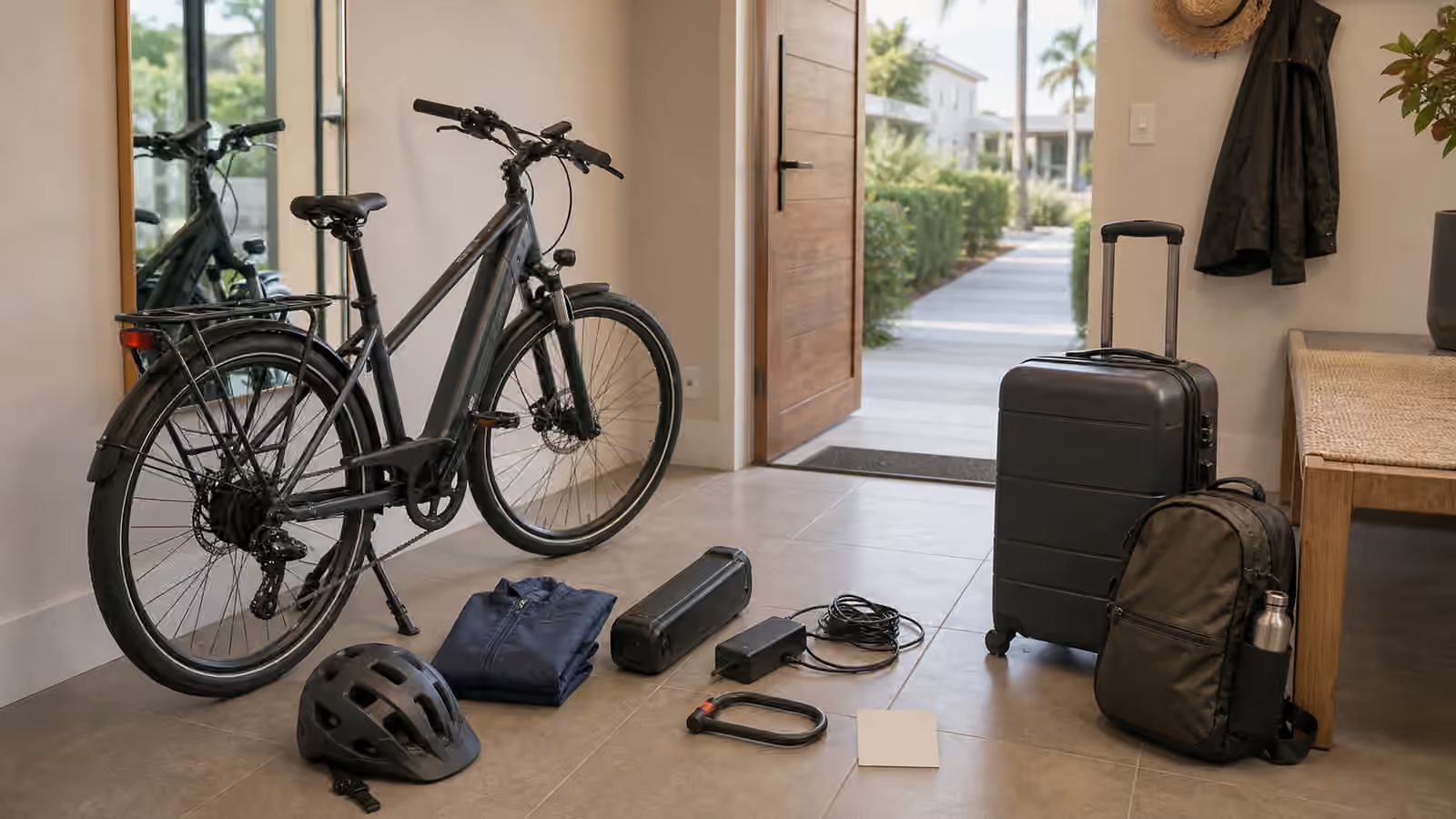
Checkout compresses every weak habit. The charger may be behind luggage, the battery may not be full, rain gear may be wet, the bike may be locked in a storage room that opens late, or the route to the station may be hillier than expected. Pack the e-bike system the night before. Put the charger where it will not be forgotten. Confirm the lock key, battery, helmet, and bags. Check whether the bike must leave by a certain door or time.
If the bike arrived by car rack, connect the lodging plan to Car Racks and Vehicle Transport . Battery removal, rack straps, weather exposure, and the arrival inspection all return on departure day. A travel ride that ends with a rushed rack load in rain can undo a careful week.
Leave the place easier for the next rider
Good travel charging is partly reputation management. Hosts and hotels notice scorch marks, blocked halls, muddy tires, scratched walls, and cords left in walkways. They also notice guests who ask, protect surfaces, keep exits clear, and leave no trace of drama. The next rider benefits when the current rider treats the space well.
A lodging e-bike plan succeeds when it feels almost like the home plan: permission is clear, the charger is correct, the surface is sensible, exits are open, the battery has margin, the route is legal and calm, and checkout does not depend on memory. Travel adds uncertainty. The workshop answer is not to avoid travel. It is to carry the boring parts of the routine with you.