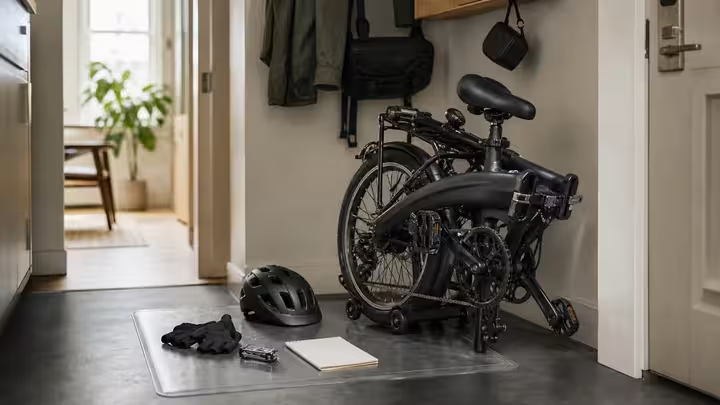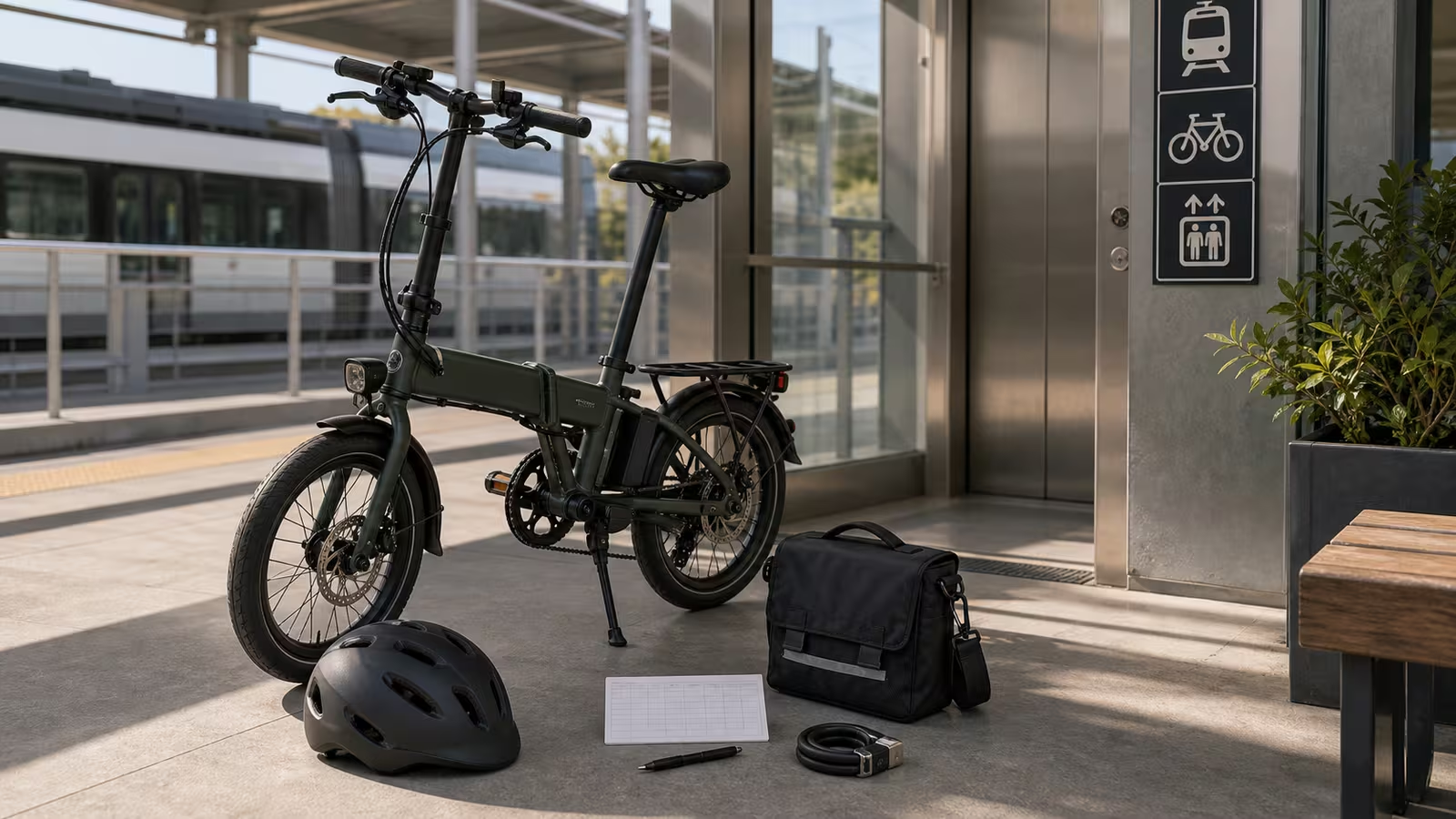
Transit can make an e-bike more useful by shrinking long distances, avoiding dangerous gaps, crossing bridges, handling bad weather, or giving a backup when battery reserve is tight. It can also become a mess if the rider discovers at the station that the bike is too large, the battery is restricted, elevators are down, peak-hour rules apply, or the only parking option is a weak rack. The transfer is part of the route, not an afterthought.
Read the agency policy before the first trip
Transit systems may distinguish between standard bikes, folding bikes, e-bikes, scooters, battery types, cargo bikes, trailers, peak hours, accessible areas, station size, and vehicle type. Some allow bikes only in certain cars. Some forbid charging. Some limit batteries. Some require folding bikes to stay folded. Some buses have racks that cannot carry heavy e-bikes.
Check the official source and date. Save the policy note or screenshot if allowed. Then check posted signs at your actual station. A systemwide page may not include a temporary closure, construction detour, or elevator outage.
Decide whether the bike rides or parks
Some transit connections work by bringing the bike aboard. Others work by parking at the station and riding another bike, walking, or using transit at the far end. Bringing the bike gives flexibility but requires rules, space, lifting, and courtesy. Parking reduces onboard stress but raises theft risk.
Use the Lock Risk Checklist for station parking. Stations can be high-risk because bikes sit for hours while owners are far away. A visible rack, strong lock, records, and accessory removal may matter more than the few minutes saved by parking near the door.
Check weight and handling
A folding e-bike can still be heavy. Can you fold it quickly without blocking people? Can you carry or roll it through gates? Can you lift it if an elevator is out? Can you hold it steady on a train or bus without hitting other passengers? Can you manage stairs if the plan fails?
Practice outside rush hour. A transfer that works in an empty station may be stressful in a crowd. If the bike is too awkward, consider station parking, a smaller bike, a different route, or using transit only on backup days.
Plan for elevators and access
Elevators, ramps, wide gates, and bike channels are not luxuries when an e-bike is heavy. Check where they are and what happens if they are out. Some systems provide outage alerts. Some stations have elevators only at one entrance. Some platforms require tight turns. A cargo bike may not fit at all.
Accessibility infrastructure belongs to many users. Do not block elevator doors, accessible paths, or platform edges with a large bike. If the station is crowded, wait for space or use another plan. Transit etiquette is part of e-bike etiquette.
Protect battery and charger boundaries
Do not charge on transit property unless it is explicitly allowed and appropriate. Follow battery transport rules. If the battery is removable, know whether agency rules treat it differently when removed. Keep the battery secure, dry, and within manufacturer guidance. Do not bring a damaged, swollen, odd-smelling, unusually hot, wet, or behaving-strangely battery onto transit.
If battery range is the reason for transit, plan reserve on both sides of the trip. The station may be farther from the destination than expected, and detours can appear.
Time the transfer honestly
A multimodal trip includes locking, folding, elevators, ticketing, waiting, crowded cars, unfolding, and the ride from the station. Do not compare it to a perfect direct ride. Compare it to the real alternatives. A slower but calmer transfer may still be excellent if it avoids a high-stress road or a battery-draining hill.
Test the route on a low-stakes day. Note the best entrance, rack, elevator, car location, and fallback. Then decide whether it belongs in the regular routine.
Keep weather in the plan
Rain changes station behavior. Wet floors, slippery platforms, dripping gear, fogged glasses, crowded shelters, and wet brakes all matter. A bike that is easy to fold dry may be awkward when wet. A station rack exposed to rain may make the return ride unpleasant. A transit backup that depends on carrying a soaked cargo bike through a crowd may not be realistic.
Build a wet version: which gear comes off, where the towel lives, what bag protects electronics, and when the ride switches to full transit.
Be predictable around people
On platforms and vehicles, move slowly. Keep pedals, bars, and bags from catching people. Do not swing a folding bike through a crowd. Let others exit before boarding. Avoid blocking doors, aisles, priority areas, and stairs. If someone is uncomfortable with the bike’s position, adjust without making it an argument.
Transit works best when the e-bike is treated as a shared-space object. Your convenience should not turn into someone else’s obstacle.
Save the connection note
Write down the policy link, station entrance, rack location, elevator plan, fare detail, peak-hour rule, bike-on-board rule, lock plan, and backup. Update it when the agency changes rules or construction appears. This note can turn an intimidating transfer into a repeatable route.
Transit and e-bikes can work beautifully together when the transfer is designed rather than hoped for. Check the rules, test the station, respect the space, and keep a backup.