A cargo e-bike can make the school run joyful, efficient, and ordinary. It can also become stressful fast if the first attempt happens on a busy morning with a half-fitted helmet, an overloaded backpack, a child who has never practiced sitting still, a school gate no one has checked, and a rider who is learning the bike under pressure. The school run deserves rehearsal because the load is precious and the deadline is real.
Begin with the school gate, not the bike
Start by naming the exact end point. Where does the bike stop? Is the drop-off on school property, a public sidewalk, a bike rack, a side street, or a walking zone? Are bikes allowed through the gate? Are there posted dismount zones? Does the school have rules about helmets, scooters, charging, or where families enter? Does the route cross a bus lane, car queue, crowded sidewalk, or narrow path at the busiest moment?
This is where local rules and school rules matter. A route that is comfortable on Saturday can be chaotic at 8:05 on a rainy Tuesday. Visit once without the child if possible. Watch where cars queue, where buses swing, where pedestrians cluster, where other riders dismount, and where a loaded cargo bike can stand without blocking people. The best school-run plan often includes walking the last short segment.
Practice the bike without the passenger
Before carrying a child, load the bike with harmless weight and practice starting, stopping, turning, signaling, using the stand, and walking the bike. Use books, water containers, or bags that approximate the location of the load without creating a passenger risk. Notice how the bike behaves when you look over your shoulder, brake downhill, push from a stop, turn tightly, or dismount.
Do this on the actual route only when conditions are calm. If the route includes hills, curb ramps, narrow bollards, uneven pavement, gravel, or crowded paths, each of those details matters. E-assist can make a heavy bike easier to move, but it does not remove the need for balance, braking distance, and thoughtful path choice.
Fit the passenger system conservatively
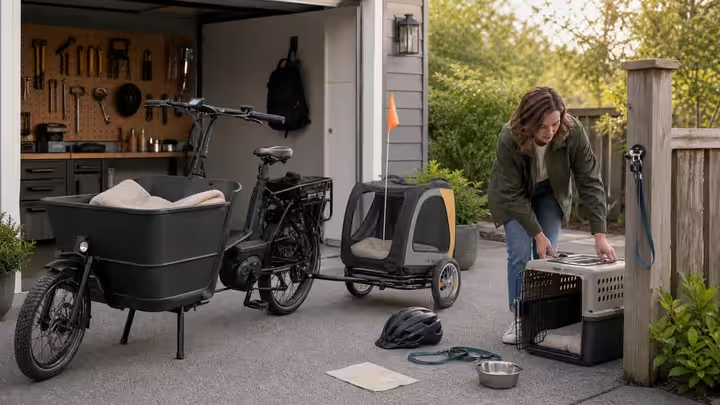
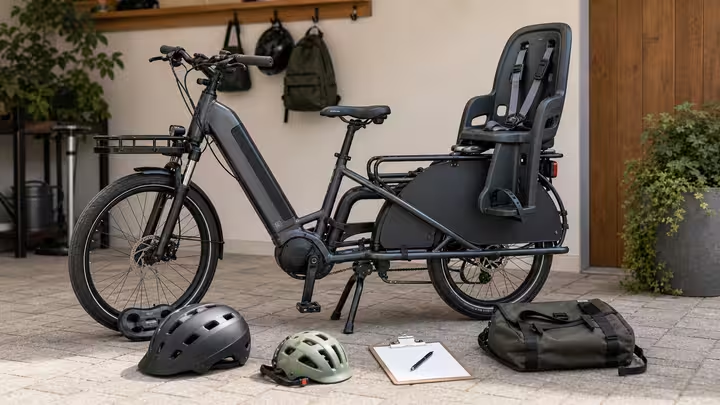
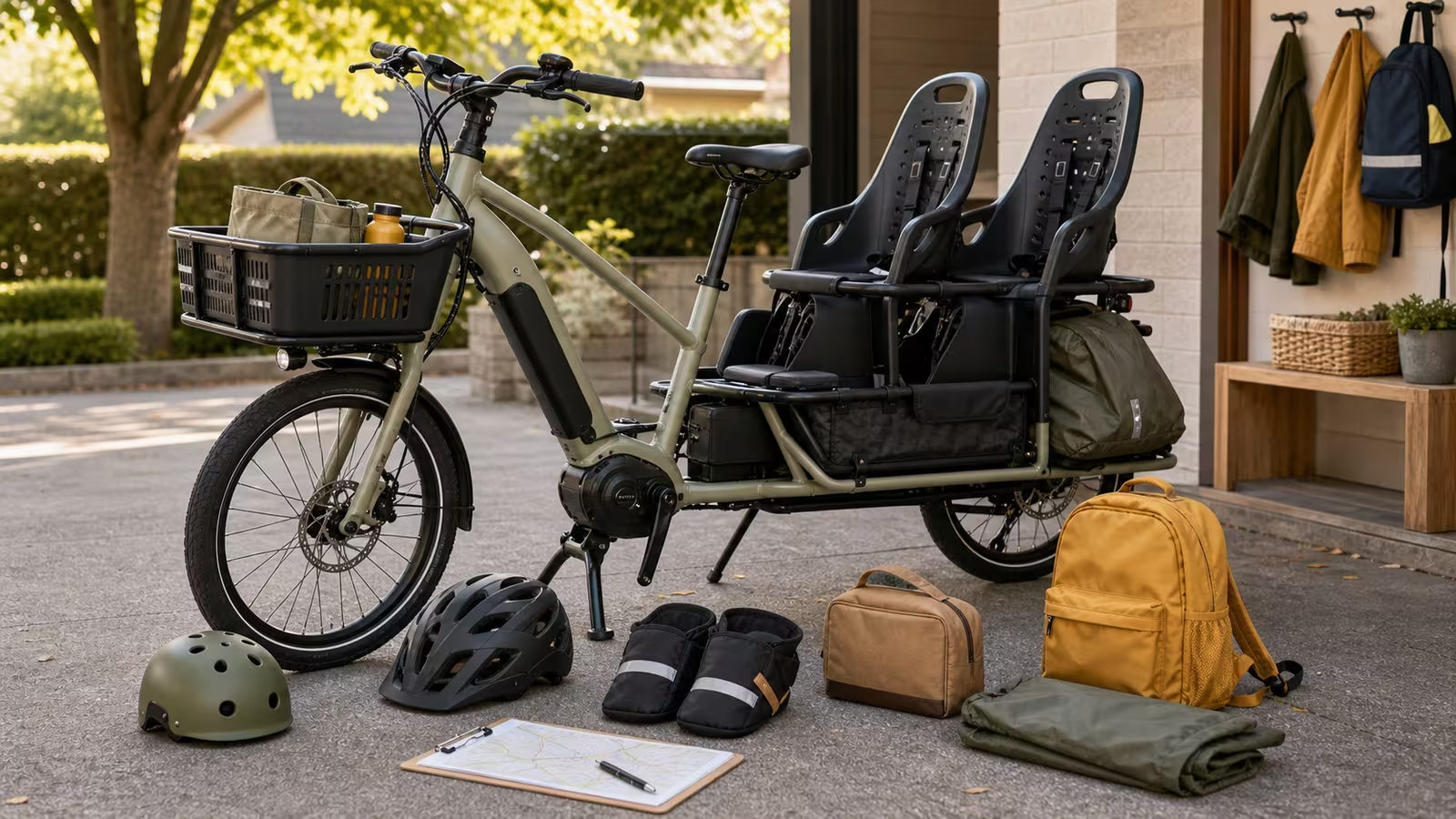
A child seat, longtail rail, trailer, foot guards, passenger bars, wheel covers, harness, rain cover, and helmet all need to fit together. Follow the instructions for each component and the bike. Check age, size, weight, mounting, foot protection, handholds, straps, and whether the accessory is approved for the model. Do not mix parts by guesswork when the question affects a passenger.
Helmet fit deserves its own calm moment. The child should know how the helmet feels, where the straps sit, and why it stays buckled. Passenger clothing also matters: loose scarves, dangling backpack straps, shoelaces, and open coats can move toward wheels or drivetrain parts. Build a pre-ride clothing check that is short, kind, and repeatable.
Teach stillness as a skill
Many school-run problems are not mechanical. They are behavioral. A child who leans suddenly, kicks the rider, unbuckles straps, waves an object, grabs a sibling, or drops a toy can change the ride. Practice passenger behavior before traffic. Use plain rules: feet stay where they belong, hands stay on the approved hold point, helmet stays buckled, no leaning, no grabbing wheels or bags, and no surprise exits.
Keep the rules few. Practice loading and unloading in the driveway or a quiet lot. The rider should control the bike before the passenger climbs on or off. The passenger should wait for a clear instruction. If the stand is unstable, the surface is sloped, or the bike feels hard to hold, solve that before the school morning. A good routine feels almost boring because everyone knows the sequence.
Choose a route with margin
The best cargo-bike school route is rarely the fastest line on a map. It is the route with fewer conflict points, calmer crossings, better sight lines, legal access, predictable surfaces, and a place to stop if the child needs help. A slightly longer route may be better if it avoids a tight merge, a busy car queue, or an awkward left turn. In some places the best move is to park two blocks away and walk in.
Use the Range Reality Planning logic even for short trips. Passenger weight, hills, cold, stop-and-go riding, and high assist can change battery use. Range may not be the main risk on a school run, but arriving low on charge can make the return or afternoon pickup stressful.
Make weather a morning decision tree
Rain gear for the school run includes the rider, the passenger, the backpack, and the arrival point. A rain cover that works in light rain may be unpleasant in wind. A child may overheat inside a cover on a warm wet day. A backpack may need a waterproof liner even if the passenger is dry. Wet brakes, slick leaves, and low visibility may change the route or cancel the ride.
Create a simple weather rule. Light rain with good visibility and a practiced route may be fine. Heavy wind, thunder, flooding, ice, or a child who cannot stay comfortable may trigger the backup plan. This is not failure. Family transportation works better when the backup is already allowed.
Build a loading order
The loading order should reduce chaos. Example: bike out, bags secured, lights on, rider gear on, passenger helmet checked, passenger seated and secured, quick brake feel, route begins. At arrival: stop in the chosen place, stabilize the bike, passenger waits, rider unbuckles, passenger steps down on command, bags come off, bike moves out of the flow. Your exact order may differ, but it should be written by practice, not by panic.
The Cargo Setup Picker can help sort the gear choice, but the real proof is the morning sequence. If loading requires lifting the bike, arguing with straps, hunting for gloves, or balancing bags on the passenger, the system needs another pass.
Respect the people around the school
School zones are crowded by design. Children move unpredictably, adults are distracted, drivers make poor last-minute choices, and sidewalks can fill suddenly. Ride slowly, dismount where expected, avoid cutting through pedestrian clusters, and do not use the cargo bike’s size to force space. Bells and voices should be early and polite. The goal is to become a predictable part of the school rhythm.
This is also a good place for the Reality Check Desk habit: do not rely on viral claims about what is allowed at schools, in parks, or on sidewalks. Check current sources, signs, and the school itself.
Reset for pickup
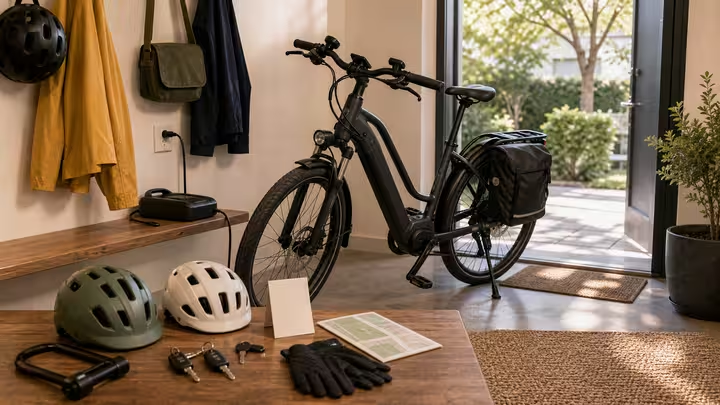
After drop-off, reset the bike for pickup. Charge if needed. Dry wet covers. Remove food scraps. Check straps. Put the passenger helmet where it will not be forgotten. Note any conflict point while it is fresh. Afternoon pickup may have different traffic, light, weather, and child energy than morning drop-off.
A school-run cargo bike routine succeeds when it becomes uneventful. The child knows the sequence, the rider knows the route, the gear has a place, the school gate is understood, and the backup mode is allowed. Practice before the passenger, add the deadline only after the loop is calm, and keep improving one small point at a time.