School cargo is rarely one neat box. It is a backpack with loose straps, a lunch bag that should stay upright, a library book, a wet jacket, a water bottle, a project board, sports gear, and sometimes an instrument case that feels too precious for a bumpy route. Add a child passenger, a school gate, and a deadline, and the cargo setup needs to be calm before the morning starts.
Sort the load the night before
Morning is a poor time to invent cargo placement. Sort items into categories: passenger, backpack, lunch, instrument, sports gear, rain layer, and fragile items. Decide what goes low, what stays upright, what needs padding, what must come off at school, and what cannot be crushed. If the load changes daily, keep the pattern stable and adjust only the item sizes.
Loose straps are the first problem to solve. Backpack straps, drawstrings, shoelaces, and jacket ties can move toward wheels, chain, belt, brakes, or pedals. Tuck, wrap, clip, or bag them before the bike leaves.
Keep instruments protected and boring
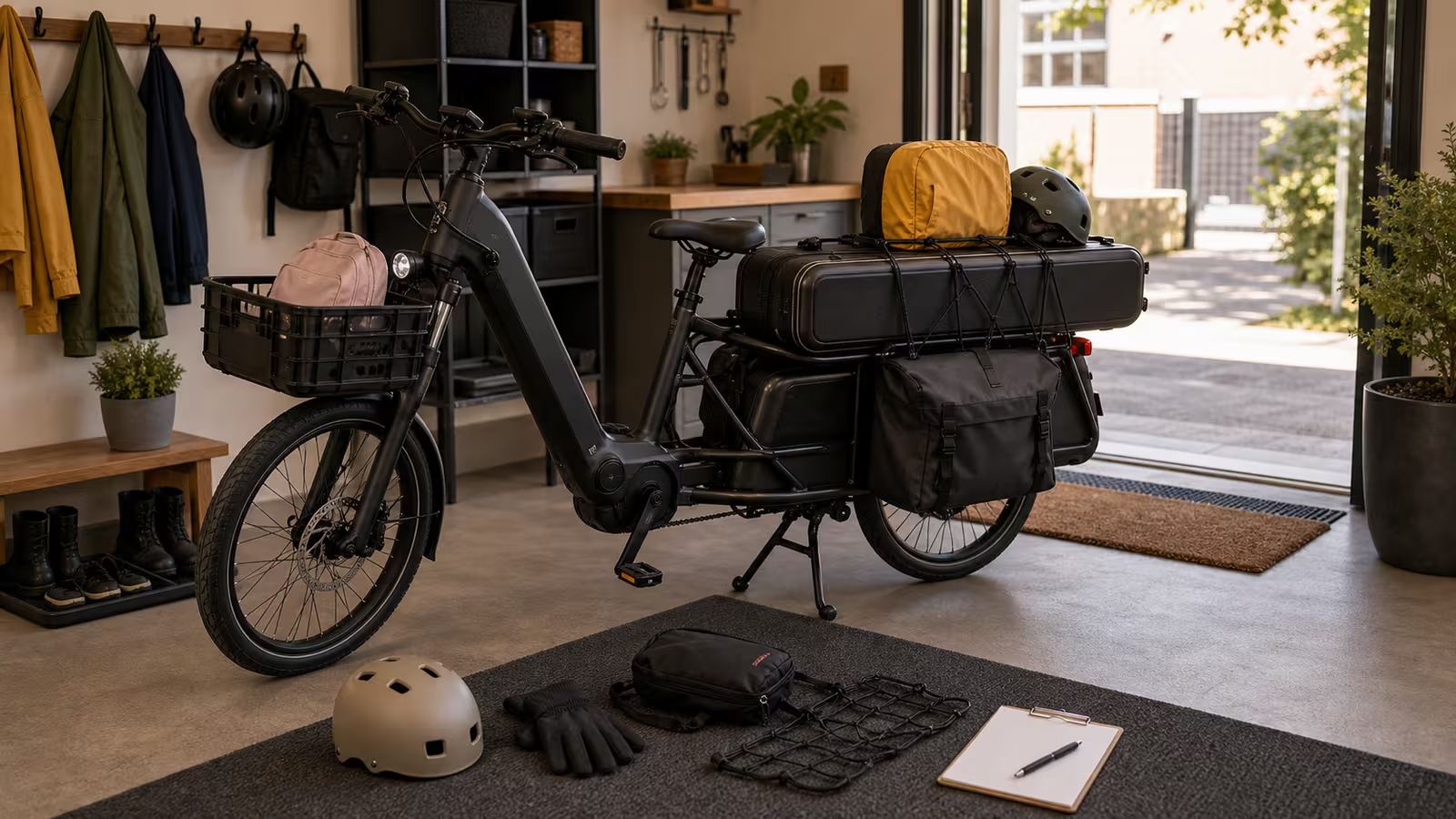
An instrument case should not bounce, swing, press into a passenger, or sit where a fall would crush it. Use the case designed for the instrument and add weather protection if needed. Long narrow cases may be awkward on a rear rack. Larger cases may need a trailer, front-loader, or another transportation mode. Do not force an expensive or fragile object into a cargo setup that feels unstable.
If the instrument is temperature or moisture sensitive, check whether biking in heat, cold, or rain is appropriate. This is not only a bike question; it is an object-care question.
Do not crowd the passenger
A child’s backpack should not push them forward, block handholds, interfere with foot protection, or tempt them to grab loose items. If the child rides on the bike, cargo placement must leave the passenger position clean. The passenger should have the same simple script every time: sit, hands, feet, helmet, wait for the rider.
If the school load makes the passenger setup crowded, the system is not ready. Use panniers, a front rack, a trailer, a walking segment, or a split load.
Use bags that detach cleanly
School arrival is busy. Bags should come off without unthreading a puzzle. Panniers, trunk bags, or cargo nets need a routine. A bungee net can work, but loose hooks and cords can be hazards. Straps should be short enough to secure the load and not flap. If a bag must be carried into school by the child, make sure the child can remove it only after the bike is stable and the rider gives the cue.
Practice unloading at home. A child who learns the sequence at the door will do better at a crowded gate.
Check weather before packing
Rain turns paper, instruments, lunches, and backpacks into a protection problem. Use liners, covers, waterproof panniers, or a different mode when needed. A wet backpack may also become heavier and less pleasant to carry. In winter, cold can affect instruments, battery range, and passenger comfort. In heat, lunches and electronics may need timing or insulation.
The Rain Gear and Fenders guide covers the broader wet routine. School cargo adds more fragile items to that routine.
Keep lights and balance visible
School bags often ride high and rearward, exactly where rear lights and reflectors live. Check the loaded bike from behind and from both sides. If the light is blocked, move it to a visible mount. If one pannier is much heavier, repack. If the bike leans when walked, practice before adding the school crowd.
Use lower speed around the school. The load may be stable at home and still shift over speed bumps, curb cuts, or tight turns. School zones are not the place to discover a handling surprise.
Plan the return load
Afternoon cargo may differ from morning cargo. There may be artwork, wet clothes, a library stack, sports gear, or an instrument after practice. Keep an extra strap, tote, or cover if the return often expands. Also plan where the morning rain cover or jacket will be stored during the day.
If the return load cannot be carried safely, use a backup. A family cargo system should include honest no-bike days.
Write the packing pattern
When the setup works, write it down: backpack left pannier, lunch upright front basket, instrument flat in trailer, rain cover over top, rear light moved to rack, passenger area clear. Repeat the same pattern until it becomes boring. Boring is the goal.
School cargo succeeds when it does not compete with the passenger or the route. Keep items quiet, protected, visible, and easy to unload.
Teach the child the cargo boundary
If a child rides with the load, teach what they may and may not touch. They should not hold loose instrument straps, rescue a falling lunch bag, unhook a net, or adjust a backpack while the bike is moving. If something shifts, the script is simple: tell the rider, then wait. The rider stops in a safe place and fixes the load.
This boundary protects both the child and the object. It also prevents small cargo annoyances from becoming moving-bike problems. Practice the words at home so they are familiar before the school gate.
Keep a backup for awkward days
Some school days produce a load the bike should not carry: wet art projects, a large instrument, sports gear plus a passenger, or a tired child in heavy rain. The backup mode should be allowed. Practical family biking includes knowing when the cargo shape is wrong for the day.