Comfort problems often get blamed on the whole bike when the real issue is one contact point. A saddle that is a little too low, grips that make the wrists collapse, brake levers that sit too far away, pedals that do not suit the shoes, or a handlebar angle that pulls the shoulders forward can turn a useful e-bike into something the rider quietly avoids.
The motor can hide some discomfort because it reduces effort. It can also make discomfort easier to ignore until the ride becomes longer, colder, hillier, or more frequent. Touch-point comfort matters because repeatable riding is built from ordinary trips. If the hands go numb on the commute, the saddle feels punishing after fifteen minutes, or the brake lever is hard to reach in gloves, the bike has a practical problem even if the motor works perfectly.
Change one thing at a time
The fastest way to get lost is to change the saddle, grips, bar angle, lever reach, tire pressure, shoes, and bag position on the same afternoon. If the bike feels better afterward, you may not know why. If it feels worse, you may not know what to undo. Touch-point setup works better when one change is tested on a short familiar ride.
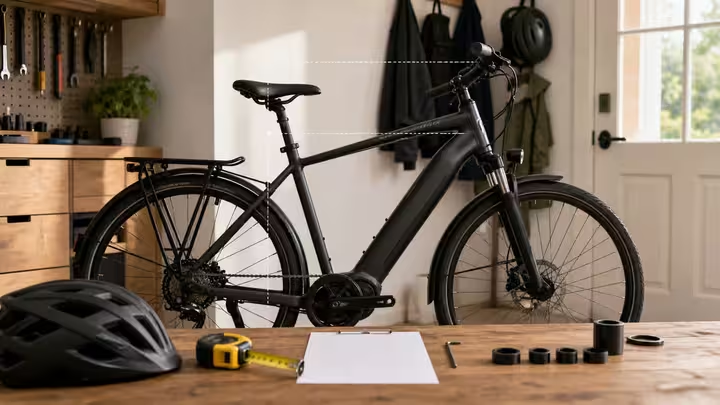
Use a simple note. Record saddle height, saddle angle if you changed it, grip position, lever angle, and what the ride felt like. The note does not need numbers for every part, though photos can help. The goal is to avoid the loop where a rider keeps adjusting from memory and eventually forgets the last comfortable position.
The saddle supports riding, not sitting still
A saddle can feel fine in the shop and annoying after twenty minutes. It can also feel strange in the driveway and acceptable on the road because riding posture changes pressure. Saddle comfort depends on shape, width, height, tilt, clothing, riding position, cadence, route surface, and how often the rider stops and starts. More padding is not always better. A very soft saddle can create pressure in new places, while a narrow performance saddle may not suit upright commuting.
Start with position before buying replacements. If the saddle is too low, the knees may work harder and the rider may sit with too much pressure. If it is too high, starts and stops can feel awkward, especially on a heavy e-bike. If the nose points too far up or down, the rider may slide or brace through the hands. Make small changes, tighten to specification, and test. If the bike carries passengers or cargo, remember that the saddle position also affects control at stops.
Hands reveal cockpit problems early
Hand discomfort can come from grips, wrist angle, handlebar width, lever position, road vibration, gloves, posture, or too much weight on the bars. E-bike riders sometimes stay seated and steady for longer distances than they did on ordinary bikes, which can make small cockpit issues more obvious. A grip that works for a short test ride may not work for a daily commute.
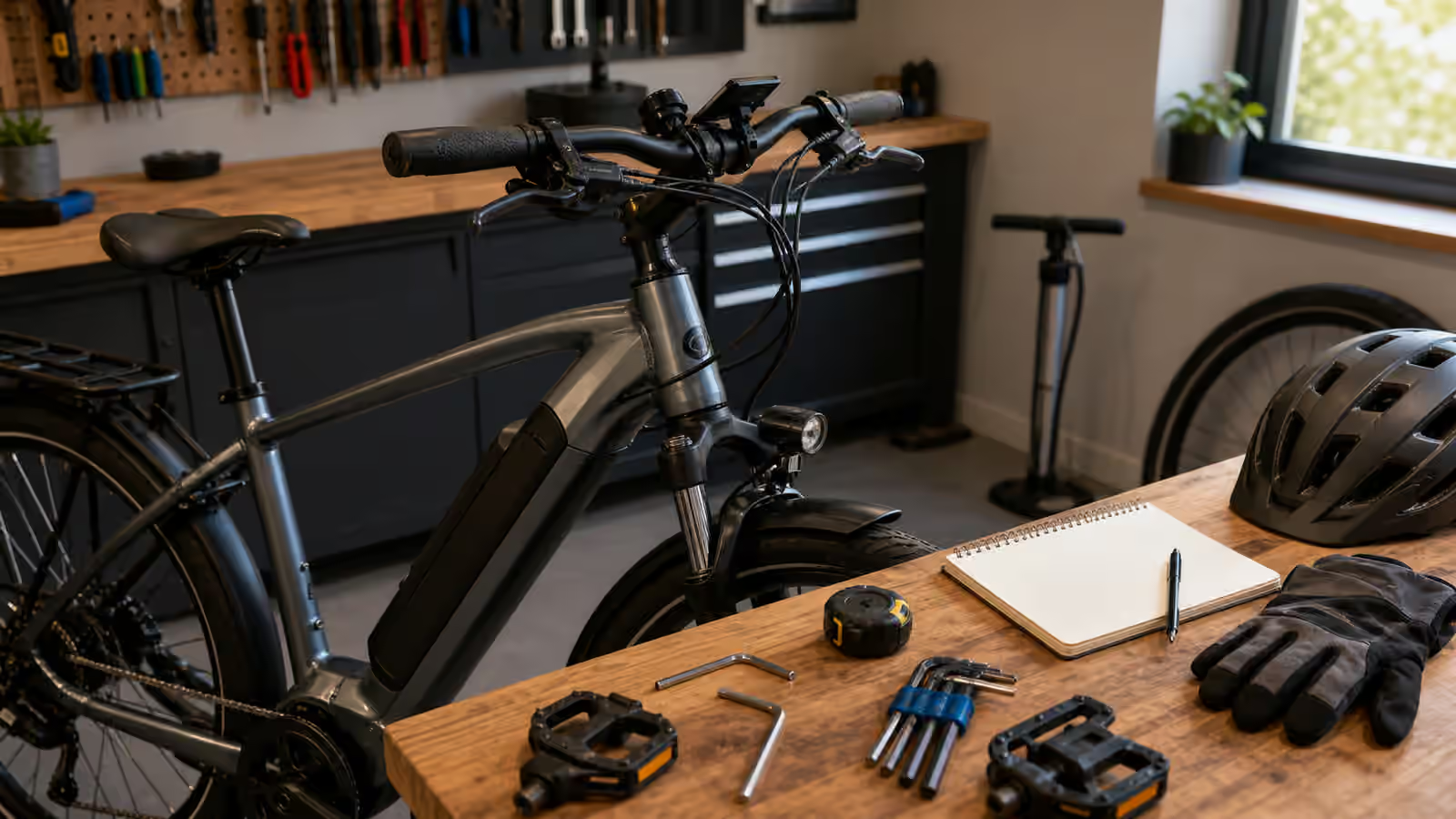
Look at the wrists when holding the grips. If they are sharply bent, the bar or grip angle may be asking for tension. If the palms feel hot or numb, pressure may be concentrated in one place. If gloves help, they may be part of the solution, but they should not hide a severe fit issue. Ergonomic grips can help some riders, but only if installed in a position that supports the hand rather than forcing it.
Brake lever reach is a control issue
Brake levers are not only comfort parts. A rider should be able to cover and squeeze the brakes confidently in normal riding posture, including with the gloves used in cold or wet weather. If the lever sits too far away, the rider may delay braking or shift the hand awkwardly. If the lever angle makes the wrist bend under pressure, braking can feel weaker than it should.
Some levers have reach adjustment. Some need a mechanic. Some should not be moved without understanding the brake system, cable or hose routing, and torque requirements. Do not improvise with brake controls. If braking confidence changes after an adjustment, stop and get it checked. The Brake Pad Wear and Shop Boundaries guide is a useful reminder that beginner confidence ends where brake uncertainty begins.
Pedals and shoes matter on utility bikes
Pedals are easy to ignore until a foot slips in rain, a shoe sole feels unstable, or a rider cannot find the pedal quickly at a stop. A practical e-bike pedal should match the shoes used on real trips. Office shoes, winter boots, sandals, and athletic shoes all interact differently with pedal shape and grip. Very aggressive pins may feel secure but can damage shoes or scrape shins. Very small or slippery pedals can make starts feel vague.
Foot position also affects comfort. If the rider pedals with the arch, toe, or ball of the foot without noticing, knee and calf sensations may change. There is no single universal stance for every rider, but there is value in noticing what your body is doing. If a change creates pain or instability, undo it and seek fit help rather than forcing adaptation.
Mirrors, bells, and phones should not crowd the cockpit
Comfort is partly about space. A handlebar full of accessories can make the grips feel shorter, force the hands outward, block the display, or make the brake levers harder to reach. A phone mount placed for constant attention can pull the eyes down. A mirror installed at the wrong angle can tempt the rider to hold the wrist strangely. A bell that is hard to reach may not get used when it matters.
Place cockpit tools around the riding position, not the other way around. The Mirrors, Bells, and Phone Mount Boundaries guide covers attention and communication, but comfort belongs in the same conversation. The best accessory setup is the one that lets the rider keep a relaxed grip and reach controls without searching.
Test comfort on the trip that matters
A spin around the block is useful, but it cannot answer every comfort question. Test the bike on the route that actually caused the problem, or on a shorter version of it. Include the same bag, jacket, gloves, hills, stops, and road surface when practical. A saddle that feels fine unloaded may feel different with a backpack. Grips that work on smooth pavement may not work on broken streets. Lever reach that feels fine barehanded may fail with winter gloves.
Use the Commute Comfort Audit when the discomfort is part of a larger pattern involving weather, lighting, cargo, storage, or arrival friction. Use Adaptive Fit and Mobility Conversations when mounting, balance, pain, control reach, or medical context makes ordinary bike-fit advice too thin.
Do not buy upgrades before naming the problem
Random comfort upgrades can become an expensive way to avoid diagnosis. A new saddle may help, but not if the old saddle was simply too high. New grips may help, but not if the brake levers are badly placed. A suspension seatpost may help some surfaces, but not if tire pressure, posture, or route choice is the main issue. Buy after naming the problem as specifically as possible.
The best touch-point setup is rarely dramatic. It is a bike that lets the rider relax the shoulders, reach the brakes, pedal without strain, look around without fighting the cockpit, and arrive with enough comfort to choose the bike again. Start with the contact points, change one at a time, and let the real route judge the result.
For purchase decisions, combine this with Test Ride Before Buying . A test ride should include touch-point attention because a bike that wins on motor power but loses at the saddle, grips, or levers may not become the bike you actually use.