An e-bike can feel easy before it feels predictable. The motor smooths hills, starts, wind, and tired legs, but it also adds timing. Power may arrive a moment after pressure on the pedals. It may fade when the rider stops pedaling. It may surge differently in a low gear than in a high gear. It may behave one way in eco, another in a stronger mode, and another again when the battery is low or the speed limit for assist is reached.
The answer is not to fear the motor. The answer is to practice until the timing is boring. A rider who knows when the bike helps, when it stops helping, and how gears change the feeling will make calmer choices on hills, at intersections, with cargo, and around other people.
Learn the bike at walking speed
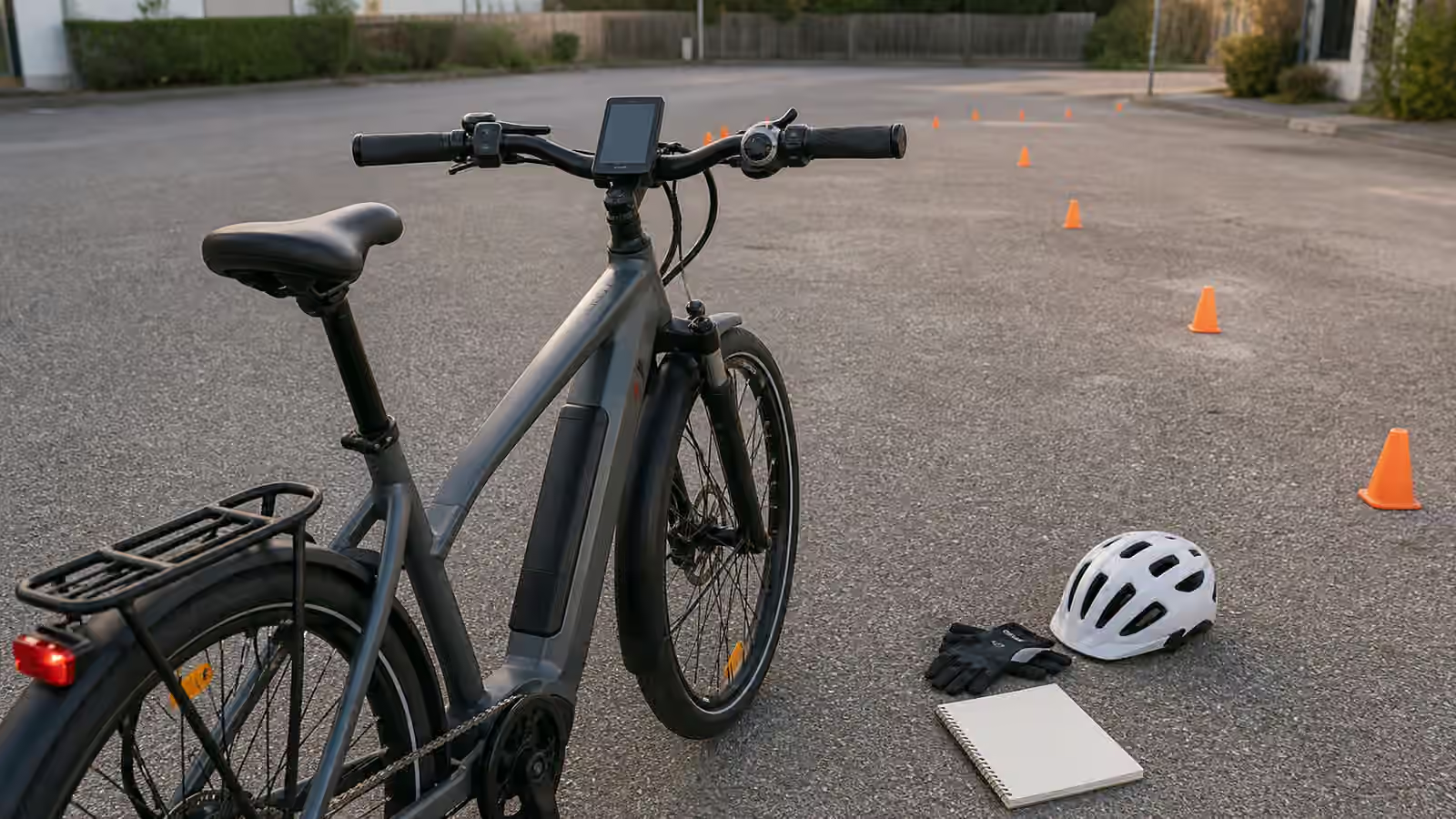
The first practice session should be slow enough to feel slightly plain. Choose an empty paved area, a quiet driveway, or another legal place with space to start, stop, circle, and turn without traffic. Bring the bike in its normal everyday shape, not stripped down to make it feel lighter. Helmet, shoes, bag, mirror, display, and the usual handlebar setup should be present because those details affect how the bike feels.
Begin with the lowest practical assist. Roll a few starts from a dead stop. Notice whether the motor starts immediately or after part of a pedal stroke. Notice whether the bike wants a lighter foot on the pedal or a firmer one. Notice how quickly assist fades when you stop pedaling. These tiny delays matter at a driveway, curb cut, tight path, or stop sign. They matter even more when the bike is loaded.
Gears still matter
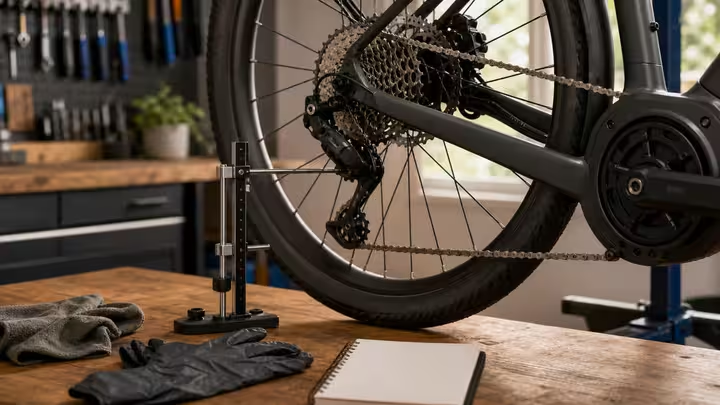
Some new riders expect the motor to replace shifting. It does not. The motor helps, but gears still decide cadence, drivetrain load, starting smoothness, and hill behavior. A high gear can make a stop feel clumsy because the rider has to push hard before the bike moves. A very low gear can make the pedals spin too fast once the motor joins in. The right gear is the one that lets the rider pedal smoothly without forcing the motor or drivetrain to rescue a bad setup.
Practice shifting before the stop, not after. As you slow down, shift to a gear that will let you start again easily. This is especially useful with mid-drive motors, cargo loads, and hills. Shifting under heavy pressure can be rough on parts. If the bike has an internally geared hub, a derailleur, or an automatic system, follow its manual because the best shifting habit may differ. The shared principle is simple: make the next start easier before you need it.
Assist mode is a route tool
Assist modes should not be treated as moral categories. Lower assist is not always better, and higher assist is not always careless. The useful question is what the route asks. A calm flat street may need very little help. A steep start with traffic behind you may need a stronger setting so the bike moves predictably. A long commute may need a battery-saving mode until the hard section. A school run with a child may need the least surprising response, not the most powerful one.
Ride the same short loop in two or three assist levels. Do not look only at speed. Notice how the bike starts, how it turns, how much pressure you use on the pedals, how the drivetrain sounds, and how easy it is to stop pedaling without a lurch. If a strong mode makes the bike feel jumpy in tight spaces, save it for open sections where it belongs. If a weak mode makes you wobble on a hill because you are fighting the bike, that is also useful information.
Throttles and walk assist need boundaries
Some e-bikes have throttles. Some have walk assist. Some local rules treat these features differently by place, path, class, speed, and vehicle type. A rider should know both the rules and the behavior. A throttle can be useful for starts on some bikes, but it can also surprise a rider who treats it casually near a wall, curb, bike rack, or crowded path. Walk assist can help move a heavy bike up a ramp, but it is still powered movement and needs clear hands, clear footing, and space.
Practice any powered non-pedaling feature away from people and obstacles. Learn how it starts, how it stops, and what happens if your hand slips. If the control feels sticky, confusing, delayed, or too strong for the setting, stop using it until you understand the cause. The E-Bike Class, Throttle, and Speed Guide can help frame the local-rule side, but the physical practice still belongs on your own bike.
Hills reveal timing
Hills make assist and shifting lessons obvious. A hill start asks for the right gear before the stop, a firm brake hold, a calm pedal stroke, and an assist mode that does not arrive too late or too hard. A downhill asks for speed discipline and braking confidence rather than motor power. Repeated rolling hills ask for shifting that keeps cadence smooth without grinding the drivetrain.
Practice hills only after flat starts feel ordinary. Begin unloaded. Then add a harmless load if the route will eventually carry groceries or bags. Leave passenger practice until the bike, rider, route, and passenger equipment are ready. The Hill Starts and Downhill Braking guide goes deeper on those moments because a hill can turn a tiny timing problem into a control problem.
Smooth power protects range and parts
Jerky riding wastes attention and can waste energy. Hard starts in the wrong gear, sudden high assist, and rough shifting under load can make the bike feel less refined than it is. Smooth starts, steady cadence, correct tire pressure, and sensible assist choices can make the same battery feel more useful. Range is not only a battery topic; it is also a control habit.
Listen as well as feel. New grinding, skipping, clunking, or delayed engagement deserves attention. A normal motor sound is not automatically a problem, but a new drivetrain sound under load should not be ignored. The Maintenance Rhythm guide gives a beginner boundary for when riding should pause and a mechanic should inspect the bike.
Use practice to simplify real routes
After the practice session, choose one real route and identify the power decisions before riding it. Which gear should you be in before the stop sign? Which assist mode belongs on the hill? Where should you lower assist because the path is crowded? Where does the motor cut out at speed, and are you prepared for the bike to feel heavier there? Where would a loaded bike need a slower approach?
This is how assist becomes practical. You stop asking the motor to solve every moment at once. You give it a job. It helps with starts, hills, wind, fatigue, and cargo within the limits of the bike, route, rules, and rider. The more predictable the power feels, the less dramatic the ride becomes.
For route planning, pair this practice with Route Scouting for Low-Stress Streets and Range Reality Planning . The route, gear, assist setting, and battery reserve should agree before the ride matters.