E-bike maintenance is not a personality test. You do not need to become a mechanic to build a useful rhythm. You do need to notice the parts that make the bike stop, steer, roll, carry weight, light up, and behave predictably. A small weekly check can prevent many annoying failures, and a clear stop-use rule can keep a beginner from riding a bike that needs professional attention.
Make maintenance small enough to repeat
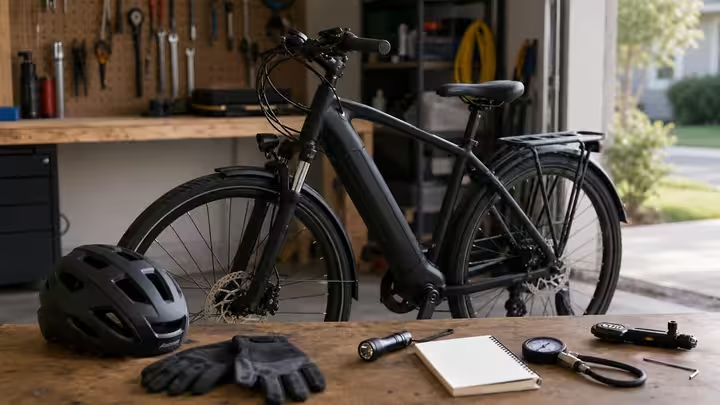
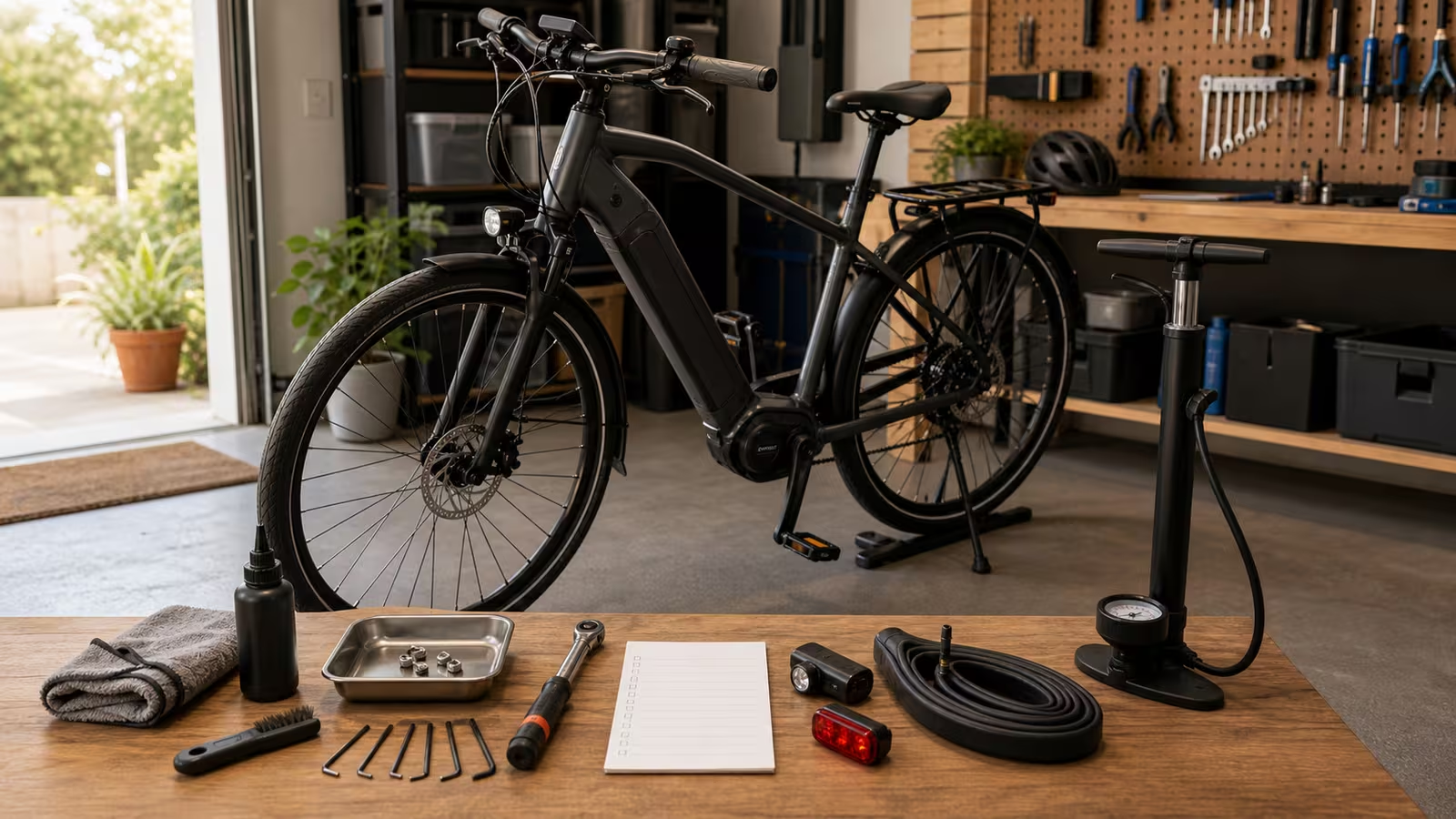
A maintenance rhythm fails when it becomes too grand. The beginner version should take a few minutes and happen at a predictable time: Sunday evening, the night before a commute week, after a rainy ride, or before a school-run day. Keep the basic tools in one place: pump, gauge, rag, chain lube if your drivetrain uses it, small light charger, and the manual or service record.
Do not begin by disassembling things. Begin by looking, listening, squeezing brakes, checking tire pressure, wiping obvious grit, charging lights, and noticing changes. The purpose is to catch the sentence: this feels different. Different is not always dangerous, but it deserves attention before the ride becomes urgent.
Tires decide how the bike feels
Soft tires make an e-bike feel sluggish, reduce range, increase pinch-flat risk on some setups, and can make steering feel vague. Overinflated tires can reduce comfort and grip depending on tire design and load. Use the pressure range on the tire and the bike or tire maker’s guidance, then adjust conservatively for rider weight, cargo, passengers, surface, and comfort. Do not inflate beyond stated limits.
Check tread, sidewalls, embedded glass, cuts, bulges, and whether the tire sits evenly on the rim. Cargo and passenger bikes put more demand on tires. If a tire is cracked, bulging, repeatedly losing air, rubbing, or showing casing threads, stop and get it addressed. A motor can hide the effort of a bad tire until handling or safety is affected.
Brakes get the clearest stop-use rule
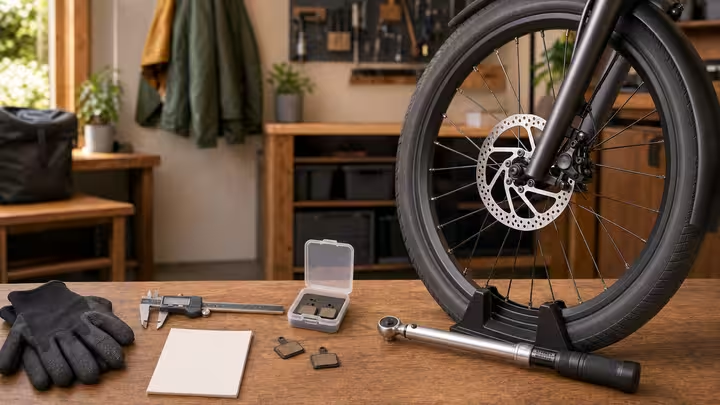
If the brakes feel weak, the lever pulls unusually far, the bike pulses, the wheel rubs badly, fluid appears, a cable frays, a rotor looks damaged, a pad seems worn out, or braking confidence changes, do not shrug and ride normally. Brakes are a professional boundary for many beginners. Learn the visual checks your manual recommends, but do not turn uncertainty into a road test with traffic.
E-bikes are heavier and often faster than ordinary bikes in the same rider’s life. Cargo, hills, wet weather, and passengers increase the demand. Listen for new scraping, grinding, squealing, or pulsing, but remember sound alone does not diagnose the issue. The practical rule is simple: when braking behavior changes, reduce use and get a qualified inspection.
Chain, belt, and drivetrain care should match the bike
Some e-bikes use chains. Some use belts. Some have hub gears, derailleurs, mid-drives, or internally geared hubs. Care varies. A chain may need cleaning and lubrication. A belt may need different inspection and should not be oiled like a chain. A mid-drive can wear drivetrain parts faster under heavy load or rough shifting. Follow the bike’s instructions rather than copying generic advice.
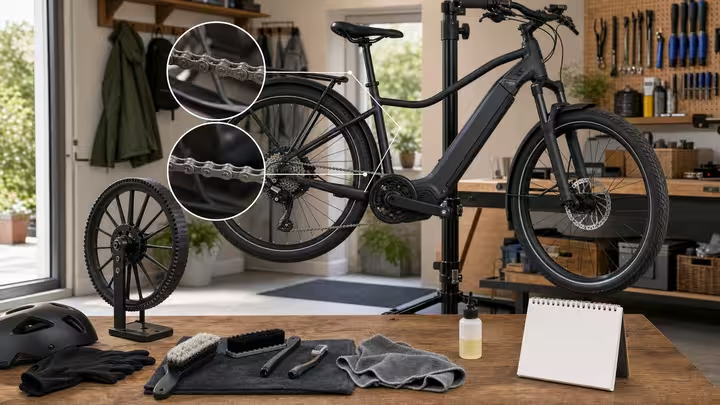
For chain bikes, wipe grit, use appropriate lube sparingly, and avoid spraying oil onto brakes, tires, floors, or rotors. For any drivetrain, notice skipping, grinding, stiff links, odd noises, poor shifting, or a chain that comes off. With cargo or passengers, drivetrain issues can become control issues because starts and hills matter more.
Bolts, racks, and accessories carry real loads
Racks, child seats, baskets, fenders, lights, kickstands, mirrors, and pannier hooks can loosen. Do not randomly tighten every bolt as hard as possible. Many parts need specific torque values, and overtightening can damage frames or components. Use manufacturer instructions and a torque tool where required, or ask a mechanic.
The beginner check is visual and tactile: does the rack move, does the fender rub, does the kickstand feel loose, does the light mount wobble, does the mirror stay put, does the child seat hardware look different, and do panniers lock into place? Any passenger hardware gets a stricter boundary. If it moves unexpectedly, the passenger setup is not ready.
Battery and electrical checks stay conservative
Battery care is not about opening packs or inventing repairs. Look for obvious stop-use signals: swelling, cracks, broken mounts, exposed wiring, submersion, odd smell, unusual heat, charger damage, connector damage, behavior changes, or error messages you do not understand. Follow the manufacturer process and do not keep charging or riding through suspicious symptoms.
Keep the charger, battery, and display clean and dry according to instructions. Do not pressure-wash electrical parts. Do not use a charger because the plug happens to fit. The Battery Care Planner gives a household routine for these choices.
Keep lights and reflectors in the maintenance rhythm
Lights and reflectors are maintenance items. Recharge lights, wipe lenses, check mounts, and confirm that bags or child seats do not block them. Reflectors can get dirty or cracked. A rear light can rotate downward after a bumpy ride. A front light can aim too high and annoy everyone or too low to help.
Visibility belongs with maintenance because it changes with the real bike. After adding panniers, a basket, rain cover, or passenger seat, repeat the visibility check. The bike you ride on Monday may not be the same shape as the bike you inspected last month.
Record service without making paperwork heavy
A simple log can include tire pressure, chain lube date, brake service, flat repairs, battery concerns, firmware or display notes, and accessory changes. It does not need to be elegant. It needs to be findable. Records help with warranty, theft recovery, resale, and remembering whether a noise is new.
The Keepers Guild approach is useful: record enough to support decisions, not so much that the record becomes the project. If you use a mechanic, save the receipt and note what changed. If a problem repeats, the pattern matters.
Use the stop-use rule
Stop using the bike, or at least stop using the affected mode, when the issue involves brakes, steering, wheels, tires, structural racks, passenger hardware, battery damage, wiring damage, unusual heat, odd smell, or anything that makes the bike hard to control. This does not mean panic. It means the next step is diagnosis, not a normal ride with crossed fingers.
A maintenance rhythm makes e-bike life calmer because the bike becomes less mysterious. You know the tires, brakes, drivetrain, lights, battery condition, and accessories well enough to notice change. You also know when the right answer is a qualified mechanic. That is a strong beginner standard.
Related guidebooks
- Battery Care Planner: Charging, Storage, Temperature, and Stop-Use Habits
- Grocery Hauling Without Wobble: Pack the Bike Like Balance Matters
- Child Seat and Passenger Readiness: Ratings, Practice, and Calm Loading
- Keepers Guild for maintenance records, repair boundaries, and knowing when to hire help.