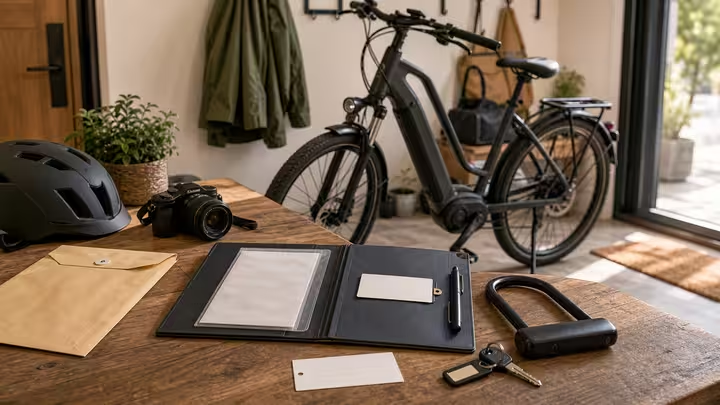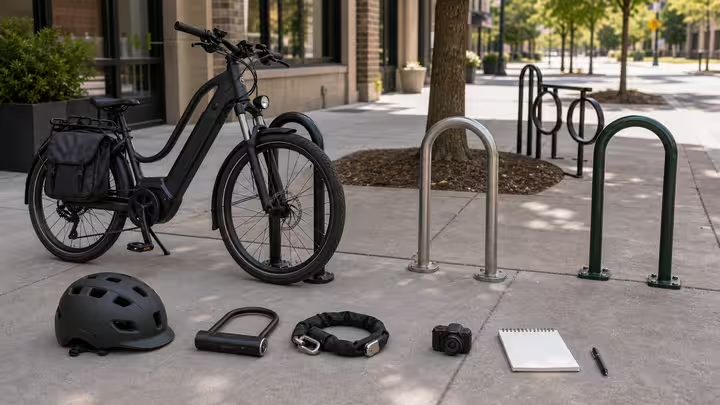
An e-bike lock is not a magic object. It is one part of a parking decision. The stop matters: how long you will be away, whether the rack is fixed, whether the bike is visible, what neighborhood patterns are like, what accessories remain on the bike, whether the battery is removable, and whether you have records if something goes wrong.
The point of a lock checklist is not to make every errand feel dangerous. It is to keep the locking habit from becoming automatic in places where automatic is not enough. A quick bakery stop and an all-day rail station stop should not get the same plan.
Start with the rack
A strong lock on a weak object is a weak lock. Look at what the rack is attached to. A rack bolted firmly into concrete is different from a loose signpost, decorative fence, small tree, removable railing, or object that can be lifted over. The object should let you secure the bike frame, not only the wheel.
Avoid blocking sidewalks, curb ramps, doors, wheelchair paths, emergency access, transit stops, and other bikes. Good parking is not only theft reduction. It is etiquette. If cargo bags, child seats, trailers, or wide handlebars make a rack awkward, find a better place rather than turning the bike into an obstacle.
Lock the frame first
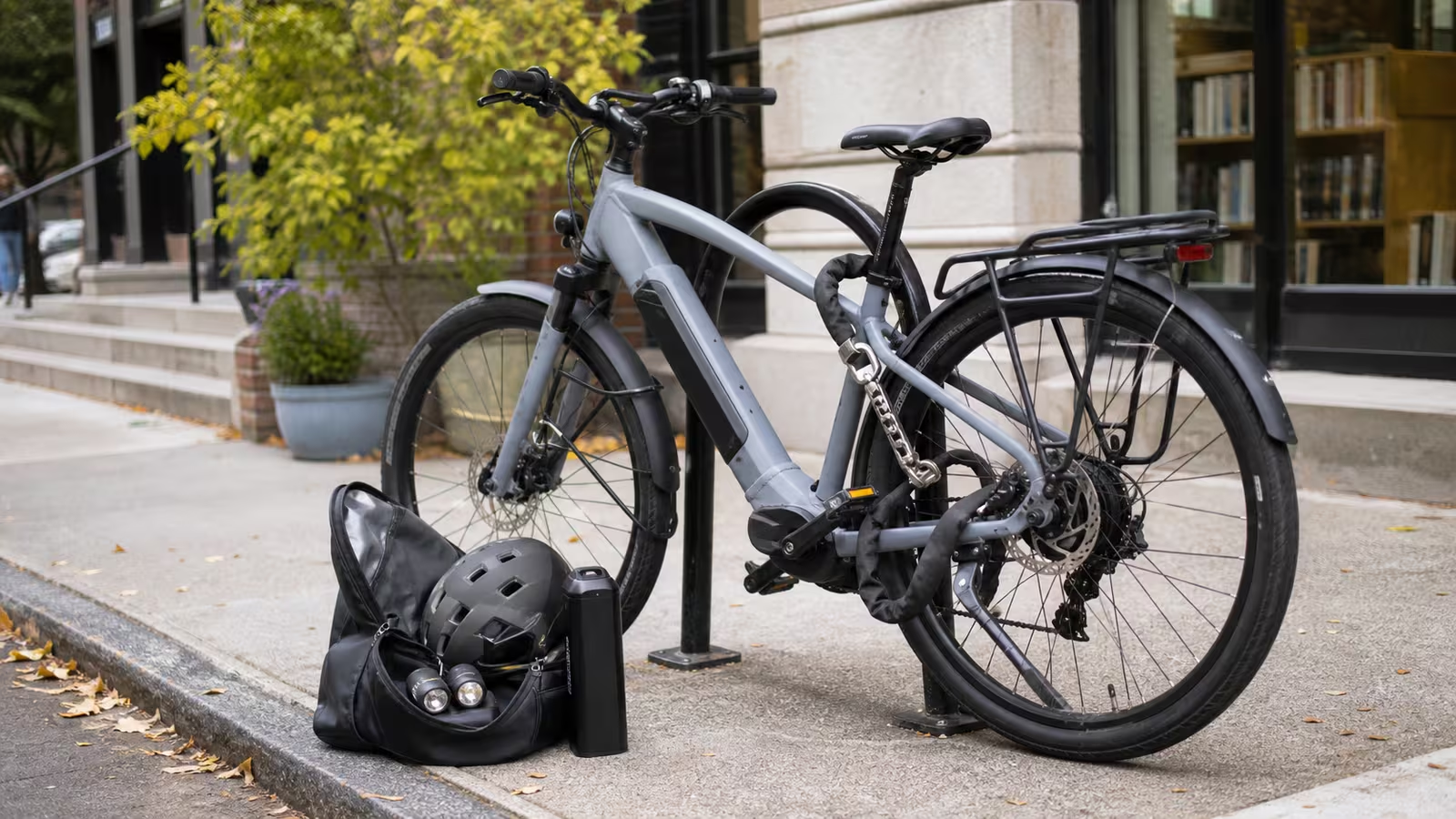
The frame is the bike. A wheel can be removed. A front wheel alone can be left behind. Lock through the frame to a fixed object whenever possible. Add a wheel if the lock size and rack allow it. If the bike has expensive wheels or the stop is long, use a secondary lock or cable for the other wheel, but do not let a cable become the only serious lock.
Practice at home before doing this under time pressure. Know which side of the rack works, where the lock sits, and how to avoid trapping cables, brake rotors, spokes, or fenders. The best lock is less useful if it is so awkward that you avoid using it correctly.
Match the stop duration
A one-minute stop where the bike is visible is still not a reason to leave it unlocked, but it may not require the same system as a long stop. A long stop changes the calculation. More time gives thieves more chances and less social pressure. Night, isolation, repeated parking in the same place, and predictable schedules can add risk.
For longer stops, think in layers: better location, frame lock, second lock, wheel security, battery removal if practical, accessory removal, display cover, record readiness, and insurance or registration where useful. If those layers are not possible and the bike is valuable, the safer answer may be a different stop, indoor parking, a supervised bike room, transit, or leaving the e-bike at home.
Removable parts are part of the target
Lights, bags, computers, phone mounts, pumps, tools, child-seat accessories, rain covers, and batteries can be targets even when the whole bike remains. Some riders remove everything. Some make peace with leaving low-value items. Some use bolts or security skewers. Your choice depends on value, convenience, risk, and how often you park.
The important habit is deciding before you arrive. If you plan to take the lights, make it easy. If the battery comes with you, know where you will carry it and whether the destination allows it. If the battery stays on the bike, understand the lock, key, and exposure. Do not leave charging adapters, spare batteries, or loose tools visible in bags.
Records reduce chaos after a loss
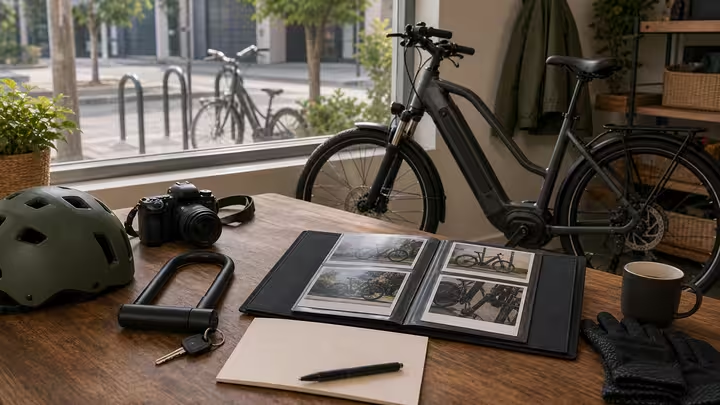
Record the serial number. Photograph the whole bike, drivetrain side, serial location, battery, lock, accessories, and unique marks. Save receipts, model information, and any registration details. If the bike is insured, know the policy requirements before a theft happens. Some policies may require a particular lock type, proof of forced entry, storage conditions, or police report.
These records do not prevent theft. They prevent the second injury: trying to assemble basic information while angry and rushed. Store the records somewhere available even if the bike and bag are gone. A cloud note, password manager secure note, or home folder can be enough.
Batteries and trackers need realistic thinking
Removing a battery can lower theft appeal, but it can also be heavy, inconvenient, not possible on every bike, or not allowed in every destination. A tracker can help in some cases, but it is not a recovery guarantee and may create personal safety decisions you should not handle alone. Do not confront suspected thieves. Follow local reporting guidance and protect yourself first.
Battery locks vary. Some are deterrents, not vaults. If the battery is expensive and removable, treat battery security as part of the parking plan. If the battery has been tampered with, damaged, dropped, or exposed to water during a theft attempt, do not casually charge it. Use manufacturer or qualified service guidance.
Choose visible, normal parking
Visibility helps when it is normal visibility, not lonely visibility. A bike hidden behind a building is easier to work on unseen. A bike in a chaotic crowd may also be vulnerable if nobody knows what belongs to whom. Look for places with steady foot traffic, lighting, legitimate bike parking, cameras where available, and racks used by other riders.
Do not assume expensive areas are safe or quiet areas are unsafe. Patterns vary. Ask local riders, bike shops, workplace facilities staff, school administrators, or building managers where e-bikes are commonly parked and what problems they see. Then verify with your own judgment.
Make the checklist quick
Before walking away, ask five questions: frame locked to fixed object, second layer if needed, removable targets handled, battery decision made, and records available if this goes badly. If any answer is weak and the stop is long, fix the stop.
This is not paranoia. It is a routine. A strong routine lets you enjoy the errand because the bike is parked as well as the situation allows.
Related guidebooks
- The E-Bike Workshop Quickstart: Make the Bike Part of Real Life
- Cargo Setup Picker: Groceries, School Bags, Child Seats, and Errands
- Battery Care Planner: Charging, Storage, Temperature, and Stop-Use Habits
- Reality Check Desk for checking viral theft advice and product promises.
- Keepers Guild for records, manuals, and repair boundaries.