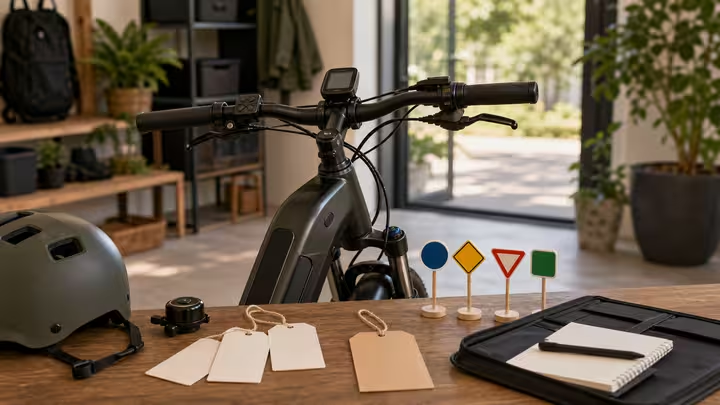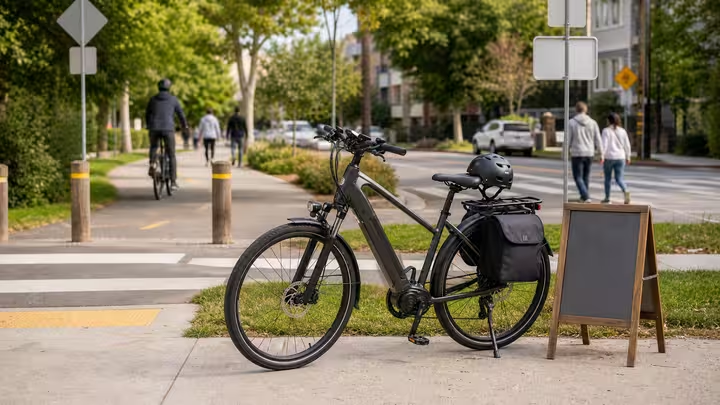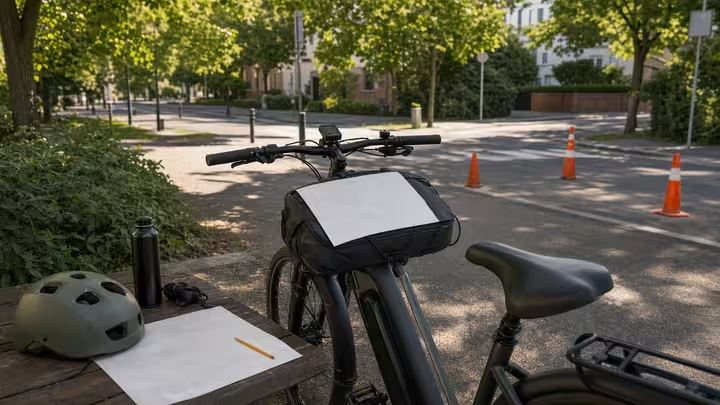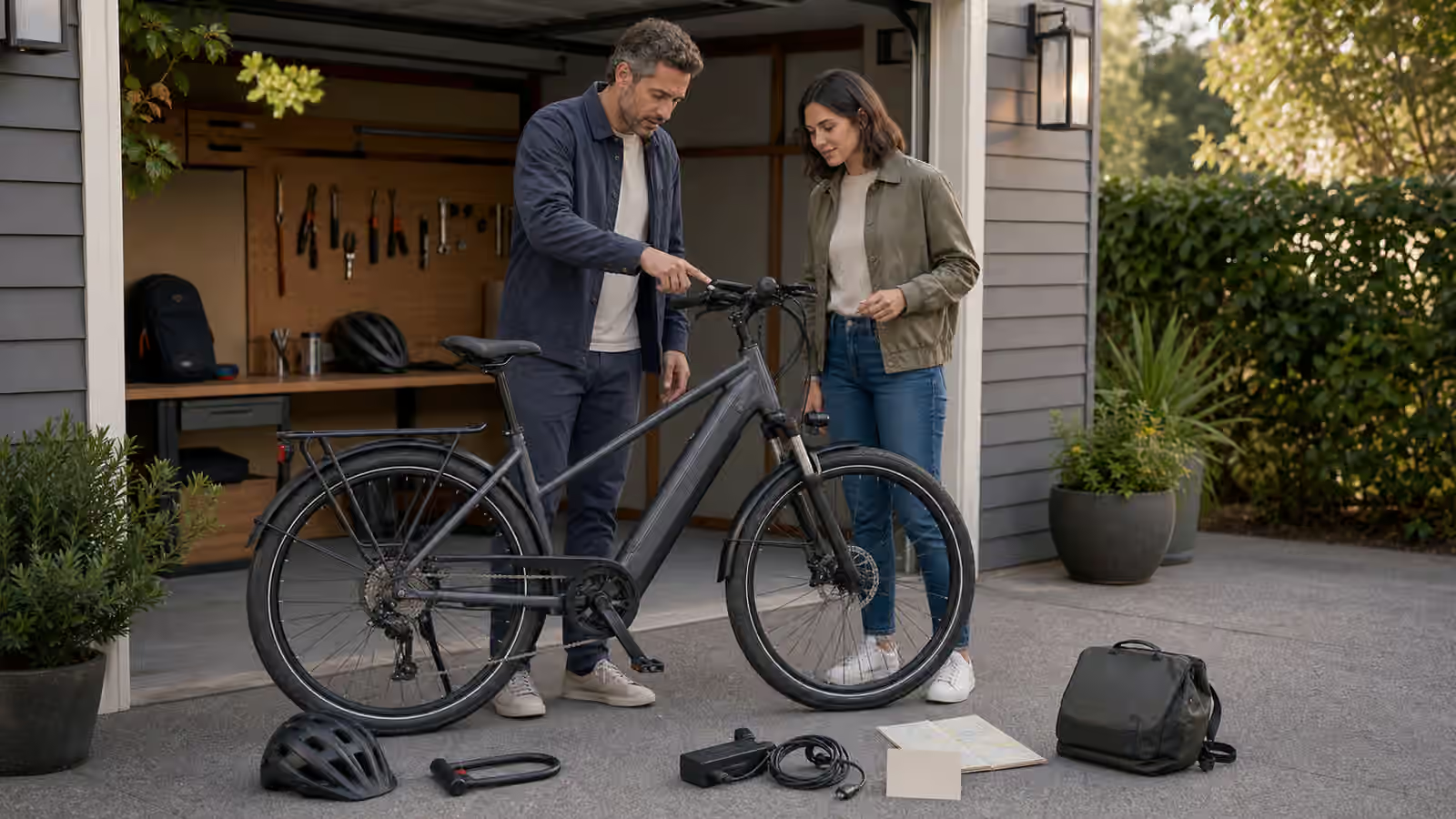
Loaning an e-bike can feel casual because the bike is already familiar to the owner. That familiarity is exactly the risk. The owner knows how the assist comes on, how heavy the bike feels at walking speed, where the brake bite starts, which lock is awkward, how far the battery really goes, and which intersection is worth avoiding. A guest sees a bicycle with a motor and may assume the important parts are obvious.
A careful handoff is not a lecture. It is a short transfer of the few facts that keep the guest from learning the bike under pressure. If the guest is only taking a spin around the block, the handoff can be brief. If they are borrowing the bike for an errand, commute, visit, or vacation day, the handoff needs to cover fit, controls, route, locks, battery, local rules, and what to do if something feels wrong.
Decide whether the loan should happen
The first question is not how to explain the bike. It is whether the bike should be loaned at all. A guest who has not ridden recently, cannot comfortably mount or dismount the frame, struggles with balance, ignores traffic rules, wants to carry a passenger, or plans to ride somewhere you would not ride may not be a good match for the bike. The same is true when the bike itself is in a questionable state. Soft tires, weak brakes, a damaged rack, a loose battery, a sticky throttle, or an error message should stop the loan before politeness takes over.
Fit matters more than hospitality. The saddle must adjust into a useful range, the rider must reach the brakes, and the bike must be manageable when the motor is off. A bike that fits the owner can still be wrong for a guest. The Frame Size, Reach, and Fit Checks guide is written for buying decisions, but its plain questions also apply to a loan: can the rider stop, start, turn, and step off without drama?
Make the controls ordinary
Do not assume the guest understands pedal assist, walk assist, throttles, displays, or motor cutoffs. Explain the exact bike in front of them. Show how to turn the system on and off, how to change assist levels, how the lights work, how the bell or horn works, how the brakes feel, and what happens when the rider stops pedaling. If there is a throttle, explain when it is active and when it should not be used. If local rules limit throttle use or access, say that plainly.
The best explanation happens while the bike is stationary and stable. After that, the guest should ride in the lowest useful assist level in a calm place before heading into public space. The first few starts and stops reveal more than any description. Some riders surge because they push too hard before the motor comes on. Others forget to downshift before stopping. The Motor Assist and Shifting Practice guide is useful because a guest ride often compresses the first week of learning into five minutes.
Choose a smaller route
A guest often asks for the route they imagine, not the route that matches their current understanding of the bike. The owner should suggest a smaller first loop. Good guest routes have low traffic pressure, simple crossings, legal access for that bike, smooth surfaces, and an easy place to turn around. They avoid steep starts, fast descents, narrow crowded paths, complicated left turns, gravel surprises, and parking problems until the rider has shown calm control.
Range should be explained in real terms, not display optimism. A battery with three bars might be plenty for a neighborhood loop and a poor choice for a hilly errand with a headwind. Tell the guest which assist level to use, how much reserve to keep, and when to turn back. If the route depends on destination charging, make sure charging is allowed and that the guest has the correct charger. The Range Reality Planning habit belongs in a loan because guests are less able to interpret the bike’s normal battery behavior.
Transfer the lock plan
A lock plan that lives only in the owner’s hands is not a plan. Show the guest which lock to use, where it rides on the bike, how to lock the frame to a fixed object, when to remove the battery or accessories, and what kind of stop is not worth the risk. If the bike has a frame lock, chain, folding lock, U-lock, cable, alarm, or hidden tracker, explain what each part does and what it does not do.
The lock explanation should include parking judgment. A guest may lock to a loose signpost, decorative railing, small tree, or crowded rack that leaves the bike blocking everyone. They may leave removable lights, bags, or the charger on the bike because they do not know the habit. The Lock Risk Checklist can help, but the owner still needs to describe the few stops that are acceptable for this ride.
Say the local rules without sounding vague
E-bike rules vary, and a guest may bring assumptions from another city, trail system, campus, or country. Tell them the practical rule boundaries for this specific ride. That may include class, throttle use, speed, sidewalks, shared paths, parks, school grounds, transit, helmet expectations, dismount zones, and building storage rules. If you do not know a rule, do not cover the gap with confidence. Change the route or check first.
This is especially important when a guest is visiting. The bike may be legal on one path and unwelcome on another. A polite rider who follows the wrong assumption can still create conflict. The E-Bike Class, Throttle, and Speed Guide and Etiquette and Local Law Awareness are the natural background reading, but the handoff should reduce the issue to the ride they are about to take.
Give them a stop rule
Guests need permission to stop. If the brakes feel odd, the display shows an error, the battery rattles, a tire feels soft, the bike surges, the route feels too fast, or the lock plan becomes confusing, the correct move is to stop in a safe place and call. That sentence matters. Without it, a guest may continue because they do not want to seem difficult.
Also explain what not to fix. A guest should not adjust brakes, open electrical parts, improvise a charger, tighten unknown bolts, carry a questionable battery indoors, or ride after a crash or tip-over just because the bike still moves. The Post-Crash and Tip-Over Inspection guide gives the owner a sober return habit for any surprise.
Make the return part of the loan
The handoff is not finished until the bike comes back. Ask how the ride felt. Check for new noises, tire pressure changes, battery level, loose cargo, dirty drivetrain, damaged accessories, and missing lights or keys. Put the charger, lock, helmet, and bags back where they belong. If the guest wants to borrow the bike again, use the debrief to improve the next route instead of pretending the first ride proved everything.
Loaning an e-bike works best when it feels generous and bounded at the same time. The guest gets a clear route, a bike that fits, controls they understand, a lock plan they can repeat, and permission to stop. The owner gets the bike back with fewer surprises. That is a better kind of hospitality than tossing over a key and hoping the motor makes everything simple.