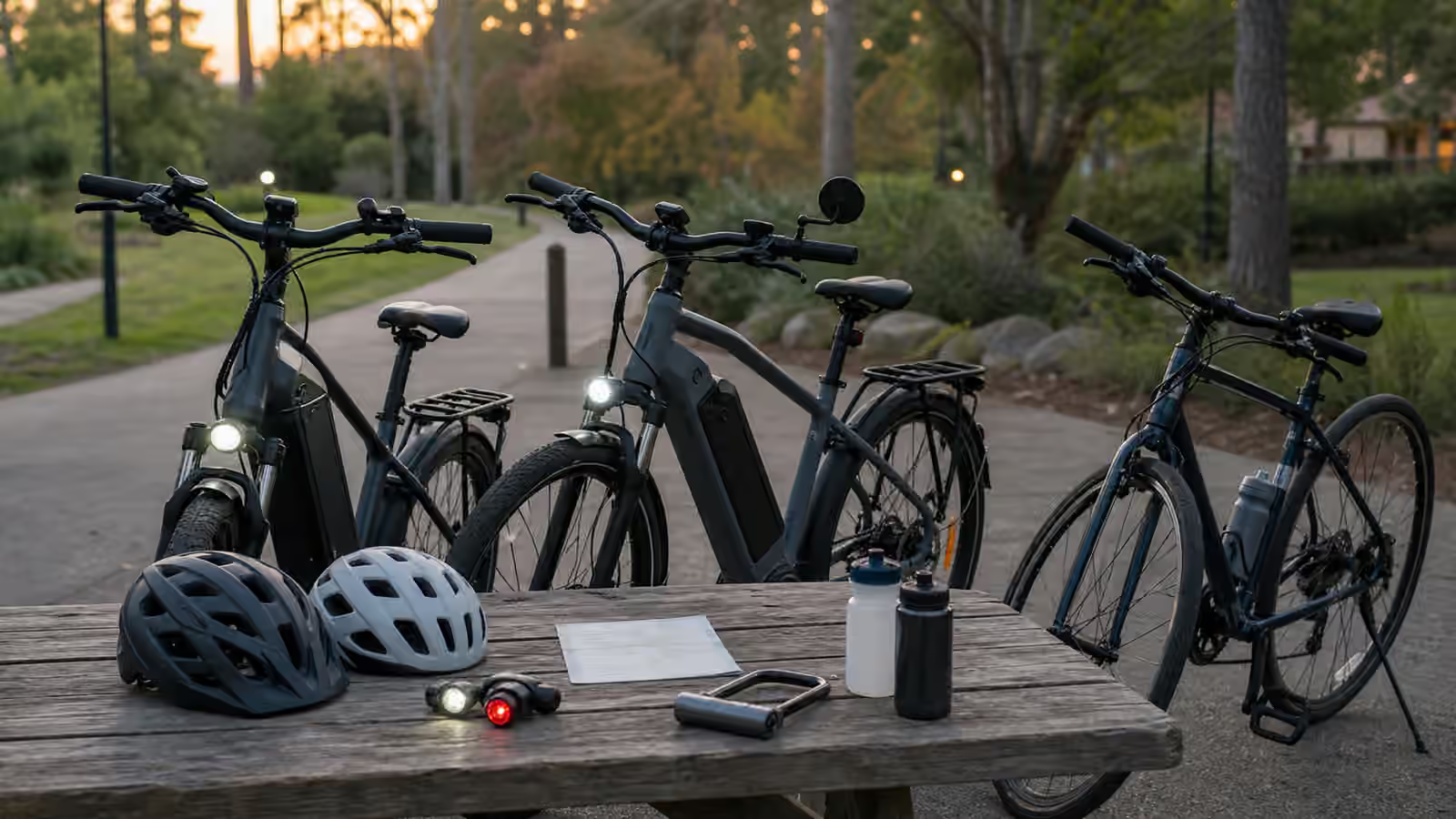
An e-bike can make a group ride easier by flattening hills, reducing effort gaps, and letting riders with different fitness levels share a route. It can also pull the ride apart. One rider accelerates gently and still opens a gap. Another saves battery and falls behind on climbs. A conventional-bike rider feels pushed. A faster e-bike rider forgets that the path is shared with walkers. The motor is not rude by itself. Unspoken pacing is the problem.
Group pacing is a practical habit. It is not racing strategy. It is the ordinary agreement that lets friends, families, commuters, and neighbors ride together without turning assist levels into social friction. The group should know the route, the speed mood, the regroup points, the battery margin, and the local rules before the first hill creates a negotiation.
Agree on the ride before rolling
The most useful group conversation is short and early. Is this a social ride, a commute, an errand loop, a training ride, a school run, or a first route test? Will the group stay together, regroup at turns, or split by pace and meet later? Are there conventional bikes, cargo bikes, children, trailers, new riders, or people who do not want to ride near traffic?
An e-bike rider may think a pace feels gentle because the motor is helping. A non-assisted rider may experience the same pace as a chase. A cargo rider may be comfortable on flats and cautious at corners. A new rider may need more room at starts. Discussing the ride does not make it formal. It prevents small mismatches from becoming silent irritation.
Use assist as a pacing tool
The Motor Assist and Shifting Practice guide focuses on individual control. In a group, assist also becomes communication. A high assist level can make starts too abrupt around slower riders. A low assist level can be fine on flats and poor on hills if it makes the rider wobble. The right setting is the one that supports the agreed pace and keeps the bike predictable.
On mixed rides, the e-bike rider often needs to choose patience deliberately. Accelerate gradually. Ease off before the group stretches. Avoid surging up every hill just because the bike can. If the purpose is to stay together, assist should smooth the ride, not announce the motor at every change in grade.
Build routes around the least comfortable section
A group route is only as calm as its hardest section. One fast road, blind crossing, steep hill, narrow bridge, gravel segment, or confusing turn can dominate the ride. The Route Scouting for Low-Stress Streets guide is especially useful for groups because different bikes and riders experience the same street differently.
Choose a route that gives the slowest or least confident rider room to make decisions. A slightly longer calm route may preserve the group better than a direct stressful one. If e-bike class or throttle rules affect access to a path, solve that before the ride. The E-Bike Class, Throttle, and Speed Guide belongs in the planning conversation when the group uses trails, shared paths, campuses, parks, or transit links.
Regroup before decisions, not after mistakes
Regroup points should come before turns, crossings, route choices, and places where a dropped rider could choose the wrong path. Do not wait only at the top of a hill after the group has already split through traffic. A good regroup point is visible, legal, out of the travel lane, and not blocking pedestrians, driveways, or other riders.
E-bike riders should be careful with the habit of circling back. It can confuse traffic, surprise slower riders, and make the group bigger on a narrow path. Often it is better to stop in a safe visible place and wait. The aim is not to show helpful energy. It is to make the group easier to understand.
Passing needs a shared tone
Passing other path users is where a group can become annoying quickly. One rider rings a bell, another passes silently, a third squeezes through, and suddenly the group feels much larger than it is. Agree on a simple tone: slow early, pass with space, use a bell or voice kindly, and wait when there is not enough room. E-bikes should be especially cautious because their approach speed may surprise walkers, children, dogs, and riders on slower bikes.
The Etiquette and Local Law Awareness guide treats predictability as respect. In a group, predictability includes the people behind you. Do not dart through a gap that the next rider cannot use. Do not call “clear” for someone who has a different bike, different speed, or different view.
Battery reserve is a group issue
Range planning changes when one rider has a motor. A low battery can turn a comfortable e-bike into a heavy bicycle. A rider who used high assist to stay with a group early may need to conserve later. Cold, wind, cargo, hills, and soft tires can reduce the margin. If the route depends on one e-bike carrying cargo, lights, a child seat, or a trailer, battery reserve affects everyone.
Use the Range Reality Calculator for planning when the ride is longer than a casual loop, but keep the conversation plain. How much reserve does each e-bike need? Is there a charger plan? What happens if a battery drops faster than expected? Does the group slow down, split, shorten the route, or use transit? A backup decided calmly before the ride feels much better than one invented at dusk.
Let different bikes have different jobs
A mixed group does not need perfect sameness. The cargo e-bike may carry picnic food. The conventional bike may set the social pace. The folding e-bike may solve the transit connection. The stronger rider may take the windy front for a while. The newer rider may choose the safest line through an intersection. Respecting different jobs keeps the e-bike from becoming either the hero or the problem.
If the mismatch is too large, split the plan honestly. A fast e-bike errand and a slow social ride may not belong in the same loop. A route legal for one class of e-bike may not work for another. A child passenger ride may need more stops than an adult coffee ride. Separation can be good planning, not rejection.
End with the next ride in mind
After the ride, notice what stretched the group. Was the assist too jumpy? Was one hill too much? Did the route force awkward passing? Did a battery end low? Did the group stop in bad places? Did someone feel rushed? Use those observations to choose the next route and pace.
E-bikes can make more shared rides possible when the motor is treated as part of the group plan. Agree on pace, choose a route that fits the whole group, use assist with patience, and leave enough battery and courtesy for the return. The best group ride is not the one where the fastest bike proves itself. It is the one everyone would repeat.