E-bikes can make ordinary trips easier, but they can also surprise people. A rider may be moving faster than a pedestrian expects, accelerating faster than a driver expects, or entering a shared path where ordinary bike habits already feel tense. Etiquette and local-law awareness are not decorative manners. They are part of making the bike predictable enough that other people can share space with it.
Know what kind of e-bike you are riding
Many places classify e-bikes by assist type, throttle use, and assisted speed. The labels and legal effects vary, but the practical reason to know your bike is simple: access and behavior can depend on it. A bike allowed on a road may not be allowed on a certain path. A throttle-equipped bike may be treated differently from a pedal-assist bike. A high-speed model may belong in traffic patterns that do not match a quiet park path.
Find the bike’s class or specifications from the maker, then check local sources. Do not rely only on sales pages, social media comments, or signs from another region. If the rules are unclear, ride conservatively until you have better information. The Reality Check Desk habit is useful here: current source first, confident summary second.
Use speed as a social signal
Speed communicates. On an open road with traffic, appropriate speed may help you ride predictably. On a shared path with walkers, children, dogs, and slower riders, the same speed can feel threatening. The motor can make acceleration quiet and sudden, which means others may not understand how quickly you will reach them. Slow earlier than you think you need to.
A good pass starts before the pass. Look ahead, reduce speed, choose a line with space, signal with a bell or voice where appropriate, wait if the space is narrow, and pass only when the person has time to react. A polite bell at high speed is not polite. A calm voice from too close can still startle. The goal is not to announce your right to pass; it is to make the pass easy for everyone.
Treat sidewalks and paths as local questions
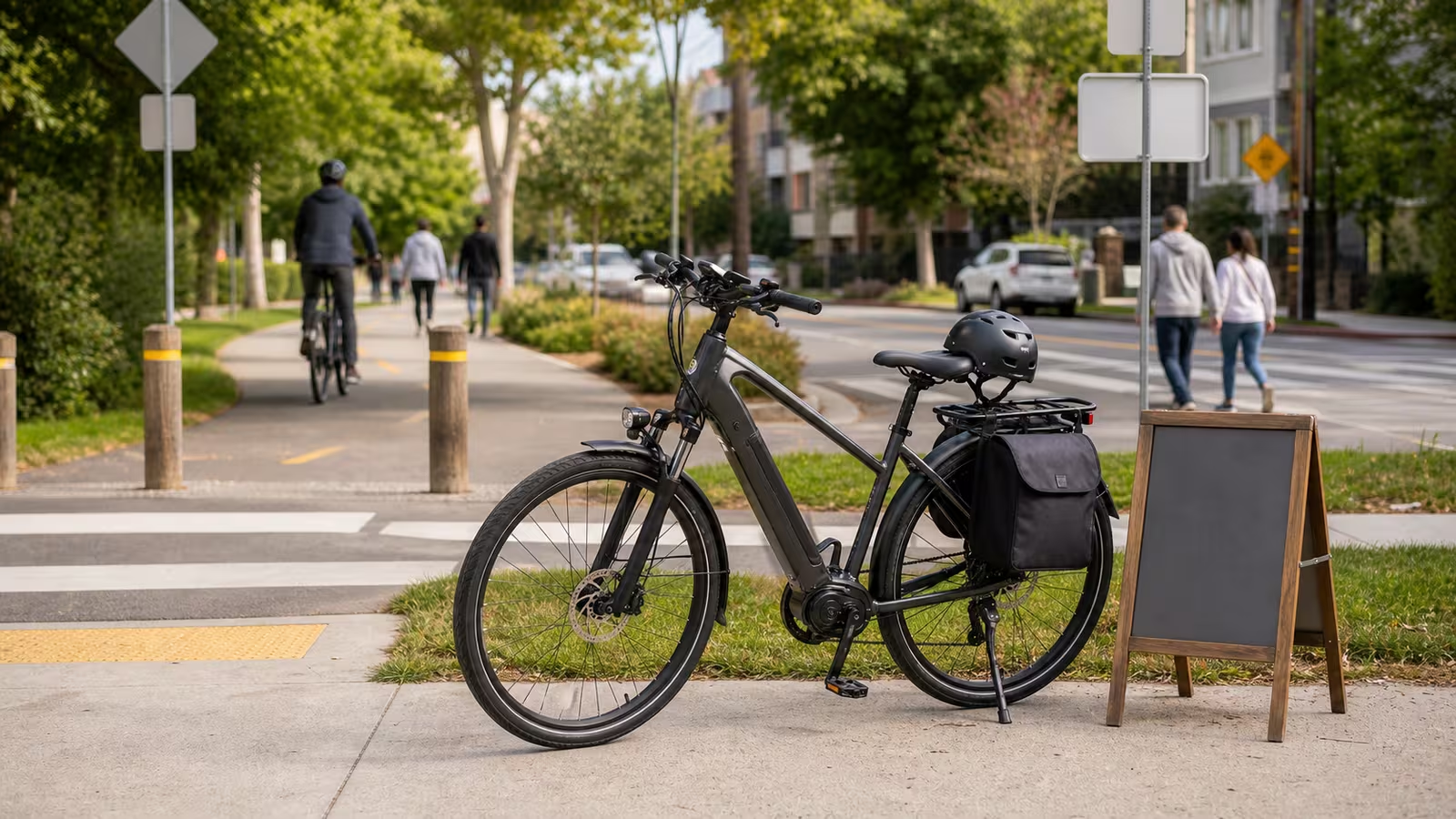
Sidewalk rules vary widely. In some places sidewalk riding is banned, allowed only for children, allowed outside business districts, allowed unless posted, or restricted by e-bike class. Even where sidewalk riding is legal, it may be a poor choice near doors, driveways, bus stops, cafes, strollers, wheelchairs, dogs, and crowded corners. Legal access and good judgment are separate questions.
Shared paths also vary. Some paths allow all bikes, some exclude certain e-bikes, some have speed limits, some change rules by park, and some rely heavily on posted signs. If you are not sure, slow down, yield generously, and check the source before making it part of a routine route.
Ride predictably around drivers
Drivers are not always kind or attentive, but unpredictability makes the situation worse. Hold a steady line where possible. Avoid weaving between parked cars. Signal turns when you can do so safely. Take the lane where local rules and conditions support it and where squeezing would be dangerous. Do not assume drivers understand how fast an e-bike can accelerate from a stop.
At intersections, choose clarity over cleverness. If a turn is too stressful, dismount and cross as a pedestrian where legal and appropriate. If a route forces repeated high-stress merges, look for a calmer route even if it is longer. The Range Reality Planning guide helps because route choice and battery margin are connected: a calmer route that uses a little more battery may be the better routine.
Be extra conservative around children and dogs
Children and dogs are not small adults with perfect path discipline. They move sideways, stop suddenly, chase balls, change direction, and react to bells unpredictably. Slow early. Give space. Avoid passing between a child and adult when possible. Do not assume a leash means a dog cannot cross your path. If a path is crowded with families, your e-bike may need to become a slow bike or a walked bike.
This matters around schools, parks, playgrounds, waterfronts, and weekend paths. A cargo bike school run should feel predictable to families walking too. The School Run Cargo Bike Routine guide treats this as part of the route, not an afterthought.
Make bells, voices, and lights humane
A bell is a communication tool, not a command. Use it early enough to be useful, and pair it with slower speed. A voice can be warmer, but it can also surprise people if used too late. Choose short, clear phrases: passing on your left, thank you, slow bike behind you. Avoid sarcasm, scolding, or ringing repeatedly at close range. You are asking to share space.
Lights need the same courtesy. A powerful front light aimed into faces can make you visible by making everyone else uncomfortable. Aim lights to help without blinding people. On paths, consider lower settings where appropriate and legal, while still meeting local requirements. Visibility and etiquette should reinforce each other.
Respect access limits without making it personal
Sometimes an e-bike is not allowed somewhere you want to ride. Sometimes a trail is closed to all bikes. Sometimes a park allows pedal bikes but not motor-assisted bikes. Sometimes a transit system limits battery types or times. Treat these boundaries as route data, not insults. The fastest way to create conflict is to ride where the rules clearly say not to and then argue from the saddle.
If a rule seems outdated or unfair, address it through the relevant agency, advocacy group, or community process. On the ride itself, comply with posted signs and current local rules. Practical transportation depends on trust, and trust is built by predictable behavior.
Create a local-rule note for each routine route
For each repeated route, keep a short note: road sections, path sections, sidewalk sections if any, school or building rules, speed limits, dismount zones, tricky crossings, and where the backup route begins. Update it when signs change or a construction detour appears. This note is especially helpful if multiple family members ride the same bike or if a guest uses the route.
The note does not need to be formal. It just needs to make local-rule awareness visible. When a route changes from winter to summer, from weekday to weekend, or from solo ride to child passenger ride, reread the note and adjust.
Apologize and repair quickly
Even careful riders make mistakes. If you startle someone, pass poorly, block a path, or misjudge a crossing, slow down and repair the moment if possible. A quick apology can prevent a small mistake from becoming a conflict. Defensive arguments rarely help from the saddle.
Etiquette is a maintenance habit for public space. Check the rules, ride slowly where people are vulnerable, pass clearly, respect access limits, and keep updating your route knowledge. That is how an e-bike becomes a welcome transportation tool instead of an argument on wheels.
Related guidebooks
- Helmet Fit and Visibility Basics: Make Your First Safety Layer Boring
- School Run Cargo Bike Routine: Practice Before the Passenger
- Commute Comfort Audit: Rain, Darkness, Hills, Surfaces, and Arrival Friction
- Reality Check Desk for checking current rules, claims, and safety summaries before repeating them.