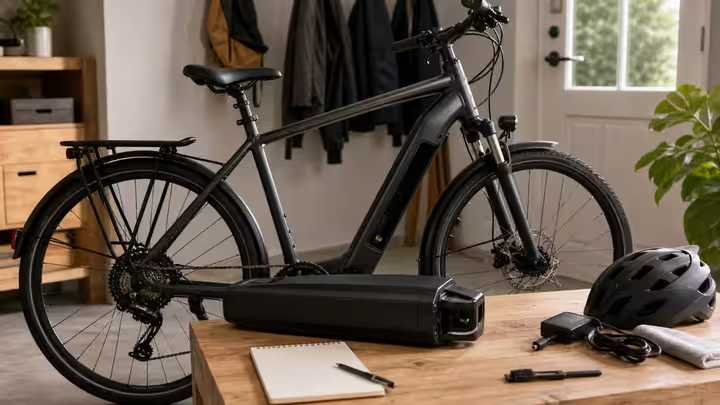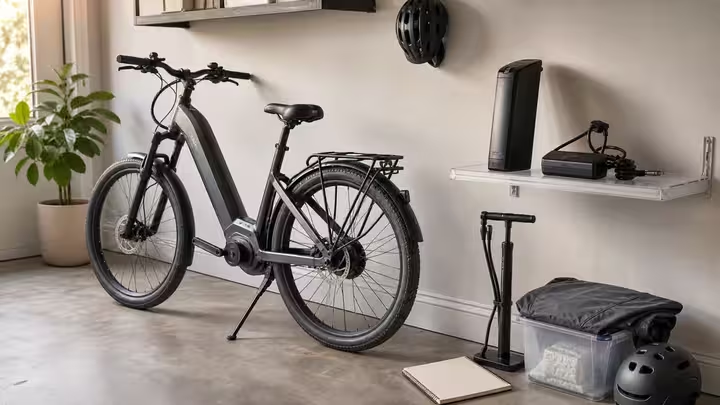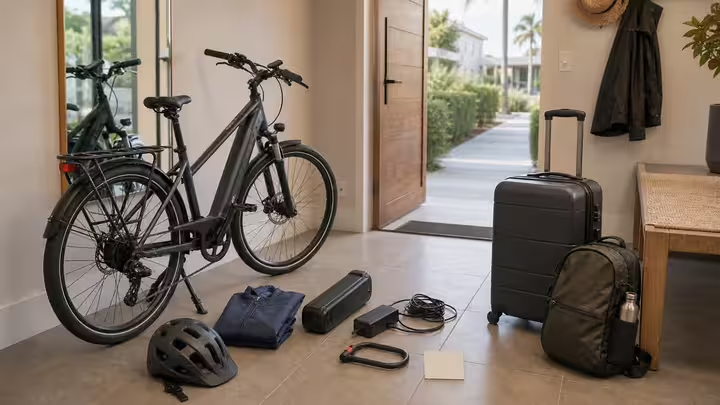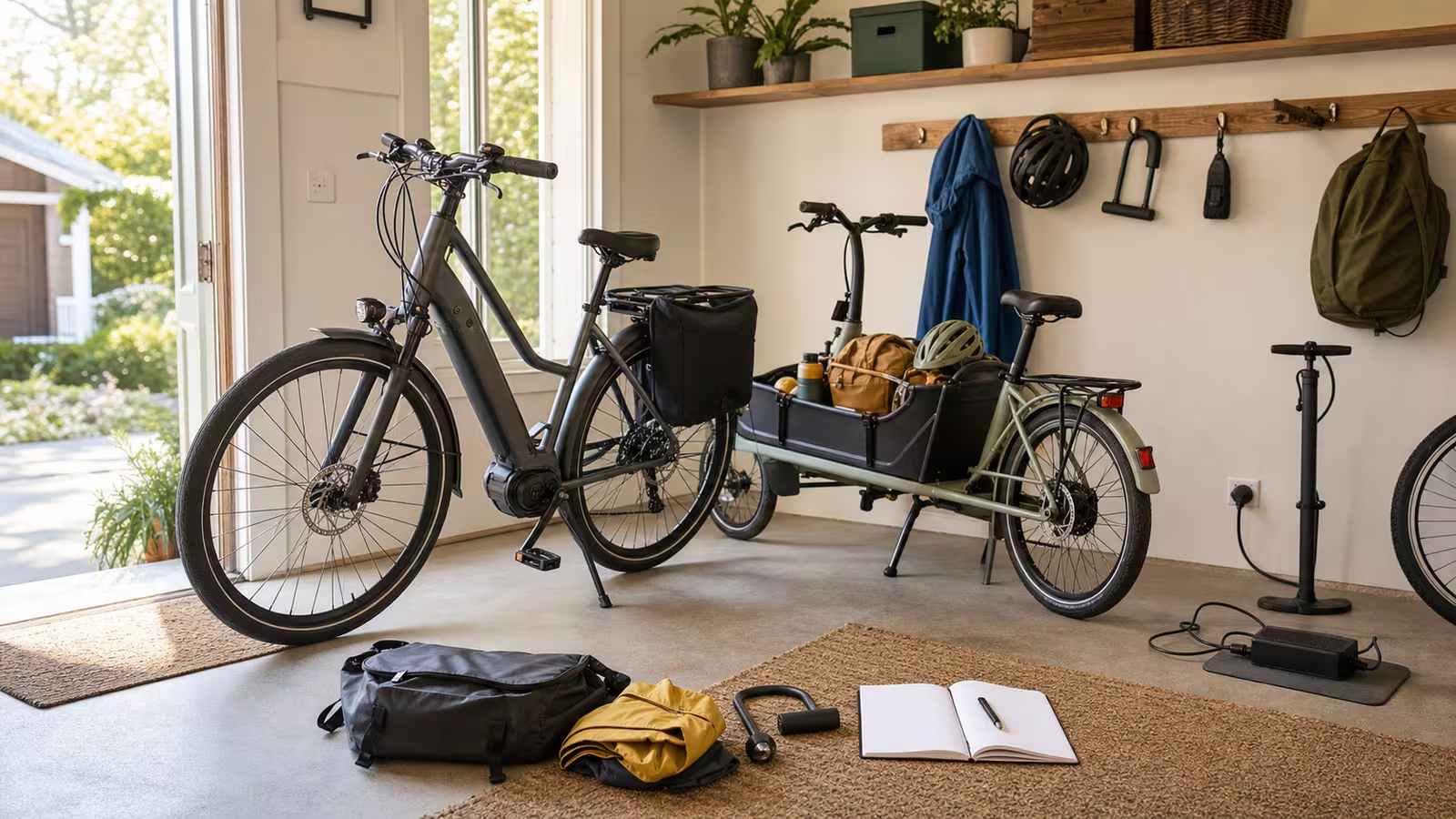
The first useful e-bike workshop is not a bench full of tools. It is the small system that lets the bike leave the house on an ordinary day and come back without becoming a pile of decisions. A bike that only works when the weather is perfect, the battery is full, the route is familiar, the rack is empty, and you have plenty of time is not yet part of daily life. It is a promising object waiting for a routine.
This quickstart is for the first practical layer: route, range, lock, battery, cargo, weather, storage, maintenance, etiquette, and local-rule awareness. You do not need to master every part before riding. You do need enough structure that a normal Tuesday does not defeat the bike before you reach the door.
Start with one real trip
Choose one trip that already happens in your life. Do not begin with the fantasy of replacing every car trip, every transit trip, or every errand. Begin with the library run, the three-mile commute, the grocery store with a gentle approach, the school drop-off after you have practiced without a passenger, or the weekend ride to the place you already know.
Write the trip down as a loop: where the bike starts, where it parks, where it charges or rests, what it carries, what weather will stop it, what lock you use, and what happens when you get home. This loop matters because many new riders only think about the moving part. The ride is only one section. The real habit includes the shoes at the door, the battery habit, the storage place, the bag that does not swing into the wheel, the lock key that is not buried, and the decision to take a quieter street even if the map says another route is faster.
Build a route that respects comfort
The fastest route is often not the best first route. E-bikes can make distance feel smaller, but they do not remove exposure to fast traffic, blind driveways, gravel, poor lighting, confusing intersections, or stressful merges. A good first route should feel boring in the right way. It should give you time to notice braking distance, assist level, mirrors, turn signals or hand signals, potholes, and how the bike behaves when the motor cuts in or out.
Ride the route once without a deadline if possible. If the route will carry a child, heavy groceries, or work gear, practice with a harmless load before adding the most important load. A few books or water jugs can teach you how the bike handles weight. This is especially important for front baskets, rear racks, longtail seats, and trailers. Cargo that feels stable in the driveway may sway when you climb, brake, or turn sharply.
Give range a reserve
Do not treat the advertised range as a promise. Range changes with assist level, hills, speed, wind, cold, tire pressure, stops, rider effort, cargo, battery age, and how much reserve you are willing to keep. A practical range plan asks a different question: can this battery complete the trip with enough margin that I am not bargaining with the last bar?
For a first routine, use a generous reserve. If the bike claims it can do forty miles and your real loop is eighteen, you may be comfortable. If the loop is thirty-two miles, includes hills, winter air, and cargo, you are already in the zone where a charger, lower assist, shorter route, or transit backup matters. Use the Range Reality Calculator to make this visible, but remember that any calculator is a planning aid, not a guarantee.
Make locking a decision, not a panic
E-bikes are attractive targets because they are useful and expensive. The answer is not to become paranoid. The answer is to match the lock plan to the stop. A two-minute stop in front of a window is different from eight hours outside a station. A quiet rack hidden behind a building is different from a busy visible rack near normal foot traffic. A weak rack can make a strong lock useless.
At minimum, learn how to lock the frame to a fixed object. Then learn when to add a second lock, secure a wheel, remove the battery if the design allows it, take lights and bags with you, cover the display, and choose a different rack. Photograph the bike, record the serial number, save purchase documents, and know whether registration, insurance, or building records apply where you live. The Lock Risk Checklist exists for exactly this kind of stop-by-stop judgment.
Treat the battery like a household system
Lithium-ion battery care should be calm and conservative. Use the charger specified by the manufacturer. Avoid charging on a bed, couch, cluttered shelf, or wet floor. Keep the battery away from heat, freezing storage, damage, and blocked ventilation. Do not keep using a pack that smells odd, becomes unusually hot, has been submerged, has visible damage, or behaves strangely. Do not open a pack as a beginner project.
Battery habits should fit the house. Some riders charge after each ride. Some store at partial charge when the bike will sit. Some remove the battery because storage is cold or theft risk is high. The right answer depends on the battery, charger, bike, living space, temperature, and instructions. The important first move is to choose one clear charging place and keep it free of fabric, paper piles, fuel, loose metal, and mystery adapters.
Cargo begins with balance
Cargo biking is not just buying a bigger bag. Weight has a place, a height, a side, and a way of moving. Heavy groceries low and centered are different from a tall loose backpack on a rear rack. A child seat is different from a crate. A front basket changes steering more than many riders expect. A trailer changes turning and visibility. Panniers can make a normal bike much more useful, but they need heel clearance and secure hooks.
Start with small loads. Tighten straps. Keep loose fabric away from wheels. Check the rack’s rated load, the bike’s total weight limit, and the child seat or trailer instructions. If a load makes the bike hard to start, stop, or put on the stand, simplify before riding in traffic. A cargo setup is successful when it helps the errand disappear into routine, not when it proves how much the bike can carry once.
Weather is a comfort problem before it is a bravery test
Rain, cold, heat, darkness, and wind often decide whether an e-bike becomes useful. Fenders, lights, gloves, a breathable rain shell, eye protection, a dry sock plan, and a towel at the door can matter more than a performance upgrade. The goal is not heroic riding. The goal is arriving able to work, parent, shop, or sit down without feeling punished.
Audit the discomfort after each ride. Were your hands cold? Did the backpack sweat through your shirt? Did the battery drop faster in the cold? Did the headlight aim too low? Did rainwater run into your shoes? Did you avoid a route because one intersection felt bad in the dark? Fix one thing at a time. Comfort is what makes repetition possible.
Keep etiquette visible
An e-bike can be faster than other path users expect. Slow down around pedestrians, children, dogs, driveways, blind corners, and crowded paths. Use a bell or voice early and kindly. Pass with space. Do not turn shared paths into speed tests. On roads, ride predictably and know when the bike’s acceleration can surprise drivers, other riders, or you.
Local rules matter here. Some places classify e-bikes by class, motor assist, throttle, and top speed. Some paths allow pedal assist but not throttles. Some schools, apartment buildings, parks, transit systems, or workplaces have their own rules. Treat signs and current local guidance as part of the route, not as afterthoughts.
Make tomorrow easier tonight
When the bike comes home, reset it for the next ride. Put the lock where it goes. Hang the wet jacket. Charge or store the battery according to your plan. Check tire pressure if the bike felt sluggish. Remove groceries, school papers, and food scraps. Wipe lights and reflectors if they are dirty. Put the helmet where your morning self will see it.
This is the workshop: not perfection, but a reset that makes the next ride easier. A practical e-bike life is built from loops like this. Choose one trip, make the loop visible, ride it gently, adjust what annoyed you, and repeat before expanding.
Related guidebooks
- Range Reality Planning: Stop Trusting the Perfect Number
- Lock Risk Checklist: Match the Lock to the Stop
- Battery Care Planner: Charging, Storage, Temperature, and Stop-Use Habits
- Commute Comfort Audit: Rain, Darkness, Hills, Surfaces, and Arrival Friction
- Home Energy Lab for battery and charging context.
- Keepers Guild for maintenance records and repair boundaries.