Many cargo-bike problems happen while the bike is barely moving. A child climbs before the rider is ready. A grocery bag goes on one side and the bike leans. A stand sinks into soft ground. A longtail rolls on a slight slope. A rider tries to hold the bike, answer a question, and secure a strap at the same time. Loading is not separate from riding. It is the first handling skill.
Choose the surface first
A stand that is stable on flat concrete may be poor on gravel, grass, a sloped driveway, wet leaves, or a soft shoulder. Before loading, look at the surface. Is the bike level? Can it roll? Will the stand sink? Is there room for the rider to stand on the correct side? Are people walking through? Is traffic nearby?
If the surface is bad, move the bike before loading. Do not try to solve a slope with one hand while lifting groceries or settling a child. A better loading spot is part of the route.
Know your stand type
Side stands, center stands, double kickstands, rolling stands, and front-loader stands behave differently. Some are for holding an empty bike only. Some are designed for cargo but still have limits. Some require technique to lift the bike onto them. Read the instructions and practice without passengers.
Do not assume a stand can hold a child climbing onto the bike. Many passenger routines require the rider to stabilize the bike and control the loading sequence directly. When in doubt, follow the manufacturer and ask a qualified shop.
Load low and balanced
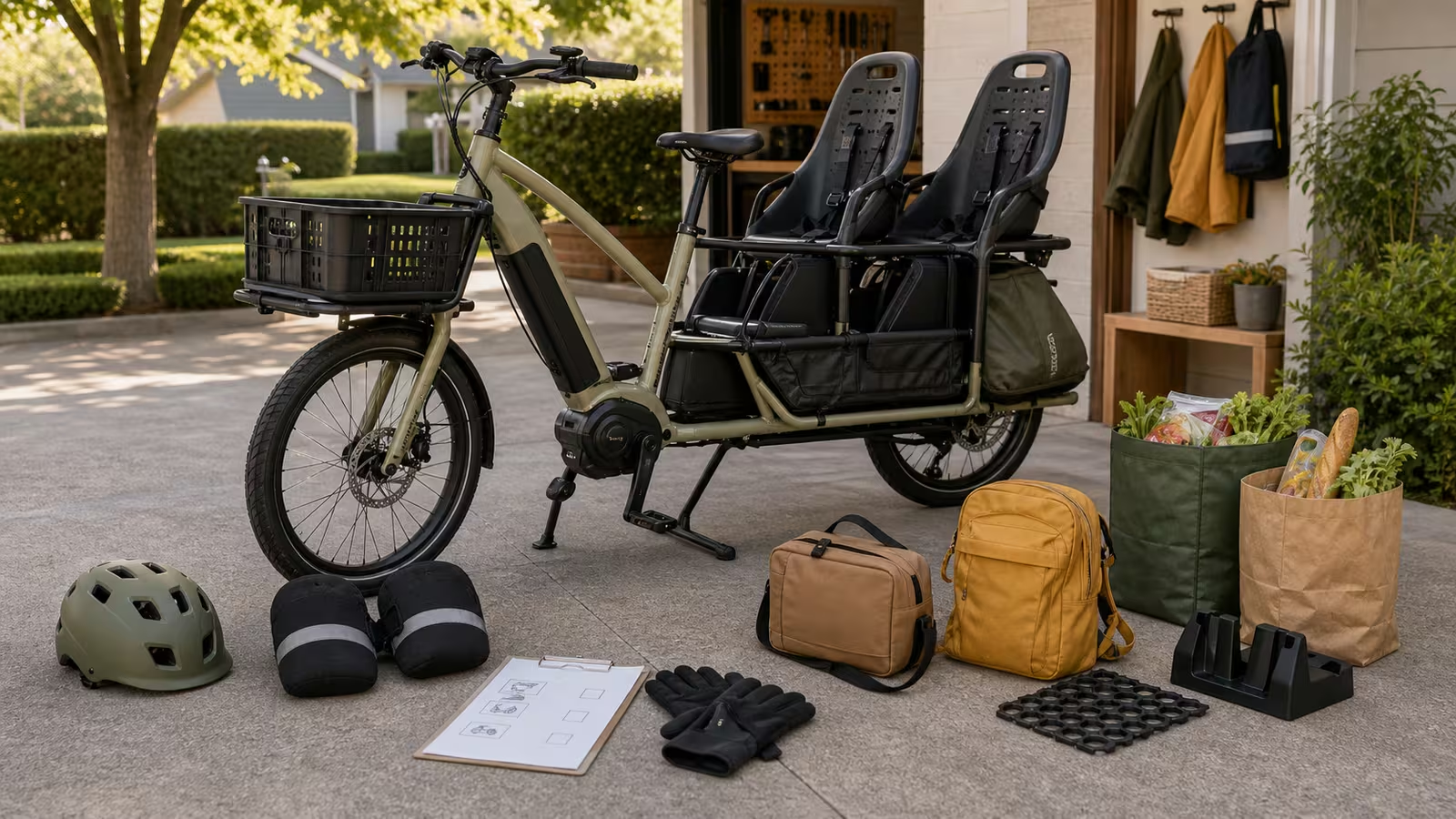
Heavy items should usually go low and centered. If using panniers, balance left and right. If using a box, put dense items at the bottom. If using a rear rack, avoid tall loose stacks. Load before passengers when that makes the passenger area cleaner, but never leave a loaded bike unstable or unattended.
After loading, walk the bike a few steps and brake. If it leans, sways, or makes the stand difficult, repack. A load that fails in the driveway will not improve in traffic.
Use a passenger script
For children, the loading script should be the same every time. Rider stabilizes. Child waits. Helmet checked. Child climbs only when invited. Feet and hands go where they belong. Straps or holds are checked. Bags are clear. Rider confirms before moving. At arrival, the child waits for the exit cue.
This script reduces negotiation at the worst moment. It also teaches that climbing on a cargo bike is not the same as hopping on playground equipment. The Child Seat and Passenger Readiness guide covers the full passenger system.
Keep straps away from moving parts
Bungees, cargo nets, backpack straps, rain-cover straps, and loose cords can move toward wheels, brakes, chain, belt, or pedals. Use straps that are long enough to secure the load and short enough not to flap. Tuck ends. Check hooks. Avoid improvising with cords that can slip or stretch unpredictably.
After securing, spin wheels if appropriate and inspect clearances. A strap that looks fine while parked may shift over the first curb cut.
Practice the grocery order
For groceries, load heavy items first and low. Fragile items last and protected. Cold items together if timing matters. Keep the lock accessible. Keep lights visible. If using a stand, avoid loading one side fully before the other unless the bike remains stable. If you must load unevenly, hold the bike and correct the balance quickly.
The Grocery Hauling Without Wobble guide gives packing patterns. The stand routine makes those patterns practical.
Unloading is not an afterthought
At home, school, or work, unloading may be harder than loading because the rider is tired, people are waiting, or the surface is worse. Decide what comes off first. Keep the bike stable. Do not let a passenger climb down into traffic, a crowd, or a swinging bag. Do not leave the bike on a stand with one heavy side loaded if it wants to tip.
If unloading requires several trips inside, solve the lock and security question. A cargo bike left unlocked because the rider is carrying groceries up stairs is a common weak point.
Stop when the stand feels wrong
If a stand bends, loosens, sinks, slips, or no longer holds the bike as expected, stop relying on it until it is checked. If a loaded bike falls, inspect the stand, frame mounts, child seat, rack, wheels, brakes, and battery before riding. A tip-over can damage more than pride.
Loading confidence should grow from practice, not denial. Stabilize first, load deliberately, then ride.
Make a two-person rule when needed
Some loading routines should require another adult until proven calm. A heavy front box, two children, a steep driveway, a new stand, or a rider recovering from injury may make solo loading unreasonable. That does not mean the cargo bike cannot work. It means the routine needs a different script, different surface, different gear, or more practice before one person handles it alone.
Write down the rule plainly. For example: no child climbs while groceries are half-loaded, no loading on the sloped curb, no passenger loading when the stand is wobbling, and no one lets go of the bike until the rider says it is stable. Simple household rules prevent repeated negotiation.
Reset the stand area
Keep the loading area clean enough to use. Leaves, loose gravel, toys, wet cardboard, and random bags can make the stand less reliable. If the bike lives in a shared room, choose a spot where loading does not block others. If a wheel chock or mat helps, store it where it will actually be used.