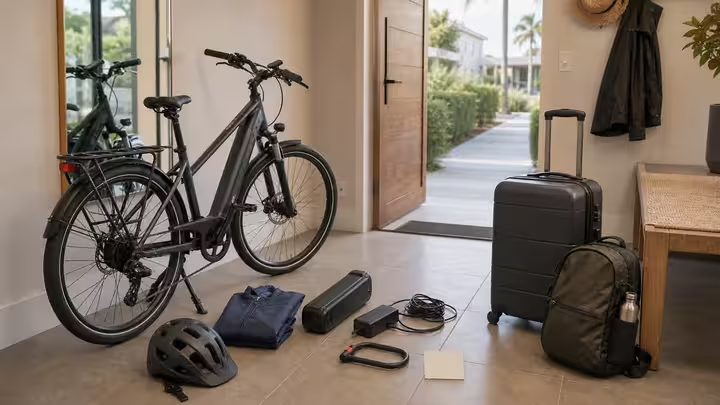
E-bike battery care has two bad extremes. One treats the battery like a harmless black box that can be charged anywhere with any adapter. The other treats every lithium-ion pack like a disaster waiting to happen. Neither extreme helps daily riders. The useful path is calmer: follow the manufacturer, keep charging boring, avoid damage, respect temperature, and stop using a questionable pack before optimism becomes the plan.
A battery care routine should be ordinary enough that you can repeat it after a long day. If it depends on memory, clutter, or a mystery drawer of adapters, it is not yet a routine. The charging place, charger, storage habit, inspection habit, and stop-use rules should be visible.
Use the intended charger
The charger is not a generic laptop brick. Use the charger specified for the battery and bike system. Voltage, current, connector, communication, and safety design matter. A connector that fits is not proof that the charger belongs. Avoid bargain replacement chargers unless they are explicitly approved by the manufacturer or a qualified source you trust.
Label the charger if your household has several similar bricks. Keep the charger with the bike system, not in a mixed drawer. Inspect the cord, plug, connector, and case. If the charger becomes unusually hot, smells odd, buzzes strangely, has damaged insulation, or behaves differently than before, stop using it and get proper guidance.
Choose a boring charging place
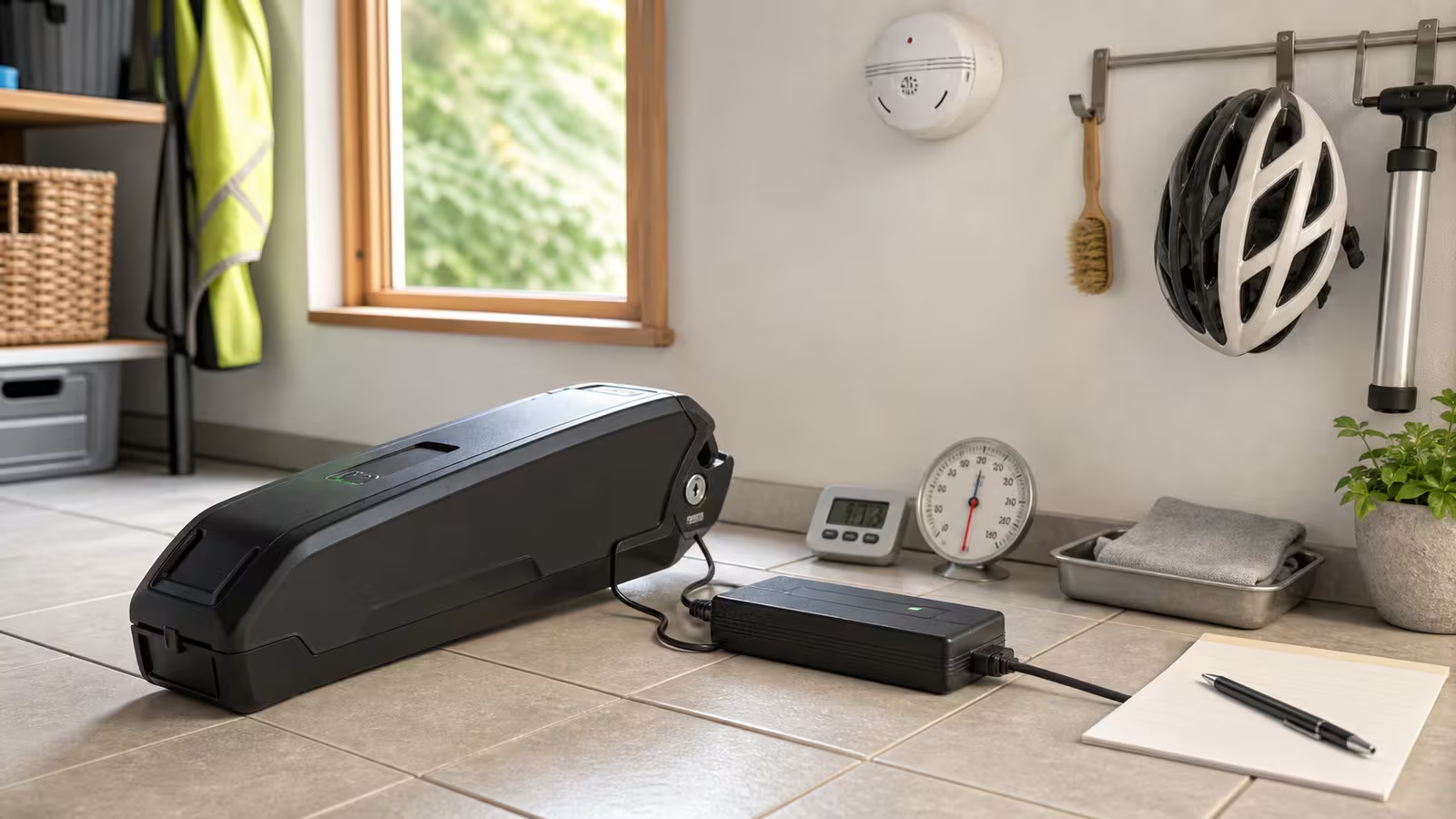
A good charging place is clear, dry, stable, and away from clutter. Avoid beds, couches, piles of laundry, paper stacks, rugs, wet floors, direct sun, heaters, fuel, solvents, and tight boxes with poor airflow. A hard surface such as tile, concrete, metal tray, or a clear utility counter is easier to keep boring.
Do not bury the charger under bags or coats. Do not run cords through pinch points where doors, stands, wheels, or furniture can damage them. Do not create a trip hazard that makes someone yank the charger. If the charger needs ventilation, give it space. If the manual says not to leave charging unattended, follow that instruction. If your building, workplace, school, or transit system has battery charging rules, treat those as part of the plan.
Temperature changes the plan
Temperature affects lithium-ion batteries. Charging a very cold or very hot battery can be harmful depending on the system and instructions. Storing a battery in a freezing shed, hot car, sun-baked porch, or damp outdoor box can shorten life and create avoidable risk. The manual may specify charging and storage temperature ranges. Those numbers matter more than generic advice.
Build a simple transition habit. If the bike comes home very cold, let the battery warm in an appropriate indoor place before charging if the manual calls for it. If the bike sat in heat, give it time to cool. Do not charge on a radiator, near a space heater, or in direct summer sun. If the only available storage is extreme, solve storage before relying on the bike for daily transportation.
Storage charge is not always full
Many lithium-ion systems prefer not to sit full or empty for long periods. Exact guidance varies, so the manual wins. For daily use, charging to full before a ride may be normal. For weeks of storage, a partial charge may be recommended. The important habit is separating “ready for tomorrow” from “sitting for a month.”
If the bike will sit because of travel, injury, winter, or a busy season, make a storage note. Charge or discharge to the recommended range, store in the recommended temperature range, keep it dry, and set a reminder to check it. Do not let a battery disappear into a closet until it is deeply discharged or forgotten.
Inspect gently and often
You are not diagnosing cells. You are noticing obvious changes. Look for cracks, swelling, loose mounts, damaged contacts, corrosion, broken latches, scraped cases from crashes, water exposure, unusual heat, charging errors, and range changes that do not match weather or route. Check that the battery seats securely on the bike. A loose battery can rattle, disconnect, or stress contacts.
After a fall, crash, flood, theft attempt, or hard impact, treat the battery as suspect until it has been assessed. A battery can look mostly fine and still deserve caution. If a pack was submerged, do not “dry it out and see.” Water and lithium-ion electronics are not a casual experiment.
Fire safety without theater
Battery fires are serious, but fear-based images do not build useful routines. Focus on practical prevention and response. Keep smoke alarms working. Charge in a place that does not add fuel. Keep exits clear. Know what your local fire authority says about lithium-ion battery incidents. Do not store several questionable packs together. Do not charge a battery in a path people need to exit.
If a battery is actively smoking, hissing, flaming, venting, or heating uncontrollably, leave the area and call emergency services according to local guidance. Do not carry a failing battery through the home because you hope to save the floor. Your plan should be made before the emergency, not improvised during it.
Charging at work, school, or apartments
Shared spaces need permission and courtesy. Some workplaces and schools prohibit charging personal batteries. Some apartment buildings require designated areas or ban indoor battery charging. Some bike rooms have outlets that are not intended for charging. Ignoring those rules can create conflict, liability, or removal of bike privileges for everyone.
Ask before charging. Bring only the correct charger. Do not leave cords across walkways. Do not monopolize outlets. Do not charge damaged batteries in shared spaces. If your commute depends on destination charging that is not actually allowed, the route plan is not stable yet.
Connect battery care to range and locks
Battery care is not separate from range planning. Cold storage, aging, heavy loads, and high assist can reduce the practical range you should plan around. It is also not separate from locking. Removing a battery for theft reduction changes what you carry, where you store it, and whether the destination allows it. Leaving a battery on the bike changes theft risk and weather exposure.
The Battery Care Planner can help you choose a next habit, but the real win is a routine you can describe in one sentence: “I charge on the clear tile counter with the correct charger, not overnight when I cannot respond, and I stop using the pack if it is damaged or behaves oddly.”
Related guidebooks
- Range Reality Planning: Stop Trusting the Perfect Number
- Lock Risk Checklist: Match the Lock to the Stop
- The E-Bike Workshop Quickstart: Make the Bike Part of Real Life
- Home Energy Lab for broader battery and charging context.
- Keepers Guild for repair boundaries and manual habits.