E-bikes can make cycling possible or practical for riders who would not choose a conventional bicycle. Assist can reduce effort, a step-through frame can make mounting easier, and a stable cargo setup can replace trips that used to require another mode. But mobility-friendly fit should not be reduced to marketing phrases. The useful question is not whether an e-bike is accessible in general. It is whether this rider, with this body, route, storage, cargo, and support network, can use this bike calmly.
Start with movement, not specs
Before comparing motors, ask how the rider mounts, dismounts, starts, stops, turns, looks behind, signals, parks, locks, and stores the bike. Can the rider lift a leg over the frame? Is a step-through shape enough? Can they hold the bike upright at a stop? Can they operate brake levers comfortably? Can they turn the bars without pain? Can they walk the bike through a doorway?
These questions are more useful than a list of features. A powerful motor does not solve a top tube that is hard to mount. A comfortable saddle does not solve a bike too heavy to move through an apartment hallway.
Test controls with real hands
Brake levers, shifters, display buttons, throttles, bells, light switches, and locks all require hand strength, reach, and coordination. A rider with arthritis, numbness, injury, small hands, tremor, or limited grip may need different levers, grips, bar shape, or control placement. Test slowly. Can the rider brake firmly from the normal hand position? Can they change assist without looking away too long?
This is also a local-rule issue. A throttle may make starts easier for some riders, but throttle access varies by place. The E-Bike Class, Throttle, and Speed Guide belongs in the conversation before buying.
Consider balance at low speed
Assist helps once the bike is moving, but many mobility challenges happen at low speed: starting, stopping, turning tightly, loading cargo, walking, and parking. A heavy e-bike can be difficult to catch if it leans. A high rear load can change balance. A front basket can affect steering. A longtail can be stable once moving but awkward in an elevator.
Practice in a quiet area. Start with no cargo. Add harmless weight. Try the exact storage movement. A test ride that only includes smooth pavement at moderate speed is not enough.
Match the bike to storage
Mobility-friendly riding can fail indoors. Stairs, narrow doors, tight elevators, high hooks, crowded bike rooms, and heavy batteries can create barriers. A folding bike may be compact but heavy. A lighter bike may have less range. A trike may be stable but too wide for storage. The storage route is part of fit.
Use the Apartment Storage and Charging guide even if you do not live in an apartment. It asks the right questions about doors, charging, rules, and daily handling.
Bring qualified support into the right questions
A bike shop can help with mechanical fit, but may not understand a rider’s medical situation. A clinician may understand movement but not bike compatibility. A family member may understand daily life but not rated loads. Good decisions often combine perspectives. Bring specific questions: mounting height, brake reach, pain after ten minutes, balance while stopping, cargo handling, storage path, and local-rule fit.
Avoid vague promises that a bike is good for seniors, injuries, or accessibility without testing the real use. Respectful fit is specific.
Plan cargo carefully
Mobility-friendly riding often includes carrying aids, groceries, medication, work gear, or comfort items. Cargo placement should reduce strain, not add wobble. Low panniers may be better than a backpack. A front basket may be convenient but affect steering. A trailer may reduce lifting but add turning and storage problems.
Do not attach cane holders, oxygen-related equipment, walkers, or other mobility items without qualified guidance where needed. The consequences of a loose or poorly placed item can be serious.
Make routes calmer than necessary
A route that feels fine to an athletic tester may be wrong for a rider managing pain, fatigue, balance, or sensory load. Choose calmer crossings, smoother pavement, more shade, places to stop, and lower traffic stress. Build backup options. Do not make the first route depend on perfect energy, perfect weather, and perfect confidence.
The e-bike should reduce friction, not create a new endurance test. If the route requires repeated panic moments, redesign the route.
Keep dignity in the process
Fit conversations should not talk down to the rider. Ask what works, what hurts, what worries them, and what would make the ride repeatable. Let the rider define success. For one person, success is a two-mile grocery trip. For another, it is reaching transit. For another, it is riding with family again.
Adaptive fit is not a special category off to the side. It is the same practical e-bike question asked with more honesty: can this setup serve the real rider in real conditions?
Document the trial
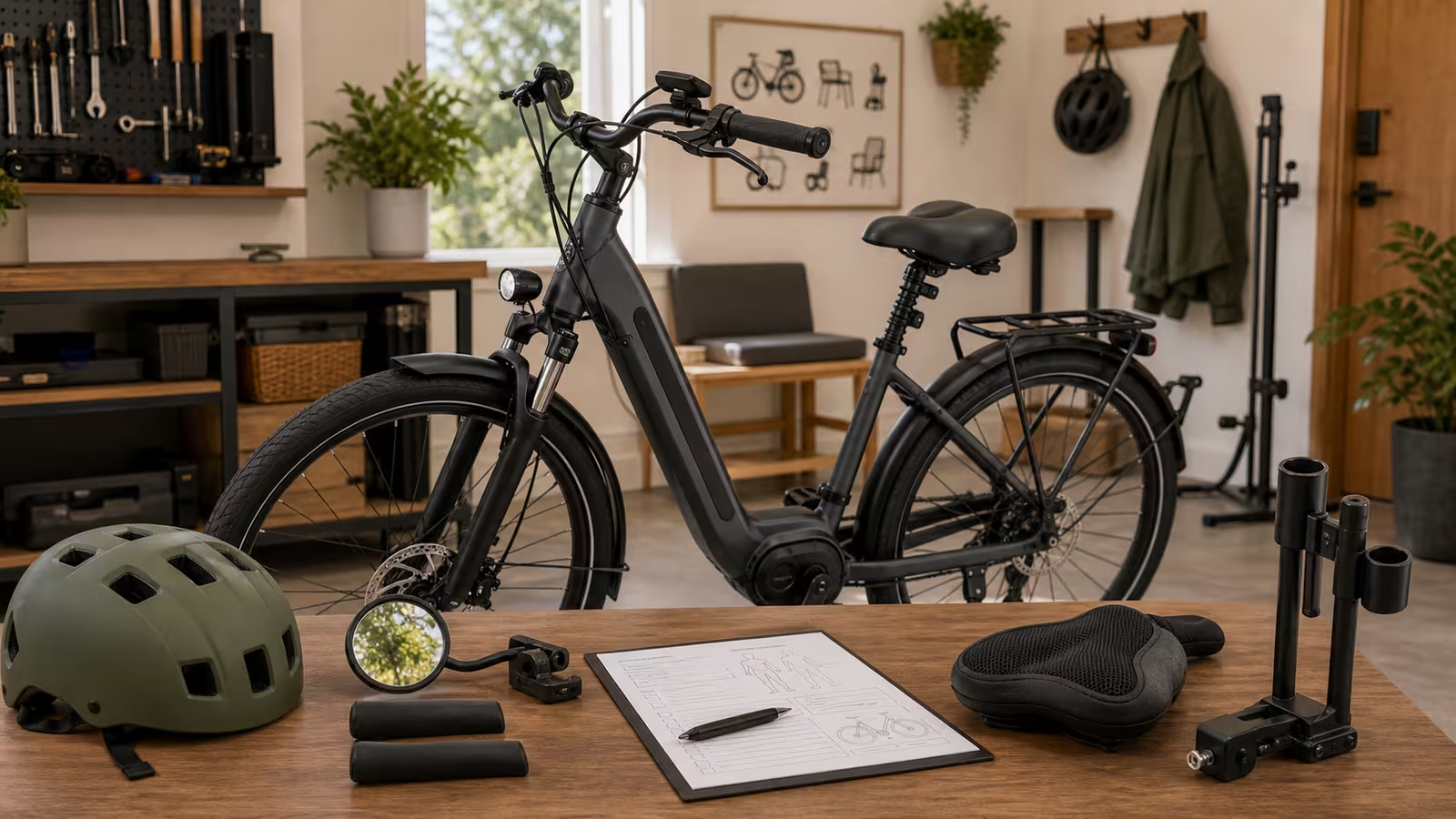
After any test ride or fitting conversation, write down what worked and what did not. Note mounting, stopping, brake reach, hand comfort, knee or back comfort, balance at low speed, storage handling, and how the rider felt after ten minutes rather than only during the first minute. If pain, dizziness, fatigue, or fear appears, do not treat it as a character flaw. Treat it as fit data that deserves better support.
Also record adjustments. Saddle height, handlebar angle, mirror placement, grip shape, tire pressure, bag position, and assist settings can change the experience. A clear note helps a shop, fitter, clinician, or family member understand what has already been tried.