Vendor remote access is a normal part of modern operations. Contractors maintain systems, support teams troubleshoot products, service providers manage platforms, and partners may need limited access to shared tools. The risk is not that a vendor exists. The risk is that vendor access can become invisible, overbroad, permanent, or hard to explain when something unusual happens. For background, see CIS — Critical Security Controls v8 .
This guide extends the discussion in External Remote Services . That guide focuses on exposed remote access surfaces. This one focuses on the relationship behind the access: who the outside party is, why they connect, what they can touch, how the session is approved, and how the organization knows when the need has ended.
This guide is defensive education. It uses toy examples, observable evidence, and safe reasoning. It does not provide exploit instructions, malware code, credential theft steps, evasion playbooks, target scanning procedures, or operational offensive workflows. If you are handling an active incident, preserve evidence, follow your organization's incident-response plan, and involve qualified responders and legal counsel where appropriate.
Why Third-Party Access Is Different
Internal access already requires ownership, least privilege, and logging. Third-party access adds distance. The person using the account may not sit inside the same identity lifecycle, device management process, training path, or incident response routine. The vendor may have its own administrators, subcontractors, ticketing system, and emergency procedures. A defender cannot assume the same controls apply unless the evidence shows they do.
Third-party access can also outlive contracts and projects. A support account created during implementation may remain enabled after the product stabilizes. A contractor’s account may stay active because no one wants to break a future support call. A shared vendor login may exist because the vendor’s tool does not support individual accounts. These patterns are common enough that a calm review should expect them without treating every finding as proof of active harm.
The review should still be serious. Vendor access often reaches systems that are difficult for internal teams to repair alone. It may touch backups, payment workflows, building systems, customer support tools, identity platforms, or managed infrastructure. The defender’s job is to make that reach visible and limited.
The Access Story Defenders Need
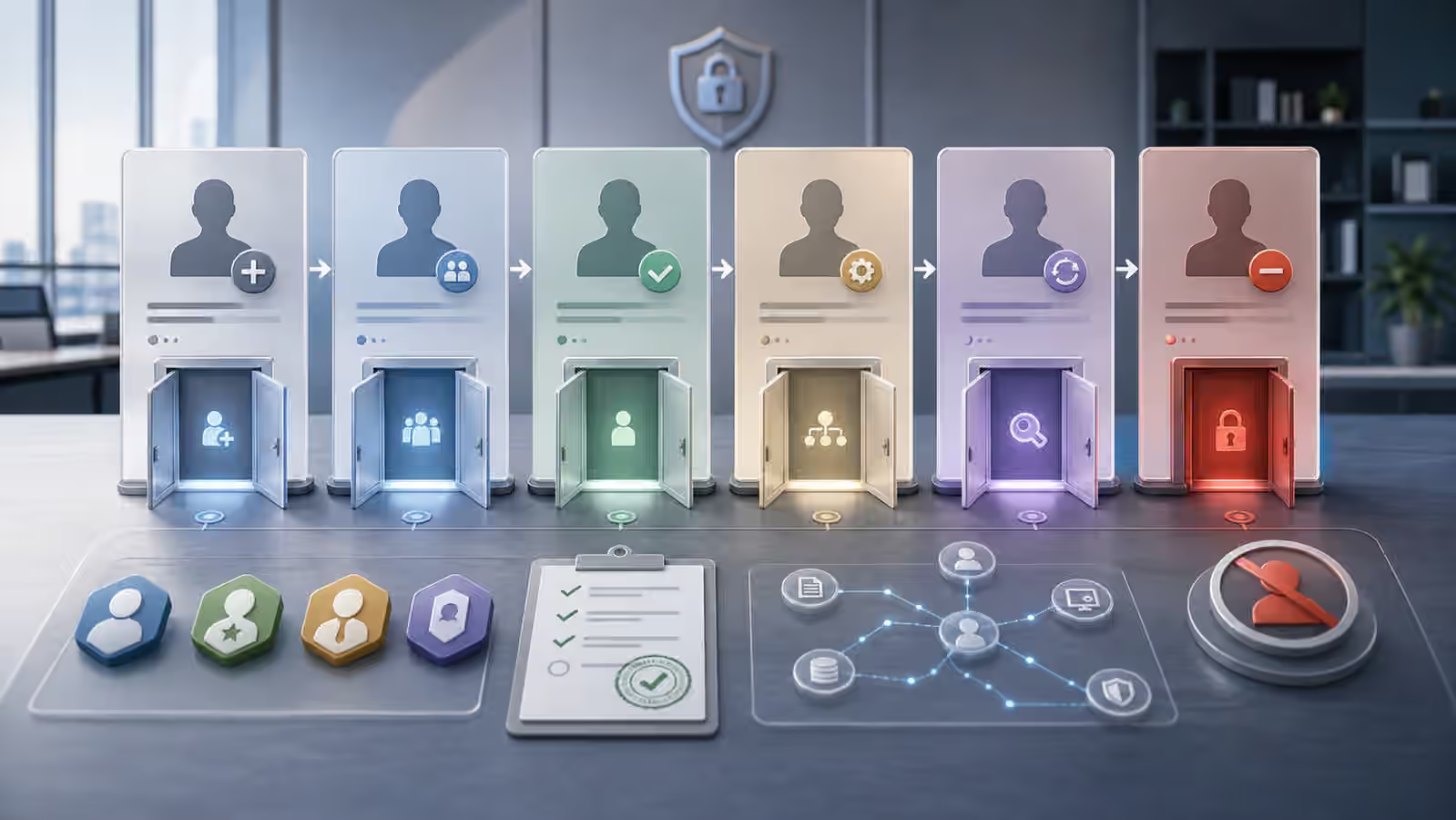
A useful vendor access story starts with purpose. The organization should know why the vendor needs access, which system or data set the access supports, who owns the relationship, and how access changes are approved. A named business or technical owner matters because security teams cannot judge every vendor workflow alone. Someone must be responsible for saying whether the access is still needed.
Identity is the next part of the story. Individual named accounts are usually easier to review than shared accounts because actions can be tied to a person or role. If shared access is unavoidable, the exception should be explicit and narrower than normal. It should have compensating controls, such as stronger approval, session visibility, time limits, or extra owner review. The guide on Valid Accounts is relevant because vendor activity may look legitimate even when the context is wrong.
Authentication and recovery matter too. Vendor accounts should not become the weak route around internal login controls. Strong authentication, recovery paths, device expectations, and offboarding should be described in operational terms, not only in policy language. If the organization cannot say how a vendor account is recovered, disabled, or reviewed during an incident, the access story is incomplete.
Session Visibility and Limits
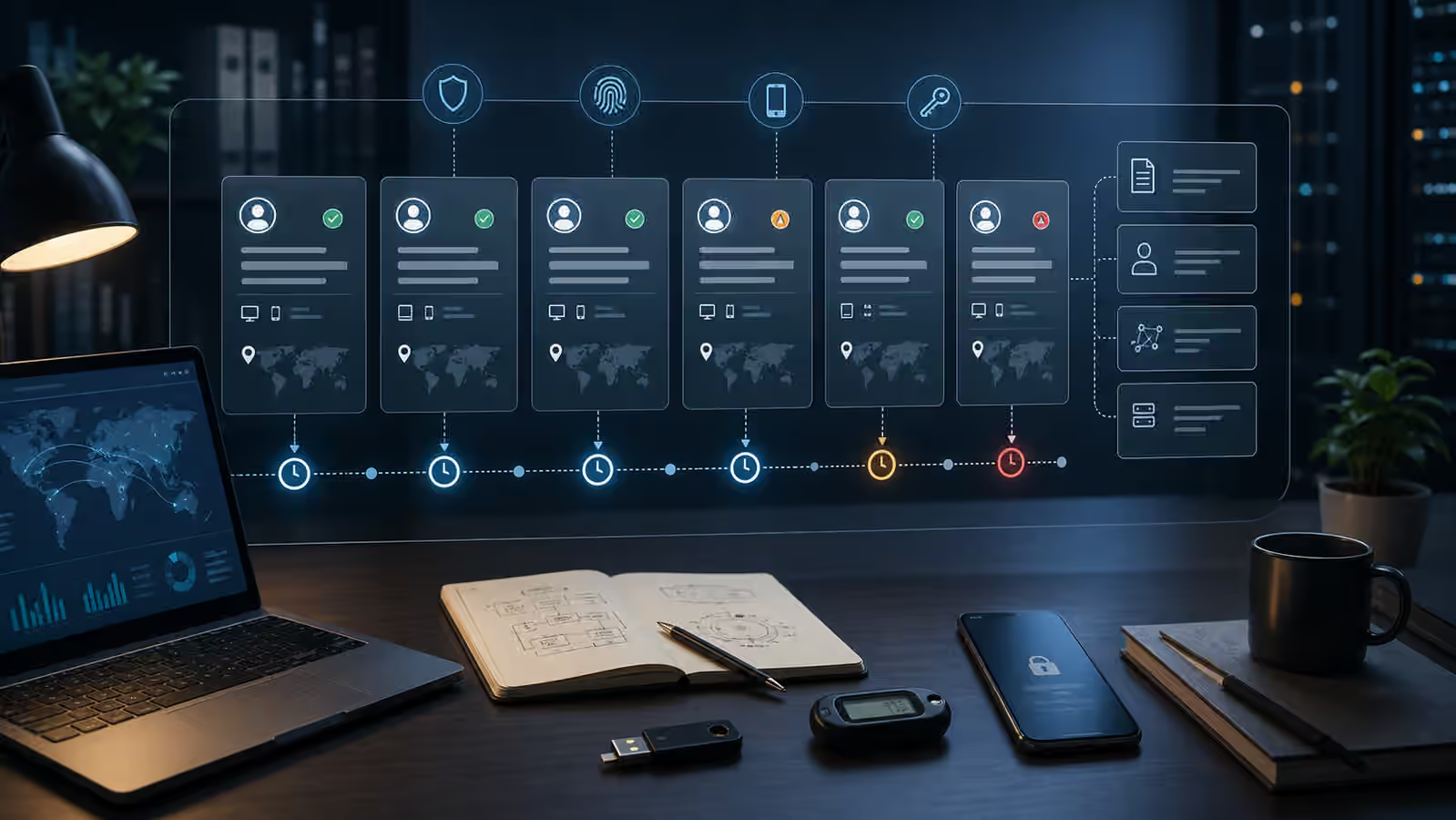
Remote support access is safer when sessions are visible. Visibility may mean logs of who connected, when the session began, which system was reached, what approval or ticket justified it, and when the session ended. In some environments, it may include recording or command review. The right level varies by risk and context, but the principle is stable: access should leave enough evidence for later review.
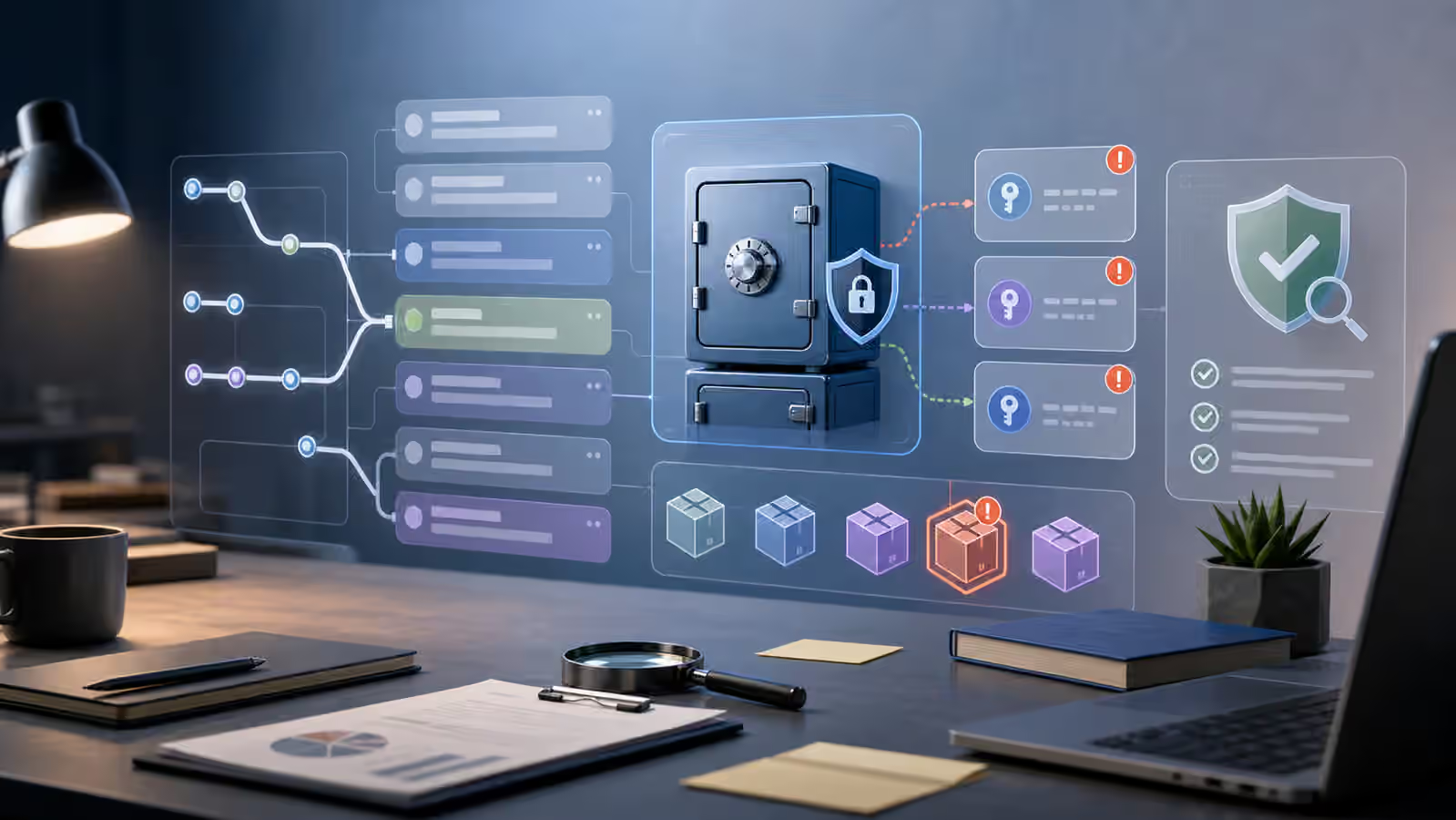
Limits are just as important. A vendor who supports one application rarely needs broad network reach. A contractor who updates content may not need administrator access. A managed service provider may need elevated access, but that access should still be scoped, monitored, and reviewed. Network Segmentation and Flat Networks helps explain why reachability changes the blast radius of any credential.
Time limits reduce forgotten access. Some vendor sessions can be opened only when needed. Some accounts can be disabled between support windows. Some privileges can be granted temporarily while a named ticket is active. The exact mechanism is less important than the evidence that access is not permanently broader than the purpose requires.
A Defensive Review Example
Imagine a fictional manufacturer with a vendor portal used to maintain a scheduling system. A defender reviews the access after a routine audit note. The first discovery is that the vendor account is active all year, even though support is needed only during quarterly updates. The second discovery is that the account has access to a broader management subnet because that was easier during deployment. The third discovery is that support tickets are stored in the vendor’s system, but internal owners rarely attach them to internal change records.
None of those facts proves misuse. Together, they describe unnecessary uncertainty. The defender records the vendor purpose, the business owner, the current access path, the systems reachable from that path, the login and session evidence available, and the missing approval link. The next action might be narrowing network reach, enabling session logs, requiring internal ticket references, and disabling access outside support windows.
The review becomes more urgent if logs show access at unexpected times, from unexpected regions, with failed authentication bursts, or near sensitive changes. Even then, the note should stay evidence-first. Write what was observed, what remains unknown, which systems could be affected, and which owner or responder needs to act.
Connections to Other Guides
Vendor access intersects with identity, exposure, and incident response. MFA, Passkeys, and Recovery Paths explains why login strength and recovery are part of the control story. External remote service review explains how reachable surfaces can invite attention. Blast-radius thinking explains why one broad vendor route can matter more than several narrow ones.
It also intersects with procurement and operations. Security teams may not own the vendor relationship, but they can ask for observable controls: named owner, scoped access, approval record, session evidence, review date, and offboarding path. Those facts make the relationship reviewable without turning every vendor conversation into a legal debate.
A Review Habit That Survives Urgency
The durable habit is to review vendor access before the next emergency. During a production outage, people will favor speed. If the access path is already named, scoped, and logged, urgent support can happen with less improvisation. If the access path is unknown, every urgent request becomes a security decision made under pressure.
Vendor access should end each review with a clear sentence: this outside party can reach these systems for this purpose, under these controls, until this condition changes. If that sentence cannot be written, the access probably needs cleanup before it becomes an incident-response problem.