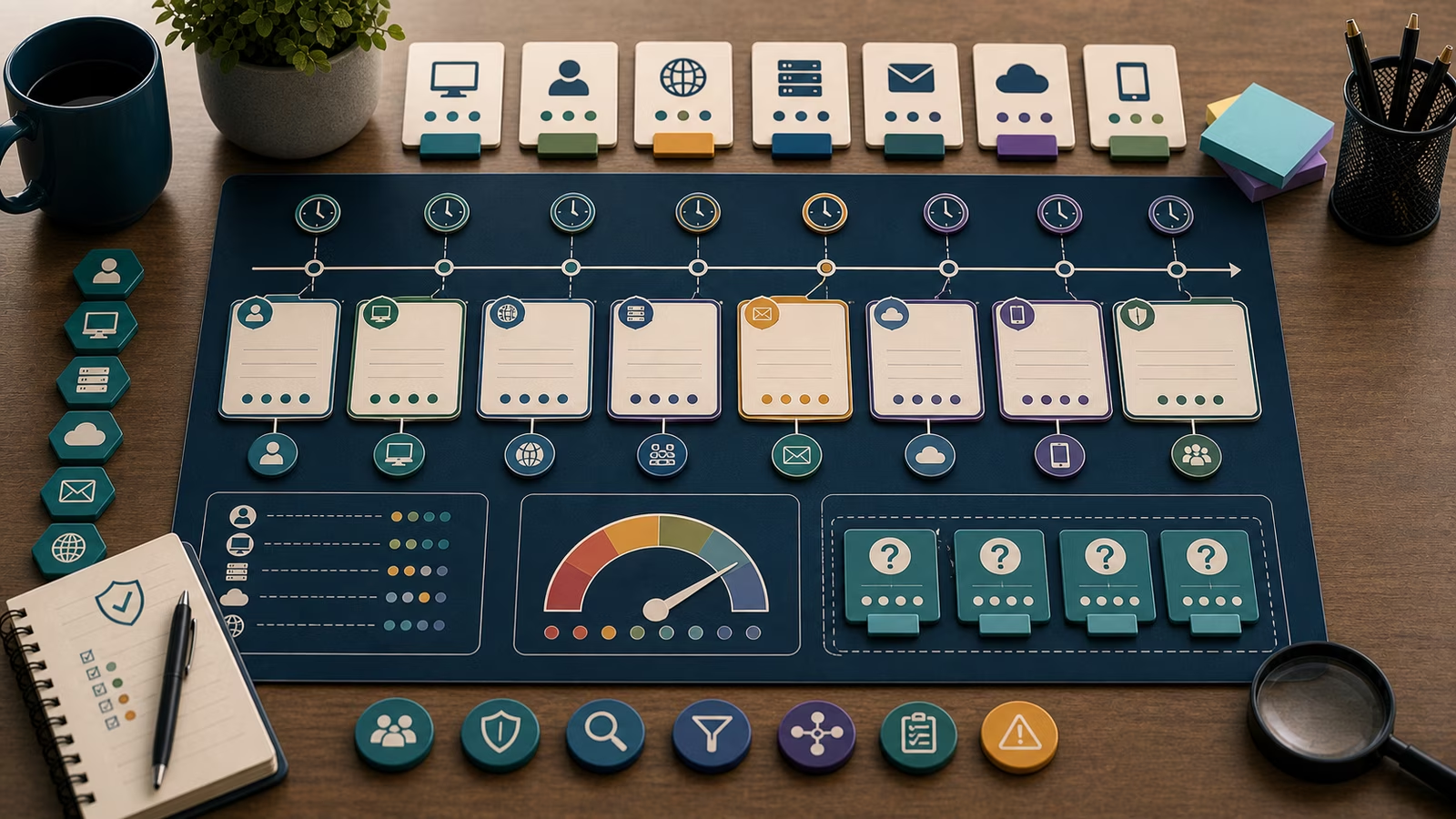
Time becomes evidence the moment a defender tries to explain what happened first. A login appears in one system, a process starts on an endpoint, a file changes, a network connection opens, and a help desk ticket appears minutes later. If those records use different clocks, time zones, collection delays, or timestamp formats, the incident story can become confident in the wrong direction. For background, see NIST — Guide to Computer Security Log Management, SP 800-92 .
This guide complements Incident Timeline Building . Timeline building explains how to assemble events, entities, and confidence. Time synchronization and log correlation explain why the timestamp on an event is not automatically the same as the time the event happened, the time it was collected, or the time a responder saw it.
This guide is defensive education. It uses toy examples, observable evidence, and safe reasoning. It does not provide exploit instructions, malware code, credential theft steps, evasion playbooks, target scanning procedures, or operational offensive workflows. If you are handling an active incident, preserve evidence, follow your organization's incident-response plan, and involve qualified responders and legal counsel where appropriate.
Why Time Becomes Evidence
Many defensive questions are sequence questions. Did the suspicious login happen before the password reset or after it? Did the process start before the network connection? Did the configuration change happen before the alert? Did the backup failure begin before the ransomware-like file activity? Sequence shapes interpretation. A minute can change whether an event is a cause, an effect, or an unrelated coincidence.
Timestamps also help tie records together. A cloud audit event, endpoint log, identity provider record, and support ticket may describe the same episode from different angles. Correlation is the act of saying these records probably belong together. That statement depends on time, but it also depends on identity, host, source, action, and context. Time is powerful evidence only when its limits are understood.
A calm defender avoids writing “this proves the user did X at 10:03” too early. A safer note says which system recorded which event, which timestamp field was used, what time zone or clock source is known, and how confident the team is that the record maps to the real event time. The extra words feel slow until an investigation depends on them.
Clock Drift and Time Zones
Clock drift is the difference between a system’s clock and a trusted reference. Small drift may be harmless for routine operations but painful during an investigation. A workstation that is several minutes off can make a process look like it started before the login that created the session. A device that logs local time without a time zone can create confusion when responders in different regions compare notes.
Time zones add another layer. Some systems store events in UTC. Others display local time. Some export files include offsets. Others depend on the viewer’s browser or account settings. A screenshot may show one time zone while the raw export uses another. None of this means the evidence is bad. It means the responder should name the source and avoid mixing display time with stored event time.
Collection delay is different from clock drift. A sensor may observe an event immediately but send it to a central platform later. A batch job may upload logs on a schedule. A cloud service may process events with small delays. If a timeline uses ingestion time instead of event time, sequence can be distorted. The guide on Logs: What to Keep and Why is useful because log value depends on fields, source, retention, and interpretation.
Correlation Is a Confidence Claim
Correlation should be written as a confidence claim, not as magic. Two events close in time may be related, but time proximity alone is weak. The confidence increases when the same user, host, session, IP address, device identifier, file path, or change ticket appears across sources. It decreases when the only similarity is that both events occurred during a busy hour.
Defenders should also watch for duplicated events. A central platform may receive the same event from more than one connector. An identity provider may log both a user-facing action and an internal service event. Endpoint tools may report a parent and child process in separate records that look like separate incidents to an inexperienced reader. Correlation should reduce confusion, not multiply it.
A good timeline can include uncertainty directly. It can say that an endpoint record appears five minutes earlier than the identity event, but the endpoint’s clock health is unknown. It can say that a cloud event uses UTC while a user screenshot uses local time. It can say that the ordering is likely but not yet proven. That honesty helps responders choose proportional next steps.
A Defensive Review Example
Imagine a fictional clinic investigating an unusual file-sharing change. The SaaS audit log shows an external share created at one time. The identity log shows a successful login nearby. The endpoint log shows browser activity that appears earlier than both. A responder could rush to say the endpoint activity came first. Instead, the team checks the timestamp sources.
The SaaS export uses UTC event time. The identity platform displays local time in the console but exports UTC. The endpoint agent records local system time, and the laptop clock was a few minutes slow before it synchronized. Once that is written down, the apparent contradiction becomes less alarming. The likely sequence is login, browser activity, sharing change, followed by a later owner confirmation. The confidence is not perfect, but it is good enough to guide the next review.
The note should preserve the reasoning. It should not simply present a cleaned-up story. Future responders need to know that one clock was off and that the endpoint order was adjusted. Evidence Notes and Chain of Custody explains why preserving the path from observation to interpretation matters.
Connections to Other Guides
Time quality affects alert triage. A detection may fire after the event it describes because of processing delay. A login alert may seem to follow a suspicious action only because one source displays a different time zone. Evidence-First Triage helps keep the first note narrow enough to survive later correction.
Time quality also affects recovery. During ransomware response, defenders may need to know which backups predate destructive behavior, which hosts saw encryption-like activity first, and which credentials were used before containment. If clocks are unreliable, recovery choices become more cautious. The answer is not to wait for perfect certainty. The answer is to label the uncertainty and choose actions that preserve options.
A Cleaner Timestamp Habit
The cleaner habit is to record event time, source, time zone, and confidence whenever sequence matters. If a platform gives both event time and ingestion time, name which one is being used. If a screenshot is taken, record the display time zone if it is visible or known. If a device clock appears wrong, write that down before adjusting the timeline.
Time synchronization is not glamorous, but it is part of defensive clarity. It turns scattered logs into a story that can be reviewed, corrected, and trusted enough for decisions. When a timeline says what time means, responders spend less energy arguing about order and more energy protecting systems, data, and people.