Incident response depends on tools and evidence, but it also depends on communication. The right people need to know what is happening, what is known, what remains uncertain, which decisions have been approved, and where updates belong. A poor communication channel can leak sensitive details, duplicate work, bury evidence, or push responders into rushed decisions.
This guide sits beside Incident Timeline Building , Response Actions and Approvals , and Evidence Notes and Chain of Custody . It treats communication as a defensive control: planned, owned, reviewed, and adjusted as evidence changes.
This guide is defensive education. It uses toy examples, observable evidence, and safe reasoning. It does not provide exploit instructions, malware code, credential theft steps, evasion playbooks, target scanning procedures, or operational offensive workflows. If you are handling an active incident, preserve evidence, follow your organization's incident-response plan, and involve qualified responders and legal counsel where appropriate.
Why communication is a control
Communication decisions affect evidence. If responders discuss sensitive details in a channel that later proves compromised, the incident can widen. If too many people receive raw indicators, rumors can outrun facts. If too few people receive operational updates, containment and recovery slow down. The channel is not neutral. It shapes what the team sees and how the team acts.
Good incident communications separate audiences. The technical response room may need raw log references, affected assets, containment options, and uncertainty. Leadership may need impact, decision points, business risk, and next update time. Legal, privacy, customer support, communications, and vendor teams may need carefully scoped facts. Those audiences overlap, but they do not need the same level of detail at the same moment.
The channel also needs resilience. If identity systems, email, chat, phones, collaboration tools, or device management are affected, the team may need an approved out-of-band path. That path should be planned before it is needed. Improvising during an incident can create confusion and expose more information than intended.
Defensive mental model
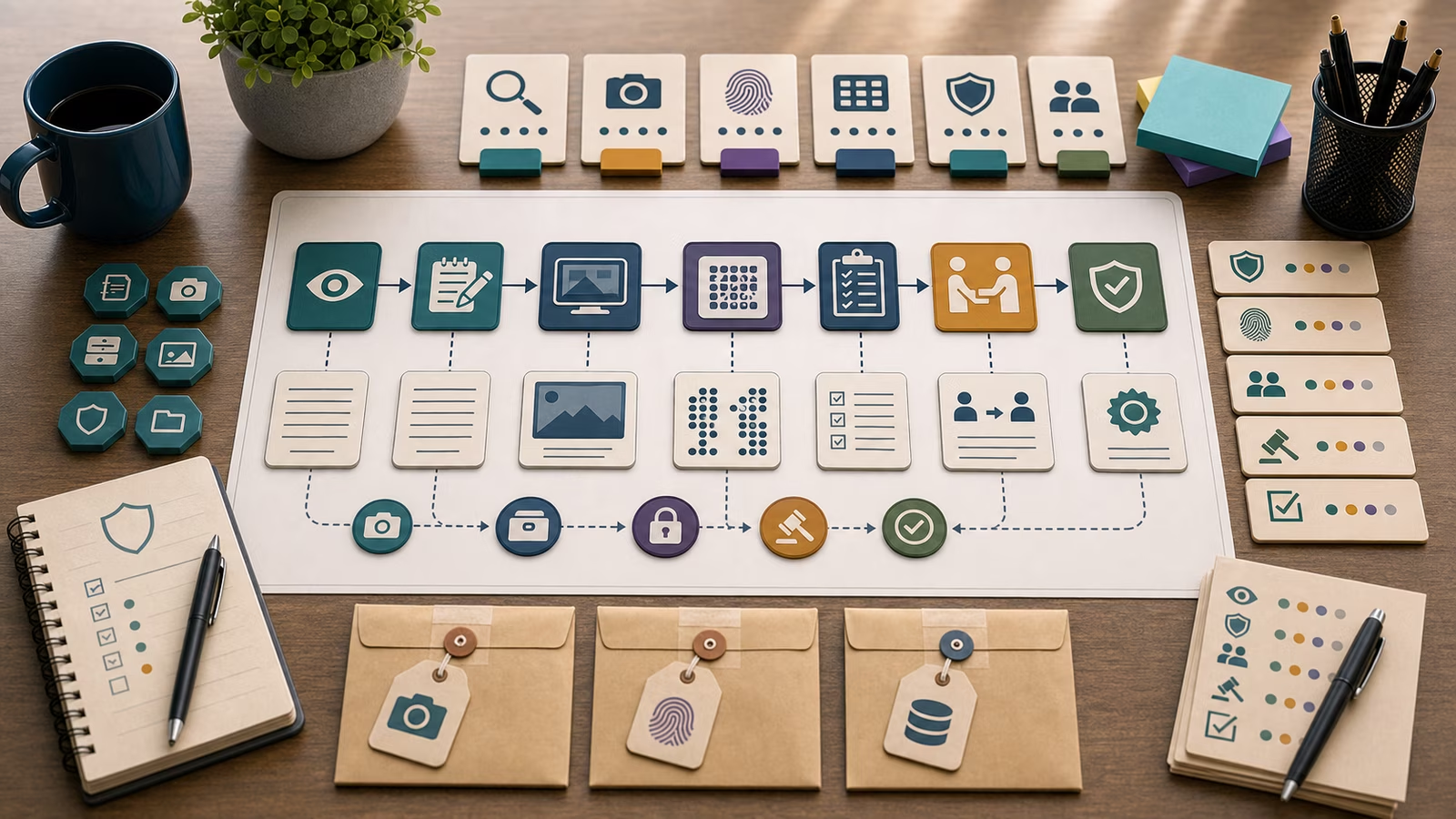
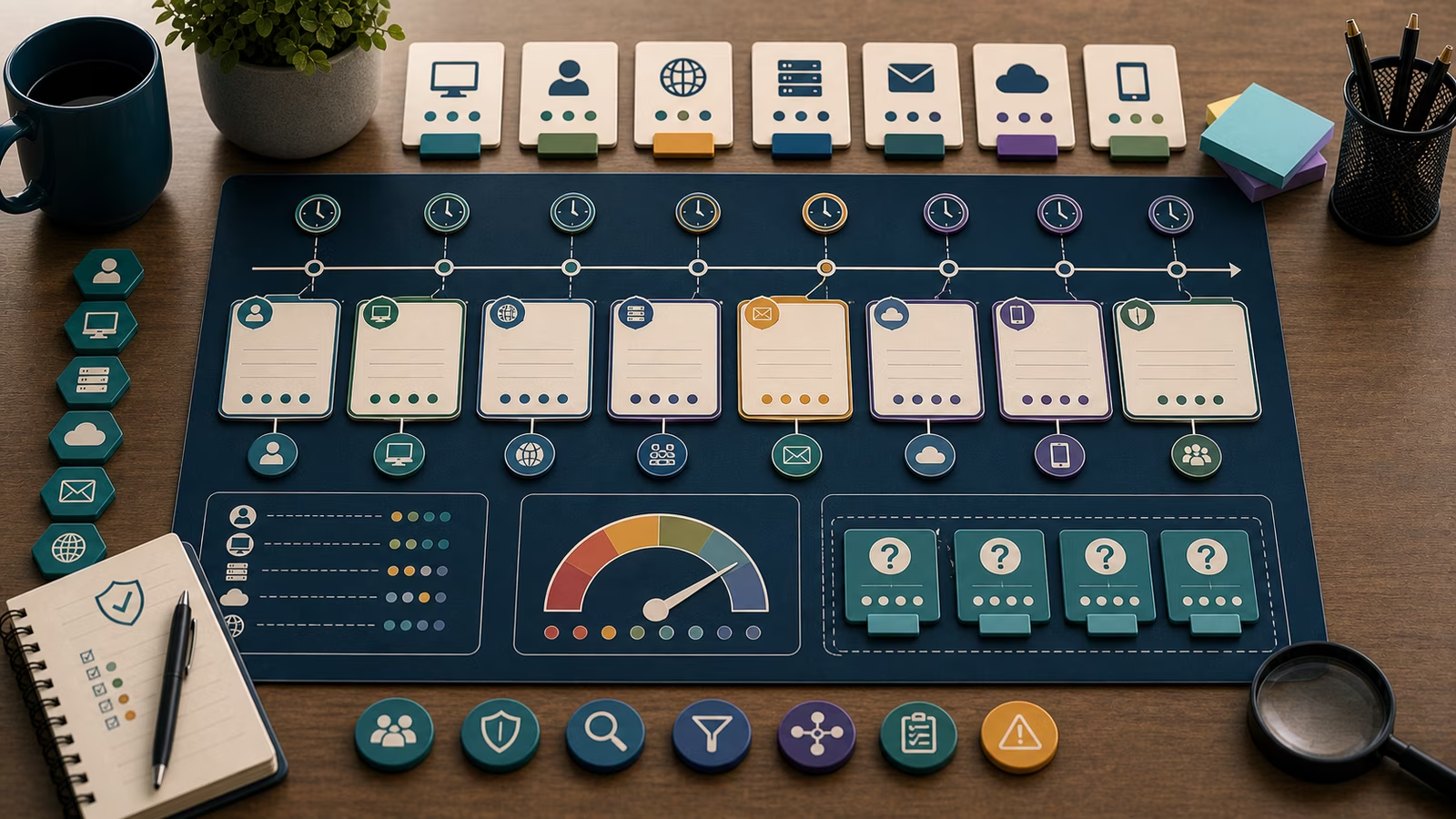
Think of incident communication as a set of rooms with doors. Each room has a purpose, an owner, an audience, and a record policy. The technical room is for evidence and response coordination. The decision room is for approvals and business tradeoffs. The update room is for concise status. The external room, if needed, belongs to the people authorized to communicate outside the organization.
Every update should distinguish facts, interpretations, decisions, and next checks. A fact might be that a server was isolated at a specific time. An interpretation might be that the isolation reduced a suspected path. A decision might be that the team will keep the server offline until a forensic image is complete. A next check might be that logs from a second source will be reviewed before the next update.
This model keeps communication aligned with the timeline. When someone asks what happened, the answer should connect back to timestamped evidence rather than memory. When someone asks who approved a containment action, the answer should connect back to the decision record. Communication and documentation support each other.
What evidence matters?
The first evidence is channel inventory. Which channels are approved for incident coordination? Who owns them? Are they accessible if single sign-on, email, or the corporate network is impaired? Are they logged, retained, and restricted appropriately for the sensitivity of the incident? A channel that works for routine support may not be right for a sensitive investigation.
The second evidence is audience scope. Who was added, when, and why? During a tense incident, channels often grow quickly. That may be necessary, but it should not be invisible. A concise membership record helps explain who had access to sensitive updates and why.
The third evidence is update quality. A useful status update includes the current confidence level, affected scope as known, actions taken, approvals needed, blockers, and next update time. It avoids speculation dressed as fact. It also avoids dumping raw evidence into broad rooms when a narrower evidence note would be safer.
Toy example
Imagine a fictional company where a suspicious administrator sign-in appears during a weekend. The first responder opens a technical incident room with the on-call engineer, security lead, and identity owner. Because the identity system may be involved, the team also confirms an out-of-band voice bridge that does not depend on the same login path.
The first leadership update says that an unusual privileged sign-in is under review, that no customer impact is confirmed, that the account has been temporarily restricted with approval, and that the next update will follow after identity and application logs are checked. It does not include raw log dumps or unsupported claims. As evidence changes, the timeline and communication record stay aligned.
Common mistakes and false positives
One mistake is creating too many rooms. People miss decisions because conversation fragments across chat, tickets, documents, and calls. Another mistake is putting every stakeholder into the technical room, which slows responders and spreads sensitive details. A third mistake is using ordinary email or chat automatically when the incident might involve those systems.
False alarms also need communication discipline. If the event turns out to be a benign maintenance action, the closeout should say what evidence resolved the uncertainty and whether any control improvement remains. That prevents the team from treating a false positive as wasted effort.
What to do next
Before an incident, define the approved technical room, decision path, leadership update path, and out-of-band fallback. During an incident, name a communications owner. That owner does not need to make every technical decision, but they should keep updates on a rhythm, separate audiences, and prevent uncertain claims from spreading.
Afterward, review communication alongside evidence and containment. Ask whether the right people were present, whether sensitive details stayed in the right room, whether approvals were visible, and whether updates helped or hindered response. The best communication plan becomes simpler after each review.
How this guide was made
This page was written as defensive education for incident coordination. It avoids legal advice, public-relations scripts, and incident-specific disclosure claims. It focuses on channel planning, evidence-aware updates, audience boundaries, and response discipline.
Official references
For orientation, compare this topic with NIST SP 800-61 Rev. 3 , the NIST Cybersecurity Framework 2.0 , and the CISA StopRansomware Guide . These references reinforce preparation, communication, containment, recovery, and post-incident learning.
Related guidebooks
Incident communications should be read with Incident Timeline Building , Response Actions and Approvals , Evidence Notes and Chain of Custody , and After-Action Reviews .