The forecast is not the enemy of an outdoor ritual. Silence about the forecast is. When a porch or stoop hour or a walking table works, it works partly because the sky is doing the decorating and the setting is doing the small talk. That same openness is what makes the gathering fragile the moment clouds gather. A living room can absorb a bad day; a park table cannot absorb a thunderstorm. The task is not to defeat weather but to decide, in advance, what your ritual becomes when the weather stops cooperating.
Doing that decision early is a gift you hand to everyone at once. A guest reading the invitation can pick the right shoes, plan the transit, arrange a ride, or decide whether to bring the toddler. A host who has already named the fallback can stop treating the ten-day forecast as a referee of whether the gathering is allowed to mean anything. The weather line is small, but it converts a vague hope into a plan people can actually hold.
Two words that quietly break the plan
“Weather permitting” feels considerate, and it is one of the least useful phrases you can put in an invitation. It sounds like the host is being flexible, but it does the opposite of flexibility: it hands the decision to twelve different people who will each interpret it privately and arrive at twelve different conclusions. One reads it as “obviously we’re still on unless it’s a hurricane.” Another reads it as “the host will text if anything changes.” A third quietly assumes it is cancelled and stays home without telling anyone.
Replace the ambiguity with a picture. Not a rule from a manual, just a sentence someone could repeat to a friend: “If it’s raining hard, we’ll be at my kitchen table instead of the porch.” “If it’s over ninety, we’ll cut the walk short and finish with cold drinks in the shade.” “If the smoke rolls back in, we skip it and keep next month’s date.” You are not writing a safety code. You are giving guests a mental image clear enough that they can dress for it and plan around it before they leave the house.
The decision that matters more than the backup
Here is the part most hosts skip: the single most valuable thing to announce is not the fallback itself but the moment you will decide. Weather is a slow-motion argument, and without a fixed call time the group thread becomes a running commentary on radar apps. Someone asks at noon whether it’s still on. You answer honestly, then the front shifts at two, and now your earlier answer is wrong, and the ritual feels shaky before a single guest has arrived.
Pick a call time that matches how much preparation the gathering demands, and put it in writing. A casual porch tea can be decided two hours out, because nobody has to pack much. A park picnic with kids, coolers, and a bus ride deserves a morning call, so families are not loading a car they may have to unload. An after-work walk is best called mid-afternoon, so people can toss shoes in a bag before they leave the office. When you make the call, restate the whole plan rather than a fragment — full location, time, and what to bring — so nobody has to stitch the evening together from three half-messages.
A backup should weigh less than the original
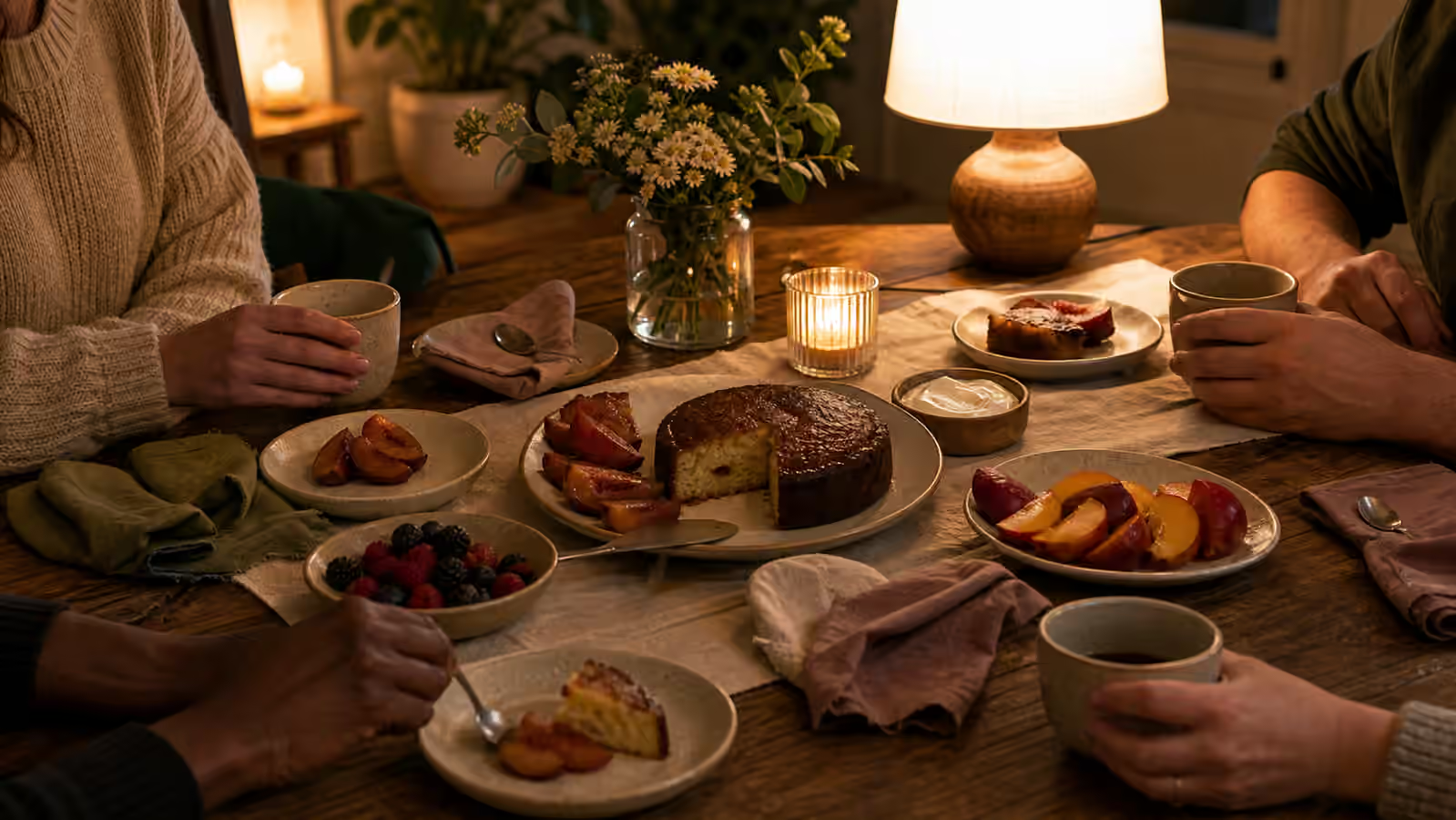
The instinct under pressure is to prove the weather didn’t win by recreating everything indoors, only now with frantic cleaning and a menu you’re improvising at four o’clock. Resist that. A good fallback is deliberately lighter than the plan it replaces. If the porch spread moves inside, it becomes mugs at the kitchen table, not a reconstructed porch. If the walk becomes a sit-down, it gets shorter, not longer. If the potluck retreats under a covered stoop, the food expectation shrinks to what fits on a lap.
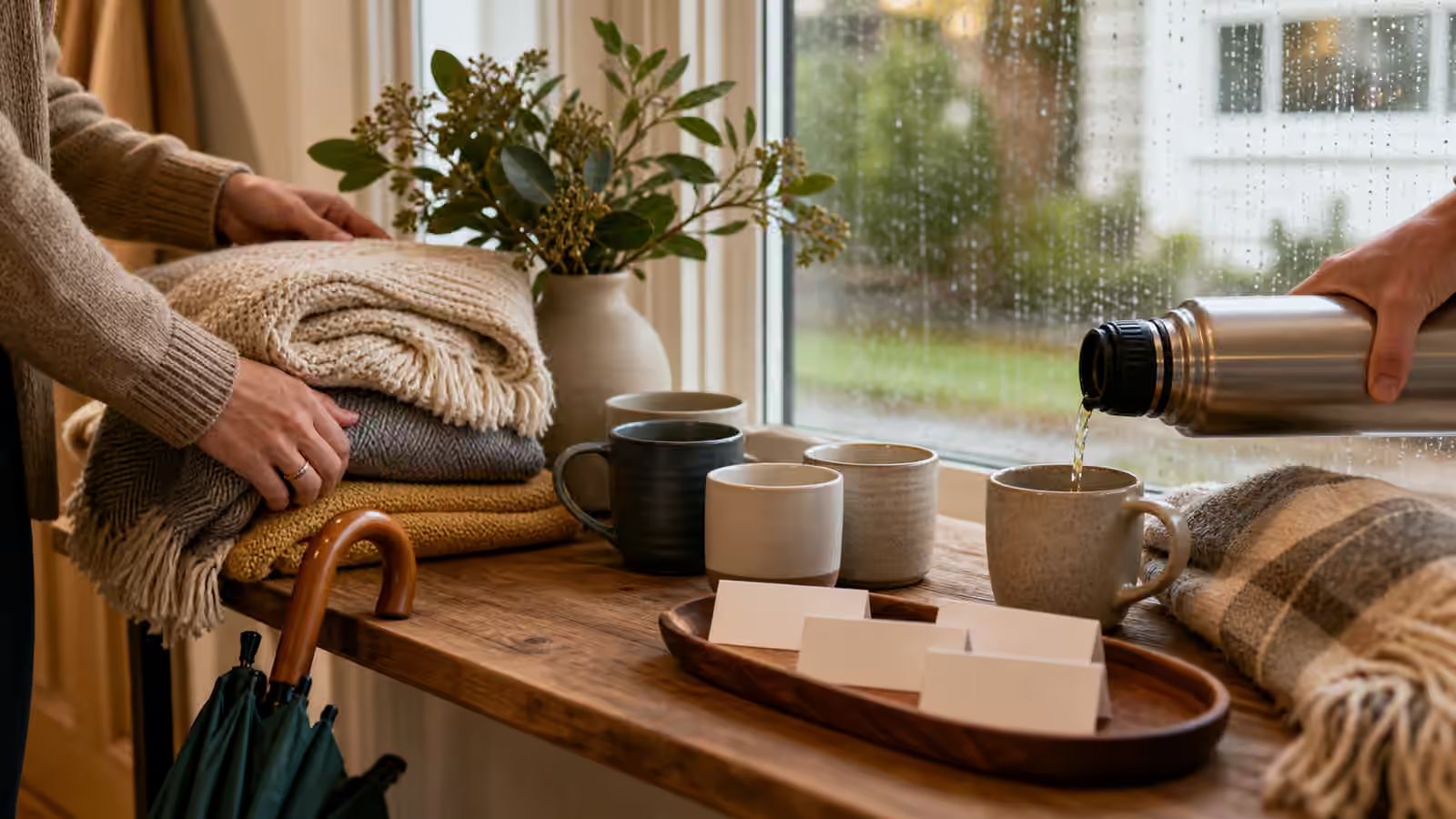
This is not laziness; it is the difference between a backup and a second, secret event hiding inside the first. A host with limited energy cannot afford a rain plan that demands sudden vacuuming and a fresh pot of soup. Keep the substitutes genuinely easy: a kettle, a thermos, a bag of the same snacks, or simply “same time next month, no scramble.” The whole point is that ordinary weather should never force you to invent a brand-new gathering on an hour’s notice.
And sometimes the honest backup is no gathering at all. Cancelling and rescheduling with grace is a legitimate move, not a failure of nerve. If the outdoor setting is genuinely the reason the ritual exists and nothing sheltered will substitute, say so early and keep the next date visible. A clean cancellation with a firm return protects trust far better than a stubborn gathering where everyone shows up damp, overheated, and quietly wishing they had stayed home.
Rain is only the loudest problem
Rain gets all the attention because it is dramatic and visible, but it is rarely the weather that quietly ruins a gathering. Heat turns a pleasant stroll into an ordeal and empties a table early. Cold makes people hunch in their coats and invent reasons to leave. Wind scatters napkins, swallows conversation, and lifts the labels off every dish. A dark park route changes what feels safe, especially for anyone walking home alone afterward. And on a day that looks flawless, poor air quality, high pollen, or lingering smoke can make the outdoors quietly inaccessible to a guest whose lungs disagree with the sky.
The trick is to cover all of that without asking anyone to explain their body. One line does it: “If the heat, air, or rain makes this uncomfortable, we’ll switch to the indoor version.” That gives a guest with asthma, joint pain, or a migraine an exit ramp without requiring a diagnosis. Food and drink shift with the weather too — hot tea cools fast in wind, cold pitchers warm in the sun, flies find anything sitting open. Building the backup often means simplifying the menu, which is exactly what low-effort shared snacks is for: thermos tea instead of open pitchers, wrapped bites instead of an elaborate board.
Let the season change the ritual without breaking it
Some outdoor rituals get stronger, not weaker, when they openly accept the season. A summer stoop hour can start earlier and run shorter. A winter porch tea can lean on blankets and a hard stop before anyone’s toes go numb. A spring walk can build in a covered midpoint. An autumn courtyard supper can drift indoors for its final twenty minutes. The gathering stays recognizable even as the setting bends around the weather, and guests learn to trust the promise rather than the thermometer.
The error is believing “repeatable” means “identical.” It doesn’t. Repeatable means the promise stays legible: “we meet outside when it’s comfortable, and there’s a calm indoor tea version when it isn’t.” That is far sturdier than “we meet outside unless the host panics.” This is also where choosing the right place pays off — mapping your third places by fit rather than beauty means favoring the plain courtyard with a hallway fallback over the gorgeous park with no shade and no shelter. So write your one weather line into the next invitation: the threshold, the call time, and the fallback, short enough to read like part of the welcome. Afterward, notice whether it cut down the anxious messages and whether people arrived dressed for the day. That is not a verdict on outdoor hosting. It is just what you needed to know before you send the next one.