
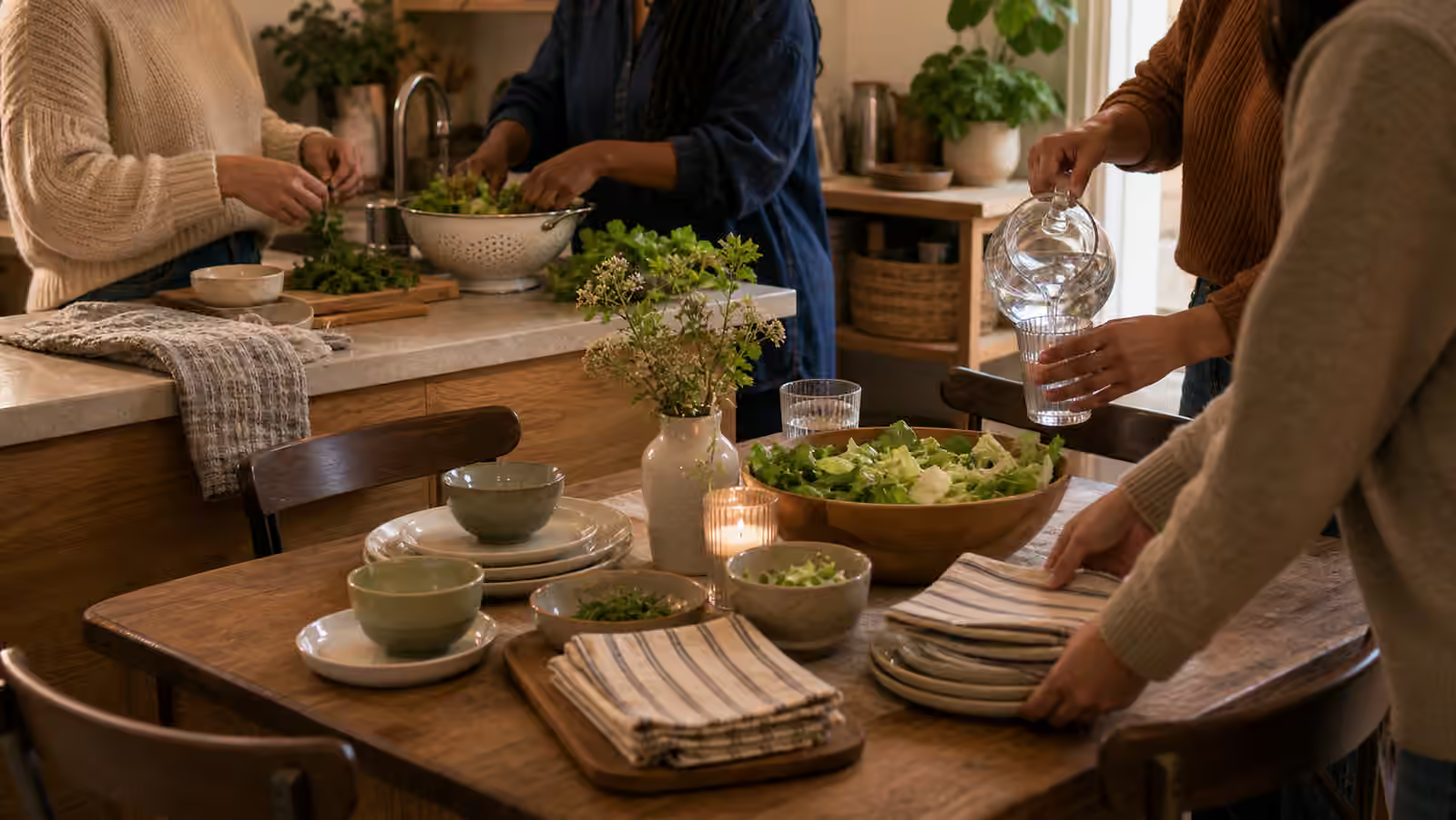
There is a particular kind of warmth that only happens before the meal, when the food is not quite ready and a few people are moving around a counter together, hands busy, conversation loose because nobody has to look anyone in the eye. Cooking beside someone lowers the stakes of talking to them. This is why so many of the best moments at a gathering happen in the kitchen, and why so many hosts, wanting to bottle that feeling, end up doing the opposite: they hand a bewildered guest a task in a moment of panic and wonder why the magic never arrived.
The distinction that matters is between prepared contribution and kitchen rescue. Prepared contribution says, “I deliberately saved an easy, pleasant job for you, because I wanted the evening to include you before we sat down.” Kitchen rescue says, “I am behind, please guess what I need while three of us jostle in the narrowest room in the house.” The words might be identical, but guests feel the difference instantly. One is an invitation into the ritual. The other is a symptom that the host planned too little and is now improvising with other people’s hands.
Design the help before anyone rings the bell
The single practice that makes prep-together work is choosing the tasks in advance, when you are calm, rather than reaching for them in the heat of the moment. Pick two or three jobs and make each one visible, bounded, and explainable in a single sentence. “Would you tear these herbs into that bowl?” works because the guest can see the beginning, the middle, and the end of it. “Can you help me figure out the timing?” does not, because it asks a person who just walked in to become a project manager for a kitchen they do not know.
A good prep task is finite and forgiving. Tearing lettuce, arranging bread on a board, filling water glasses, folding napkins, setting out bowls, washing fruit, carrying a tray to the table: none of these can really be done wrong, and none of them require the guest to hold a mental model of the whole meal. Save anything with a timer, a flame, an unfamiliar appliance, or a sharp edge for yourself or for a genuine co-host. Co-Host Roles exists for the person who is actually sharing responsibility for the room; an arriving guest is not that person, and should never be handed a task where a mistake would embarrass them or wreck the dish.
Where the task happens matters as much as what it is. A small kitchen can only hold so many bodies before the host loses access to the sink, the stove, and the fridge, and everyone ends up apologizing as they squeeze past each other. Move what you can to the table. Herbs can be picked at the table, bread arranged at the table, water poured well away from the cooking. This keeps the cook’s lane clear and, not incidentally, puts the helping guests in the more social room rather than penning them into a galley.
Keep the anchor host-ready so help is never rescue
The safeguard that separates contribution from rescue is a host-ready anchor: the substantial part of the meal, already handled, before anyone arrives. The soup is simmering, the rice is cooked, the main is in the oven on a timer you control. When the core of the dinner is secure, guest help becomes pure decoration on an evening that would have worked anyway. Nothing depends on it. The salad getting tossed, the bread getting arranged, the table getting set: these improve the room without saving it, and because they are not load-bearing, no guest can feel that the meal’s success was quietly placed on their shoulders.
This is what lets you offer help as a genuine option rather than a summons. You can say, “There are a couple of easy jobs if you’d like one, and sitting down with a drink is also a completely real way to be here,” and mean both halves of it. Some guests relax by keeping their hands busy. Others arrive tired, anxious, dressed for sitting, physically limited, or simply wanting to be a guest tonight, and every one of those responses is correct. Contribution Without Scorekeeping applies before the meal as much as after: belonging cannot be allowed to depend on who chopped, carried, or cleaned. When you ask lightly and let no be a full sentence, help stays a pleasure instead of becoming a test.
Alcohol at the prep stage sets the tone for the night
Prep-together often happens at the loosest, least formal part of the evening, and whatever is in people’s hands at the counter tends to define the mood. If the only thing offered while you cook together is a glass of wine, you have quietly told the room that this is a drinking evening before the food has even arrived, and you have put the guest who does not drink in the awkward position of standing empty-handed while everyone else has something. Make the first thing you offer something anyone can hold: sparkling water, tea, a good non-alcoholic option that feels considered rather than childish. Let that be the default in hand, with anything else genuinely optional and off to the side.
You will rarely know why a given guest is skipping alcohol, and it is none of your business to find out. Someone is driving, someone is pregnant, someone takes medication, someone is protecting something private, someone just does not want one tonight. A guest tearing herbs at your counter should be able to do it with a glass of something they actually enjoy, and never once field a raised eyebrow about what is in it. Handled well, this is invisible; the whole point is that no one has to notice it working.
Mark the end of prep clearly
Prep-together has a failure mode of its own: it never ends. Helpful guests, given no signal, will keep hunting for jobs, wiping counters that are clean, and the gathering slowly turns into a work session where the host feels strangely abandoned the moment everyone finally sits. Draw the line out loud. “Let’s put the last bowl down and move to the table” is a small sentence that changes the room from making to sharing. Say it, and mean it, and stop assigning tasks after it. The cleanup ritual at the other end of the meal works the same way and deserves the same restraint: “cups to the counter is plenty” beats letting a kind guest scrub your kitchen while the rest of the table waits.
Handle food safety plainly without turning it into a lecture. Make handwashing obvious, keep serving utensils ready, give trash and compost a clear home, and never improvise casual cross-contact around a guest who has told you about a serious allergy. And offer non-food jobs freely, because prep can expose the restrictions a seated meal hides. Someone who would rather not handle pork, dairy, wheat, alcohol, or shellfish can light a lamp, set out cups, choose the music, or clear a landing spot for coats and belong just as fully. Done this way, the pre-meal bustle becomes the first warm memory of the night: a late guest setting bowls and feeling useful instead of apologetic, a quiet guest folding napkins and hearing the room before speaking, the food and the room getting ready at the same time.
Related guidebooks
- Small-Kitchen Hosting Without Bottlenecks
- Contribution Without Scorekeeping
- Co-Host Roles: Stop Making One Person Hold the Whole Room
- The Cleanup Ritual: Reset the Room Without Making Guests Work
- The Common Table guidebook shelf
- Startable Life Lab for making recurring systems easier to begin and resume.
- Reality Check Desk for calm verification habits when social media advice turns hospitality into pressure.


