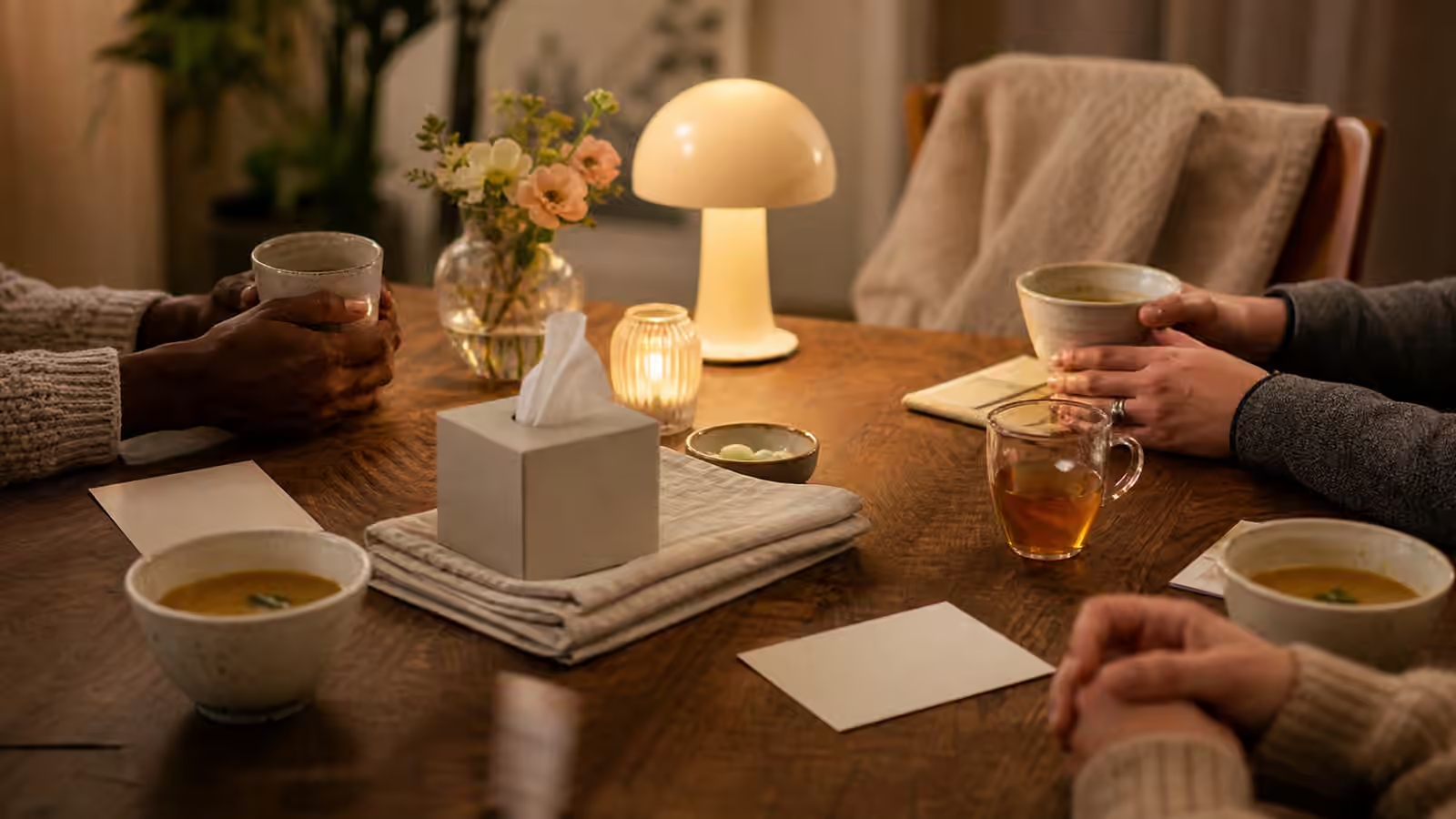
Every host has watched it happen. The evening is going well, someone is genuinely interesting, and then somewhere around the second story you notice the table has quietly reorganized itself into an audience. One guest is talking, five are nodding, and the people who came to be among friends have become spectators at a performance nobody scheduled. The talkative guest is rarely a villain in this. Very often they are the person who rescued your first awkward gathering by filling the silence, and they are now doing the same generous thing long after the room stopped needing it. For when the subject itself is the trouble rather than the airtime, Topic Boundaries Without Policing the Table is the neighboring guide; this one is about volume of presence, not choice of topic.
A table of four or six cannot hide an imbalance. There is nowhere for a quiet person to drift and form a side conversation, so when one voice expands, the others simply contract, and if the host waits until the imbalance is obvious the only tools left tend to be blunt. The craft is to widen the room early and through the format, so that redirection never has to become confrontation.
Read the room before you name a culprit
The most useful diagnostic is not the talker but the listeners. Watch the quiet guests. Are they still leaning in, or have they settled back into polite attendance? Does every subject somehow route back through the same person’s job, family, or current crisis? Are two people starting to murmur to each other because the main table has become unavailable to them? Do you yourself feel a strange mix of gratitude and fatigue, glad someone is carrying the conversation and tired of carrying nothing else? Those signals tell you more than any judgment of the talkative guest’s character, and they tell you sooner.
They also point at causes, which matters because the remedy differs. An anxious guest fills silence because pauses feel like danger and they are trying to keep everyone safe. An expert advises before anyone asks because being useful is how they know they belong. A funny guest keeps going because the last laugh felt like approval and they want another. A lonely guest talks because this is the only room this week where anyone is listening at all. None of these is misbehavior. Each is a person meeting a real need through the one channel that has worked for them, and each responds to a slightly different door being opened elsewhere.
Let the format do the redirecting
The reason to build a table around a shared object, soup, tea, a passage, a repair task, a snack to pass, is that the object gives you a neutral place to turn when a personality has filled the air. You are not silencing anyone; you are returning to the thing everyone agreed to gather around. “Let me get this soup around before it goes cold” moves the whole room’s attention onto bowls and hands, and it accuses no one. After the activity resets the rhythm, you have a clean moment to open a specific door: “Priya, you mentioned the move earlier, how’s the new place treating you?”
Notice the shape of that opening. It is concrete, it points at one person, and it references something they already offered, so it is an invitation rather than a demand to perform. A vague “what does everyone else think?” tends to die in the open, because no one wants to be the one who volunteers into a room the loud guest still dominates. A named, specific, low-stakes question builds an actual doorway with a person standing in it. Used lightly, question cards that do not turn guests into interviews do the same work structurally: a one-sentence limit that applies to everyone equally is a kindness precisely because it binds the talker and frees the quiet at the same time, and passing is always allowed.
Redirect with warmth and motion together
When you do speak, put both warmth and movement in the same sentence. Warmth keeps the guest from feeling swatted; movement keeps the room from staying stuck. “That’s the whole shape of it, I want to hear how this lands for the rest of us too” honors what they gave and turns the wheel. “Hold that thought a second, I want to check whether Sam wanted advice or just to vent” protects a third person without shaming the second. Beginning with “I want to” is quietly powerful because it makes the redirect your move as host rather than a verdict about the guest; you are stewarding the room, not ruling on anyone’s worth.
What to avoid is the tempting shortcut: the joke about how much someone talks, the eye-roll, the public tease. It will get a laugh and it will cost you the table. The talkative guest either shrinks into shame or defends themselves by talking more, and every other guest silently learns that in this room boundaries arrive dressed as mockery, which means their own edges are not safe here either. A Common Table should never need to humiliate someone to rebalance itself. In a newer group with less trust in reserve, soften even the honest lines: “let’s give this a little more air around the table” carries the same intent as “I want to hear from someone who hasn’t spoken” but leaves no one exposed.
Do not overcorrect onto the quiet
The classic mistake, once you notice the imbalance, is to swing the pressure onto the silent guests and start calling on them like a teacher. That trades one problem for another. As Quiet Guest Participation argues, belonging does not require constant airtime; some people participate fully by listening well, setting out cups, noticing the thing everyone else missed, or speaking once and precisely. Balance is not equal minutes. Balance is available entry. A quiet guest should be able to step in without wrestling the floor away from anyone, and a talkative guest should be able to contribute without becoming the evening’s only engine.
A side task is often the gentlest bridge of all. A guest who ends up beside you refilling the water or stirring the pot frequently discovers a low-pressure door into the conversation, because talking is easier when your hands are busy and no one is staring. But the guest who never wants that door should not be dragged through it. The measure of success is not that everyone spoke; it is that everyone could have.
When it keeps happening, go private
One evening’s imbalance you handle in the room and forget. A pattern that repeats across gatherings deserves a quiet word outside of it, and the word should be specific, kind, and tied to the format rather than the person. “I really like having you at the table, and I’m also trying to leave more room for the slower voices, would you help me hold a pause or two after you speak?” hands the guest a role in the solution instead of a complaint about their nature. You are not asking them to become someone else; you are asking them to help the table work, which most people are glad to do once they understand it is wanted.
If you are too close to the pattern to steer it alone, co-host roles can share the load: a second person to refill water, introduce the next beat, and notice who has not yet had an opening. This is not an alliance against anyone; it is making the format sturdy enough that no single guest can accidentally carry or crowd the whole room. Over time, well-balanced tables become less spectacular and more restful. The big stories shorten, the quiet observations arrive sooner, advice waits to be asked for, and pauses stop feeling like failures. That restfulness is what brings people back with their whole selves, not only the parts fast enough to compete for air, and a recurring table lives or dies on whether people want to return.