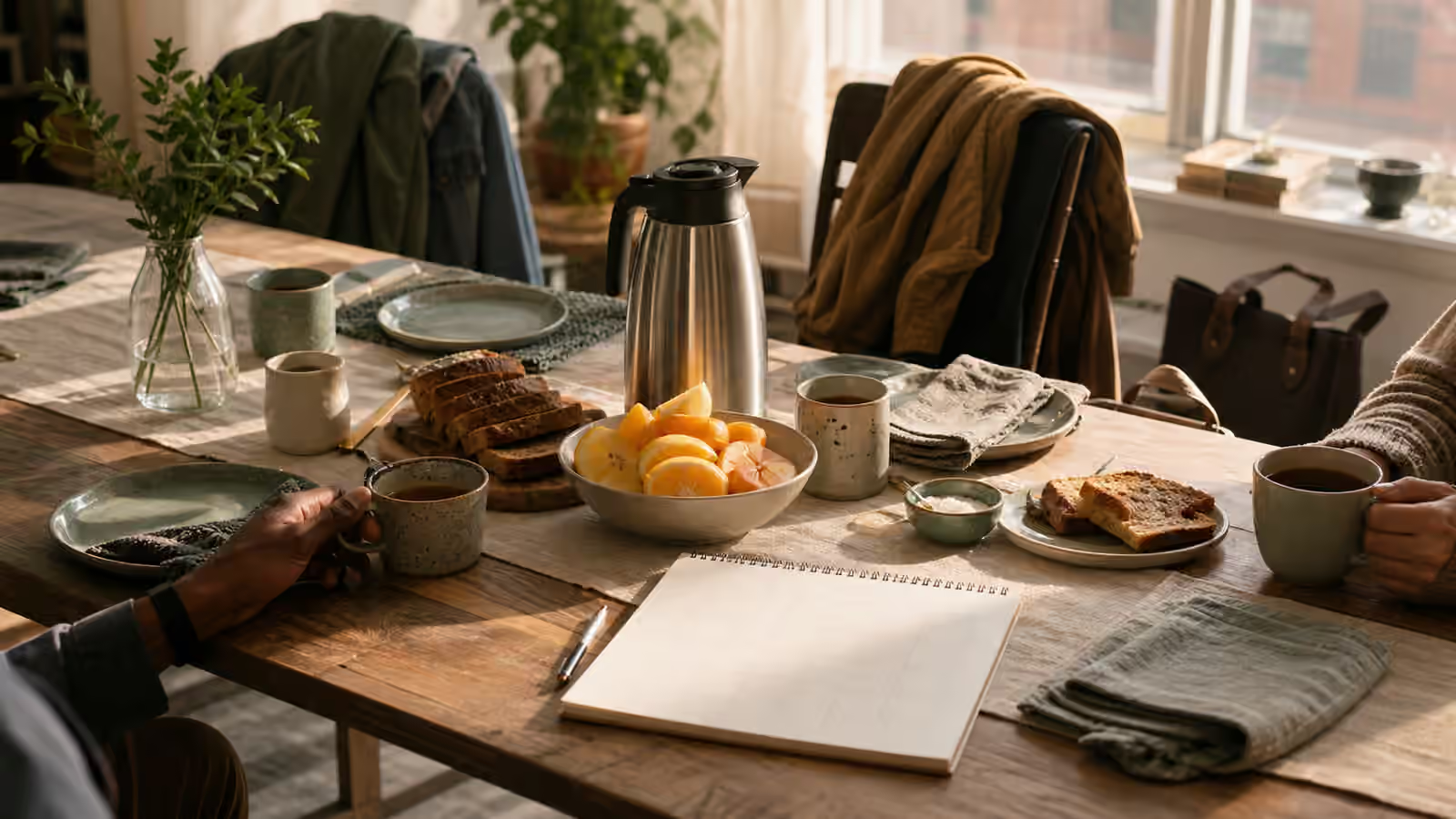
Repair Share Evening uses practical objects as a social anchor. A life-admin table uses the unfinished paper and digital edges of ordinary life: forms to sort, returns to package, calendars to reconcile, photos to back up, thank-you notes to write, receipts to file, appointments to place on a calendar, or a small stack of mail that has become too emotionally loud for its size.
The table is not a clinic, coaching session, study hall, or accountability group. It is company for low-risk tasks that are easier beside other people. The host does not give legal, financial, medical, or bureaucratic advice. Guests do not inspect one another’s private information. The ritual works because it gives ordinary avoidance a warm room without turning friendship into supervision.
Choose tasks that can stay private
The first design question is not what people need to accomplish. It is what kind of task can safely sit at a shared table. A guest might address envelopes without showing the letter. Another might sort receipts into broad piles without explaining amounts. Someone might clear a photo folder, schedule a dentist appointment, update a household calendar, or write two condolence notes. These are small tasks with visible progress and controlled disclosure.
Avoid tasks that require sensitive decisions, expert advice, passwords, medical interpretation, legal judgment, taxes, debt strategy, immigration paperwork, conflict messages, or anything a guest would regret opening in a social room. The life-admin table should lower friction, not expose vulnerability for the sake of productivity. If a task needs professional help or private concentration, it belongs elsewhere.
The invitation should say this plainly. “Bring one low-risk admin task you can do privately beside other people” is better than “bring your paperwork.” The second phrase can sound like an audit. The first phrase gives guests permission to choose a safe edge of the problem.
Keep advice out of the center
Practical tables attract advice. Someone mentions a return, a bill, a form, or an appointment, and another guest wants to help. Help can be kind, but advice can quickly take over the room. The host should set the norm early: people can ask for practical company, supplies, or a quiet timer, but nobody is expected to explain the task or accept suggestions.
This is where Social Safety House Rules earns its place. A life-admin table needs a privacy rule, a no-peeking rule, and a consent rule around advice. The host can say, “We are working beside each other, not solving each other’s lives unless someone clearly asks.” That sentence keeps warmth from becoming intrusion.
If advice starts to spread, redirect without scolding. “Let us keep the table in work-beside mode” is enough. The guest who wanted help can continue privately after the gathering if they choose. The shared table should not make anyone perform competence or disclose why a simple task became hard.
Build the rhythm in short rounds
A life-admin table works best in short rounds because many tasks carry hidden resistance. Open with tea, water, and a quiet naming of tasks at the level each person chooses. “I am doing mail,” “I am updating a calendar,” or “I am writing two notes” is enough. Nobody needs to show the task.
Then work quietly for twenty or twenty-five minutes. A visible timer can help, but avoid making the room feel like a productivity app. The timer is there to relieve decision fatigue, not to measure worth. After the round, pause. People can stretch, refill cups, say one sentence about what changed, or remain quiet. Then choose whether to do another round.
Quiet Guest Participation is useful here because the format lets belonging be visible without talking more. A guest can sort, write, seal, fold, shred, or simply sit with a task they were avoiding. Progress may be tiny. The social value is not the amount finished. The value is that ordinary burdens became less solitary for an hour.
Prepare the table like a soft workshop, not an office
The room should have supplies without feeling corporate. Pens, blank paper, envelopes, tape, a recycling bag, a small trash bag, sticky notes with no printed prompts, and a tray for finished items are enough. If laptops are welcome, make outlets visible, but do not build the gathering around screens. Screens can help, and they can also pull people into private worlds so completely that the table disappears.
Food should be simple and clean. Tea, water, fruit, crackers, or small sandwiches work better than saucy food near papers. Keep drinks in stable cups. Leave space for documents. A cluttered table turns life admin into a second obstacle.
The host should also think about sound. Some people can write through conversation; others cannot. A soft agreement helps. The first work round can be mostly quiet, followed by a social pause. This protects guests who came because the task was hard and they need the room to hold focus without becoming lonely.
End with a next step, not a verdict
The closing should not ask people to report accomplishments. A life-admin table can easily become a place where everyone compares how much they finished. That comparison defeats the ritual. Instead, close with a next step. A guest might put one envelope by the door, place one appointment card in a bag, move a folder to the right shelf, or decide which private task needs a different kind of help.
Micro-Volunteering Table turns shared effort outward toward a useful action. Life-admin turns companionship inward toward the ordinary maintenance of a life. Both need humility. The host should not pretend that an hour at the table fixes structural problems, paperwork burdens, or private stress. It simply makes one small edge easier to touch.
The host can make leaving easier by offering a simple finish ritual. Papers go back into folders, envelopes move into bags, trash and recycling leave the table, and any private item returns to its owner before social conversation resumes. This prevents the last minutes from exposing what people meant to keep private. It also lets the room become a table again, not a scattered record of unfinished lives.
Host one quiet life-admin hour where every guest chooses a low-risk task, keeps private details private, and leaves with one small next step. If people leave lighter without feeling inspected, the format can repeat. Keep it modest. The table is there to make small work companionable, not to turn friendship into management.