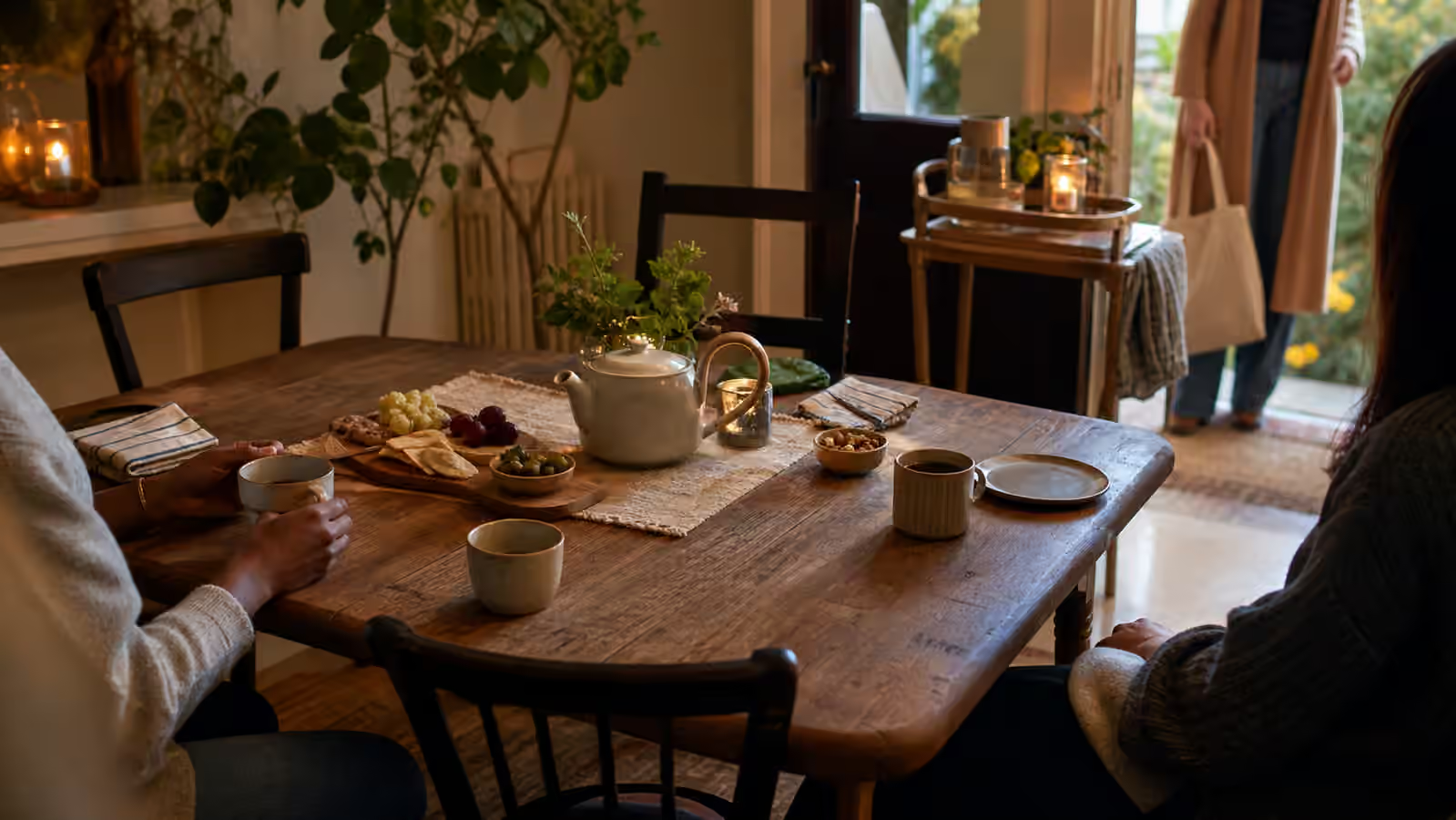
The Opening Beat helps the first guests arrive without performing. Late arrivals need their own design. A delayed guest enters after the room has already formed a temperature, a topic, a seating pattern, and sometimes a private joke. Without a path, their arrival can embarrass them and make the whole gathering start again.
The useful move is to prepare a late-entry path that welcomes the person without making the room restart. Late arrival is not a character flaw. It may come from transit, work, caregiving, pain, parking, weather, anxiety, or a wrong turn. It may also come from poor planning. The host does not have to investigate in front of everyone. The design question is simpler: how can this person join without paying an apology tax and without breaking the table’s thread?
Leave a visible landing place
A late guest needs to know where their body goes before they can join socially. If every chair is tucked tightly into conversation, the guest has to solve furniture while everyone watches. If the only open chair is blocked by bags, the guest feels like an exception. If food is already passed away, they may not know whether taking any is disruptive.
Set one spare landing place near the edge of the table, not in exile and not at the center of attention. Angle the chair slightly open. Keep a cup, napkin, or small plate easy to reach. If the room is very small, make the path from door to chair clear before guests arrive. A late-entry path is part of Small-Room Seating Flow , not a moral statement about punctuality.
The landing place should not announce that everyone expected lateness. It should simply make entry possible. In a four-person table, the spare place may be a corner of the bench or the chair closest to the host. In a porch hour, it may be a stool near the rail. In a walking table, it may be a planned meeting point ten minutes into the route. The right place is the one that lets the guest arrive with the least negotiation.
Use a short bridge
When someone arrives late, the host needs a line that is warm and brief. Too little acknowledgment can make the guest feel ignored. Too much acknowledgment can turn them into the event. The bridge should welcome, orient, and return the room to its current beat.
The line can be simple: “I’m glad you made it. Tea is here, and we are talking about the first apartment we remember.” Or: “Come in, no need for a story. We just started soup.” Or: “There is a chair by Mara; we are halfway through the passage, and I will catch you up after this paragraph.” The bridge gives the guest enough information to enter without making the group rewind.
Avoid asking for the reason in public. “What happened?” may sound caring, but it asks the guest to narrate stress while standing in a doorway. If the reason matters, there will be time later. If the guest wants to explain, they can do so after they sit down. The host’s first job is landing, not inquiry.
Do not restart every ritual
Small gatherings often have openings: the first pour, a shared question, a read-aloud passage, a round of names, or a small task. When a guest arrives after the opening, the room may feel tempted to repeat the ritual. Sometimes that is right. Often it breaks the room.
Decide which openings can absorb late arrival and which cannot. A tea pour can repeat easily. A full introduction round may not need to. A question card can wait until the next natural turn. A book passage can continue, with a quiet summary later. A repair table can point the guest to materials without stopping every hand.
This is especially important for quieter guests. The first ten minutes may have finally settled, and a complete restart can pull everyone back into awkwardness. The First Ten Minutes treats early awkwardness as a design problem. Late arrival is one way awkwardness reenters. The solution is not to pretend nothing happened. It is to keep the room’s thread intact while giving the late guest a thread to hold.
Make lateness less contagious
Forgiving late arrival does not mean making time meaningless. A recurring table needs a start people can trust. If the group learns that nothing begins until everyone arrives, punctual guests become unpaid waiting staff. The host may spend the first half hour apologizing for starting and apologizing for not starting. Nobody relaxes.
Start the opening beat on time or close to it, especially if the invitation named a clear window. Late guests can enter the running format. This respects the people who arrived and lowers the pressure on the people who did not. It also teaches the ritual’s rhythm: the table is forgiving, but it is not suspended.
If one person is repeatedly late in a way that harms the gathering, handle it privately. The conversation can be practical rather than accusatory. Ask whether the time is wrong, whether the route is hard, whether a different role would help, or whether the guest should plan to join at the second beat. Chronic lateness may be a design clue. It does not need to become a public identity.
Give the late guest an easy first action
A late guest often enters with extra self-consciousness. Give them a small action that connects them to the table without requiring a speech. Pour water, take soup, choose a cup, pass bread, sit beside someone who can summarize, or listen until the next turn. Action lets the body arrive before the story does.
The action should not be a punishment. Do not make the late guest wash dishes, answer first, or perform a dramatic apology. Also avoid over-serving them in a way that freezes the room around their needs. A cup within reach is enough. A plate pointed out quietly is enough. The host can be attentive without making the guest the center.
For a newcomer who is also late, use the late-arrival path and the Newcomer Bridge together. Give them a seat near someone kind, offer a one-sentence room summary, and save deeper context for later. The goal is not to make them catch up instantly. It is to let them participate from the point where they actually arrived.
Build the path into the invitation
Some late-arrival problems can be prevented by wording. If arrivals are flexible, say so. If the first fifteen minutes matter, say that gently. If the walk leaves at six-ten, say where a late guest can meet the group or whether they should join next time. Guests cannot respect a structure they cannot see.
The invitation might say, “We will pour tea at seven and start the passage at seven-fifteen; if you arrive after that, come in quietly and I will point you to a chair.” That sentence makes lateness less mysterious. It also removes the need for a doorway apology. The guest already knows the path.
Before the next table, choose the spare seat and write one sentence you can use when someone arrives late. Practice it once so it comes out naturally. A late-arrival path is a small thing, but small things decide whether a gathering feels forgiving or fragile. The room does not have to stop being warm because someone came through the door after the first cup was poured.