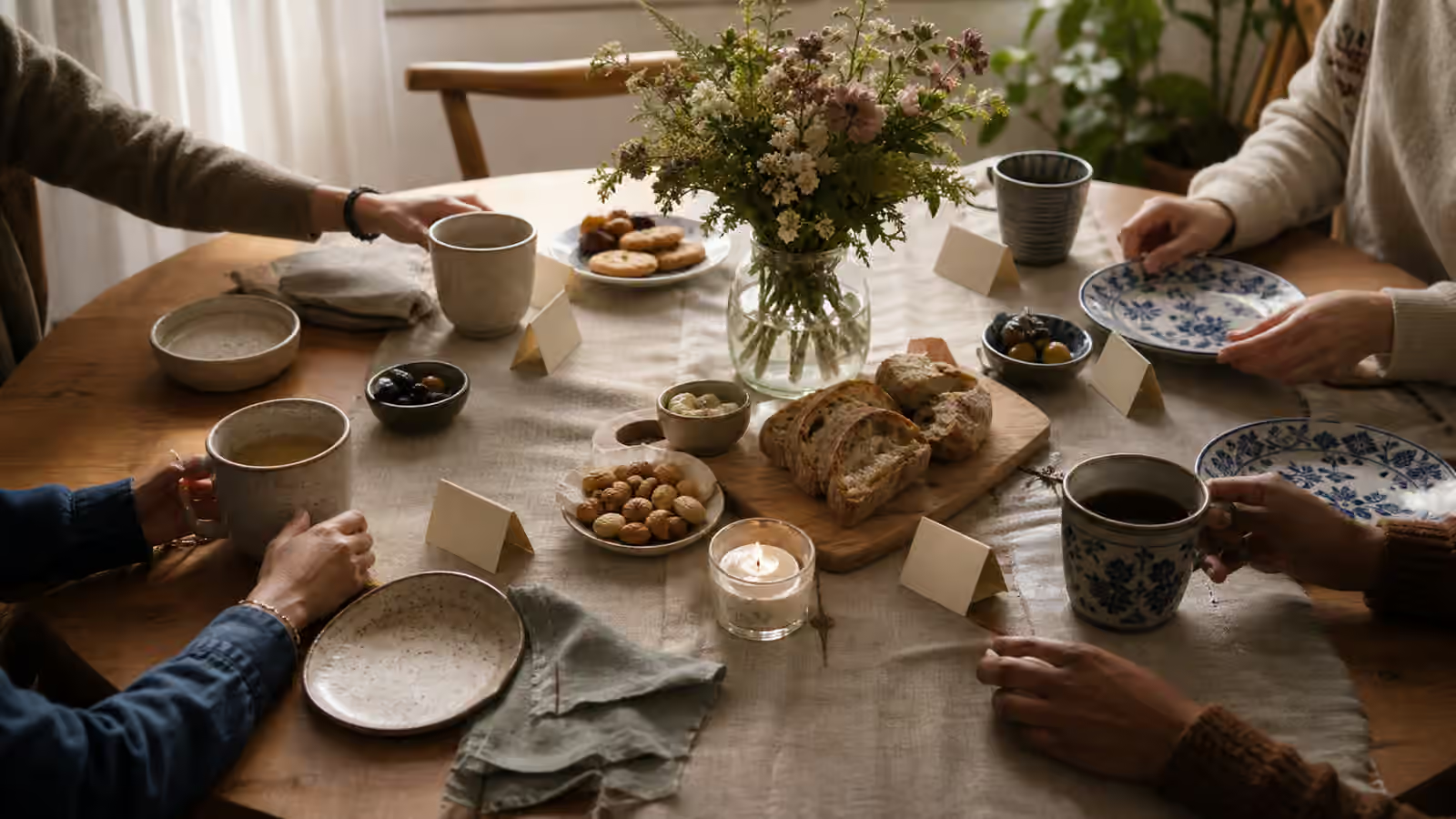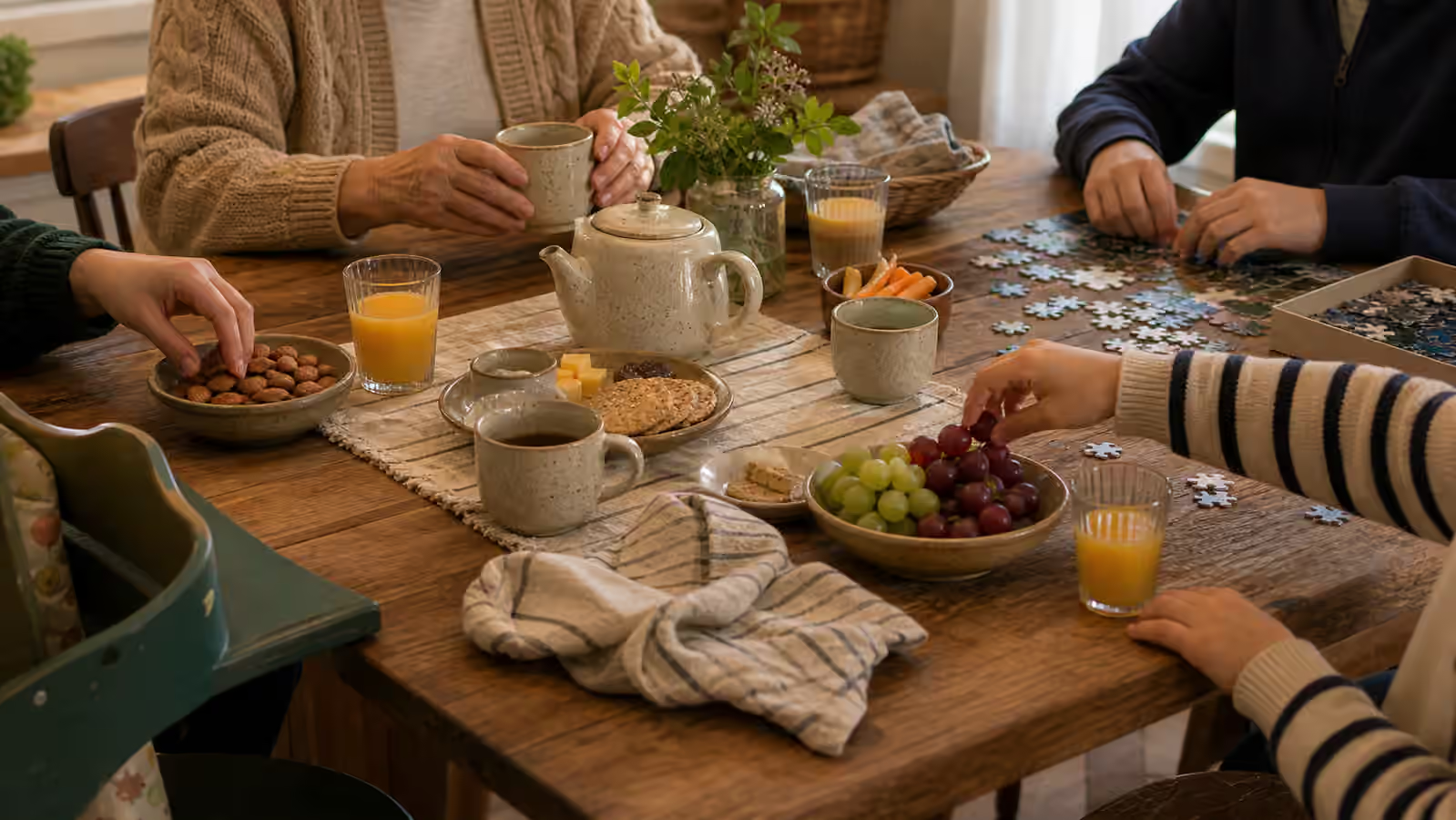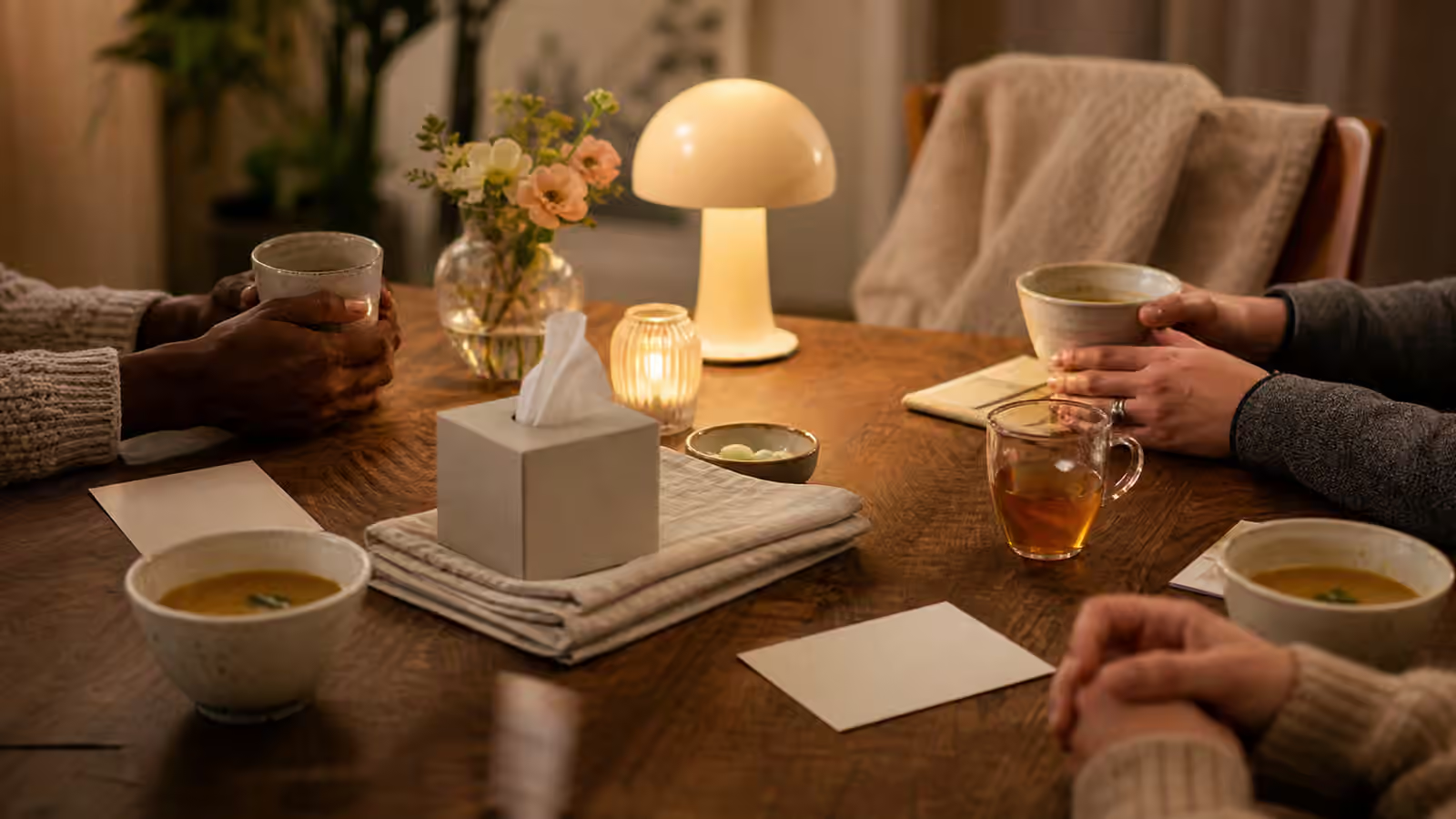
There is a particular kind of week that does not want a party and does not want to be alone either. The deadline landed badly, the diagnosis is still uncertain, the breakup is three weeks old and no longer novel enough to talk about, the job hunt is grinding, or nothing dramatic happened at all and the person is simply flattened by too many small demands. A hard-week soft table is a gathering built for exactly that middle state: ordinary difficulty, the kind almost everyone is carrying some version of at any given time, held in a room that asks very little.
It is worth saying at the outset what this is not, because the whole design depends on the boundary. This is not therapy, not crisis response, not medical or recovery care, and not a support group with a host instead of a facilitator. It is hospitality. The question a soft table answers is narrow and answerable: how does a room make space for people who are not at their best without requiring them to explain, perform, or be improved? The answer, most of the time, is less. Simpler food, dimmer light, fewer questions, and a genuine tolerance for silence do more than any clever prompt.
Invite the mood without staging it
The invitation sets the emotional temperature before anyone arrives, so it should be gentle and slightly under-dramatic. “Soup on Thursday, low talking allowed, no need to be cheerful” gives people permission to come as they are. “Come process the week together” does the opposite: it turns the evening into assigned emotional labor and quietly excludes anyone who wants company without a spotlight. The goal is to signal that the table can hold a heavy mood, not to require one. Some guests will arrive wanting to talk and some will arrive wanting to sit in warm silence near other humans, and a good invitation leaves both doors open.
Because the invitation is gentle, declining has to be genuinely safe. A person having a hard week may not have the capacity to attend even a soft gathering, and if turning it down costs them trust or triggers a worried follow-up, the softness was never real. Treat a no as ordinary. Invitations Without Pressure is the underlying skill here: the table is only soft if absence is allowed to be as unremarkable as attendance.
Let practical care speak before words do
When someone is visibly struggling, the reflex is to reach for questions, and questions can be kind, but a stack of them turns the guest into the evening’s project. Practical care is quieter and often lands better. A warm bowl put in front of someone. A full water glass they did not have to ask for. A chair set slightly away from the loudest corner. A blanket over the back of a seat, a lamp turned low, a clear and obvious path to the bathroom, and an exit that requires no announcement. These arrangements say “you are welcome and I am not going to interrogate you” without a single sentence, and for a tired person that message is a relief.
Food should carry the same logic. Avoid the elaborate dish that demands praise and explanation and a serving ritual, because it asks the guests to perform gratitude at exactly the moment they have the least to spare. Soup earns its place at this table honestly: it is warm, forgiving, easy to serve, and it gives hands something gentle to do. Tea does similar work. Nothing on a hard-week table should require a guest to compliment the host to justify their presence in the room.
This is also why quiet has to count as real participation. Quiet Guest Participation belongs right beside this format: some people show trust by talking less, and a guest who peels an orange, rinses a cup, watches the lamp, and sits through a whole hour without being drawn out has participated fully. If the host mistakes that quiet for failure and starts prying, the softness collapses.
Keep advice from colonizing the table
Ordinary difficulty attracts advice the way an open toolbox attracts hands. Someone mentions a rough week and, almost involuntarily, another guest offers a fix, a supplement, a book, a reframe. Occasionally that is exactly what was wanted. Far more often it is the listener’s own discomfort looking for an exit, and it leaves the speaker feeling managed rather than heard. A soft table needs a light, explicit boundary around fixing, set before the first heavy thing is said rather than after advice has already landed wrong.
A single sentence early in the evening does most of the work: “If someone wants advice they can ask for it; otherwise, listening is plenty tonight.” It can feel a touch formal in the moment, but it is far less awkward than interrupting a well-meaning guest mid-solution. Topic Boundaries Without Policing the Table offers the general habit, which is to name the boundary early, briefly, and in a way that makes no single person the problem. And when a conversation does climb past what a small table can safely hold, the host has an honest tool: return to the anchor. “Let us pause and refill the bowls” is not avoidance when a room needs a breath. It is the table remembering that care includes limits, and that a soup night is not equipped to hold every crisis, which is a truth that protects everyone in the room rather than abandoning anyone.
Do not let alcohol become the language of relief
A hard week is precisely when a room can start to treat alcohol as the natural symbol of unwinding, and that drift is worth resisting on purpose. When the drink becomes shorthand for relief, the table quietly tells anyone who is not drinking that they are outside the evening’s central comfort. People skip alcohol for a long list of private reasons that they owe to no one, and a soft table should never make the reasons relevant. Keep the non-alcoholic options genuinely appealing and present without ceremony, so that broth, tea, sparkling water, or a bitter spiced juice sit on the table as equals rather than as a consolation.
Watch the jokes as much as the pour. “I need a drink after this week” sounds harmless, but repeated a few times it defines the mood in a way some guests cannot step into, and it subtly reroutes the source of relief from the company to the bottle. Recovery-Aware Hosting Without Making Anyone Explain is relevant here even when no one at the table has disclosed anything, because the host does not need to know why a person is choosing water in order to make water an easy, unremarkable choice. The relief a soft table offers should come from warmth, structure, and being left alone when that is what a person needs, never from a single expected substance.
Follow up without asking for a report
The morning after a soft table is its own small design problem. A guest who spoke honestly may wake feeling exposed and slightly regretful; a guest who stayed quiet may wonder whether they did it wrong. The follow-up should soothe both without probing either. Something brief and undemanding does it: “Glad you came last night, no need to reply, hope today has one easier corner.” That is the whole message. Aftercare Follow-Up can help you make return easy, but the hard-week version of it deliberately avoids emotional accounting. Do not ask “are you better?” as though the table were a treatment, do not recap anyone’s disclosure in a group thread, and do not turn the next invitation into a check on whether they are still struggling.
The host needs a boundary of their own here too, because meaningful evenings are seductive and can tempt a host into offering more ongoing support than they can actually sustain. Keep the promise small and repeatable: a warm room, plain food, respected quiet, and a clean ending. The host is not obligated to become anyone’s emergency contact, adviser, or interpreter of their week. So host one soft table, with soup or tea or some other plain anchor, say plainly that guests may talk, listen, or simply be present, and then notice whether the room felt calmer precisely because it asked for less. If people leave without having performed either cheerfulness or pain, the table has done its modest and genuine work.