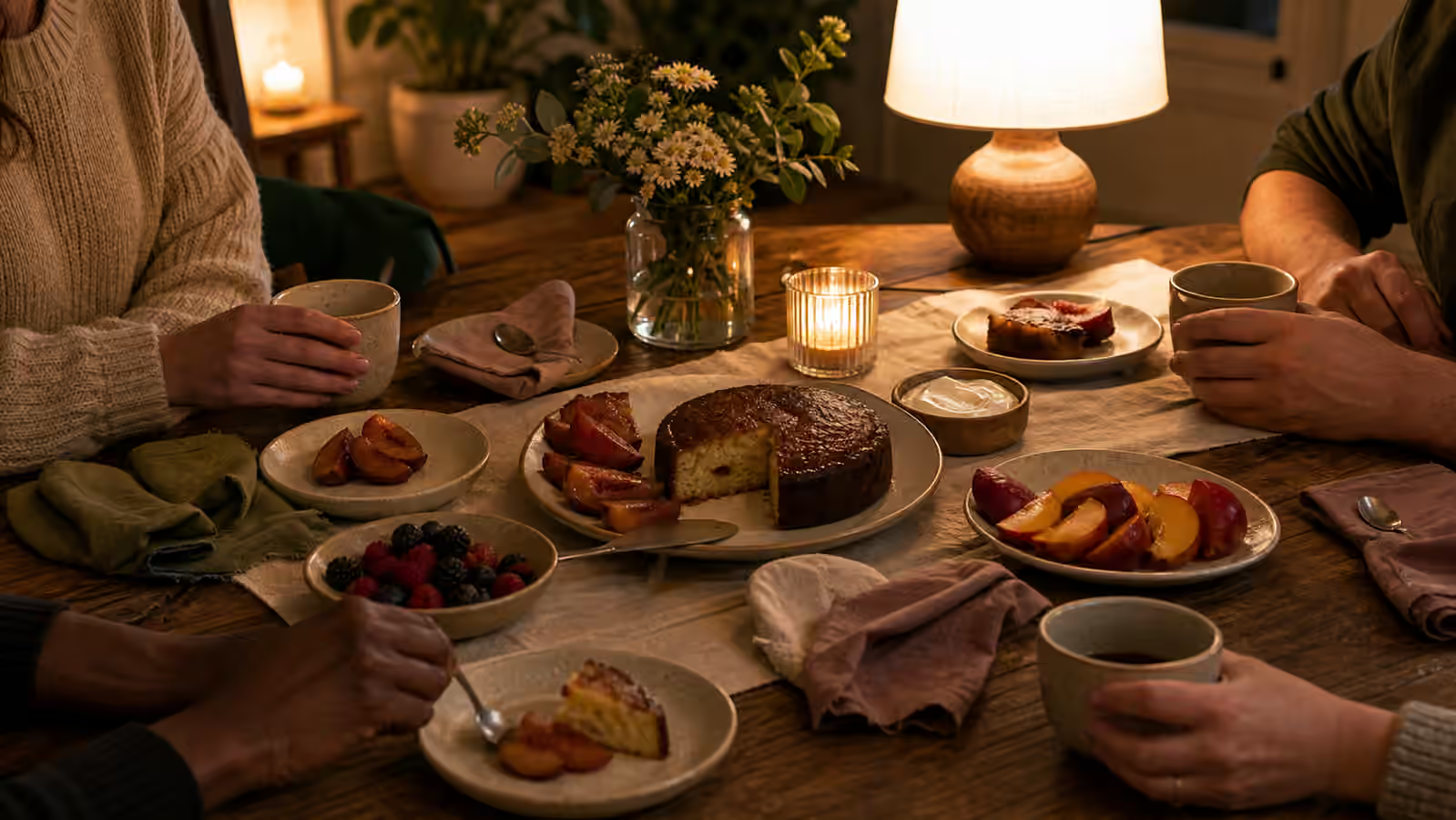
The reason a dessert hour works is that it quietly refuses the hardest part of hosting. A full dinner asks someone to plan a menu, shop, cook on a schedule, time several dishes to land together, absorb everyone’s dietary math, and then face a kitchen full of pots at the end of a long day. For an ordinary week, that is often simply too much, and so the gathering never happens. A dessert hour keeps the warmth and drops the labor. You put out something sweet, you make tea, you give the evening a short window, and you get a real table without the machinery of a meal.
The one thing it asks in return is honesty in the invitation. A dessert hour is not a dinner party wearing a smaller outfit. If guests suspect there might be food and arrive hungry, a plate of sliced cake reads as a disappointment rather than a treat. Say the true shape of it: eat dinner first, then come by for dessert, tea, and an hour or so at the table. Told plainly, the same cake becomes exactly what everyone came for.
Let the sweet be an anchor, not an audition
The dessert has one job, and it is not to impress anyone. It is to give hands something to hold and the table something to gather around. A single cake already sliced, a bowl of good fruit, a plate of cookies from a box, dates split with a bit of cheese, yogurt with honey and nuts, a store-bought tart cut into small wedges: any of these carries the whole format. What matters far more than the recipe is the staging. Cut things before people arrive so no one waits on a knife. Set the fruit where everyone can reach it. Put out small plates, forks, and napkins. Keep the tea or water flowing without effort.
If you genuinely love to bake, by all means bake, but watch the trap hidden in your own enthusiasm. The Common Table test is always whether the thing can happen again next month. A dessert that eats a whole Saturday is beautiful once and quietly unrepeatable, and a ritual that depends on a heroic effort is really a special occasion in disguise. A dessert you can buy or assemble in ten minutes is the one that lets the group come back, which is the entire point. Cheap Hosting Without Apology sits right alongside this: you owe no apology for serving one simple sweet thing, because the invitation promised exactly that and the table delivered it.
Guard the short window on purpose
Ninety minutes is close to the natural length of a dessert hour, and the shortness is a feature rather than a limitation. It is long enough to arrive, settle, taste, talk, and leave with the evening still glowing. It is short enough that the guest with an early shift, a kid at home, a long bus ride, or a limited social battery can say yes without calculating the cost. That accessibility is quietly the whole reason the format fills up when a dinner invitation would have been declined.
The catch is that sweetness and low lamplight are excellent at hiding the passage of time, and a dessert hour drifts into a midnight hangout more easily than almost any other small format. So name the close before the room gets too soft to end. “I’ll put on a last pot of tea around nine” is a gentle, real cue, as is beginning to clear the dessert plates while leaving the water out. The ending does not need to be abrupt, only honest; Closing Before It Drifts is worth reading precisely because this format tempts a host to let the evening dissolve rather than land it. A dessert hour that reliably ends on time is one people trust enough to accept again.
Handle food needs without turning it into a project
Dessert looks simple and hides a surprising number of edges. Sugar, dairy, gluten, nuts, religious practice, allergies, and the ordinary business of managing blood sugar can all make a sweet table narrower than it appears. The answer is not to become a short-order pastry chef juggling five substitutions. It is to ask early, keep the options legible, and make sure at least one thing on the table clears the widest set of needs. A plate of fruit and a clearly labeled packaged item often does more real good than an elaborate homemade substitute whose ingredients you cannot fully vouch for. Dietary Needs Without Drama lays out the broader habit; here it shrinks to a friendly line in the invitation, something like, “There’ll be cake, fruit, and tea, so tell me if there’s an allergy I should steer clear of.” That is enough. Nobody should have to narrate the reasons behind their needs to earn a plate.
Let the table carry the conversation
Tea does patient social work, and dessert changes the room it works in. A tea circle can feel deliberately hushed, almost meditative; add a sliced cake and you have given people a shared object to talk around. They can compare the fruit, remember a cake like this one from a grandparent’s kitchen, or simply agree that something small and sweet after dinner is one of life’s plain mercies. These are ordinary subjects, and ordinary subjects are usually how a table warms up in the first place. Weeknight Tea Circle is the quieter cousin of this format when you want less on the table and more stillness.
Keep the drinks easy and unloaded. Tea, decaf, herbal infusions, warm milk, water, or something cold all belong; what matters is that alcohol is not the thing that supposedly makes the evening grown-up. A dessert hour is already an adult evening because it has a clear invitation, a considered table, and a graceful exit. Set the cups where people can see them, say what is on offer, and let refills be self-serve so the host is not trapped on beverage duty. The host deserves a chair at their own table.
Match the conversation to the format’s scale. A ninety-minute dessert table is not the place to run a hard emotional excavation or a group decision; the window is too short and the mood too light to hold real weight well. That does not mean the talk must stay shallow, only that you should be careful about prying open a topic the evening cannot close. If conversation stalls, reach for small, sensory prompts rather than searching personal ones. Ask which fruit people wait all year for, what they always keep in the freezer, or what their most-used kitchen tool is. Those let people speak from everyday life without asking the dessert table to impersonate a therapy session.
Try it once
The whole experiment fits in a sentence: invite three to five people for dessert and tea after they have eaten, and keep the table short enough that you would happily do it again. Afterward, check three honest things. Did you, the host, still have energy left when everyone went home? Did people understand the promise, or did anyone arrive hungry? Did the close land on time, or did the evening puddle past it? If the answers are mostly kind, you have found one of the lowest-effort recurring tables on the whole Common Table guidebook shelf , the kind you can keep lit through a busy season without it ever becoming a burden.