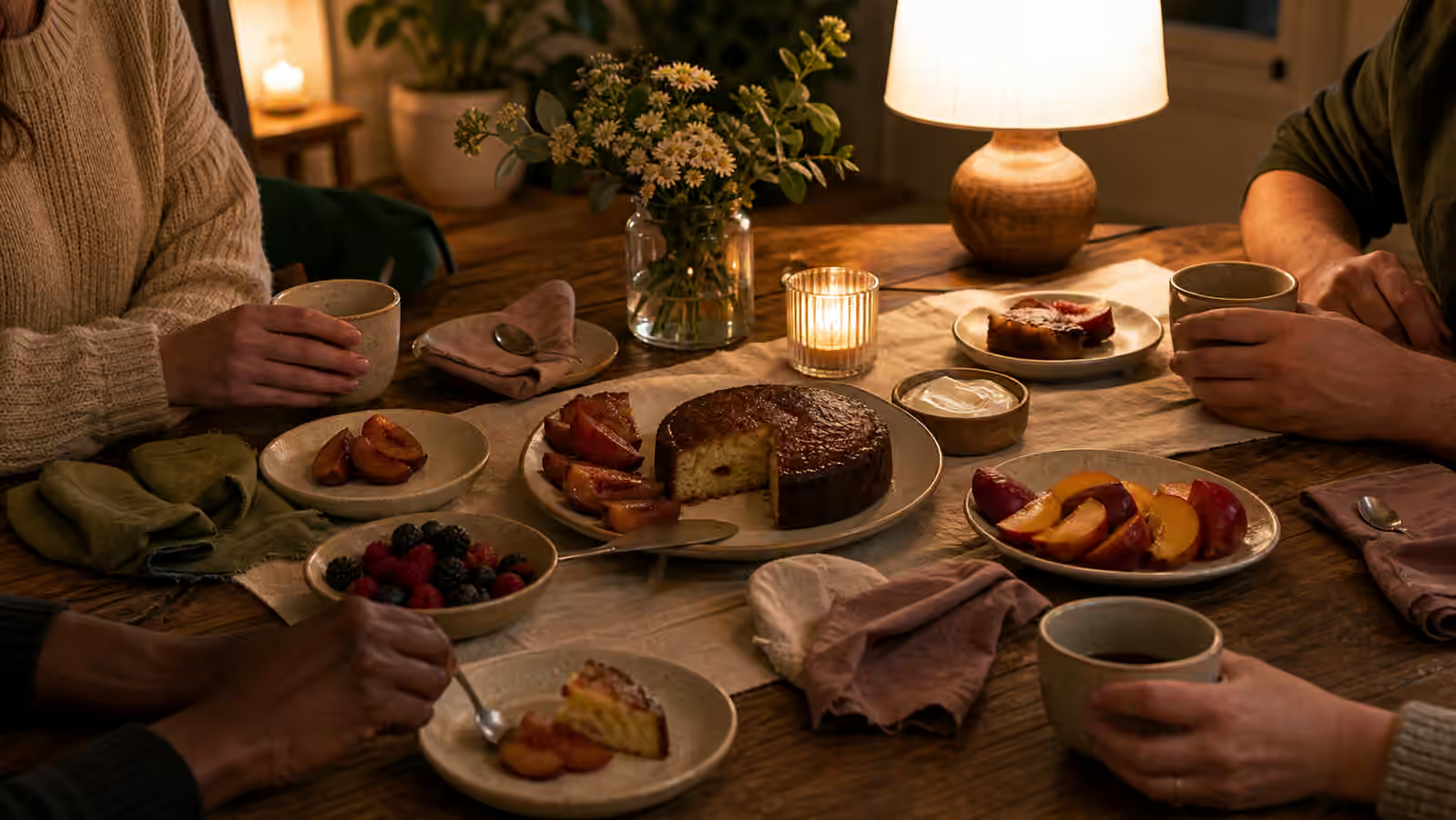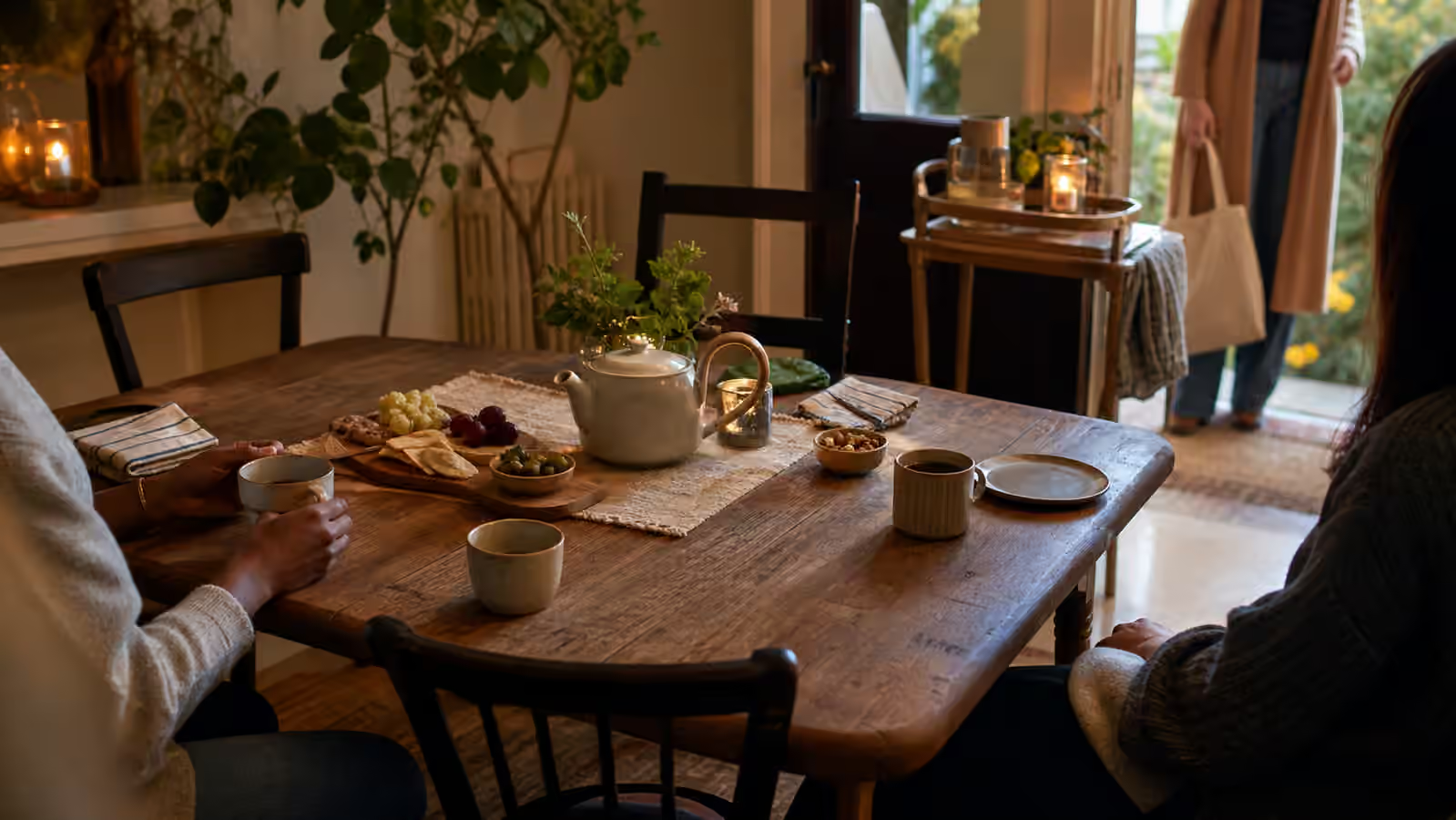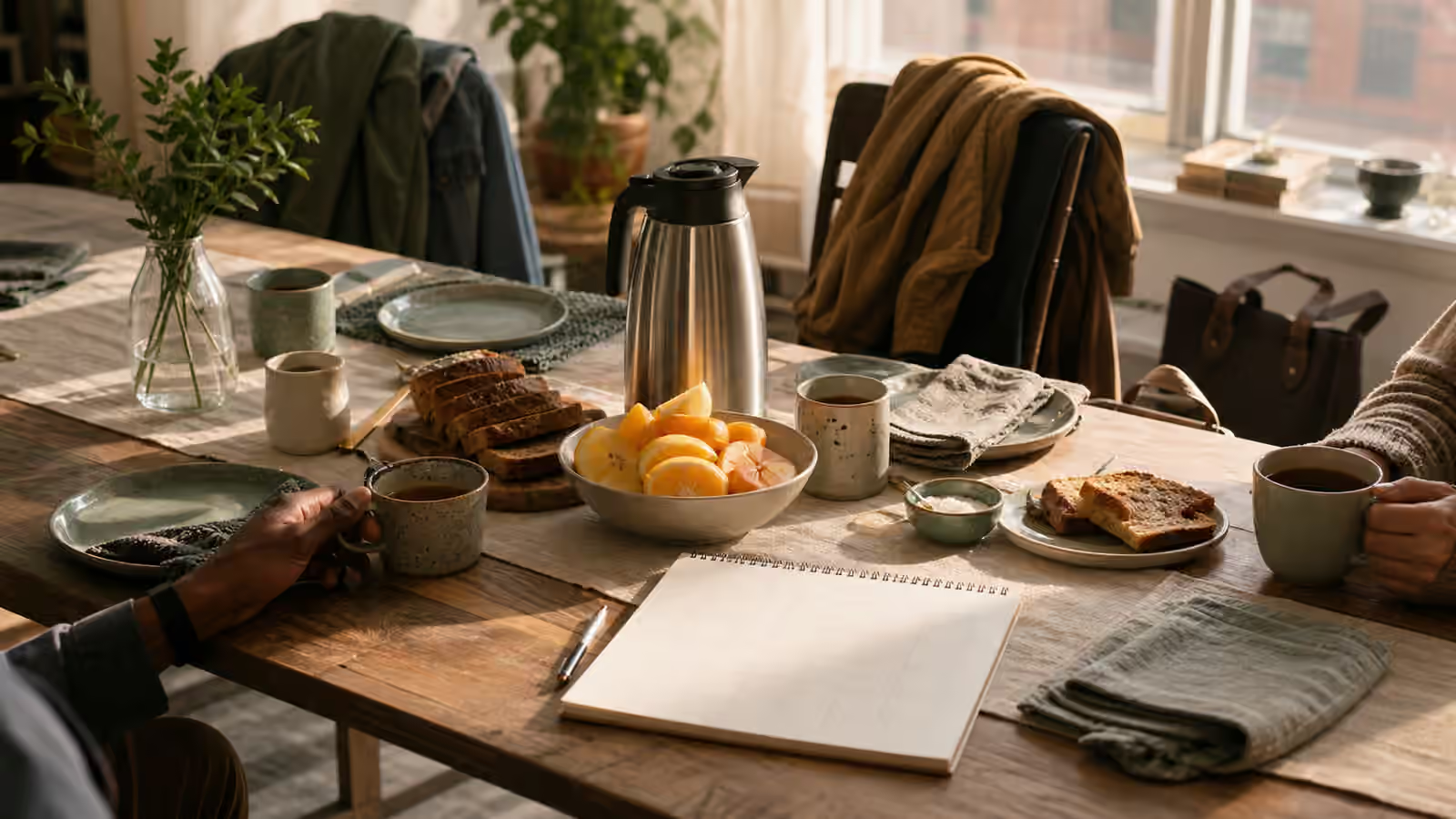
Most hospitality assumes the evening. It assumes people arrive already unwound, with the day behind them and nowhere urgent to be. A breakfast table inverts all of that. It catches people on the way in rather than the way out, before the meetings and the school run and the errands and the slow accumulation of tiredness have pulled everyone in separate directions. That is precisely its value. The hardest thing to protect in a busy life is not the free evening, which fatigue often eats anyway, but the first hour of the day, and a small morning table stakes a modest claim on that hour before anything else can.
If the daytime table ritual exists for people whose lives do not bend around late nights, the breakfast table is its sharpest form. It does not promise a leisurely spread. It promises something smaller and, for a lot of people, kinder: a warm drink, a plain thing to eat, a few familiar faces, and a clean exit onto the day.
Morning honesty is a feature, not a problem
There is a particular candor to early hours that no other part of the day offers. People have not yet assembled the polite face they wear by mid-morning. They are quiet, sometimes monosyllabic, occasionally still half in a dream, and a good breakfast host treats this as the point rather than a deficiency to fix. A guest who can sit at your table without producing conversation, sipping coffee and slowly returning to themselves, is receiving something rare: a place to be tired and unpolished among other people, with nothing expected in return.
This means the worst thing a morning host can do is overcompensate. Faced with the quiet, some hosts reach for the big question, the ambitious dish, the second round of refills, anything to fill the low hum of a room that has not fully woken. Do not. The silence is not a failure of the gathering. It is the texture of the hour, and forcing brightness onto it only tells your quietest guests that their actual morning selves are not welcome. Let the mood be plain. A friendly table does not have to be a loud one.
Refuse to let breakfast become brunch
Breakfast stays repeatable only by refusing the gravitational pull toward brunch. Brunch is a wonderful thing, but it is a different animal entirely: it expects abundance, planning, and a morning that can stretch as long as it likes. A Common Table breakfast has to survive an ordinary Tuesday, cooked by a host who also has a day ahead, for guests who cannot spend it defending the rest of their calendar. The whole design depends on staying smaller than the fancier meal it could so easily become.
Make the smallness visible in the invitation itself. “Coffee, toast, and fruit, 8:00 to 8:55” is a genuine kindness compared to a vague “come by for breakfast some morning.” The specific version tells a guest exactly what they are agreeing to and, just as importantly, exactly when they are free to leave. Morning people are usually watching a clock they have not mentioned; there is a train, a shift, a drop-off pressing on them the whole time. Put the clock in the design so it stops living as private anxiety in your guests’ heads.
The food should forgive an uneven arrival. Toast can be made in waves. Oatmeal holds. Boiled eggs, cut fruit, yogurt, a good loaf, a jar of jam, and a wedge of cheese do not collapse if someone turns up ten minutes late off a delayed bus. Steer away from anything that demands everyone be seated at the same instant, unless your group is unusually punctual by nature. No guest should ever feel that a late connection ruined the meal.
Let people arrive slowly and quietly
Morning arrivals need fewer words than evening ones. Put the cups where they can be seen. Set water out before the coffee, especially early. Leave a chair obviously open so nobody has to ask where they belong. If bags, coats, and bike helmets are going to pile up, give them a landing place so the entrance does not turn into a knot people have to pick their way through half-awake.
You can skip the grand opening entirely. A morning table can begin by pouring, or by passing the toast, or with one small remark about the day ahead and nothing more. A line as simple as “let’s take the first ten minutes easy” hands everyone permission to arrive at their own pace. The people who most need a soft landing, and who are also the least likely to ask for one, will feel it immediately. If you want more on lowering the friction of the doorway itself, invitations without pressure covers how to phrase the ask so a tired guest can accept, or decline, without cost.
Drinks stay uncomplicated at this hour, which is part of the charm. Nobody is reaching for alcohol at eight in the morning, so the whole question of it simply never arises, and the table is quietly inclusive by default. Make the coffee good, keep a caffeine-free option and plain water within reach for whoever wants them, and let each person’s cup be their own business. The morning table asks nothing of anyone’s reasons.
Protect the ending the day is trying to steal
A breakfast table is only generous if it ends when it said it would. A vague finish is quietly cruel in the morning, because every single guest is carrying a private next thing: a meeting, a hand-off, a medication time, a commute, a dog waiting by a door. Leave the ending open and you force each of them to choose between being polite and being on time, which is a choice no host should ever impose before nine in the morning.
So name the close before people start glancing at their phones. “I’ll wrap us up in ten so everyone gets out clean” is plenty. It is not a dismissal; it is you keeping the exact promise the invitation made. A clean ending is also what makes people willing to come back, because they have learned that this table will never quietly swallow the day it was meant to open. The fuller argument for ending a gathering while it is still going well lives in closing before it drifts .
Size the cleanup to match. If restoring the kitchen would cost you forty resentful minutes, the format is too big for a weekday. Set a tray by the sink, use fewer dishes than the room could technically hold, choose foods that do not coat every surface, and let the night-before self do as much of the work as possible. A thermos filled the evening before, a loaf already bought, a table set before bed: these are the moves that let a normal person host breakfast and still be a person by noon rather than someone nursing a quiet grievance about it. If your mornings keep leaving you depleted, the host energy budget is the guide to read next.
Repeat the shape until it becomes trustworthy
Breakfast can be weekly, monthly, or occasional, but it should never depend on novelty to justify itself. Keep the same drink, the same window of time, and the same closing line long enough that guests stop having to wonder what they are walking into. Variety will arrive on its own, carried in by the day itself and whatever each person brings to the table half-awake. You are not trying to impress anyone before work. You are trying to let a few people begin the day with just enough warmth to carry it, and not one ounce more that would weigh them down.
One small habit keeps the format from swelling. After everyone leaves, note what actually got eaten, what got ignored, and what made leaving easier. If nobody touched the second pastry, do not buy it again. If staying seated by the thermos kept the conversation flowing, keep the thermos. Morning rituals improve by subtraction far more than by addition. The practice is this: host one breakfast table with a stated leaving time, a food anchor that can wait, and a closing line that sends people cleanly into the day. Then ask whether the morning was easier to live because of it. If it was, keep it small and repeat it before you try to make it better.