
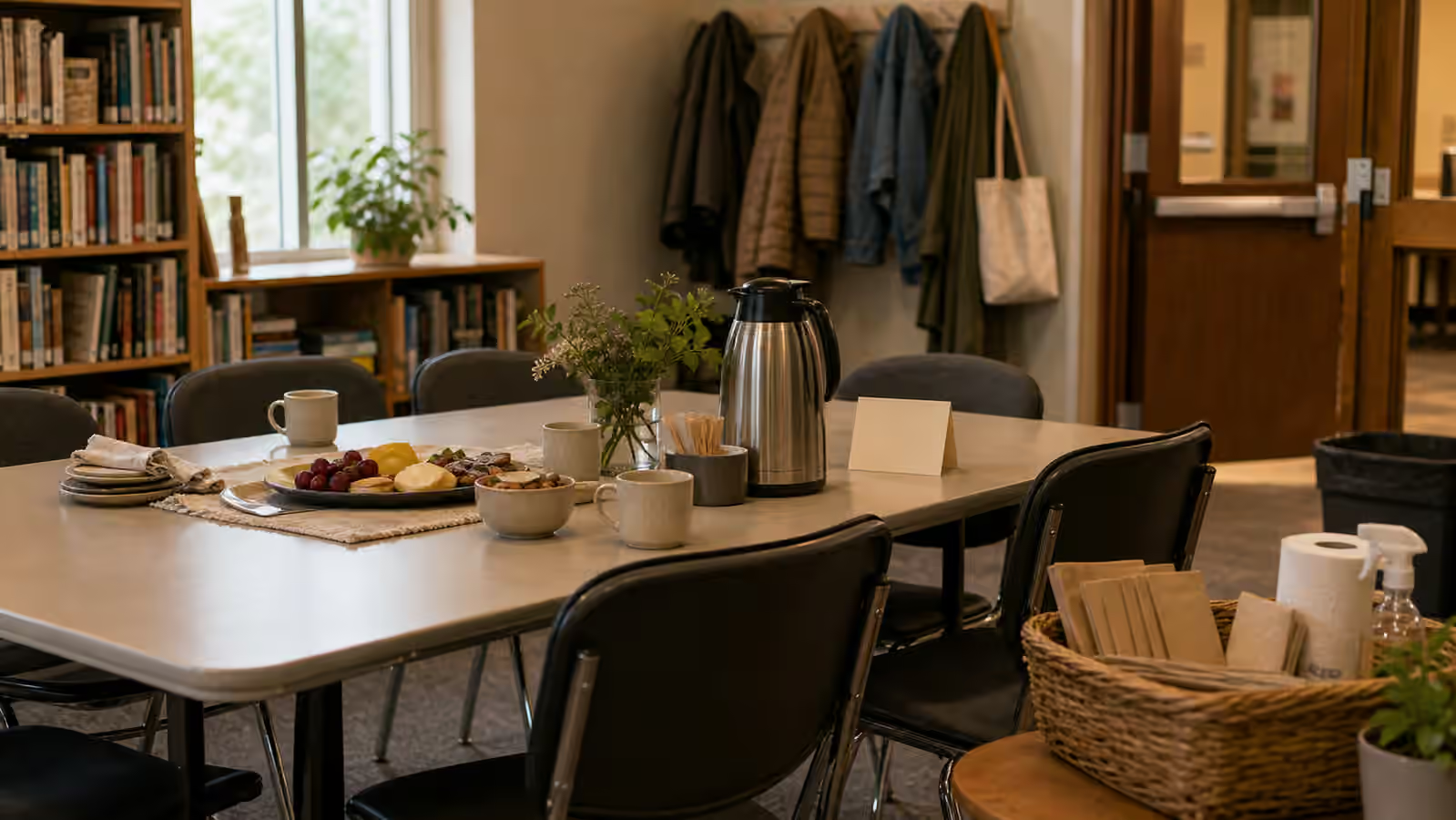
A borrowed room asks something of you that your own kitchen never does: it asks you to host well while remaining a guest yourself. The reservation card has your name on it, but the room does not. Behind it stands a librarian who will lock up, a facilities worker who empties the bins, a tenants’ committee that approved the booking, and whichever group has the slot after yours. When you gather people in a space you do not own, you are borrowing all of their goodwill at once, and the quiet skill of borrowed-room hosting is spending that goodwill so lightly that nobody notices it was spent.
This is a different discipline from home hosting, and it deserves its own attention. If you have already used the third-place map to find candidate rooms near you, this guide is the next step: turning a room you found into a table you can actually run more than once.
Read the room’s real terms, not just its posted hours
Every shared space carries two sets of rules. The first is written on a laminated sheet or in a booking email: capacity, hours, whether food is allowed, whether furniture may move. The second set is unwritten and usually more important. Does the staff genuinely like hosting outside groups, or do they tolerate it? Is the “food allowed” permission meant for a birthday cake, or would a pot of soup and its lingering smell change the answer next month? Will the group two doors down hear your laughter through a shared wall, and do they have a slot right after yours?
The way to learn the second set is to ask a person, not a poster. When you confirm the booking, ask the human on the other end what tends to go wrong with groups in that room, and what they wish people knew. You will usually get a candid, useful answer: the heat takes an hour to come up, the side door locks at seven, the last group left crumbs in the carpet and now everyone is nervous about food. That single conversation tells you more than any rules sheet, and it quietly signals that you intend to be an easy group to host. Easy groups get invited back; that is the whole game.
Bring a room that fits inside their room
The temptation in a large space is to fill it. Resist that. A community hall with fifty chairs does not want fifty of your guests any more than it wants one lonely table marooned in the middle of a gymnasium. Choose a corner or one end, cluster a handful of chairs close, and let the emptiness of the rest of the room simply be. A tight, warm cluster reads as intimate; a group spread thin across institutional space reads as a poorly attended meeting. The room’s scale is not your promise to keep. Your promise is the small, legible table at the center of it.
What you carry in should match what the room can absorb. A space with no sink is a space for foods that do not need one: bread, fruit, cheese, something in a thermos rather than something that must be reheated and scrubbed. If you must haul out your own trash, bring the bag before you need it. If the chairs are upholstered, think hard before you pour anything red. Drinks are simplest of all here, because most borrowed rooms make alcohol either forbidden or awkward, which is a gift rather than a constraint. Pour good tea or a cold nonalcoholic option with the same care you would give anything, set it where people can reach it without asking, and the question of drinking never has to become a conversation. Nobody at a borrowed-room table should feel they owe an explanation for what is in their cup.
Design arrival for a stranger holding a phone
At home, guests ring a bell they recognize. In a borrowed room, your guest is standing outside an unfamiliar building, unsure which door is unlocked, whether the room is up the stairs or down them, and whether the person at the front desk will know what they are talking about. That uncertainty is lonely, and it lands hardest on exactly the people you most want to include: the newcomer, the person who almost did not come, the guest already braced to feel out of place. A clear note the day before does most of the work. Name the building entrance that will actually be open, the floor, the room, what to say if someone asks, and what to do if they arrive after you have started. Good arrival cues are worth more thought outside the home than in it, and the arrival logistics guide goes deeper on the door-side details.
Host for the people who never sit down
The stakeholders at a borrowed-room table outnumber the guests. Someone has to close the building. Someone lives on the other side of that wall. Someone cleans the carpet on Monday. A generous host designs for those people even though they will never take a chair. This is where the ordinary etiquette of social safety and house rules translates into being a good tenant for an evening: keep the paths clear, keep the volume matched to the walls, keep phones and cameras respectful of a shared space, and keep the food where it belongs.
Noise deserves particular vigilance because it is the thing you will least notice yourself. A table that feels cozy from the inside can be surprisingly loud through a partition wall or an open transom. If the room shares a boundary with anything, favor formats that stay low: conversation, a passage read aloud, quiet handwork, a shared pot to gather around. Save the boisterous game for a space that can hold the sound. The neighbor you never meet is the one who decides, silently, whether your group is a good presence in that building or a nuisance to be quietly discouraged.
Build the reset into the clock, not after it
The single habit that most determines whether you are welcomed back is the reset, and the mistake almost everyone makes is treating it as something that happens after the gathering ends. It has to happen inside the reservation. If the room is yours until nine, the table begins closing at half past eight, so that the wiping and stacking and bin-tying finish while there is still time, not while a tired staff member waits by the door with keys. Bring a small reset kit, because a borrowed room rarely has a home kitchen’s supplies: a cloth, paper towels, a spare trash bag, a container for leftovers, and low-tack tape that peels off without marking a wall. The full logic of a clean, dignified close lives in the cleanup ritual guide , and it adapts neatly to shared space.
The goodbye line is what protects the reset from swallowing the evening. Something like, “We are going to start wrapping up now so the room is back to normal by quarter to,” gives everyone a clear role. Some guests will pitch in, some will drift out, and both are fine. What you are avoiding is the two bad endings: the host scrubbing tables alone while guests chat in their coats, and the whole group vanishing at once and leaving the space worse than they found it. A room returned in better shape than you received it is the closest thing borrowed-room hosting has to a thank-you note.
Let the constraints choose your ritual
The best borrowed rooms end up shaping the gatherings they hold, and this is worth welcoming rather than fighting. A quiet library room almost asks for a table built around a shared reading. A courtyard belongs to daylight and warm afternoons. A lounge with soft chairs wants a dessert-and-tea hour more than a full meal. A plain classroom can carry a skill-swap supper as long as the tone stays companionable and never tips into a lecture. When you let the room suggest the format, you stop hauling your home habits into a space that cannot hold them, and you start hosting something that genuinely belongs there.
The practice is simple: run one small table in a borrowed room with a reset kit in hand, a real conversation with the staff behind you, and a closing time that already includes the cleanup. Afterward, ask yourself the only questions that matter. Could every guest find and enter the room without stress? Did the food fit what the space could absorb? Was the room left in a state that would make you comfortable asking for it again? When the honest answer is yes, the borrowed room has stopped being a workaround and become a dependable part of your community’s rhythm.


