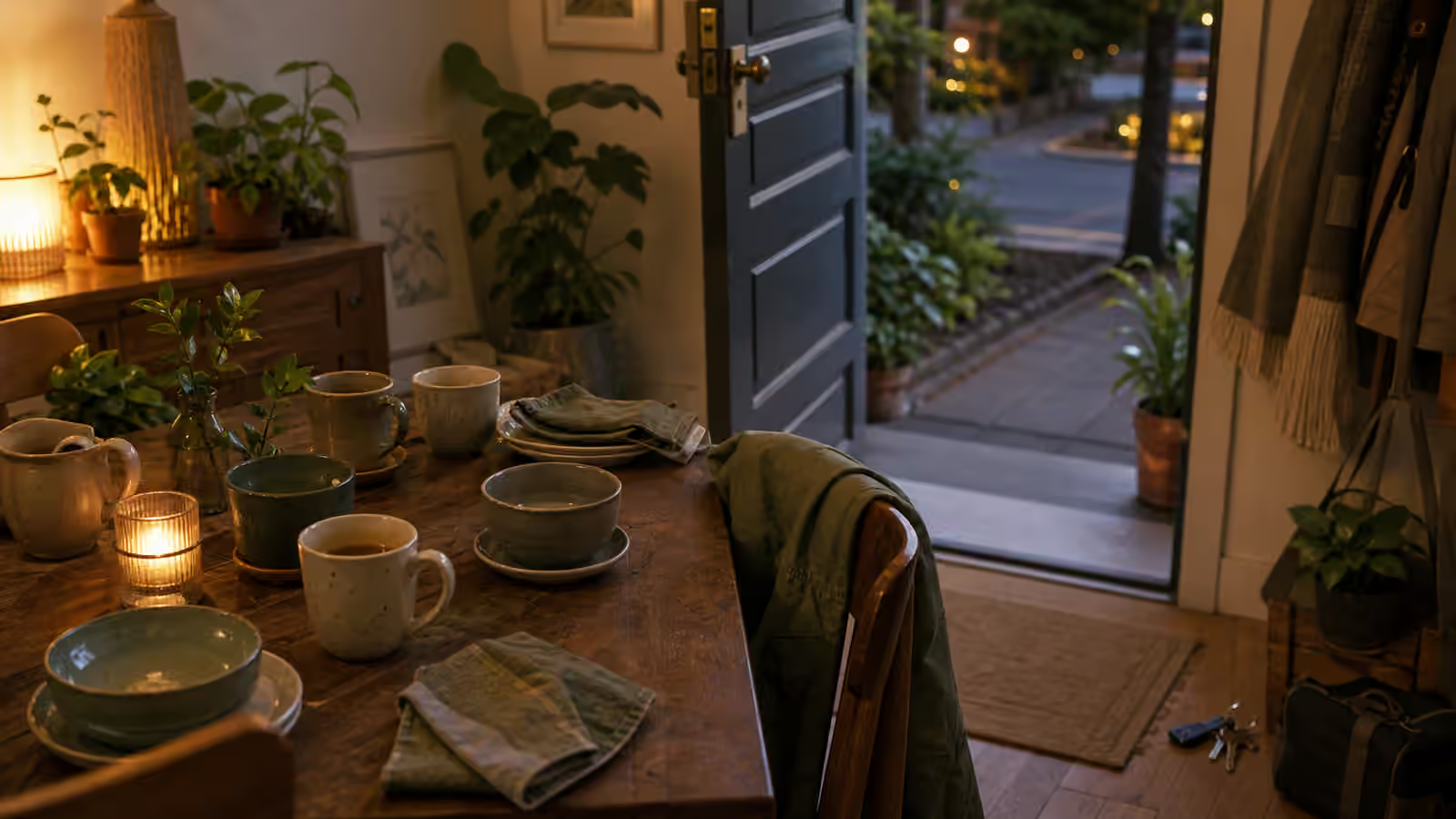
There is a particular moment at the end of a good gathering when everyone is standing, coats half on, and nobody quite knows how to leave. The table went well, which is exactly the problem: the room is warm and open and nobody wants to be the one who breaks the spell by walking out. So people hover. The conversation restarts on the threshold. The host, who was minutes from resting, ends up holding the room for another forty-five minutes while cups go cold. The after-table walk is a small, deliberate answer to that moment, a way to give warmth somewhere to go so it does not pool in the doorway.
The heart of it is to make decompression optional, brief, and located somewhere other than the table you just closed. That last part is the whole trick. When decompression happens at the table, the table reopens. Someone sits back down, a new subject cracks open, the kettle goes back on, and the clean ending you built dissolves. A short walk around the block, a few minutes on the porch step, a slow amble to the transit stop, gives people a genuine transition without asking the host to start hosting all over again.
Close the table first, then open the walk
A decompression walk only works if it comes after a real ending, never instead of one. The sequence matters. First you close the table the way you always do: name that the gathering is ending, thank people, do the small cleanup beat, and release anyone who needs to go. Only then does the walk appear, and it appears explicitly as an extra. “The table’s done, thanks everyone, I’m going to take a ten-minute loop around the block if anyone wants a soft landing before heading home” gets the order right. The gathering is over; the walk is a bonus.
That ordering protects the guest who needs to leave immediately. If you never clearly close, the walk quietly becomes the real ending, and skipping it starts to feel like leaving early. Some people have a bus to catch, a kid to relieve a sitter of, a body that is simply done, and they should be able to peel off at the close without missing anything that counted. Getting the close solid before you float the walk is what makes leaving feel complete rather than premature. If your closes tend to smear rather than land, Closing Before It Drifts is the companion piece to fix that first.
Keep it short enough to be believed
Decompression has to be short enough that people trust the label. Five minutes to the corner and back, one loop of the building, a porch sit while rides are summoned, the walk to the station, any of these is enough. The instant a “quick decompression walk” becomes a forty-minute expedition, it has stopped being decompression and started being a second, more shapeless gathering, one with no host structure and no clear end of its own.
Brevity matters most after the warmest tables, precisely because those are the ones people least want to end. The desire to keep going is not a flaw; it is the evidence the evening worked. But it is also the moment a boundary protects the next gathering. A recurring table runs on people leaving with a little appetite left, wanting to come back, rather than emptying every last thread into the night while the host runs on fumes. The walk should let the warmth settle, not become the place where everything gets processed. When something genuinely does need more, that is what the next day is for, and Aftercare Follow-Up is where it belongs, not the cold sidewalk.
Guard the threshold against the heavy topic
Doorways invite confessions. The coats are on, the cups are empty, the light has gone soft, and someone suddenly says the real thing they held back at the table. Sometimes that is a gift and you are glad to receive it. Just as often it traps you and the last guest in a conversation neither of you can end without seeming to brush the other off. So an after-table walk needs one gentle norm: no new deep topic that cannot survive being paused.
You can model the norm without coldness. When a heavy subject opens at the door, you can honor it and still decline to reopen the whole evening around it. “I’m really glad you told me, and I don’t want to rush it out here, so let me message you tomorrow” respects the person and protects the boundary at once. On paper that can read blunt; in a real doorway at the end of a long night it is often exactly the kindness that keeps a careless half-conversation from happening. Walking side by side genuinely does loosen some talk, which is why the Walking Table exists as a full format of its own, but the after-table walk has a narrower job, cooling down rather than cracking open.
Let people decompress their own way
Not everyone unwinds by walking, and a good option never forces a single exit. Some guests decompress best by leaving right now, while the room still glows. Some want a silent ride. Some need to sit alone in the car for a minute before driving. Some settle by carrying two cups to the sink because a small task does the transition for them. Some want no further contact at all and are ready to be done the instant the table closes. A well-designed decompression ritual ranks none of these; it simply adds one more door, it does not replace the others.
Offer it in language that keeps the variety open. “I’m doing a short loop, no need to join” invites without herding, where “let’s all walk” quietly conscripts. And read the conditions: if it is dark, icy, unsafe, if mobility or sensory load makes a walk a poor fit, swap it for a porch pause, a lobby sit, a two-minute stretch in the hallway, or nothing at all. Mind the household too, a porch cluster can wake neighbors, a hallway can block residents. The point is a softer exit, not another thing guests must actively opt out of.
Return the host to rest
The walk needs its own ending, and that ending should hand the host back to recovery rather than steal it. If you walk guests to the corner and then come home to a sink full of dishes and a wired nervous system, you have decompressed everyone but yourself. Build your own landing into the plan: a glass of water, ten quiet minutes, a decision to leave the dishes until morning, permission not to answer any messages tonight. The ritual exists to create rest, so do not let it quietly consume the rest it was meant to make. If in doubt, weigh it against your Host Energy Budget : keep the walk if it makes you feel more human, drop it if it just makes every gathering longer.
For your next table, pick exactly one decompression option that runs under fifteen minutes and does not require you to restart hospitality, then try it once and watch what it does to the ending. When it works, it feels almost too simple: people step away together, the air changes the conversation, you pour nothing more, and leaving stops being abrupt. The evening gets a landing strip, and everyone carries it home without dragging the gathering past its clean close.