Pre-ground coffee asks for honesty before it asks for technique. It will not keep aroma as well as whole beans, and it will not give you the same control over extraction that a burr grinder gives. Still, many people brew it every morning because it is convenient, affordable, available, or simply what fits the kitchen right now. The question is not whether pre-ground coffee can become a cafe fantasy. The question is how to make it taste cleaner, sweeter, and more intentional with the limits already in place.
The biggest mistake is treating pre-ground coffee as hopeless. The second biggest mistake is treating it as if nothing has changed. Grinding exposes far more surface area to oxygen, so aroma fades quickly and stale flavors arrive sooner. Grind size is already chosen for you, so your main levers become freshness, storage, ratio, water, filter, brewer choice, and brew time. If you understand the broader ideas in Coffee Freshness and Resting and Coffee Brewing Ratios , you already have most of the tools you need.
Buy the Smallest Useful Amount
Pre-ground coffee loses its best aroma faster than whole beans because every particle is exposed. A bag that might be reasonable as whole beans for a couple of weeks can taste tired much sooner after grinding. This does not mean you must panic after opening it. It means the most important buying decision is often size. A modest bag you finish while it still smells like coffee is usually better than a large bag that spends weeks becoming woody and flat.
If you buy from a local roaster, ask for the coffee to be ground for the brewer you actually use. Drip, French press, moka pot, espresso, and pour-over do not want the same grind. If the roaster can grind just before selling, buy only what you will use soon. If you buy sealed grocery coffee, choose packaging that protects aroma and has a clear roast or production reference when available. A distant best-by date is less useful than a roast date, but sealed packaging still matters.
Smell is a practical test. Fresh ground coffee should smell specific: chocolate, nuts, fruit, toast, spice, flowers, or roast. Stale ground coffee often smells dull, papery, dusty, or faintly oily. If the dry aroma is already gone, no recipe can restore it completely. You can still brew it, but your expectations should move toward comfort and usefulness rather than high definition.
Store It Like Aroma Is Leaving
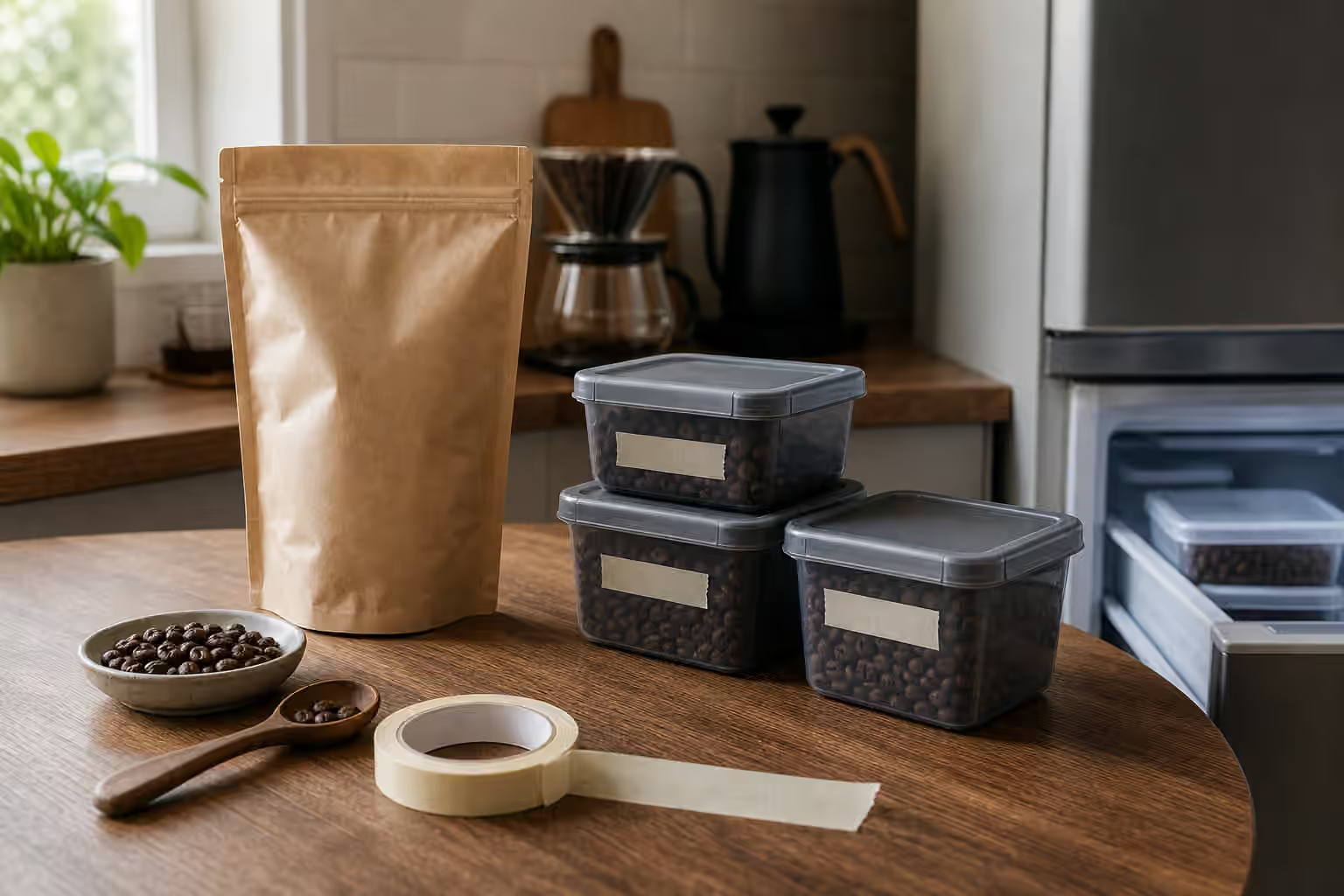
Once the bag is open, make the coffee work less hard. Keep it in an airtight container that is close to full, stored away from heat, light, moisture, and strong smells. A cabinet away from the oven is usually better than a counter near sunlight. The refrigerator is usually a poor daily home because condensation and food odors can create more problems than they solve. Freezing can work for longer storage when the coffee is sealed well in small portions, but repeatedly opening a frozen container invites moisture.
Avoid pouring the entire bag into a decorative jar that leaves lots of headspace. The jar may look calm, but the oxygen inside is doing work. If the original bag has a good one-way valve and a reliable closure, it may be better than a pretty container. If you transfer the coffee, choose a small container and keep the rest sealed. The Coffee Storage Guide goes deeper on oxygen, heat, and moisture, but pre-ground coffee makes the lesson sharper because the clock is already moving fast.
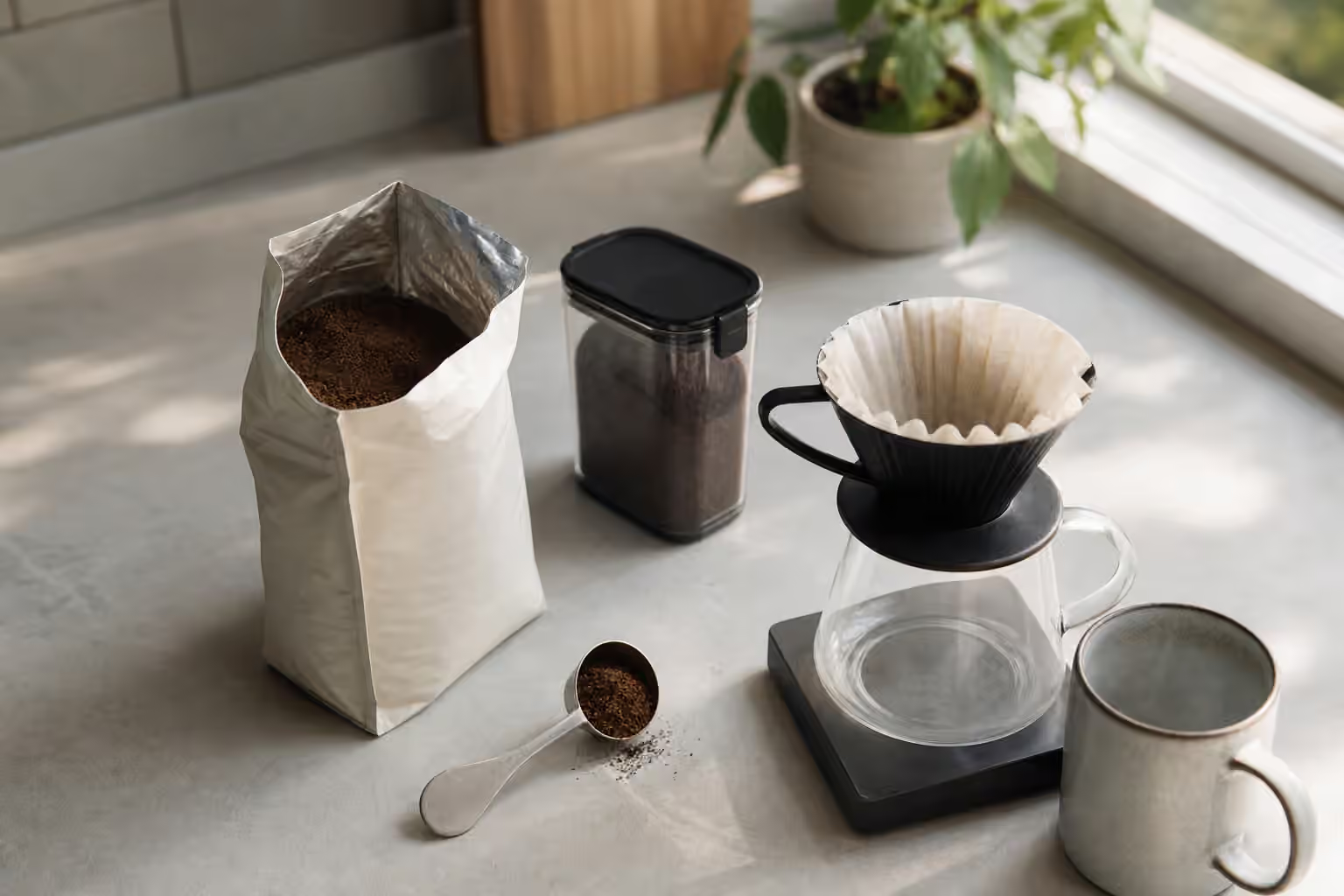
Do not leave the scoop buried in the grounds if it brings counter moisture or oils back into the container. Use a clean, dry scoop. Close the container immediately after dosing. These habits feel small because they are small, but pre-ground coffee improves when many small losses are reduced at once.
Match the Brewer to the Grind
Most pre-ground coffee sold for general use is ground near the automatic drip neighborhood. That makes it naturally suited to many drip machines and paper-filter brewers, less ideal for French press, and usually unsuitable for true espresso unless the package says it was ground for espresso and you are using a pressurized or forgiving setup. If a coffee tastes silty and harsh in a French press, the grind may be too fine for full immersion with a metal screen. If it tastes weak and fast in a cone dripper, the grind may be too coarse or the bed may be too shallow.
Choose a brewer that forgives the grind instead of fighting it. Automatic drip can work well because the basket and paper filter are built for medium grounds. A Clever-style immersion dripper can also help because the steep time gives you some control even when grind is fixed, while the paper filter removes fines at the end. AeroPress can be flexible because you can adjust steep time and pressure, though very fine pre-ground coffee may clog or produce a heavy cup.
When the grind is fixed, time becomes a gentler tool than agitation. Stirring hard, swirling aggressively, or pouring violently can push fines into filters and make the cup bitter or muddy. If the coffee tastes weak, increase contact in a measured way before shaking the whole process. If it tastes dry and rough, reduce contact, use a slightly shorter recipe, or choose a cleaner filter. The Coffee Filters guide helps explain why paper can rescue clarity when the grind contains many tiny particles.
Use Ratio Before You Use More Scoops
Pre-ground coffee is often brewed by scoops because that is how it is packaged and taught. Scoops are convenient, but they drift. A packed scoop, a fluffy scoop, and a heaping scoop can all look normal while changing the cup. If you have a scale, weigh the dose at least a few times so you know what your scoop actually holds. The guide to Coffee Scales and Timers is useful here because measurement is not about fussiness. It is about finding a repeatable starting point.
If the cup tastes balanced but thin, use a slightly stronger ratio. If it tastes harsh, do not automatically use less coffee. Harshness may come from over-extraction, stale coffee, dirty gear, or too many fines. A weaker harsh cup is still harsh. If it tastes sour and hollow, the water may be moving through too quickly or the coffee may need a little more contact. If it tastes flat and papery, age and storage may be the main issue.
Water quality matters even more when coffee is already quiet. Chlorinated or heavily mineral water can make pre-ground coffee taste dull, metallic, or chalky. Filtered water that still has some mineral content is often enough. You do not need a lab approach, but you do need water you would drink by itself. If every bag tastes the same kind of flat, revisit Water Quality for Coffee before changing brands repeatedly.
Keep the Gear Neutral
Pre-ground coffee often gets blamed for flavors that come from the brewer. Old oils in a drip basket, a stained carafe, a travel mug lid, or a reusable metal filter can make fresh coffee taste older than it is. Because pre-ground coffee has less aroma to spare, stale residue stands out quickly. Run hot water through the empty brewer once in a while and smell it after it cools. If it smells like yesterday’s coffee, it will join today’s cup.
Paper filters can help by holding back sediment and some oils, but they should be seated properly and rinsed when practical. A folded or collapsed filter creates bypass, where water slips around the coffee bed and weakens the brew. A dirty machine can also heat unevenly or flow slowly because of scale. The Clean Coffee Gear guide is not glamorous, but it is one of the most direct upgrades for coffee that tastes tired before the bag is empty.
Thermal handling matters too. Coffee that sits on a hot plate becomes sharper and flatter as it cooks. If you brew a batch, drink it soon or move it to a thermal carafe. Pre-ground coffee does not usually have enough high aroma to survive prolonged heat gracefully.
Know When Convenience Is the Point
The best use of pre-ground coffee may be a calm, reliable routine. It can be the office bag, the guest backup, the travel option, the budget choice, or the bridge before buying a grinder. It does not need to compete with a freshly ground single-origin pour-over to be worthwhile. It needs to be bought in sensible amounts, stored carefully, brewed with a matching method, and judged fairly.
If you later move to whole beans, the Grind Size Guide will give you a new lever. Until then, pre-ground coffee still has room for skill. Protect the aroma that remains. Use a ratio you can repeat. Choose a brewer that fits the grind. Keep the water and equipment clean. Taste the cup after it cools slightly, then make one small change. That is enough to turn a compromise into a decent daily brew.