The best coffee improvement I ever made wasn’t a grinder. It wasn’t a new brewer. It wasn’t a mysterious bag with tasting notes like “sun-dried strawberry” and “rainwater on slate.”
It was deciding that my weekday coffee deserved a routine.
Not a ritual that requires candles and a slow-motion soundtrack. A routine like brushing your teeth: something simple enough to do half-awake, consistent enough to trust, and good enough that you stop thinking about it once it works.
Because the real enemy of good home coffee isn’t ignorance. It’s chaos.
You know the chaos. The Monday morning where you scoop an unmeasured amount of coffee, grind “somewhere in the middle,” pour water you didn’t check the temperature of, then blame the beans when it tastes sharp. The Tuesday morning where you do the same thing but accidentally make something wonderful—and you can’t reproduce it, which is its own kind of heartbreak.
This guide is how to stop living like that.
It’s a story about building a cup you can repeat.
The day consistency became the point
I used to treat coffee like an improv show. New beans, new settings, new opinions. It was fun, until it wasn’t.
The turning point came during a busy week when I realized I was optimizing for the wrong outcome. I wasn’t trying to become the world’s most interesting coffee person. I was trying to drink coffee that made me feel like my morning had traction.
So I made a small promise: for two weeks, I would brew the same method the same way, and I would only change one thing at a time.
The first cup wasn’t perfect. The second wasn’t either.
The fifth cup was the first one that felt predictable.
Predictable is underrated. Predictable is what makes coffee calm.
The framework: a routine is just repeatable decisions
A reliable routine is a short list of decisions you stop re-deciding.
Pick your defaults:
- One brew method you can do daily
- One dose and ratio you like
- One water habit you can actually keep
- One grinder setting range you understand
You can always explore later. But exploration is only fun when you have a baseline.
Step 1: Choose a method you’ll actually do on a Tuesday
People choose brew methods the way they choose kitchen knives: by the fantasy version of themselves.
The best daily method is not the most “correct.” It’s the one you’ll do with consistent effort.
A practical menu:
- Pour-over: clean, expressive, a little technique; great if you enjoy a few minutes of focus.
- AeroPress: forgiving, fast, excellent taste-to-effort ratio.
- French press: rich body, minimal fuss; great if you like texture.
- Drip machine (good one): the king of weekday consistency.
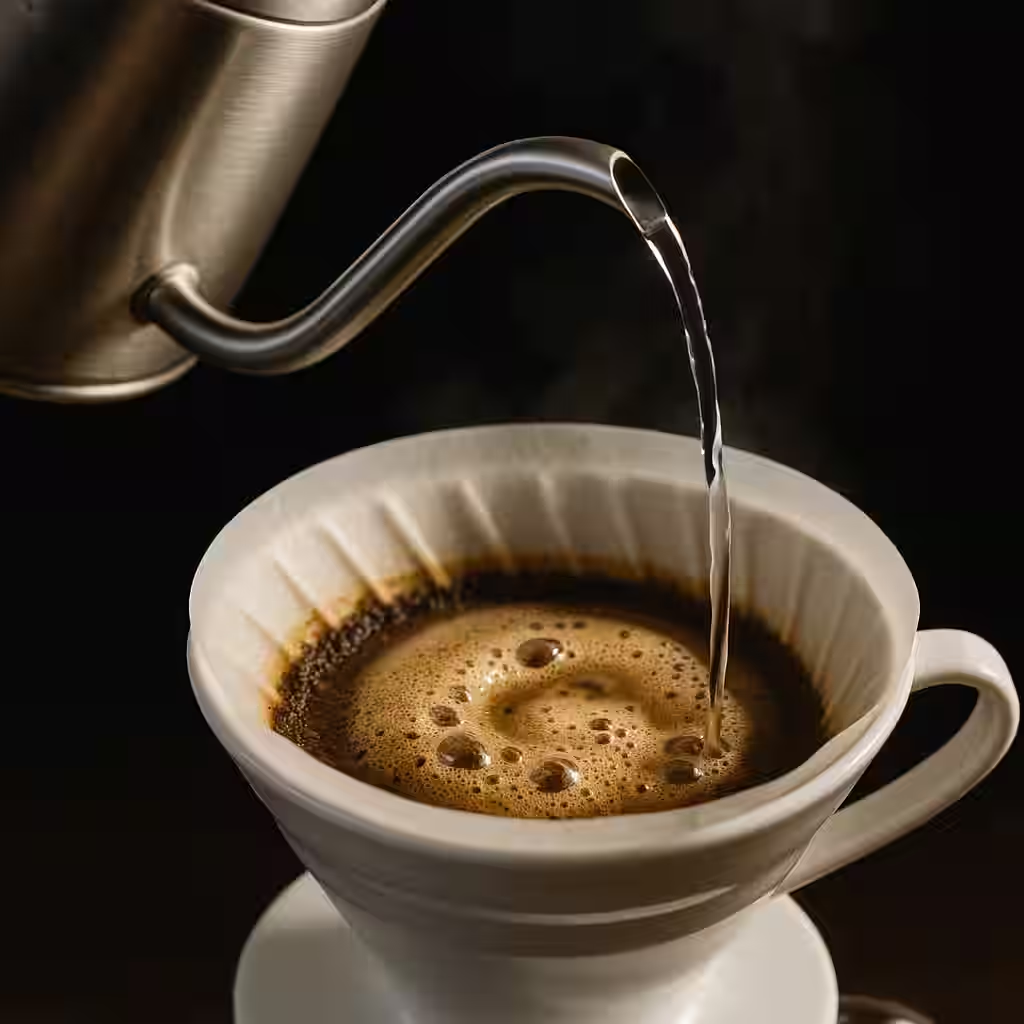
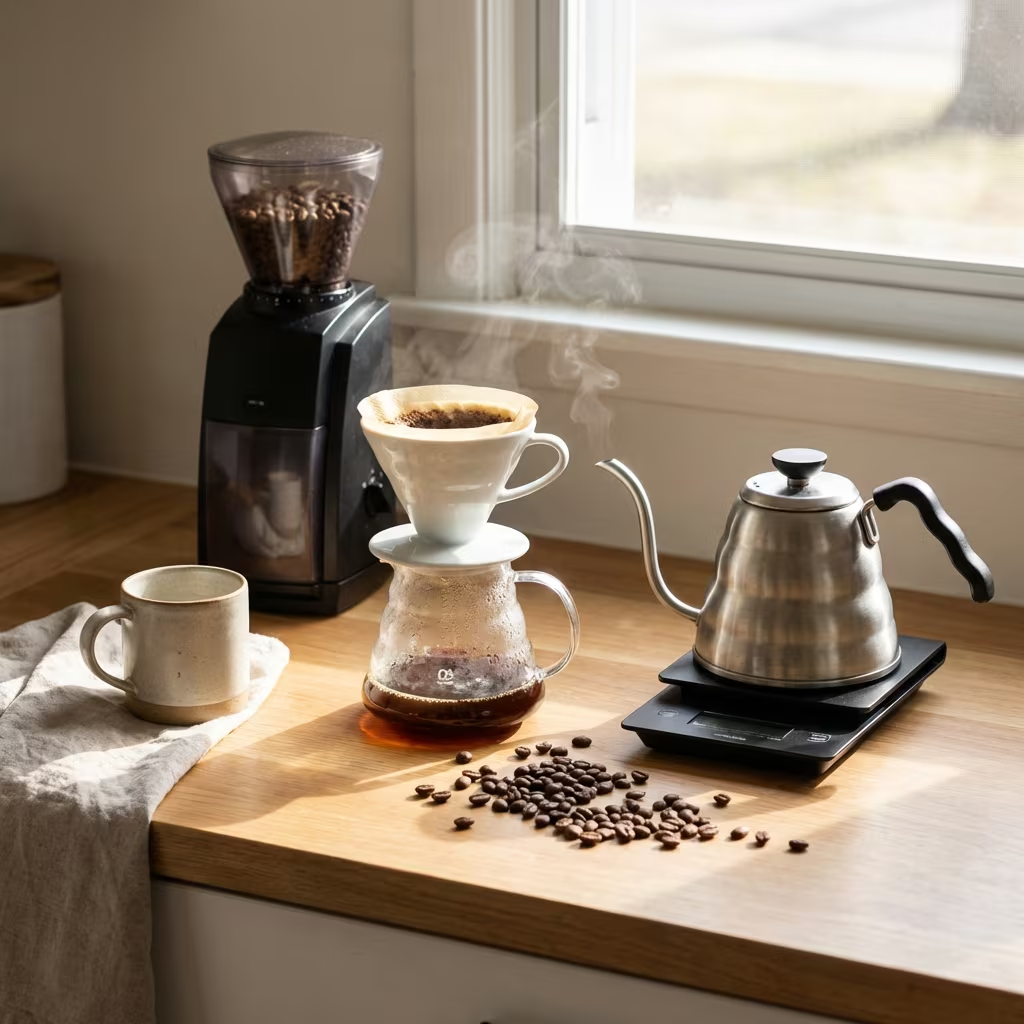
For this story, imagine pour-over—because it makes the causes of good coffee visible. But the routine principles work for any method.
Step 2: Lock in a simple recipe (and let it be boring)
A recipe is your anchor. Without it, your brain tries to solve every cup from scratch.
A strong starting point for many home brews:
- Coffee: 20g
- Water: 320g (that’s a 1:16 ratio)
Or if you prefer bigger cups:
- Coffee: 30g
- Water: 480g
The exact numbers don’t matter as much as choosing numbers you can repeat.
When you lock a ratio, your taste adjustments get simpler. Too strong? Add water or choose a slightly higher ratio tomorrow. Too thin? Use a slightly lower ratio. But don’t change three things at once.
Step 3: Make peace with the grinder (and teach it one language)
Most “bad coffee” at home is really “wrong grind size for this recipe.”
The grinder doesn’t want you to be brilliant. It wants you to be consistent.
Here’s the quiet expert move: stop chasing one perfect setting and instead learn a range.
- If your coffee tastes sour and thin, you likely need finer (or a bit more contact time).
- If it tastes bitter, harsh, or drying, you likely need coarser (or less contact time).
The goal is to turn flavor into direction. Once you can reliably move the taste, you’ve won.
If you want the more technical version of this, pair with Grind Size.
Step 4: The small workflow details that change everything
This is where the story becomes practical.
On day three of my two-week routine experiment, I realized something embarrassing: I was blaming coffee for my own inconsistency.
I wasn’t always:
- using the same water temperature,
- pouring at a similar speed,
- wetting the filter the same way,
- starting the timer at the same moment.
Coffee responds to what you do. It’s not judging you. It’s just physics.
The fix was not to become obsessive. The fix was to pick a few habits and repeat them.
A simple workflow that works:
- Heat water, then wait a beat so you’re not always at a full boil.
- Rinse the filter (removes paper taste and warms the brewer).
- Add grounds, then gently level the bed.
- Bloom with enough water to wet all grounds, then wait.
- Pour steadily in a consistent pattern until you hit your target weight.
You don’t need fancy pouring. You need repeatable pouring.
Step 5: Make notes like a normal person
The internet turns coffee notes into poetry. You don’t need poetry. You need memory.
Write one sentence:
- “Sour today; go finer tomorrow.”
- “Tasty but a bit heavy; try slightly longer ratio.”
- “Good—don’t touch anything.”
A routine becomes satisfying when “good” is stable enough that you can stop tinkering.
The ending: the morning cup that doesn’t demand attention
Two weeks later, something changed. I stopped thinking of coffee as a performance.
I woke up, brewed, and got a cup that felt like it belonged to my morning. Not perfect. Not dramatic. Just reliably good—sweet enough, balanced enough, clear enough that I could taste what I bought.
That’s the gift of a routine. It gives you your attention back.
And once you have attention again, you can choose when to explore: new beans, new methods, new experiments. But you’ll be exploring from a home base.
If you want the deeper companion pieces behind this story, read Brewing Methods, Water Quality, and Storage.