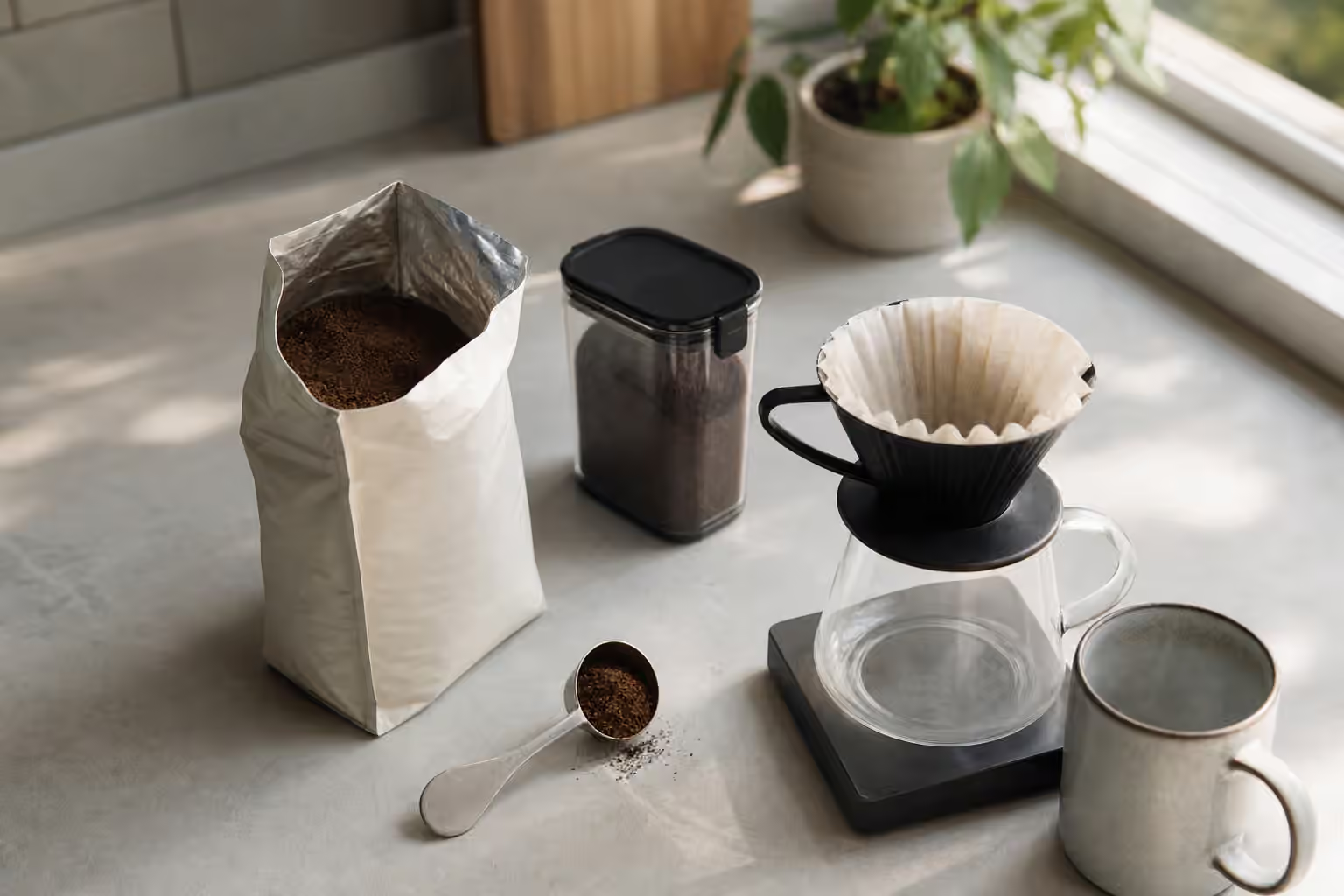
Decaf coffee has spent too long as the apologetic corner of the coffee shelf. It is often treated as an afterthought, something roasted too dark, stored too long, and brewed only for people who cannot drink the regular thing. That reputation is partly earned by bad decaf, but it is not the whole story. Decaf can be sweet, balanced, aromatic, and worth brewing carefully. It simply asks the buyer and brewer to understand what changed before the beans reached the grinder.
The first useful correction is simple: decaf is not a different species of coffee. It begins as green coffee, usually Arabica, and goes through a process that removes most of its caffeine before roasting. The same origin, variety, processing, and roast decisions covered in Coffee Beans still matter. A bland decaf is not bland because decaf is doomed. It may be bland because the starting coffee was ordinary, the decaffeination process was rough, the roast was pushed too far, or the bag has been sitting open for too long.
The point of good decaf is not to imitate caffeine. It is to preserve enough of the coffee’s sweetness, aroma, body, and finish that the cup feels complete without the stimulant doing any emotional work. That makes decaf especially revealing. When caffeine is not the reason for drinking it, the flavor has to stand on its own.
What Decaffeination Changes
Caffeine is water soluble, but it is not the only thing in coffee that wants to move when green beans are soaked, steamed, or exposed to a solvent. Decaffeination is a selective removal problem. The process needs to pull out caffeine while leaving behind as much of the coffee’s desirable flavor potential as possible. That is difficult because green coffee is dense, chemically complex, and full of compounds that later become aroma during roasting.
Most decaf is made before roasting. Green beans are moistened or steamed so their cellular structure opens up, then caffeine is drawn out through water, carbon dioxide, or a food-processing solvent. Afterward the beans are dried back to a stable moisture level and shipped or roasted. The exact details vary by method, but the basic sequence explains why decaf often behaves differently in the roaster and grinder. The beans have already been through an intense treatment before they ever meet heat.
That treatment can soften acidity, reduce some aromatics, and make the bean structure more fragile. A roaster has to compensate without simply roasting away the problem. Too light, and decaf may taste papery, grassy, or thin. Too dark, and it can taste hollow, smoky, or flat. The best decaf roasts often live in a careful middle range, developed enough to build sweetness but not so dark that every origin tastes the same. The Coffee Roasting Guide is useful background here because roast development affects decaf even more visibly than it affects many regular coffees.
The Main Decaf Methods
Water process decaf uses water and filtration to separate caffeine from the soluble compounds that contribute flavor. The general idea is to create a solution that can draw caffeine from green coffee while limiting the movement of everything else. Swiss Water Process and Mountain Water Process are common names you may see on bags. These coffees often appeal to drinkers who want a clear method statement and a cup that tends to be clean, gentle, and familiar.
Solvent-based decaf uses compounds such as ethyl acetate or methylene chloride to bond with caffeine and remove it from the green coffee. The word solvent makes some people nervous, but in coffee it refers to controlled food-processing methods, not to a roaster splashing mystery liquid onto finished beans. Ethyl acetate decaf is sometimes marketed as sugarcane process when the ethyl acetate is derived from fermented sugarcane or similar plant sources. Sugarcane decafs can be especially pleasant, often bringing a rounded sweetness that works well with Colombian and other Latin American coffees.
Carbon dioxide decaf uses pressurized CO2 to target caffeine. It is less common on retail shelves than water or solvent methods, partly because the equipment is specialized. When done well, it can preserve body and clarity, which makes it useful for higher-volume decaf production and some coffees where the producer or buyer wants a less flavor-disruptive process.
No method automatically guarantees a better cup. The starting coffee matters first. A carefully sourced water-process decaf can be excellent, and a careless one can taste dull. A sugarcane decaf can taste sweet and lively, or it can taste generic if the coffee, roast, and storage were poor. Treat the method as a clue, not a verdict.
How to Buy Better Decaf
The best decaf buying habit is the same habit that improves regular coffee: look for specific information. A good bag should tell you the origin or blend, the roast date, and ideally the decaffeination method. If the bag says only “decaf” and offers no roast date, it may still be drinkable, but it is asking you to trust a lot.
Freshness matters because decaf can taste faded sooner than regular coffee. That does not mean it spoils instantly. It means that the margin for liveliness may be narrower. Buy amounts you can finish comfortably, store them carefully, and avoid treating decaf as the bag that sits in the back of the cabinet for guests. The Coffee Storage Guide applies directly: keep beans airtight, cool, dark, and dry, and grind only what you are about to brew.
Roast level deserves attention. Many commercial decafs are roasted dark because darkness can cover defects and create a simple bitter-chocolate profile. That can be comforting in milk, but it is not the only option. If you like sweet, easy cups, look for a medium roast from Colombia, Brazil, Guatemala, or a balanced blend. If you like brighter coffee, try a lighter water-process or sugarcane-process decaf from a roaster that is willing to name the origin and method. Very light decaf can be tricky, but when the green coffee and roast are handled well, it can show citrus, red fruit, florals, or honeyed sweetness rather than the old cardboard stereotype.
It also helps to buy decaf from roasters who seem proud of it. If a roaster gives the decaf a real description, keeps it fresh, and treats it like part of the lineup rather than a reluctant obligation, the odds improve. If the tasting notes sound vague and the roast date is missing, move on.
Brewing Decaf Without Making It Thin
Decaf often grinds differently. Many decaf beans are more brittle because of the moisture and drying cycles involved in decaffeination. That can create more fines, which are tiny particles that extract quickly and can add bitterness or dryness. At the same time, some decafs need enough extraction to avoid tasting flat. This is why copying your regular coffee recipe exactly may not work.
Start from your normal recipe, then taste before changing anything. If the cup is hollow, sour, or tea-thin, grind a little finer or use a slightly stronger ratio. If it is bitter, dry, or dusty, grind a little coarser and reduce agitation. The Grind Size Guide gives the broader extraction logic, but decaf asks you to make smaller moves and pay close attention to finish. A decaf cup can smell sweet at first and still end with a papery dryness if the grind is too fine or the brew bed is uneven.
Immersion methods are forgiving for decaf because they reduce some of the flow problems that brittle beans can create. French press, AeroPress, and clever-style steep-and-release brewers can build body without demanding a perfect pour. Pour-over can still be excellent, especially with fresh medium-roast decaf, but it rewards a gentle hand. Avoid violent pouring that churns the bed, and do not assume a long drawdown means the cup will be rich. With decaf, long drawdowns can sometimes mean fines are clogging the filter while bitterness builds.
Espresso decaf is its own small puzzle. The beans may age differently, grind settings can shift quickly, and the shot can run fast or choke with very small grinder changes. The method in How to Dial In Espresso still works, but expect to adjust by taste rather than by a fixed time target. A good decaf espresso can be round and sweet, especially in a cortado or cappuccino, but it rarely forgives stale beans or sloppy puck prep.
Taste It on Its Own Terms
Decaf is often judged against the wrong standard. If you expect it to taste exactly like the caffeinated version of a favorite coffee, you may notice only what is missing. A fairer question is whether the cup has balance. Does it smell pleasant? Is there sweetness? Does the body feel satisfying? Does the finish fade cleanly, or does it leave bitterness, paper, smoke, or dust?
Some of the best decaf flavor profiles are modest rather than spectacular. Brown sugar, cocoa, toasted almond, baked apple, orange, and mild florals are all good signs. The cup does not need to shout. In fact, decaf is often most useful when it becomes a calm daily coffee, something you can drink after lunch or with dessert without turning the rest of the day into a caffeine calculation.
If you drink both regular and decaf, keep a small record when you open a new bag. Note the method, roast date, grind setting, ratio, brew time, and one honest tasting sentence. The Coffee Dial-In Log is built for this kind of small adjustment. Decaf improves fastest when you stop treating each bag as a compromise and start treating it as coffee with its own recipe.
Where Decaf Fits
The strongest case for decaf is not restriction. It is range. It lets coffee be an evening drink, a second cup, a dessert pairing, or a social habit when more caffeine would be unwelcome. It also makes coffee more inclusive. Some people are sensitive to caffeine, some are reducing it, and some simply want the flavor and ritual without the buzz. None of those reasons require bad coffee.
Good decaf asks for the same respect as any other bean. Buy it fresh. Read the bag. Learn the method without turning it into dogma. Grind with care. Adjust the recipe by taste. When the cup works, it does not feel like a substitute. It feels like coffee that has been given a narrower job and has done it well: warmth, aroma, sweetness, and the familiar pause of a brewed cup, without asking caffeine to carry the whole experience.