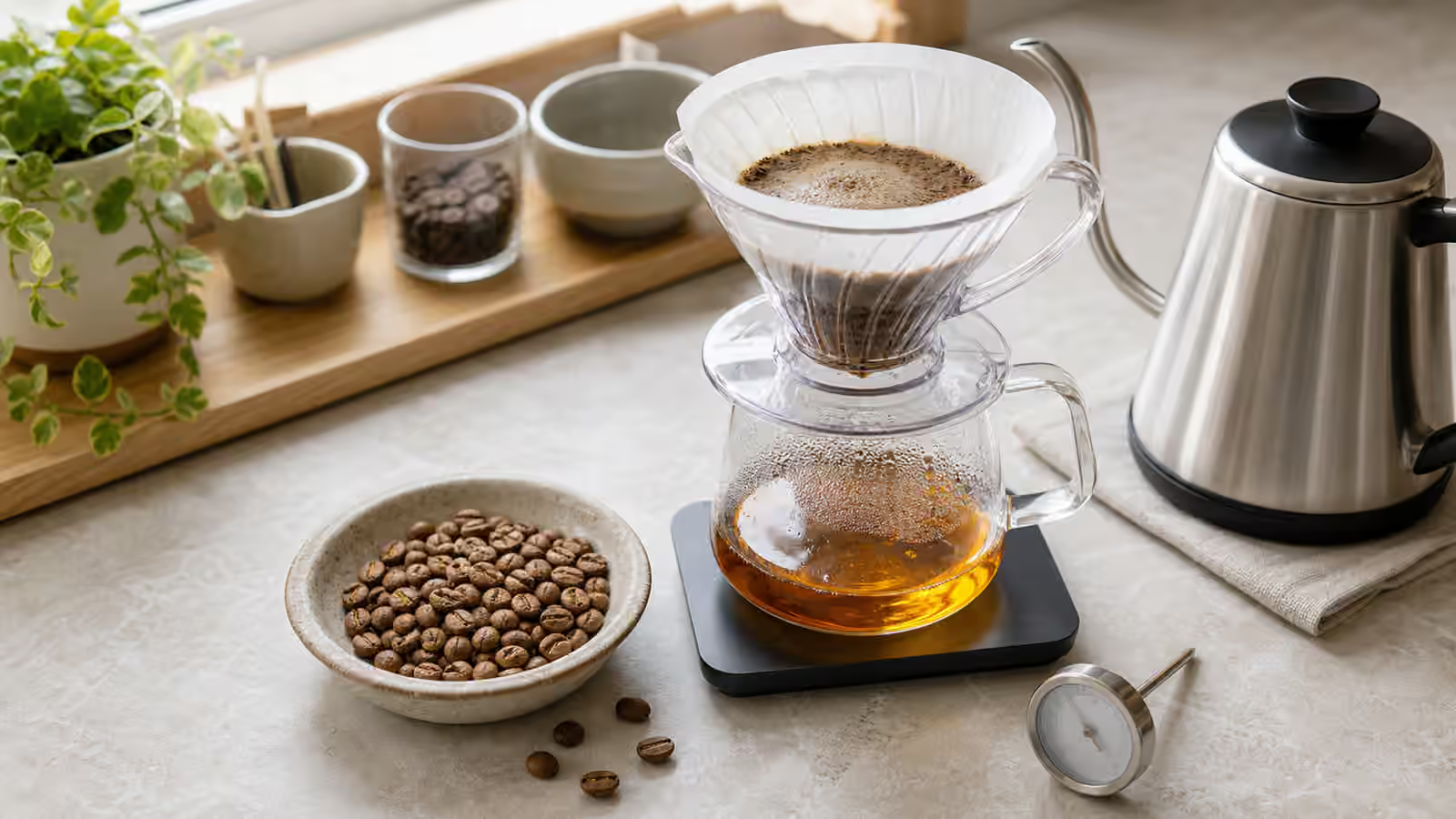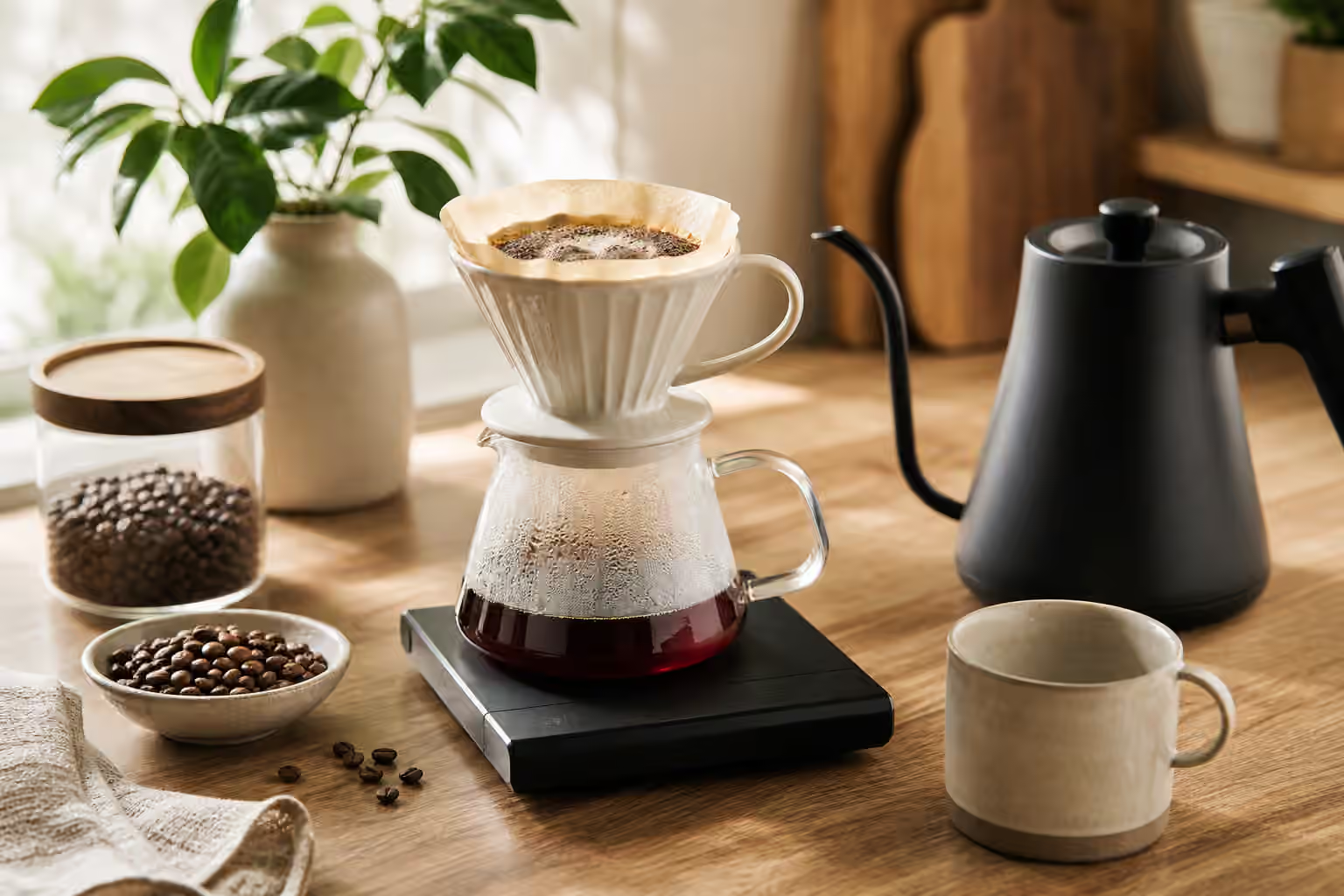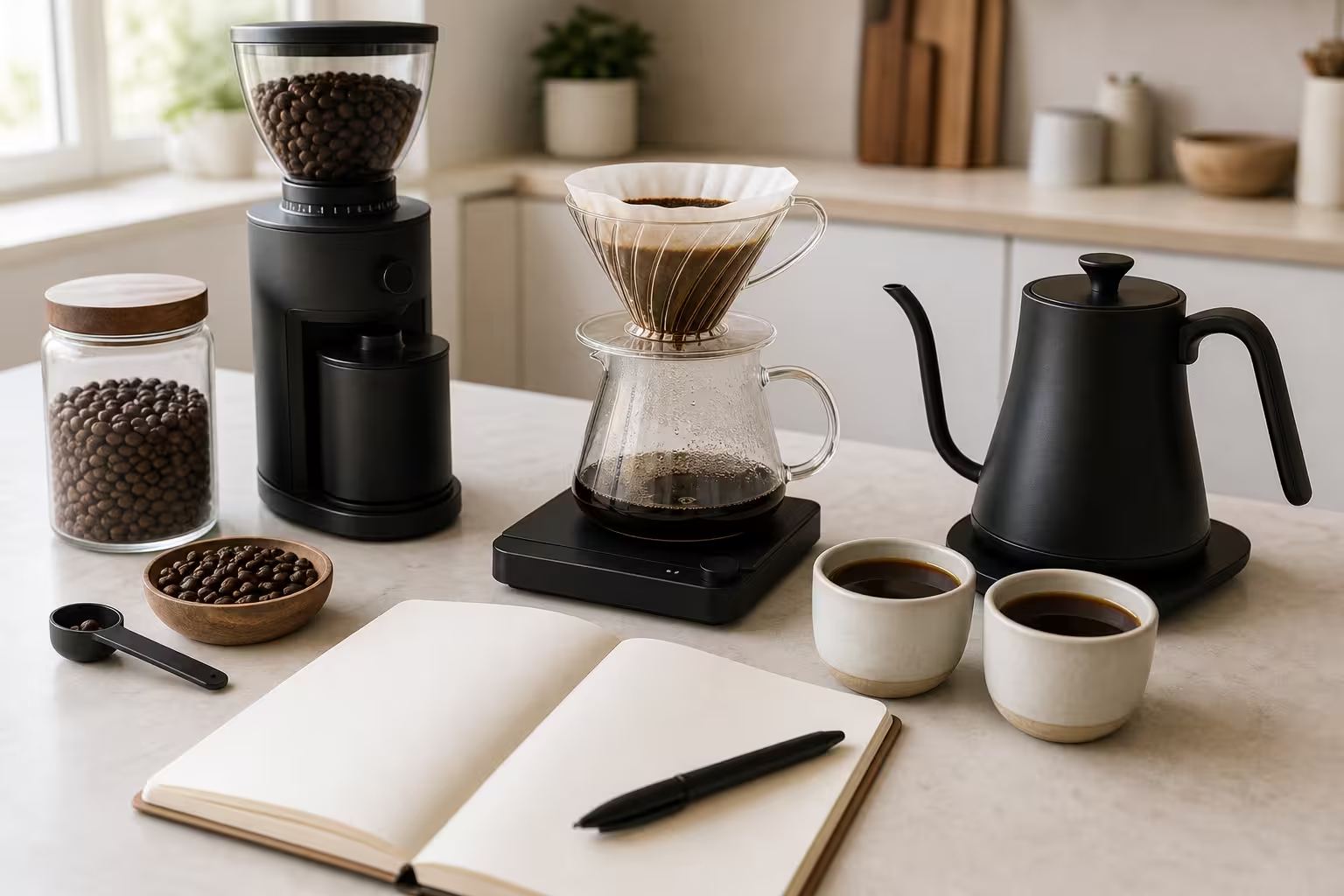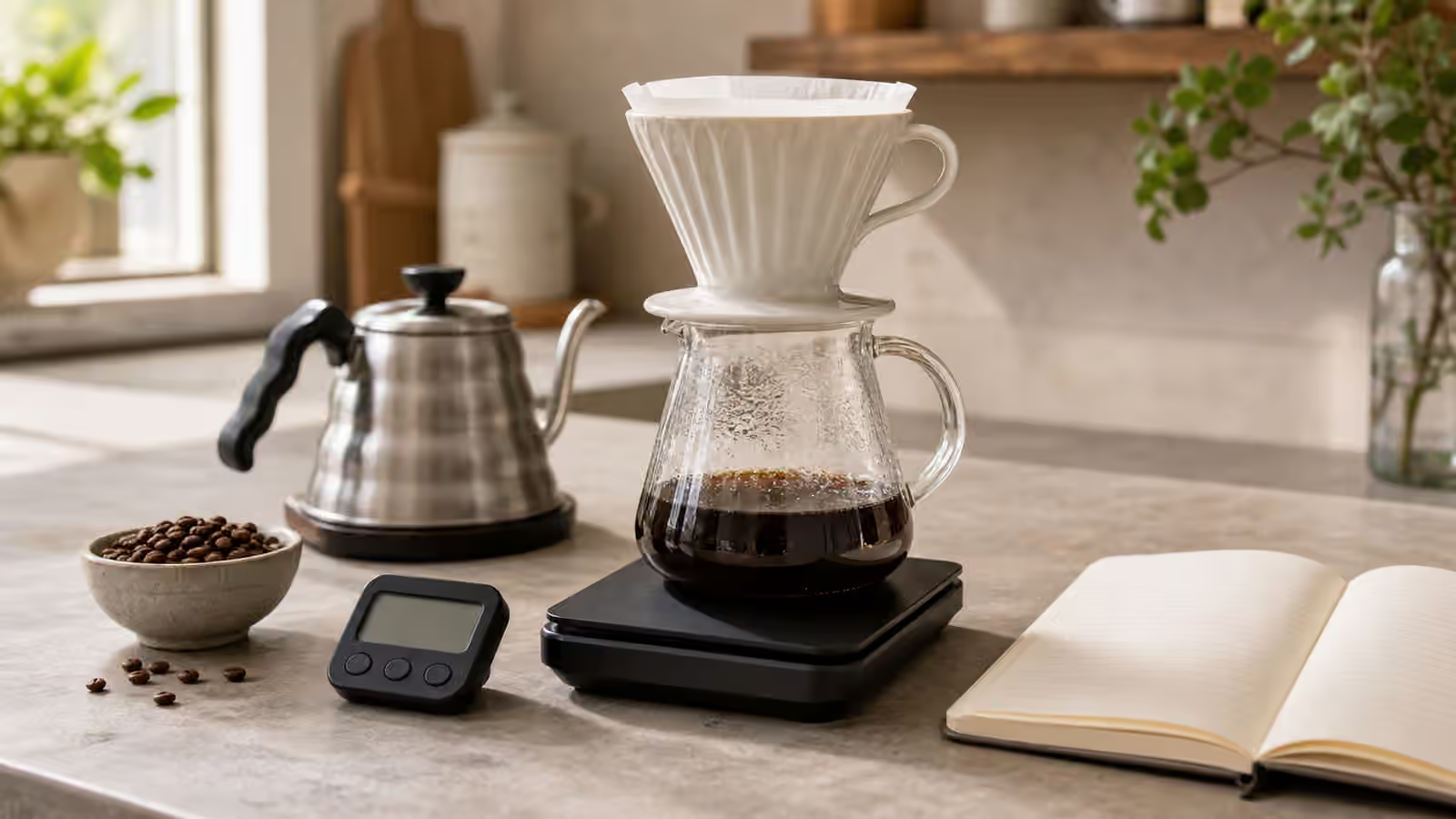
A scale and timer do not make coffee better by themselves. They make your choices visible. Without them, a cup that tastes different from yesterday can feel mysterious. Maybe the dose changed. Maybe the mug held more water than you thought. Maybe the brew ran a minute longer because you answered a message. Once those details are measured, coffee becomes less like a morning guess and more like a recipe you can understand.
This does not mean every cup needs to feel like lab work. The point of measuring is not perfection. It is relief. You weigh the coffee, weigh the water, notice the time, and give your taste buds something stable to compare. The Coffee Brewing Ratios guide explains how dose and water shape strength. A scale turns that idea into an everyday habit.
Volume Is Convenient, But Weight Is Clearer
Scoops are fast, and they can work when the routine is casual. The problem is that a scoop measures volume, not coffee. Light roasts, dark roasts, small beans, large beans, whole beans, and ground coffee all fill a scoop differently. A heaping scoop one morning and a level scoop the next can change the cup more than a grinder click. If the coffee tastes hollow or heavy, you may not know whether the recipe failed or the scoop drifted.
Weight gives you a steadier language. Fifteen grams of one coffee and fifteen grams of another are not identical in flavor, but they are identical as a starting dose. Two hundred fifty grams of water is always two hundred fifty grams of water. Once the starting point is stable, taste can guide the next move instead of arguing with the measuring method.
This matters most when you are learning. A new brewer, grinder, or coffee already introduces enough variation. If the dose also changes invisibly, every cup becomes harder to read. Weighing does not remove the pleasure from brewing. It removes one source of confusion so the pleasure has a better chance to repeat.
The Scale Changes How You Think About Strength
Many people say they want stronger coffee when they mean one of several different things. They may want more concentration, more bitterness, more body, more roast flavor, or more caffeine. A scale helps separate those wishes. If you use the same coffee and reduce the water, the cup becomes more concentrated. If you grind finer, extraction changes. If you use more coffee and keep the water the same, both strength and extraction behavior can shift. Those are different moves.
Start with a comfortable ratio, then taste. For many filter brews, a range near one part coffee to fifteen to seventeen parts water is a useful neighborhood, not a command. A French press may feel satisfying at one ratio while a clean paper-filtered pour-over may want another. The scale lets you move deliberately inside that range. If a cup is pleasant but thin, add a little more coffee next time or use less water. If it is heavy and crowded, open the ratio slightly before blaming the beans.
Measuring also prevents accidental escalation. It is easy to add “a little extra” coffee until the recipe becomes expensive, muddy, and hard to extract evenly. When the dose is visible, you can decide whether the stronger cup is actually better or just louder. That distinction sits at the heart of Coffee Extraction , where flavor balance matters more than intensity alone.
Timing Shows What Water Did
A timer tells a different part of the story. It does not judge the cup, but it tells you how long coffee and water spent together. In immersion methods such as French press, Clever-style drippers, and AeroPress, time is the main contact lever. In percolation methods such as pour-over and automatic drip, time also reflects grind size, filter resistance, pouring pattern, and bed shape.
If a pour-over finishes much faster than usual, the water may have passed through too easily. The cup might taste sour, thin, or underdeveloped. If it drags far longer than usual, the grind may be too fine, the filter may be clogged with fines, or the bed may have been disturbed too much. The cup might taste dry, bitter, or muddy. These are not strict rules, but they are useful clues. The Grind Size Guide becomes easier to apply when you can connect a grind change to both flavor and time.
For automatic drip, timing is less hands-on but still useful. A machine that takes too long to brew a batch may be clogged, scaled, overloaded with fine grounds, or using a filter that slows flow. A machine that races through a full basket may be under-extracting or failing to wet the bed evenly. The Automatic Drip Coffee guide covers those machine-specific details, but a timer gives you the first warning that the batch has changed.
Tare Is the Habit That Keeps Things Calm
The most useful button on a coffee scale is tare. Put the brewer or container on the scale, press tare, and the display returns to zero. Add coffee, press tare again if needed, then pour water until the target appears. You are not doing arithmetic while sleepy. You are letting the scale ignore the cup, dripper, carafe, and bowl so it can show only the ingredient you are adding.
This is especially helpful when brewing directly into a server or mug. A glass carafe may weigh several hundred grams. A ceramic mug may weigh more than the finished drink. Tare makes that irrelevant. It also lets you pre-weigh beans before grinding, weigh the ground coffee after grinding if retention matters, and weigh water as it enters the brewer.
Some scales lag slightly when water is poured quickly. That does not make them useless. Pour more gently near the target, especially for small brews. If your scale has a built-in timer, use it if the workflow feels natural. If it does not, a phone timer or small kitchen timer is enough. The tool should serve the routine, not dominate it.
Recipes Need Context, Not Blind Obedience
A written recipe is only useful when you know what it assumes. A recipe that says twenty grams of coffee, three hundred twenty grams of water, medium-fine grind, and three minutes may work beautifully on one grinder and brewer. On another setup, the same words may produce a very different cup. The scale and timer help you translate the recipe into your kitchen.
Think of a recipe as a starting conversation. Keep the dose and water stable for the first attempt. Notice the brew time. Taste the cup after it cools slightly. If it is sour and thin, adjust toward more extraction with a finer grind, longer contact, or more even wetting. If it is bitter and drying, adjust away from harsh extraction. Record the change in a simple note. The Coffee Dial-In Log is built around this exact loop.
The danger is treating numbers as proof. A three-minute pour-over can taste bad. A four-minute pour-over can taste excellent. A ratio that looks elegant can still be wrong for a particular coffee. Numbers are anchors. Taste is the verdict. The scale and timer are there so that when taste speaks, you know what it is responding to.
Measuring Can Be Invisible to Guests
Measured coffee does not need to feel fussy at the table. For guests, the most hospitable workflow is often the quiet one: weigh the beans before anyone arrives, set the water target, choose the brewer, and make the pot with calm hands. Nobody needs to watch the numbers unless they are curious. They just receive better coffee.
This matters because shared coffee magnifies small mistakes. A random dose in a large batch can become weak for everyone or harsh for everyone. A clean, measured recipe gives the pot a better center. The guide to Brewing Coffee for Guests focuses on the hosting side, but the scale is one of the easiest ways to make that hospitality repeatable.
You can also measure loosely after a recipe becomes familiar. Many people start by weighing every brew, then learn the feel of their grinder, kettle, and favorite mug. That is fine. The scale is not a badge of seriousness. It is a training tool and a diagnostic tool. Use it heavily when learning, when changing coffees, when troubleshooting, or when you want a cup to land the same way twice.
The Quiet Payoff
The payoff from a scale and timer is not a more complicated morning. It is fewer pointless mysteries. You learn that a certain coffee tastes better at a slightly shorter ratio. You notice that a grinder cleaning changed your drawdown. You discover that your favorite mug holds more water than you thought. You stop describing every cup as “different somehow” and start seeing the few variables that matter.
Good coffee still needs fresh beans, suitable water, a reasonable grind, and clean equipment. Measuring does not replace those basics. It helps them show up consistently. Once the numbers are steady, the human part gets easier: taste, adjust, remember, and enjoy the cup in front of you.