Fines are the tiny coffee particles produced during grinding. Sediment is what you notice when some of those particles end up in the cup, especially near the bottom. They are related, but they are not the same problem. Fines can clog a filter without ever becoming visible in the mug. Sediment can add pleasant body in one method and gritty heaviness in another. Like many coffee variables, the goal is not total elimination. The goal is control.
Coffee with no texture can feel sterile. Coffee with too much loose particle load can feel muddy, dusty, or drying. The best point depends on the brewer and the person drinking. A French press drinker may enjoy a little settled body. A Chemex drinker may want a clear cup with a polished finish. An espresso drinker may expect density but not gritty harshness. The Coffee Body and Mouthfeel guide explains the larger texture question. This guide looks at the tiny particles that often decide whether body feels satisfying or sloppy.
Every Grinder Makes Some Fines
Grinding coffee is not a clean act of making identical pieces. Beans fracture. Brittle edges break. Some pieces are large, some are small, and some become dust-like fines. A better grinder narrows the spread, but no grinder makes perfectly uniform particles. Even expensive grinders create fines because coffee is an organic material, not a block of plastic being machined into exact shapes.
The amount of fines depends on grinder design, burr condition, alignment, roast level, bean density, and grind setting. Darker roasts are more brittle and often produce more small fragments. Very light, dense coffees can also create challenges if the grinder struggles to cut them cleanly. Decaf sometimes behaves differently because processing changes the bean structure. A grinder that is dirty, worn, misaligned, or poorly calibrated may produce a wider mix of boulders and dust.
This is why Burr Grinder Calibration matters beyond the number on the dial. A setting is useful only if the grinder behaves consistently. If the same mark gives a fast hollow cup one week and a slow dry cup the next, retention, cleaning, burr seating, or bean change may be involved. Fines are one of the hidden reasons grinder changes show up as flavor changes.
Fines Extract Quickly and Move Easily
Small particles have more surface area relative to their mass, so they extract quickly. A little of that can help a brew taste complete. Too much can make the cup bitter, woody, or drying before the larger particles have given up enough sweetness. This is one reason a coffee can taste sour and bitter at the same time. The large pieces under-extract while the fines over-extract.
Fines also move with water. In pour-over, agitation can send them downward, where they collect near the filter and slow drawdown. A brew that begins normally may stall near the end, and that slow finish can add a dry edge. In automatic drip, fines can settle at the bottom of the basket and restrict flow where you cannot see it. In espresso, fines help create resistance, but too many or poorly distributed fines can contribute to channeling, choking, or a muddy finish.
The Coffee Extraction guide is useful here because fines make extraction uneven. They are not simply small coffee. They are fast-extracting, mobile coffee. A recipe that treats every particle as equal will miss what is happening in the bed.
Sediment Changes the Last Sip
Sediment is most obvious in metal-filtered and unfiltered methods. French press, cupping bowls, ibrik coffee, some AeroPress metal filters, moka pot, and espresso all let more fine material reach the cup than paper-filtered drip. That material can add body, aroma, and a satisfying weight. It can also collect near the bottom, making the last sips taste stronger, dirtier, or more bitter than the first.
French press is the classic example. A clean press does not require a perfectly clear cup. It requires enough settling, gentle pouring, and reasonable grind quality that the sediment stays manageable. If you plunge hard and pour every last drop, you stir up the bed and bring more grit along. If you let the brew settle, press gently, and leave the final muddy layer behind, the cup can feel full without becoming sludgy. French Press Coffee goes deeper on that calmer approach.
Ibrik and Turkish-style coffee accept sediment as part of the method. The powder-fine grounds settle in the cup, and the drink is sipped with that reality in mind. The technique is not trying to imitate paper-filter clarity. It is building a small, dense, traditional cup where sediment is expected but controlled by gentle heat, careful pouring, and patience. The lesson transfers: sediment is a style when managed and a flaw when accidental.
Filters Decide How Clear the Cup Becomes
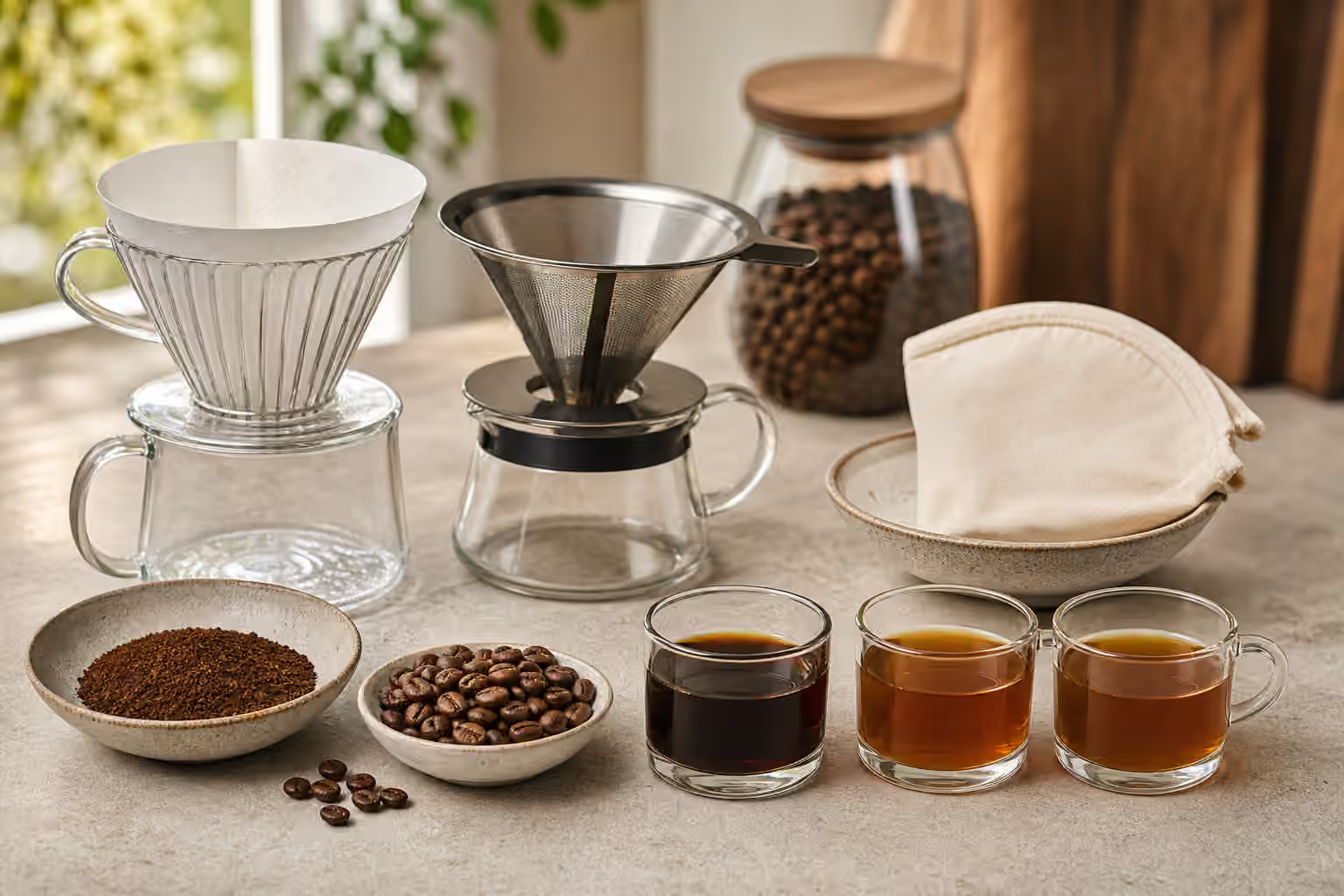
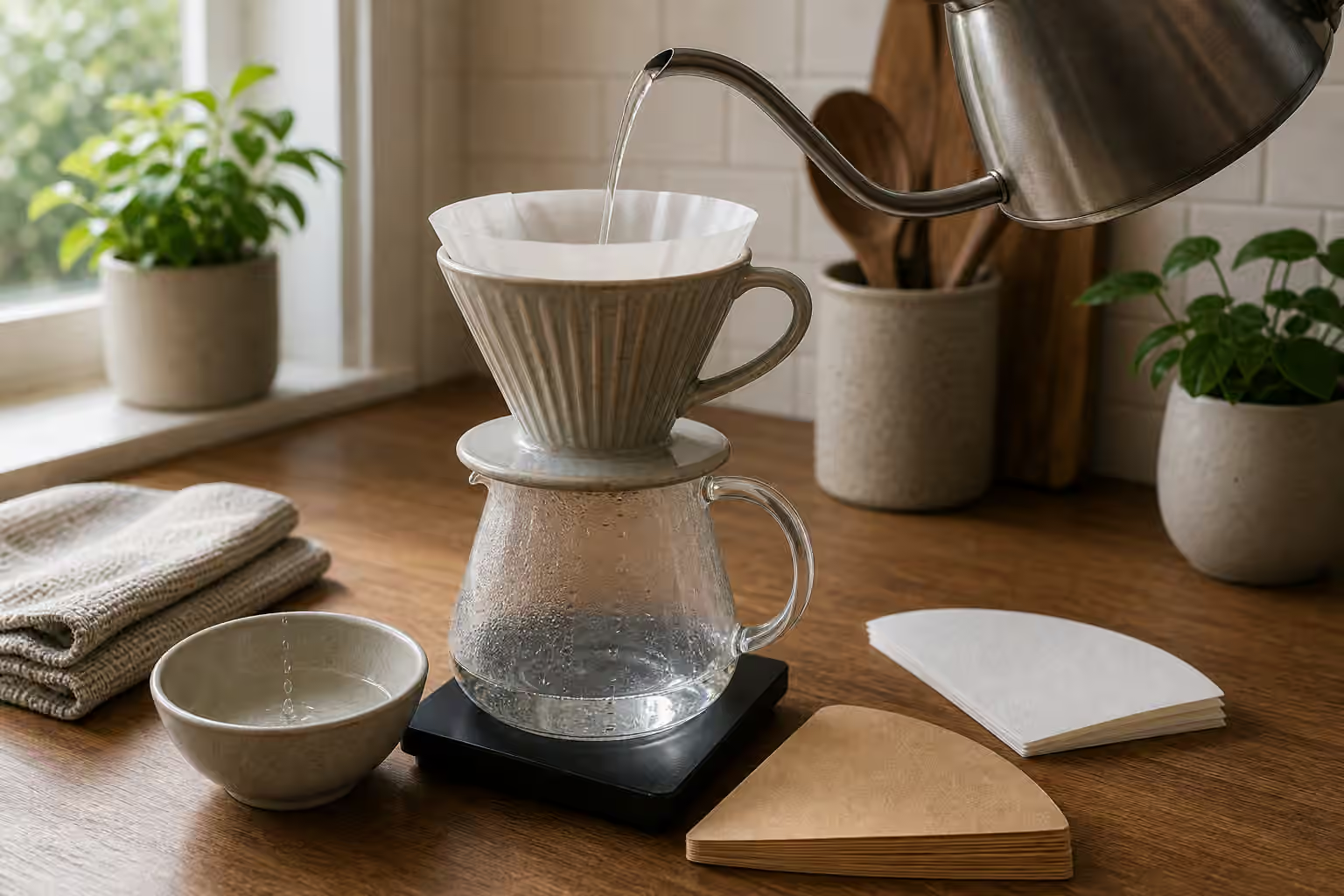
Paper filters trap most visible sediment and many oils. They can make acidity and aroma feel more defined because fewer particles blur the finish. Thick paper, as in Chemex-style brewing, creates a particularly polished cup. Standard cone or flat-bottom papers still produce strong clarity if seated well. Rinsing paper can reduce loose paper taste and help the filter cling to the brewer.
Metal filters let more through. They can make coffee feel fuller, more aromatic in a heavy way, and more persistent. That can be wonderful with a coffee that wants body. It can be tiring with a coffee that already has a dry finish. Cloth filters can create a soft middle texture when maintained well, but old oils trapped in cloth can turn pleasant body into stale heaviness. Coffee Filters explains those tradeoffs across common brewers.
Filter fit matters as much as material. A paper filter that collapses or pulls away from the brewer wall can allow bypass and uneven flow. A metal filter with residue can taste stale. A clogged filter can overwork the end of a brew. Clarity is not simply about choosing paper. It is about giving water a clean, predictable path.
Pouring and Agitation Can Make Fines Worse
Agitation is useful when it wets dry grounds and improves even extraction. It becomes a problem when it keeps fines suspended, drives them into the filter, or churns the bed after it has begun to settle. A pour-over bloom may benefit from a gentle swirl. Repeated hard swirling near the end can clog the filter and roughen the finish. An AeroPress stir can help extraction. An aggressive stir with a fine grind can make pressing harder and the cup heavier.
Pour height matters too. A high, forceful stream can dig into the coffee bed, break the surface unevenly, and move fines around. A lower, steadier stream wets the bed with less violence. The Pour-Over Coffee Technique guide treats this as technique, but the particle story explains why technique changes flavor.
If your brews often stall, resist the urge to stir harder. First coarsen slightly, pour more calmly, use a better-seated filter, or reduce late agitation. If your immersion coffee tastes silty, grind a little coarser, let it settle longer, and pour with restraint. Small physical changes can clean up the cup without making it thin.
Clean Gear Keeps Sediment From Tasting Old
Fresh fines and stale fines are very different. Grounds trapped in a grinder chute, French press screen, reusable filter, moka pot gasket, or espresso basket continue to oxidize. The next brew can pick up those stale particles and oils, adding bitterness and a dull coating sensation. If coffee tastes muddy across many beans and recipes, cleanliness may be part of the sediment problem.
The Clean Coffee Gear guide is especially important for metal screens and reusable filters because they hold physical residue. A quick rinse may remove visible grounds while leaving oils behind. A deeper clean can make the same filter taste clearer without changing its material or body.
Fines and sediment are not villains. They are texture tools that need boundaries. A little can make coffee feel generous. Too much can make flavor crowded, rough, and stale. Learn how your grinder behaves, choose filtration that matches the cup you want, pour with enough calm to keep particles where they belong, and stop drinking before the bottom sludge writes the final sentence.