Understanding Coffee Beans
Every cup of coffee tells a story that starts long before it reaches your mug. The flavor in your morning brew is shaped by a fascinating chain of decisions and circumstances — the varietal of the coffee plant, the terroir where it grows, how the cherries are processed after harvest, and ultimately how those green beans are roasted. Understanding these factors is like learning a new language: once you speak it, you’ll never taste coffee the same way again. This guide takes you on a journey through coffee-growing regions around the world, breaks down the flavor characteristics you can expect from each, and helps you figure out which beans will make your taste buds happiest.
Coffee Species
Arabica (Coffea arabica)
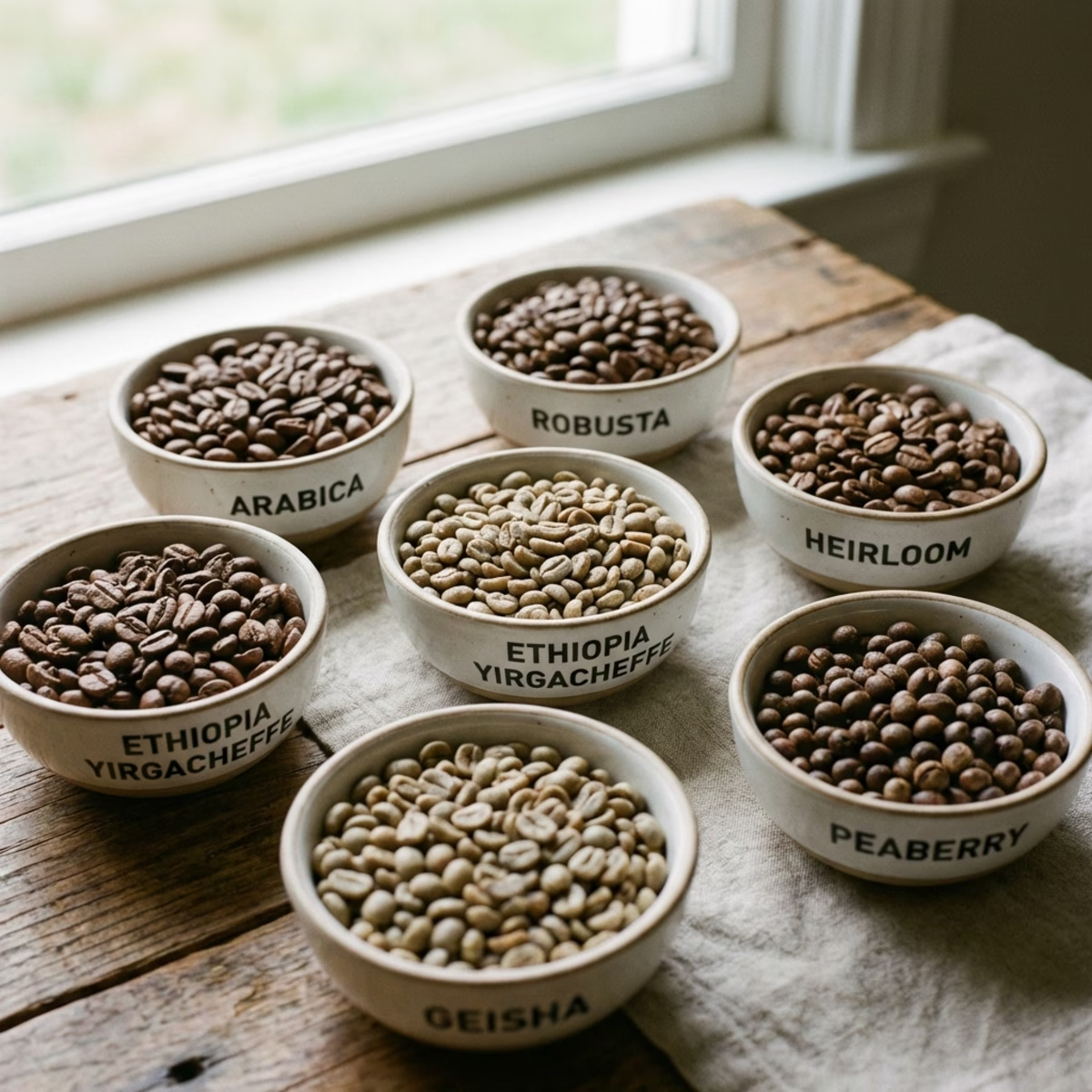
Arabica is the undisputed star of the specialty coffee world, accounting for roughly 60 to 70 percent of global coffee production. If you’ve ever sipped a coffee that made you pause mid-drink and think, “wow, that’s actually interesting,” there’s an excellent chance it was Arabica. These beans are prized for their complex, nuanced flavors and a naturally higher acidity that translates to bright, lively notes in the cup. Compared to other species, Arabica tends to be sweeter and more delicate, offering a wider spectrum of flavor profiles that ranges from fruity and floral to chocolatey and nutty.
Growing Arabica is no walk in the park, though. These plants are picky about their environment, thriving only at higher altitudes — typically between 3,000 and 6,500 feet above sea level — which drives up production costs. That’s part of why Arabica commands a higher price tag. But for coffee lovers, the payoff in the cup is more than worth it.
When you start digging into Arabica, you’ll encounter some famous varieties. Typica is the original cultivar, known for delicate complexity. Bourbon (pronounced “bur-BOHN,” not like the whiskey) delivers sweet, balanced cups with a full body. Caturra brings bright acidity and a medium body to the table. Then there’s Geisha — sometimes spelled Gesha — which has become the darling of specialty coffee for its extraordinary floral, tea-like character with notes of exotic tropical fruits. If you ever see SL28 or SL34 on a bag, those are Kenyan varieties celebrated for their vibrant, fruity, almost winey intensity.
Robusta (Coffea canephora)
Robusta makes up the remaining 30 to 40 percent of global production, and it has a bit of an unfair reputation. These beans are bold, strong, and undeniably bitter, with low acidity and about twice the caffeine content of Arabica. The flavor profile leans earthy, woody, and grainy, sometimes veering into territory described as burnt rubber or peanutty. It’s not exactly the stuff of cupping competitions.
That said, Robusta has its place. It’s the backbone of many espresso blends, where it contributes thick crema and a powerful body that cuts through milk beautifully. Italian-style coffee traditions lean heavily on Robusta, and it’s the workhorse behind most instant coffee and commercial blends. The plants themselves are tough and disease-resistant, growing happily at lower altitudes from sea level up to about 2,000 feet, which makes them cheaper and easier to cultivate.
Coffee-Growing Regions
The Coffee Belt
All of the world’s coffee grows in what’s commonly called the “Bean Belt” — the band of tropical and subtropical regions stretching between the Tropics of Cancer and Capricorn. For Arabica to flourish, it needs a very specific set of conditions: altitudes between 2,000 and 6,500 feet, average temperatures hovering around 60 to 70°F, and generous annual rainfall in the range of 60 to 80 inches. Rich, volcanic soil is a major bonus, and many of the best coffees grow under a canopy of shade trees that slow the cherries’ ripening and concentrate their flavors. It’s a demanding recipe, which is exactly why great coffee can’t just come from anywhere.
African Coffees
Africa is where it all began, and the continent still produces some of the most exciting and distinctive coffees on Earth.
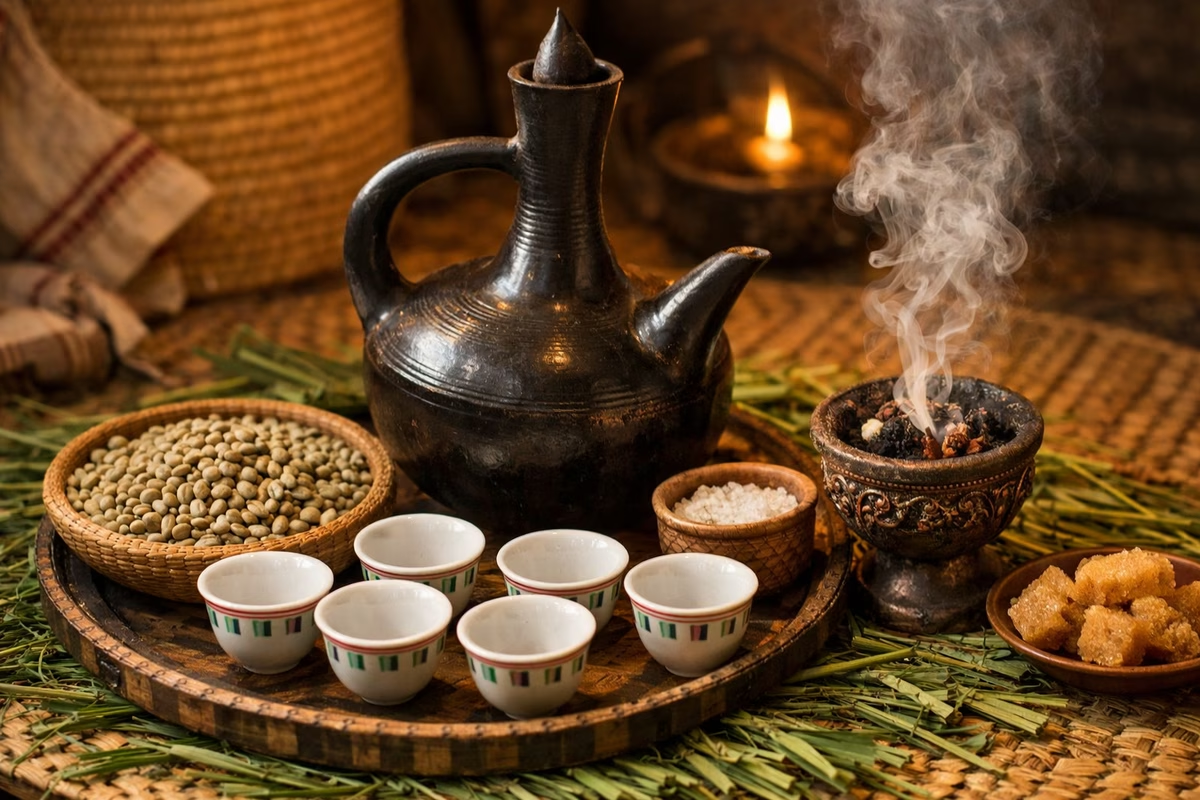
Ethiopia, the literal birthplace of coffee, is a must-know origin for any coffee enthusiast. The legendary growing regions of Yirgacheffe, Sidamo, and Harrar each have their own personality, but Ethiopian coffees as a whole tend to deliver bright, wine-like acidity alongside dazzling notes of blueberry, strawberry, and jasmine. The body is typically light to medium, often described as tea-like, and the aromatics can be intoxicating — think bergamot and floral perfume. Processing plays a huge role here: washed Ethiopian coffees are clean and bright, while natural (dry-processed) lots explode with fruity, funky intensity. A classic Yirgacheffe, for example, might greet you with lemon and bergamot up front, a vibrant acidity that dances on your palate, and a clean, complex finish that lingers. Ethiopian coffees are best enjoyed as light to medium roasts, brewed with a pour over to let those origin characteristics shine.
Kenya is another African powerhouse, particularly the regions of Nyeri, Kirinyaga, and Kiambu. Kenyan coffees are known for an almost aggressive intensity of acidity — in the best possible way. Think tomato-like brightness, black currant tang, grapefruit zing, and a juicy, winey quality that’s completely unique. What’s remarkable is that despite all that acidity, Kenyan coffees often have a surprisingly full body. Much of this character comes from the SL28 and SL34 varietals, which are uniquely adapted to Kenyan growing conditions, and from the country’s distinctive double-fermentation washed processing method. These beans are fantastic as light to medium roasts, and they make exceptional pour over and cold brew.
Rwanda and Burundi are two origins that are rapidly gaining recognition in the specialty world. Their flavor profiles share DNA with Kenyan coffees — bright acidity, fruity and floral notes, with recurring themes of red berries and orange. The cups tend to be clean and sweet, and as quality infrastructure continues to improve in both countries, they’re offering some of the best value in specialty coffee right now.
Central & South American Coffees
Moving across the Atlantic, Central and South America form the backbone of the global coffee supply, producing the balanced, approachable cups that many of us fell in love with first.
Colombia is perhaps the world’s most recognized coffee origin, and for good reason. Growing regions like Huila, Nariño, Antioquia, and Tolima consistently produce beans that are balanced and approachable, with familiar notes of caramel, nuts, and chocolate. The acidity is mild, the body is medium, and the overall profile is clean and consistent — which makes Colombian coffee an incredibly reliable choice for everyday drinking. Most Colombian coffee is washed, contributing to that clarity. These beans work beautifully as medium roasts and adapt well to just about any brewing method.
Brazil holds the title of the world’s largest coffee producer, responsible for a staggering 40 percent of global output. The major growing regions of Minas Gerais, São Paulo, and Bahia produce coffees that sit at the opposite end of the spectrum from bright African lots. Brazilian coffee is all about low acidity, a heavy and creamy body, and comforting flavors of chocolate, peanut, cocoa, and caramel. Most Brazilian coffee is natural or pulped-natural processed, which enhances that sweetness and body. This profile makes Brazil the go-to base for espresso blends, and it’s excellent in medium to dark roasts, especially when you’re making milk-based drinks.
Costa Rica, with its famous Tarrazú, West Valley, and Central Valley regions, produces coffees that are bright and clean, with lovely notes of honey, citrus, and apple. The body is medium, and the overall cup is well-balanced. Costa Rica has earned a reputation for quality focus, with strong infrastructure and high production standards. Many Costa Rican coffees are honey processed, which adds a layer of sweetness and body. These are wonderful as light to medium roasts, particularly when brewed as pour over.
Guatemala brings something richer and darker to the Central American table. Coffees from Antigua, Huehuetenango, and Atitlán tend to be full-bodied and complex, with notes of chocolate, spice, and a subtle smokiness. The acidity is balanced and doesn’t overpower, making for a layered, satisfying cup. Volcanic soil and high altitude growing conditions contribute to this depth. Guatemalan beans are excellent at medium roast levels and brew beautifully in a French press.
Panama has achieved almost mythical status in the specialty coffee world, and it’s all because of one variety: Geisha. Panamanian Geisha coffees are intensely floral — think jasmine and hibiscus — with tropical fruit notes of mango and papaya, a delicate tea-like body, and a complexity that can be almost overwhelming. This is coffee that tastes like nothing else on Earth, and the prices reflect that exclusivity: expect to pay anywhere from $50 to $150 per pound, with rare competition lots fetching over $1,000 per pound at auction.
Asian & Pacific Coffees
The Asia-Pacific region brings a completely different set of flavors to the coffee world, defined by earthiness, body, and low acidity.
Indonesia is the headliner here, with Sumatra, Java, and Sulawesi all producing distinctive cups. Indonesian coffees are earthy and herbal, with a full, syrupy body and virtually no acidity. You’ll find tasting notes like tobacco, cedar, and dark chocolate. What makes Indonesian coffee truly unique is the wet-hulled processing method known as Giling Basah, where the parchment is removed while the beans are still relatively wet. This process is responsible for that signature earthy, forest-floor quality. Sumatra Mandheling is the classic example — spicy, herbal, and full-bodied. Java coffees are cleaner by comparison, with a spicy earthiness and medium body. If you’re someone who finds acidity off-putting, Indonesian beans roasted dark and brewed in a French press will be your happy place.
Vietnam is the world’s second-largest coffee producer, though the vast majority of its output is Robusta. The flavor is strong, bitter, and earthy — classic Robusta characteristics. Vietnam’s most beloved coffee tradition is ca phe sua da, an intensely brewed iced coffee sweetened with condensed milk that turns those bold flavors into something utterly addictive.
Papua New Guinea is a quieter origin that deserves more attention. The flavor profile is fruity and complex, with medium body and balanced acidity — somewhat reminiscent of Central American or East African coffees. Most PNG coffee is washed processed, and while quality can be variable, the best estates produce truly excellent lots.
Hawaii, specifically the Kona region on the Big Island, holds the distinction of being the only place in the United States with commercial coffee production. Kona coffee is smooth and mild, with nutty, buttery notes, low acidity, and a medium body. It’s lovely coffee, but it comes at a premium — expect to pay $40 to $60 per pound, reflecting the high labor costs of Hawaiian agriculture. One important tip: look for bags labeled “100% Kona,” because many so-called Kona blends contain as little as 10 percent actual Kona beans.
Flavor Profiles by Region
Processing Methods
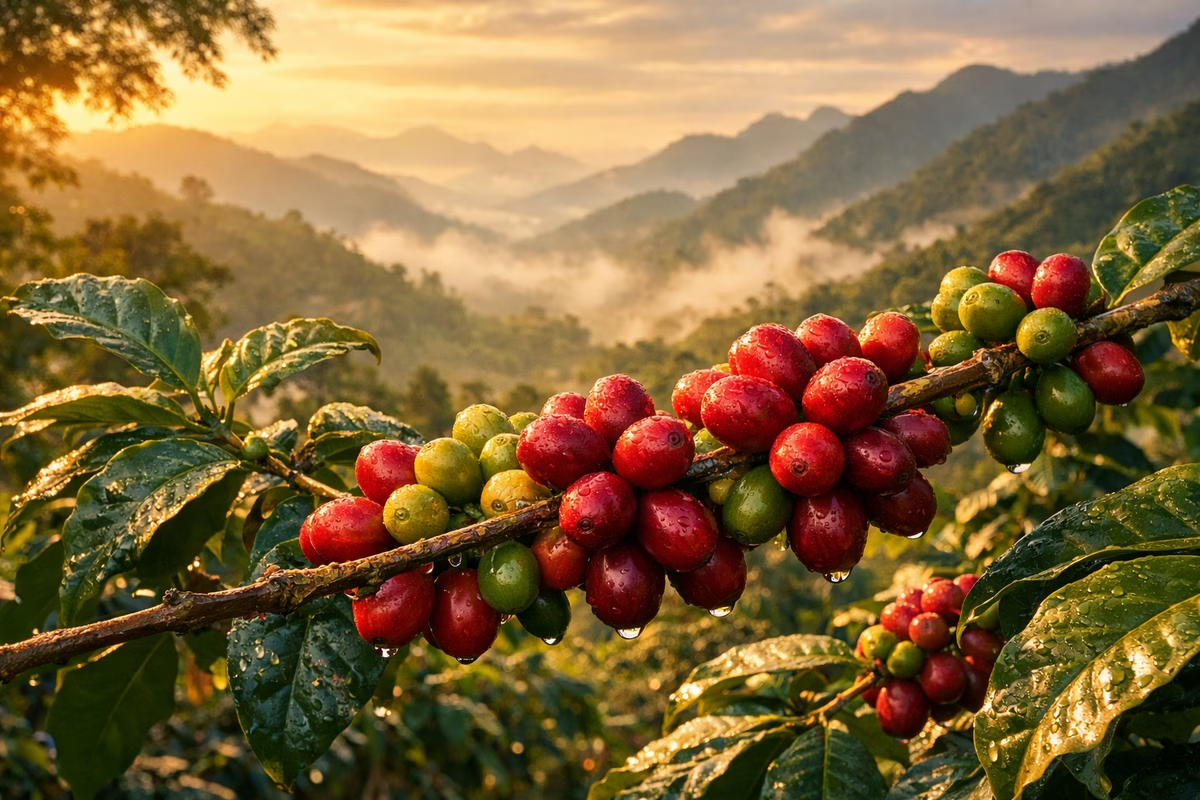
How coffee is processed after harvest has a dramatic effect on what ends up in your cup — sometimes even more than the origin itself. Think of processing as the bridge between the raw cherry on the tree and the green bean that’s ready for roasting.
Washed (Wet) Processing
In washed processing, the cherry’s outer skin is removed through depulping, and then the beans sit in water tanks for 12 to 48 hours to ferment away the sticky mucilage layer. After fermentation, the beans are thoroughly washed clean and then dried on patios or raised beds. The result in the cup is clean, bright, and complex. Washed coffees tend to highlight the inherent characteristics of the origin itself — the terroir really shines through — with higher acidity and remarkable clarity of flavor. This method is the standard in Central America, East Africa, and Colombia.
Natural (Dry) Processing
Natural processing is the oldest method and arguably the most dramatic. Whole coffee cherries are spread out in the sun and left to dry intact, fruit and all, over a period of three to four weeks. Only after the fruit is fully dried is it removed from the bean. This extended contact with the fruit imparts deep, wine-like flavors, heavier body, lower acidity, and pronounced berry and fermented notes that can border on funky. It’s a polarizing style — you’ll either find it thrillingly complex or a bit too wild. Natural processing is traditional in Ethiopia, Brazil, and Yemen. The downside is that uneven drying can introduce defects, so quality control is critical.
Honey Processing (Pulped Natural)
Honey processing splits the difference between washed and natural. The cherry’s skin is removed, but the mucilage — that sticky, honey-like layer — is left on the bean during drying. The amount of mucilage left behind determines whether it’s classified as white, yellow, red, or black honey, with each variation producing a slightly different cup profile. The result is a coffee that’s sweet and fruity with good body and a pleasant balance. It’s the best of both worlds, really. Costa Rica, Brazil, and other Central American countries have become particularly skilled at this technique.
Wet-Hulled (Giling Basah)
This processing method is unique to Indonesia and is a big part of why Sumatran and Sulawesi coffees taste so distinctive. In wet-hulling, the parchment layer is removed while the beans are still at around 12 percent moisture (compared to the 10 to 11 percent typical of other methods), and then the beans finish drying after hulling. The result is that unmistakable earthy, herbal, spicy profile with a full body and very low acidity. If you’ve ever tasted a Sumatran coffee and thought it tasted like the forest floor in the best possible way, you can thank Giling Basah.
Roast Levels
Light Roast
Light roasts are where origin really gets to speak. The beans emerge a light brown color with no oil on the surface, having reached an internal temperature of roughly 356 to 401°F. At this level, the origin characteristics dominate — bright acidity, fruity and floral notes, and all the unique terroir of where the coffee was grown. The body is light to medium, and interestingly, light roasts actually retain slightly more caffeine since less roasting means more caffeine is preserved. Light roasts are ideal for showcasing single-origin Ethiopian and Kenyan coffees, and they’re at their best when brewed with a pour over or V60 to highlight that complexity.
Medium Roast
Medium roasts hit a beautiful sweet spot. The beans are a medium brown with still no oil on the surface, reaching internal temperatures of 410 to 428°F. At this level, you get a balance between origin character and the caramelized sugars that develop during roasting. The acidity is moderate, the body is medium, and the overall profile is sweet and approachable. This is the versatile all-rounder of the roast spectrum, working well with Colombian, Costa Rican, and most single-origin coffees. Brew them however you like — drip, pour over, or French press — and they’ll deliver.
Medium-Dark Roast
Push a little further into medium-dark territory and things get bittersweet in the best way. The beans take on a darker brown hue with a slight oil sheen, reaching internal temperatures of 437 to 446°F. Flavors of caramel and chocolate come to the forefront, acidity drops noticeably, and the body fills out to a satisfying fullness. Brazilian and Guatemalan beans are excellent at this roast level, as are many blends. French press and espresso are the brewing methods that really let these roasts shine.
Dark Roast
At the far end of the spectrum, dark roasts are very dark brown to nearly black, with an oily surface and internal temperatures of 464 to 482°F. At this point, roast flavors dominate entirely — smoky, charred, and bitter notes take over, acidity drops to almost nothing, and the body, while initially full, can thin out as the oils burn off. Caffeine is at its lowest. These roasts are forgiving of lower-grade beans since the intense roast character masks defects. Indonesian and Brazilian origins work well here, and dark roasts pair naturally with espresso, French press, and moka pot brewing.
Choosing Coffee Beans
Based on Brewing Method
Your brewing method should guide your bean selection more than almost any other factor. For pour over brewing, reach for light to medium roasts from bright, complex origins like Ethiopia, Kenya, or Costa Rica, ideally washed processed to maximize clarity. French press loves the opposite end — medium to medium-dark roasts from full-bodied origins like Brazil, Guatemala, or Sumatra, where natural or honey processing adds richness and sweetness.
For espresso, most baristas recommend a medium to dark roast, often a blend of origins crafted for balance. A classic espresso blend might use a Brazilian base for body and chocolate, add Colombian or Central American beans for balance and sweetness, and finish with a splash of Ethiopian for brightness and complexity. And if you’re making cold brew, lean toward medium to dark roasts with chocolatey and nutty profiles — Brazil and Colombia are your friends here — and natural processing tends to produce the smoothest results.
Based on Taste Preference
If you love bright, fruity coffee, an Ethiopian Yirgacheffe (especially natural processed) or a Kenyan AA in a light roast, brewed as a pour over, will be your paradise. For those who prefer smooth, chocolatey coffee, a Colombian Supremo or Brazilian Santos at a medium roast, brewed with a drip machine or French press, is the way to go. If bold, strong coffee is your thing, look for a Sumatra Mandheling or a French Roast blend, roasted dark and brewed in a French press or as espresso. And if you just want something balanced and approachable that works any time of day, a Costa Rican Tarrazú or Guatemalan Antigua at a medium roast will deliver consistent pleasure from any brewing method.
Single-Origin vs. Blend
Single-Origin
Single-origin coffee comes from one specific location — sometimes a country, sometimes a region, and sometimes even a single farm or lot. The beauty of single-origin is that it showcases unique terroir, giving you a distinct flavor profile that tells you something about where it was grown. There’s a traceability and transparency to it that many coffee lovers find exciting. Each bag is a little different, and exploring single-origins is one of the great joys of specialty coffee.
The trade-off is that single-origins can be polarizing. That intensely acidic Ethiopian or deeply earthy Sumatran might not be to everyone’s taste. They also tend to be more expensive and are subject to seasonal availability — your favorite lot might only come around once a year. Single-origins are at their best as light roasts brewed with a pour over, where all those origin nuances can shine.
Blend
Blends combine beans from multiple origins to create something balanced and consistent. A skilled roaster will choose each component for a specific purpose: one origin for body, another for sweetness, another for a hint of brightness. The result is an approachable cup that tastes the same month after month, which is exactly what you want for your daily espresso or your café’s house coffee.
A classic espresso blend, for example, might be 60 percent Brazilian for body and chocolate, 30 percent Colombian or Central American for balance and sweetness, and 10 percent Ethiopian or Kenyan for brightness and complexity. Blends are generally less expensive than single-origins and are available year-round. The downside is that they’re less distinctive, and lower-quality blends can use cheap components to hide defective beans. But a well-made blend from a good roaster is a thing of beauty. Blends are ideal for espresso, everyday drinking, and milk-based drinks.
Coffee Grading & Quality
Specialty Coffee Association (SCA) Scoring
In the specialty coffee world, beans are evaluated on a 100-point scale established by the Specialty Coffee Association. Coffees scoring 90 to 100 are considered outstanding and exceptionally rare. The 85 to 89 range represents excellent, premium specialty coffee. Anything from 80 to 84 is very good and qualifies as specialty grade, while coffees scoring below 80 fall into the commodity category. The scoring criteria encompass aroma, flavor, aftertaste, acidity, body, balance, uniformity, clean cup, sweetness, and the absence of defects. To earn the specialty designation, a coffee must have zero defects.
Common Grading Terms
Different countries have developed their own grading systems, which can be confusing at first but are worth understanding. In Kenya, you’ll see grades like AA, AB, and PB. AA denotes the largest bean size and is generally associated with the highest quality. AB indicates a medium bean size, while PB stands for peaberry — a natural mutation where only one rounded bean develops inside the cherry instead of the usual two. Peaberries account for roughly 5 percent of any crop and are prized for their concentrated flavors.
Colombia uses Supremo and Excelso designations, referring to screen sizes of 17-plus and 15 to 16 respectively — essentially, how large the beans are. In Central America, the terms SHB (Strictly Hard Bean) and SHG (Strictly High Grown) indicate coffee grown above 4,000 feet, where altitude produces denser beans and generally better quality. Ethiopia uses a numbered grade system, with Grade 1 representing the highest quality and fewest defects. It’s worth noting that while bean size doesn’t always equal quality, there is a meaningful correlation.
Buying & Storing Coffee
Where to Buy
The single best place to buy coffee is from a local specialty roaster. You’ll get the freshest beans possible, and the staff can guide you toward coffees that match your taste. If you don’t have a local roaster nearby, online specialty roasters are an excellent alternative — many roast to order and ship the same day. Some adventurous buyers even purchase directly from farms when the opportunity arises.
What you want to avoid is grabbing beans off a grocery store shelf, where they’ve often been sitting for months. Also steer clear of beans displayed in clear containers, since light is one of coffee’s worst enemies, and never buy pre-ground coffee if you can help it — it goes stale within days of grinding.
What to Look For
The most important thing on any bag of coffee is the roast date. If a bag doesn’t have one, put it back. Ideally, buy coffee within two weeks of its roast date and use it within four to six weeks. Beyond the date, look for origin information — country at minimum, but the more detail the better. The best bags will list the region or farm, the varietal, the altitude, and the processing method.
As for price, expect to pay $12 to $20 per pound for solid specialty coffee. Premium single-origins typically run $20 to $30 per pound, while rare lots like Geisha or competition coffees can range from $50 to over $200 per pound. If you see coffee priced below $8 per pound, it’s almost certainly low quality or stale.
How to Store
Proper storage is simple but crucial. Keep your beans in an airtight container in a cool, dark place, away from light, heat, moisture, and air — those are the four enemies of fresh coffee. The best containers are opaque, airtight canisters like the Airscape or Fellow Atmos. The original bag works fine too, as long as it has a one-way valve and is resealable. A mason jar stored in a dark cabinet will also do the job.
Whatever you do, resist the urge to freeze or refrigerate your coffee. Temperature fluctuations cause condensation, which introduces moisture and off-flavors. Don’t keep your beans in a clear container where light can reach them, and definitely don’t store them near your stove or in direct sunlight. For reference, whole beans stay at peak quality for four to six weeks and remain drinkable for two to three months. Ground coffee peaks in just one to two weeks and goes noticeably stale after about a month — which is the best argument for investing in a good grinder.
Next Steps
- Learn Brewing Methods to best showcase your beans
- Explore Equipment Guide for proper grinders and brewers
- Browse our Coffee Database for specific bean recommendations
- Try our Taste Profile Quiz to find your perfect coffee
Understanding coffee beans transforms your daily cup from routine to ritual. Each origin tells a story — from Ethiopian highlands to Brazilian plantations, from cherry to cup. Taste, explore, and discover your favorites!