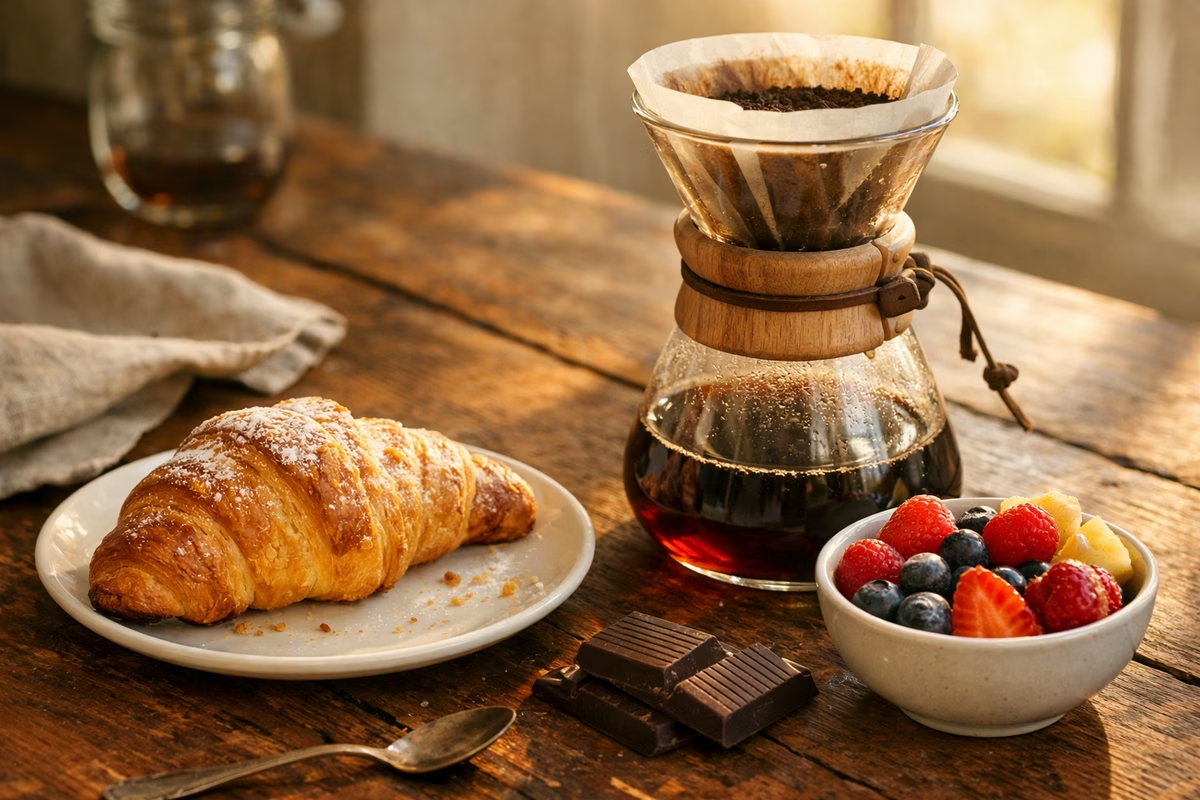
Wine has sommeliers. Beer has cicerones. Coffee has… you, standing in the kitchen with a mug in one hand and a piece of toast in the other, wondering whether it matters.
It matters. Not in a hushed-voice, white-tablecloth way. In a Tuesday-morning, this-is-actually-better-together way. The right pairing doesn’t just avoid clashing—it creates something new. A bright Ethiopian coffee next to a lemon pastry and the citrus in both amplifies into something electric. A deep, chocolatey Brazilian next to a buttery croissant and the richness rounds into something you want to sit with for twenty minutes.
This guide is the practical framework. No pretension. No rules that require a flavor wheel tattooed on your forearm. Just the logic of why certain combinations work, and enough examples to make your next breakfast, snack, or dessert a small revelation.
The Basics: Why Coffee and Food Pair at All
Coffee is one of the most chemically complex beverages on earth—over 1,000 aromatic compounds in a single cup. That complexity means coffee has something to say to almost any food, but the conversation depends on three variables:
1. Roast Level
This is the biggest lever.
Light roasts preserve the bean’s origin character: fruit, floral, citrus, tea-like acidity. They pair the way white wine pairs—with lighter, brighter foods.
Medium roasts balance origin character with roast-developed sweetness: caramel, nuts, mild chocolate. They pair like an off-dry rosé—versatile and forgiving.
Dark roasts are dominated by roast flavors: bittersweet chocolate, smoke, toast, molasses. They pair like a bold red wine or stout—with rich, heavy, sweet, or smoky foods.
2. Origin Character
Different growing regions produce distinct flavor profiles, just like wine regions. These origin notes interact with food:
- Ethiopian / Kenyan (bright, fruity, floral) → pair with fruit, citrus, light pastry
- Colombian / Central American (balanced, nutty, caramel) → pair with baked goods, chocolate, nuts
- Brazilian / Indonesian (heavy, earthy, chocolatey) → pair with rich or savory foods
- Guatemalan / Peruvian (complex, spiced, cocoa) → pair with chocolate, spice-forward desserts
For detailed origin profiles, see the Coffee Origins guide.
3. Brew Method
Brew method affects body and intensity, which changes pairing dynamics:
- Pour-over / drip: Clean, clear flavors. Best for delicate pairings.
- French press: Full-bodied, oils intact. Handles richer foods.
- Espresso: Concentrated, intense. Pairs well with sweet or bold foods.
- Cold brew: Smooth, low-acid. Pairs with creamy or sweet foods.
For brew method details, see Brewing Methods.
Breakfast Pairings
Breakfast is where most people drink coffee, so this is where pairing has the highest daily impact.
The Classic Continental
Croissant, butter, jam + medium roast drip coffee
The buttery, flaky croissant wants a coffee with enough body to match its richness but enough sweetness to complement the pastry. A medium-roast Colombian or Brazilian, brewed clean, is the default pairing here. The caramel and nut notes in the coffee mirror the toasted-butter quality of the croissant.
If you add jam, lean slightly lighter in roast—the fruit brightness in a light-medium Central American coffee picks up the jam’s sweetness without competing.
Eggs and Toast
Scrambled eggs, sourdough toast + medium-dark roast
Eggs are fatty, savory, and relatively neutral—they need a coffee with presence. A medium-dark roast with chocolate and nutty notes provides the structure. The slight bitterness cuts through the richness of the eggs, and the toast bridges the two.
Avoid very light, fruity coffees here. The bright acidity clashes with the egg’s sulfur notes. Save the Ethiopian Yirgacheffe for after the eggs.
Yogurt and Fruit
Greek yogurt, berries, granola + light roast Ethiopian or Kenyan
This is where light roasts shine. The tangy yogurt matches the coffee’s acidity. The berry notes in the coffee amplify the actual berries on the plate. The granola provides the crunch and sweetness that ground both elements. This pairing feels intentional even when it’s accidental.
Oatmeal
Oatmeal with brown sugar and walnuts + medium roast
The warm, earthy sweetness of oatmeal harmonizes with a medium roast’s caramel and nut tones. Add a splash of milk to the coffee and the creaminess connects the two. This is a comfort pairing—nothing dramatic, everything aligned.
Pastry and Baked Goods Pairings
Coffee and pastry is perhaps the most natural pairing in the world. Here’s how to make it intentional.
Buttery Pastries (Croissants, Danish, Brioche)
Butter wants warmth and sweetness. Medium roast, clean brew—the caramel notes complement without overpowering. Avoid dark roasts here; the bitterness can fight the butter’s delicacy.
Chocolate Pastries (Pain au Chocolat, Chocolate Muffins)
Layer chocolate on chocolate. Medium-dark Brazilian or Colombian with cocoa and nut notes creates a double-chocolate effect without being cloying. Or go contrast: a bright Kenyan light roast whose berry acidity cuts through the chocolate’s sweetness.
Citrus Pastries (Lemon Cake, Orange Scone)
Match brightness with brightness. Light roast Ethiopian (natural process) with its inherent citrus and floral notes amplifies the pastry’s citrus. This is one of the most striking pairings in the coffee world—two citrus sources creating something more than either alone.
Cinnamon and Spice (Cinnamon Roll, Spiced Scone)
Warm spice wants warm coffee. Medium-dark Guatemalan or Sumatran with notes of brown sugar, clove, and cocoa wraps around cinnamon like a blanket. The coffee becomes the liquid version of the pastry’s spice.
Plain Bread and Toast
Simple bread lets coffee’s nuance show. Use your best single-origin here—whatever you want to taste clearly. The bread acts as a neutral palate reset between sips.
Chocolate Pairings
Coffee and chocolate share botanical cousins in the flavor-compound world. This makes them natural partners, but the specific pairing matters.
Dark Chocolate (70%+)
Medium roast, single-origin with inherent cocoa notes. The chocolate and coffee create a unified flavor experience—one continuous spectrum of roasted, bittersweet, fruity depth. Avoid very light roasts (the acidity fights the chocolate’s bitterness) and very dark roasts (too much combined bitterness).
For a contrast pairing, try a fruity Ethiopian with 70% dark chocolate. The berry and citrus notes in the coffee cut through the chocolate’s intensity, creating a bright-dark tension that’s genuinely exciting.
Milk Chocolate
Milk chocolate is sweeter and creamier—it needs a coffee with structure. Medium-dark roast espresso or a strong French press provides the intensity to stand up to the sugar. The coffee’s bitterness balances the chocolate’s sweetness.
White Chocolate
White chocolate is all fat and sugar with no cocoa solids. It needs contrast. A bright, acidic light roast slices through the richness like lemon juice on a rich dessert. Unexpected, but it works.
For detailed chocolate tasting guidance, see the Chocolate & Coffee Pairing guide.
Dessert Pairings
Fruit Desserts (Tarts, Pies, Sorbets)
Light roast, pour-over. Clean and bright. The coffee’s fruit-forward notes harmonize with the dessert’s actual fruit. Particularly good with stone fruit desserts (peach, apricot) paired with a natural-process Ethiopian.
Caramel and Toffee Desserts
Medium roast, any method. The caramel in the coffee’s roast profile creates a resonance chamber with the caramel in the dessert. Crème brûlée with a medium Colombian is an effortless classic.
Creamy Desserts (Tiramisu, Panna Cotta, Cheesecake)
Espresso. Concentrated intensity cuts through cream and fat. This is why tiramisu uses espresso in the recipe—the pairing logic is baked into the dish. A double espresso alongside a slice of cheesecake applies the same principle.
Ice Cream
Cold brew or iced coffee with ice cream is an affogato waiting to happen. Pour espresso over vanilla ice cream for the classic. But also try cold brew alongside salted caramel or coffee ice cream—the temperature match and flavor overlap create a seamless experience.
Savory Pairings
Coffee with savory food is less intuitive but increasingly interesting.
Cheese
Hard, aged cheeses (Parmigiano-Reggiano, aged Gouda, Gruyère) pair surprisingly well with medium-dark roast coffee. The umami in the cheese and the bittersweet roast notes create a complex, satisfying combination. Soft, creamy cheeses prefer lighter roasts.
For cheese guidance, visit the Cheese Pairing guide.
Smoked or Cured Meats
Smoked salmon, bacon, prosciutto—all have the salt, fat, and smoke that pair with dark roast’s bitterness and body. A dark-roast French press with bacon is a breakfast pairing that needs no justification.
Spiced or Savory Breakfast Dishes
Shakshuka, huevos rancheros, or a spiced tofu scramble—dishes with heat, acid, and spice want a coffee that can keep up. Medium-dark, full-bodied (French press or espresso) provides the weight. The coffee’s roast notes add another layer to the spice without clashing.
Building Your Own Pairings
The principles above compress into four guidelines:
- Match intensity. Light coffee with light food, bold coffee with bold food.
- Use contrast for richness. Bright, acidic coffee cuts through fatty, sweet, or heavy food—the way lemon brightens butter.
- Use harmony for comfort. Coffee and food with similar notes (both nutty, both chocolatey, both fruity) create seamless, comforting pairings.
- Brew method matters. Pour-over for delicate pairings, French press for rich pairings, espresso for intense pairings, cold brew for smooth or sweet pairings.
Start with one experiment per week. Change the coffee you drink alongside a food you already eat. Notice whether the combination improves, clashes, or reveals something new. That’s all pairing is: paying attention to what happens when two flavors meet.
Quick Reference Table
| Food Category | Best Coffee Match | Why It Works |
|---|---|---|
| Buttery pastry | Medium roast, drip | Caramel/nut notes complement butter |
| Citrus dessert | Light roast Ethiopian | Citrus amplifies citrus |
| Dark chocolate | Medium roast, single-origin | Shared cocoa chemistry |
| Eggs and toast | Medium-dark, any method | Body matches richness, bitterness cuts fat |
| Fruit and yogurt | Light roast, pour-over | Acidity matches acidity, fruit matches fruit |
| Rich dessert | Espresso | Concentration cuts sweetness |
| Cheese (aged) | Medium-dark, French press | Umami meets bittersweet depth |
| Spiced dishes | Medium-dark, full-bodied | Weight keeps up with heat and spice |
Next Steps
- Explore Coffee Origins for the flavor profiles that drive pairing decisions
- Read Brewing Methods to understand how brew method shapes body and intensity
- See The Chocolate & Coffee Pairing Guide for the deep dive on coffee’s closest flavor partner
- Try The First Espresso That Changed Everything for a narrative about discovering what espresso can do