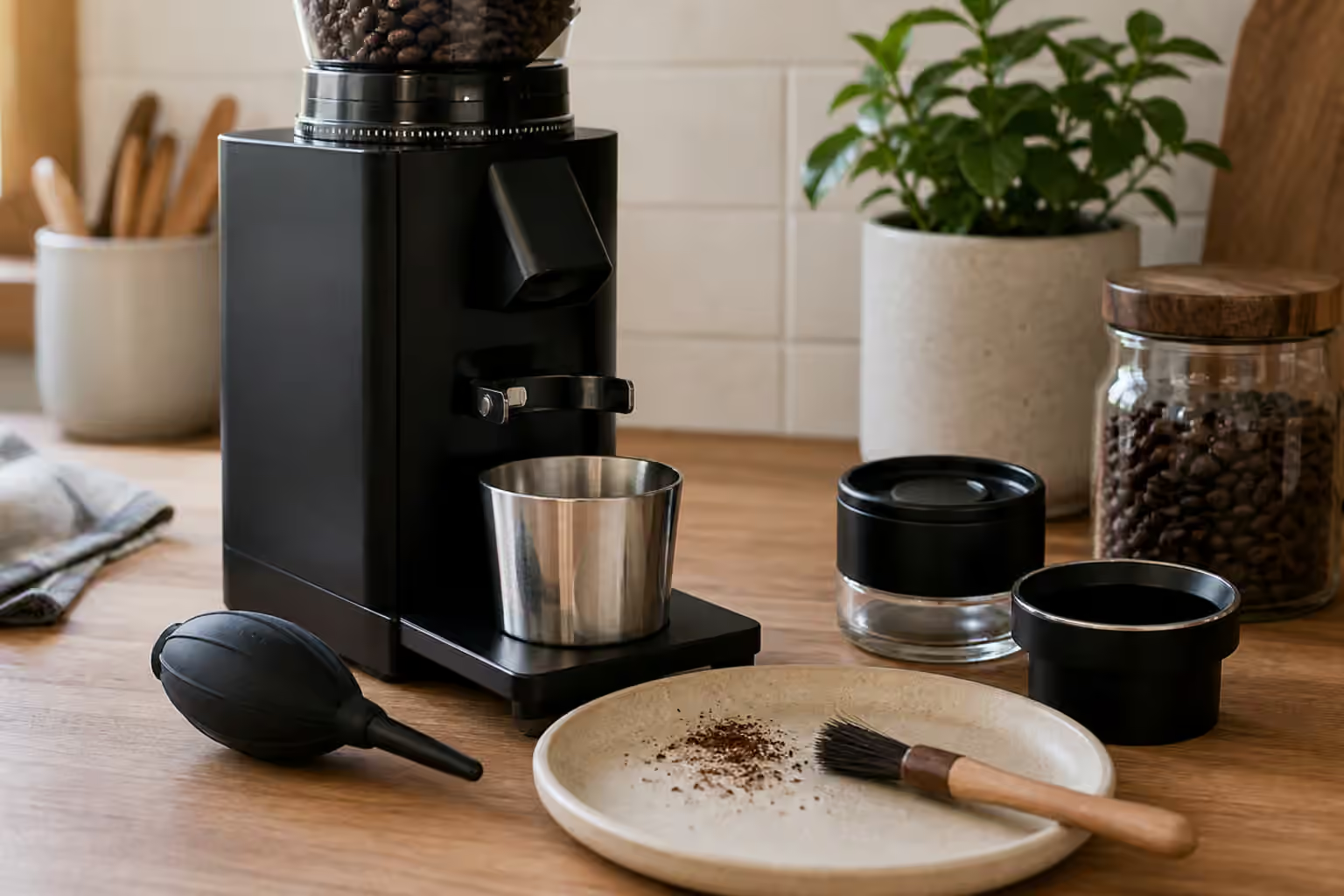
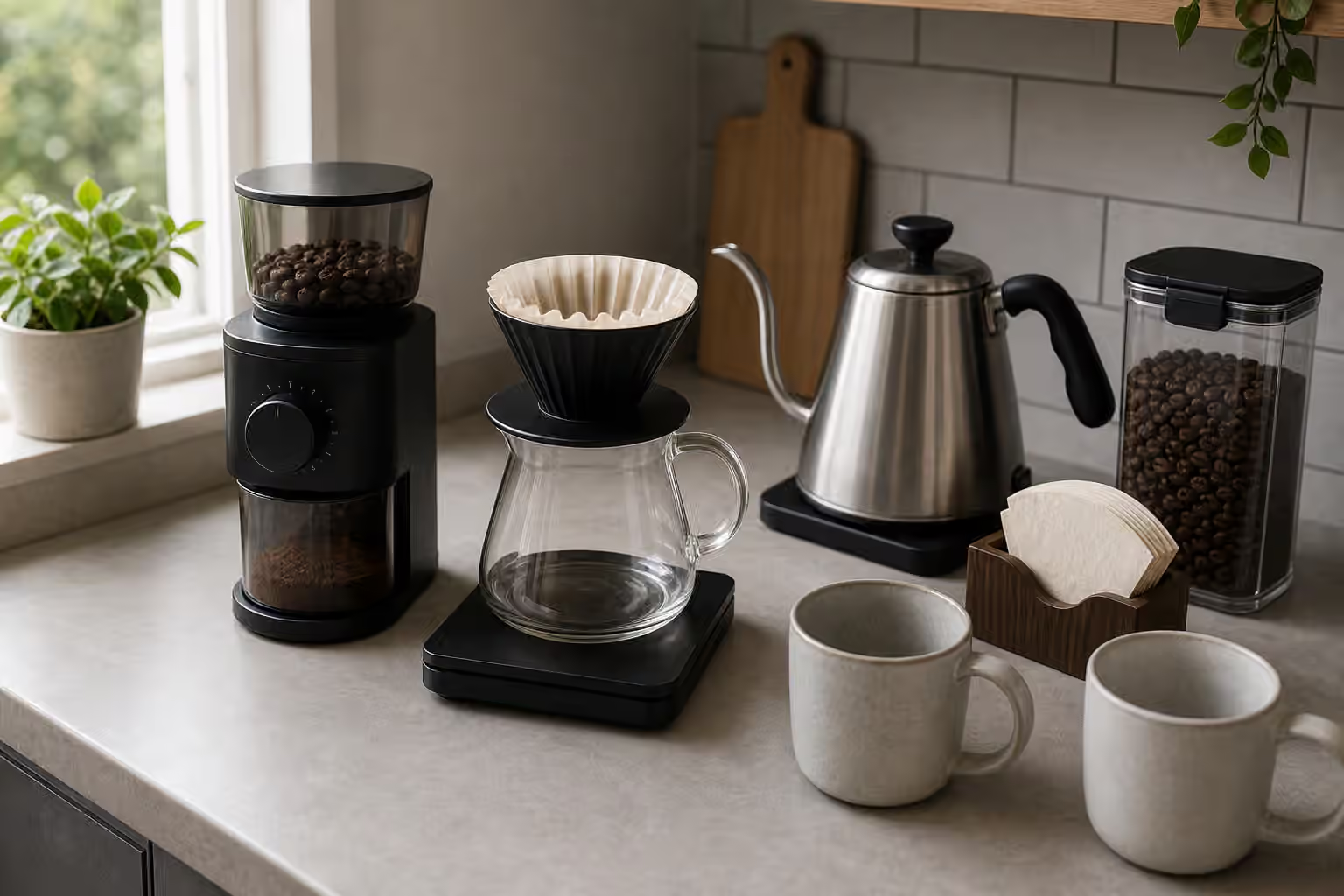
A burr grinder setting is not a universal measurement. The number twelve on one grinder does not mean the same thing as number twelve on another grinder, and it may not even mean the same thing on your grinder after cleaning, burr replacement, travel, or a hard knock on the counter. Calibration is the work of making your grinder’s settings meaningful inside your own coffee routine. It does not make the grinder perfect. It makes the grinder readable.
This matters because grind size is one of coffee’s strongest levers. The Grind Size Guide explains how fine and coarse particles shape extraction. Calibration asks a more practical question: when you decide to grind finer or coarser, do you know where you are starting from, and can you return there tomorrow?
For many home brewers, the answer is only partly. They remember that pour-over works “around fifteen” or espresso works “somewhere near two,” but those marks drift as burrs season, coffee changes, fines collect, and parts are removed for cleaning. A little calibration turns those vague memories into a working map.
What Calibration Means
In coffee grinders, calibration usually means establishing the relationship between the adjustment scale and the physical distance between the burrs. On some grinders, that begins with identifying the zero point, the place where the burrs touch or nearly touch. On others, especially grinders with factory stops or digital displays, calibration means aligning the indicated setting with a repeatable mechanical reference.
This is not the same as burr alignment, though the two are related. Alignment describes whether the burr faces sit parallel enough to grind evenly. Calibration describes whether the adjustment system tells the truth consistently enough for you to use it. A perfectly calibrated grinder with poorly aligned burrs can still produce too many fines and boulders. A well-aligned grinder with a confusing scale can still make dialing in frustrating because you cannot return to a known setting.
Most home users do not need to chase laboratory precision. You need a dependable range for each brew method, a way to recover after cleaning, and enough confidence to make small changes without losing your place. If your grinder can do that, it is calibrated for practical coffee.
Finding the Zero Point Carefully
Many grinders allow you to find a burr touch point. With the grinder empty and clean, you move the adjustment finer until the burrs just begin to chirp, rub, or resist, depending on the design. That point becomes a reference. Some manuals describe this process clearly. Others warn against it. The manual wins. Burrs are hardened metal, but motors, threads, carriers, and coatings can be damaged by careless contact.
If your grinder is electric and the manufacturer allows burr-touch calibration, make changes in tiny movements and avoid running the grinder with firm burr contact. A brief faint chirp is information. A harsh scraping sound is abuse. If your grinder is manual, you may feel the handle stop turning freely as the burrs touch. Again, gentle contact is enough.
Once you know the reference point, you can decide how to label it. Some grinders have numbered collars that can be reset so zero aligns with the touch point. Others have fixed numbers, so you simply write down where touch occurs. Your espresso range may then be a certain number of clicks or marks above that point, while filter coffee may live much farther away. The number itself is less important than the relationship.
Why Settings Drift
Grinder settings drift for ordinary reasons. New burrs become seasoned as sharp machining edges smooth slightly during use. The difference is most noticeable during the first several pounds of coffee. A setting that produced a balanced pour-over during the first week may need a slight adjustment later because the burrs are cutting and crushing differently.
Cleaning can also shift the map. Removing an upper burr carrier, adjustment collar, hopper, or dial can change how parts reseat. Even when everything returns correctly, compacted fines that once filled tiny gaps may be gone, so the grinder behaves a little differently. That is one reason Clean Coffee Gear and calibration belong together. Cleaning improves flavor, but it can temporarily disturb repeatability.
Coffee itself creates the illusion of drift. Dense light roasts often need a different setting than brittle dark roasts. Dry, aged beans grind differently than fresh beans still carrying more gas and aroma. Decaf can be more fragile and may produce more fines. If you change coffee and the same setting suddenly tastes wrong, the grinder may not have moved at all. The beans may simply be asking for a new setting.
Retention adds another layer. Some grinders hold a gram or more of grounds in the burr chamber or chute. When you change settings, the next dose may contain old grounds from the previous setting. This can make a careful adjustment seem ineffective. Purging a small amount after a major setting change helps, especially for espresso, where tiny differences are amplified.
Build a Range, Not a Mythical Setting
The goal is not to discover the one perfect number. It is to build ranges. Your pour-over range might cover several marks depending on brewer, filter, dose, roast, and water. Your French press range may be wider because immersion is forgiving. Your espresso range may be narrow because pressure brewing is sensitive. The Espresso Dialing In guide makes more sense when you know how small your grinder’s espresso steps really are.
Start by anchoring one recipe you already understand. Brew a familiar coffee with a familiar method and record the grinder setting, dose, water amount, brew time, and taste. If the cup is balanced, mark that setting as a reference, not as a law. Then adjust finer and coarser on later brews to learn how much each movement changes the cup. Some grinders make large jumps per click. Others move in tiny increments. Your palate needs to learn the scale.
The Coffee Dial-In Log is useful because grinder calibration becomes practical only when it connects to taste. A zero point is mechanical. A setting range is sensory. If you write that a washed Colombian pour-over tasted sweet at setting twenty-two, sharp at twenty-four, and drying at twenty, you have learned more than any generic chart can tell you.
Stepped, Stepless, and Repeatability
Stepped grinders click from one setting to another. They are easy to repeat because each click is a fixed position. Their weakness is that the ideal setting may sit between clicks, especially for espresso. Stepless grinders move continuously. They allow fine adjustment, but returning to a previous position depends on clear markings and careful hands.
Neither system is automatically better for every drinker. A stepped grinder with small enough steps can be excellent for filter coffee and workable for espresso. A stepless grinder can be wonderful for espresso but annoying if the dial is too sensitive and unlabeled. Calibration helps both. On a stepped grinder, you learn which clicks matter. On a stepless grinder, you create reference marks and move deliberately.
For shared kitchens, repeatability matters more than theoretical precision. If two people use the same grinder for espresso and French press, the adjustment system needs a way to travel between settings and return without drama. A small notebook, a strip of painter’s tape with marks, or a photo of the dial can prevent a lot of morning confusion. This is not fussy. It is the same logic as weighing coffee and water: remove one avoidable variable so taste can guide the rest.
Calibration After Cleaning
After a deep clean, treat the first brew as a check, not a verdict. Reassemble the grinder carefully, make sure carriers and collars are seated, and return to a known reference setting. Grind a small dose to clear any loosened particles and confirm that the grinder sounds normal. Then brew something familiar.
If the cup lands close to normal, make small taste-based adjustments. If it is wildly off, stop and inspect the assembly before blaming the coffee. An upper burr carrier that is not fully seated, a collar started on the wrong thread, or a hopper safety tab not engaged can all make settings meaningless. Do not force parts. Most grinder problems after cleaning come from impatience, not mysterious failure.
This is also a good moment to check static, clumping, and chute buildup. Calibration is easiest when grounds leave the grinder consistently. If your grinder sprays chaff and fines across the counter one day and clumps heavily the next, retention and distribution may be changing the cup as much as the dial. A clean catch cup, dry beans, and a stable workflow help keep calibration visible.
When Calibration Cannot Fix the Grinder
Some grinders cannot produce the consistency a brew method demands. Calibration will not turn a blade grinder into a burr grinder, and it will not make large stepped jumps behave like tiny espresso adjustments. It also cannot erase severe burr misalignment, worn burrs, a loose carrier, or a design with heavy retention and unstable adjustment.
That does not mean you need the most expensive grinder. It means you should recognize the boundary between technique and hardware. If your filter coffee tastes both bitter and sour across many settings, the grinder may be producing too many fines and boulders. If espresso moves from choking to gushing with one click, the steps may be too large for that machine and basket. The Equipment guide is helpful when deciding whether a grinder is still serving the way you brew.
Calibration is not glamorous, but it is one of the quiet habits that makes coffee less random. You learn where the burrs begin, where your methods live, how cleaning changes the map, and how each coffee asks to move within a range. The payoff is not a perfect number. It is a morning in which “a little finer” means something precise enough to taste.