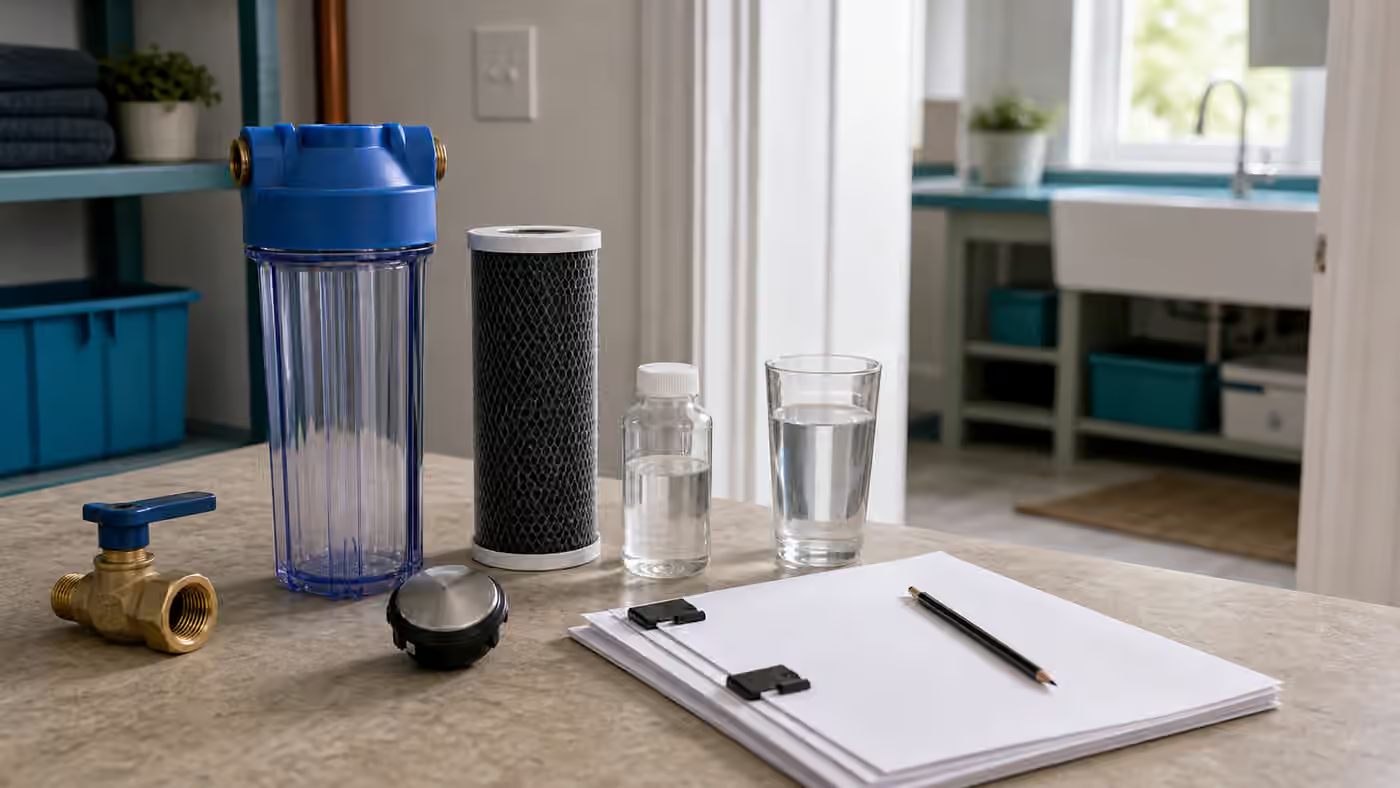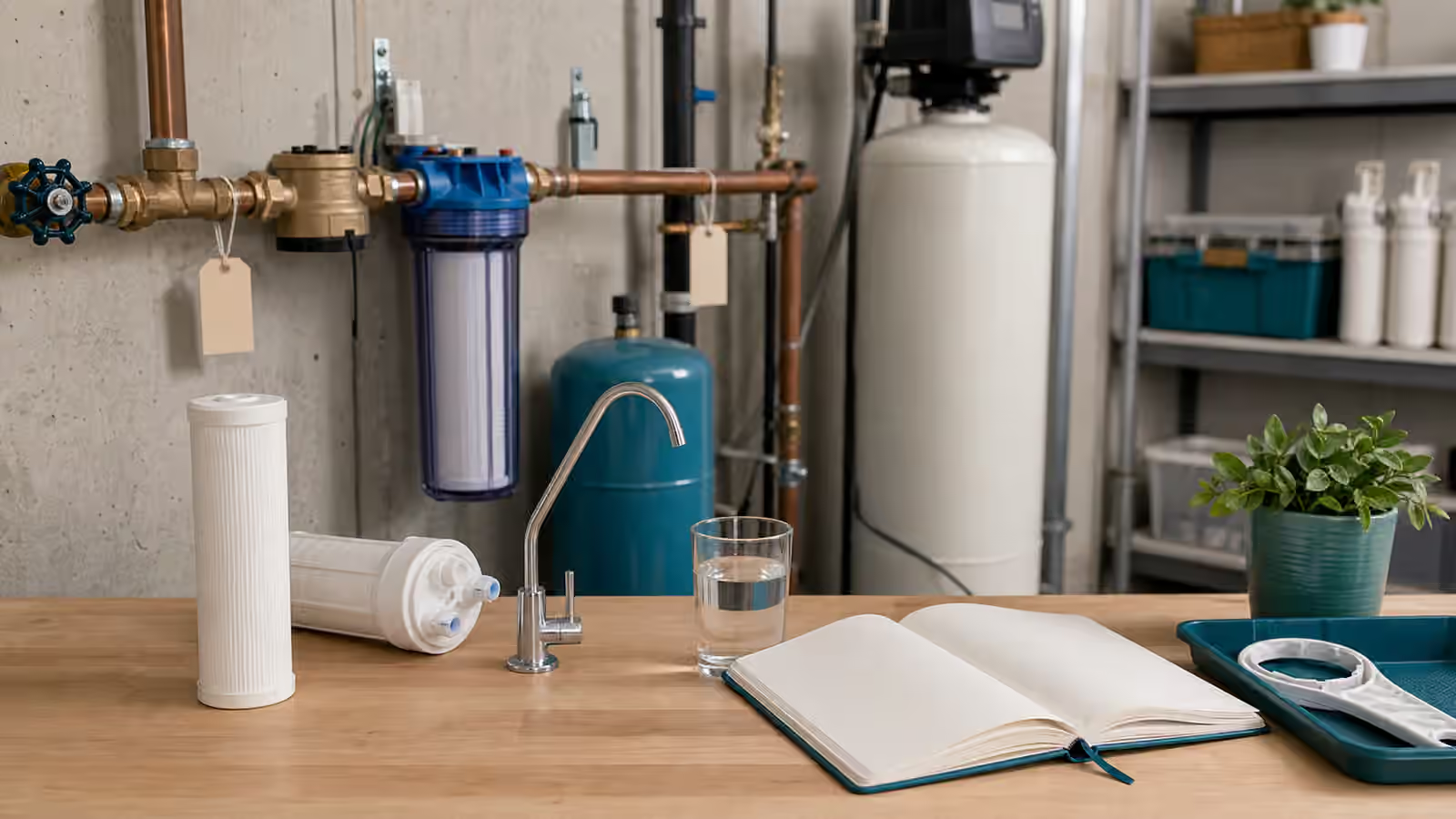
The place where water treatment happens is often as important as the device itself. A whole-home system treats water near the entry point. A point-of-use filter treats water at one tap, appliance, or dispenser. The right location depends on the evidence, the use, the plumbing, and the maintenance burden the household can actually carry. For background, see EPA — Home Drinking Water Testing .
Clear Water Lab helps with everyday water decisions, reports, testing, certification checks, and maintenance. It is not medical advice, legal advice, or a substitute for local boil-water notices, certified lab results, utility instructions, or health department guidance.
Draw the water route before choosing equipment
Start with a simple route. Water enters the home, passes through shutoffs, pressure equipment, heaters, branches, fixtures, appliances, and drinking taps. A whole-home treatment stage sits near the beginning of that route, so it can affect every downstream use. A point-of-use treatment stage sits near one end of the route, so it can focus on a specific glass, faucet, refrigerator, or cooking station. Neither location is automatically superior. Each location solves a different kind of problem.
Whole-home treatment makes sense when the problem affects the building broadly or when upstream treatment protects plumbing and equipment. Sediment that clogs fixtures, iron that stains, sulfur odor across many taps, hardness that scales appliances, or well conditions that need a designed treatment train may belong near the entry point. Even then, the system should come from evidence. Sediment, Rust, and Cloudy Water is a better starting place than a sales page because it asks what the clue is before assigning a device.
Point-of-use treatment makes sense when the goal is drinking and cooking water at one location, especially for a specific certified contaminant claim. Lead at an old kitchen tap, PFAS reduction for drinking water, taste improvement at the sink, or reverse osmosis for one faucet can all be point-of-use questions. Treating every gallon in the house for a concern that only matters at the drinking tap can add cost, complexity, and maintenance without improving the decision. The comparison in Pitcher, Faucet, Countertop, Under-Sink, RO, and Whole-Home Filters pairs naturally with this location question.
Whole-home sounds complete, but it is not always focused
The phrase “whole-home” is emotionally powerful. It suggests that the household has handled water everywhere. That can be true for some broad issues, but it can also blur the target. A sediment filter at the entry point may protect fixtures and downstream cartridges, yet do little for dissolved contaminants. A softener may reduce scale and make soap behave differently, yet not remove PFAS, nitrates, arsenic, or lead. A carbon tank may improve taste or reduce specific chemicals when designed for that job, yet it still has capacity, flow, media, and replacement limits.
Whole-home treatment also changes the maintenance stakes. If one under-sink cartridge is overdue, one drinking station is compromised. If an entry-point system is neglected, every downstream use may be affected or the equipment may fail to protect the rest of the system. Pressure drop, bypass valves, backwash cycles, drain connections, salt, media life, lamp age, cartridge changes, and service access all become part of the water plan. The larger the system, the more ordinary maintenance has to be.
There is also a plumbing boundary. Some whole-home systems are simple enough for handy homeowners in certain settings, while others belong with qualified installers, local code awareness, and lab-informed design. Private wells, pressure tanks, iron, sulfur, bacteria concerns, arsenic, nitrates, pH, corrosion, and treatment sequencing can interact. The Nitrates, Arsenic, and Private Wells guide keeps that boundary visible because wells are not solved by buying the most impressive tank first.
Point-of-use is narrow by design
Point-of-use treatment can feel less ambitious, but its narrowness is often the advantage. A certified under-sink filter can focus on drinking and cooking water. A reverse osmosis system can be selected for a particular claim and used at one dedicated faucet. A pitcher can serve a renter who cannot touch plumbing. A refrigerator cartridge can support convenience if the cartridge claim and replacement schedule are clear. Less reach can mean less confusion.
The narrow design also forces a use decision. If the filter is at the kitchen sink, bathroom brushing water may not pass through it. If the filter is in the refrigerator, cooking water from the tap may not pass through it. If RO water goes only to a small faucet, the kettle and coffee routine need to use that faucet deliberately. A household should not assume that “we have a filter” means every use is treated. It means water is treated at the place where the filter sits.
This is where labels and habits help. A small note under the sink, a calendar reminder, and a clear family habit can be more important than another cartridge stage. If the point-of-use system is for a health-related claim, everyone who prepares formula, cooks, fills bottles, or makes ice should understand which tap matters. If the system is only for taste, the stakes are different, but the maintenance still decides whether it stays useful.
Layering can help, but only with a reason
Some homes need both locations. A private well with sediment might use entry-point sediment control to protect downstream equipment, then a point-of-use certified drinking-water device for a specific contaminant. A home with hard water might use softening or scale control for appliances, then carbon at a drinking tap for taste. A cabin or small system might use prefiltration, UV, and a dedicated drinking-water stage if testing and design support that sequence. Layers work best when every layer has a named job.
Layers become wasteful when they are added because more equipment feels safer. A sediment filter cannot do the job of an RO membrane. A softener cannot do the job of a lead-reduction cartridge. A UV chamber cannot do the job of a nitrate treatment system. A refrigerator filter cannot do the job of a whole-home iron system. The guide on UV Water Disinfection is a useful reminder: a treatment stage can be valuable and still be narrow.
The calmer decision is to write one sentence before shopping. It should name the source, the water clue or contaminant, the place water is used, and the treatment location that fits. For example, a taste complaint at one drinking tap points to a different solution than sediment in every fixture. Lead concern at an old kitchen faucet points somewhere different from scale on the water heater. A well bacteria concern points somewhere different from chlorine smell in a city shower.
Put the fix where the problem lives. Treat the whole home when the issue is truly whole-home or when upstream treatment protects the route. Treat one point when the goal is one drinking or cooking use. Use both only when the evidence earns both. That location discipline prevents oversized systems, underpowered convenience filters, and the expensive feeling that water has been solved when the real question was never placed on the map.