A private well has a memory only if the owner keeps one. The water may come from the same ground year after year, but the conditions around it are not frozen. Pumps are serviced, pressure tanks are replaced, filters are changed, storms pass through, nearby land use shifts, casing repairs happen, treatment is added, and household needs change. A sampling log turns those scattered events into evidence. Without it, every new water question starts from memory and guesswork. For background, see CDC — Guidelines for Testing Well Water .
Clear Water Lab helps with everyday water decisions, reports, testing, certification checks, and maintenance. It is not medical advice, legal advice, or a substitute for local boil-water notices, certified lab results, utility instructions, or health department guidance.
The log is not a substitute for a lab
A sampling log does not make a kitchen test strip more powerful than it is. It does not turn taste into a certified result. It does not decide whether nitrate, arsenic, bacteria, or another health-effect contaminant is present. Those questions need the right method, the right bottle, the right sampling point, and often a certified laboratory. Nitrates, Arsenic, and Private Wells keeps that boundary clear.
The log’s job is different. It preserves context around each result. A lab report from two years ago is more useful when it sits beside notes about the sampling tap, recent rainfall, repairs, disinfection, treatment status, and whether any filter was bypassed. A bacteria result after a flood means something different from a routine annual sample collected during stable conditions. A nitrate result from the raw water tap should not be confused with a result after reverse osmosis. The number and the story belong together.
Keep the format plain enough that you will use it. A notebook, folder, shared document, or printed sheet can all work. The best log is the one that survives busy months, power outages, and service calls. It should be close to the water equipment or easy to find from a phone. If the record requires a special app nobody opens, it will fail the first time a pump technician asks what changed.
Record the sampling route
A private well sample needs a route. Where was the sample taken? Was it raw water before treatment, after a sediment filter, after a softener, after UV, at the kitchen tap, or at a dedicated drinking-water faucet? Was the aerator removed if the lab required it? Was the bottle preserved or chilled according to instructions? Was the water stagnant, flushed, or collected after normal use? The lab instructions decide many of these details, but the log keeps them from disappearing.
This matters because different questions belong at different points. If you want to understand the well itself, sampling after a filter may hide the raw condition. If you want to verify a point-of-use treatment device, the post-treatment location matters. If you are investigating lead or building plumbing, the method may involve first-draw timing rather than a well-head sample. Home Water Testing explains why sample location and method are part of the answer, not clerical details.
Record weather and events in ordinary language. Heavy rain, snowmelt, flooding, drought, nearby excavation, septic work, pump service, pressure tank replacement, well cap repair, shock chlorination, new treatment equipment, long vacancy, and sudden pressure change can all matter. You are not trying to prove causation from one note. You are giving future testing a map. When a result surprises you, the event history helps a local professional decide what to ask next.
Keep treatment records beside results
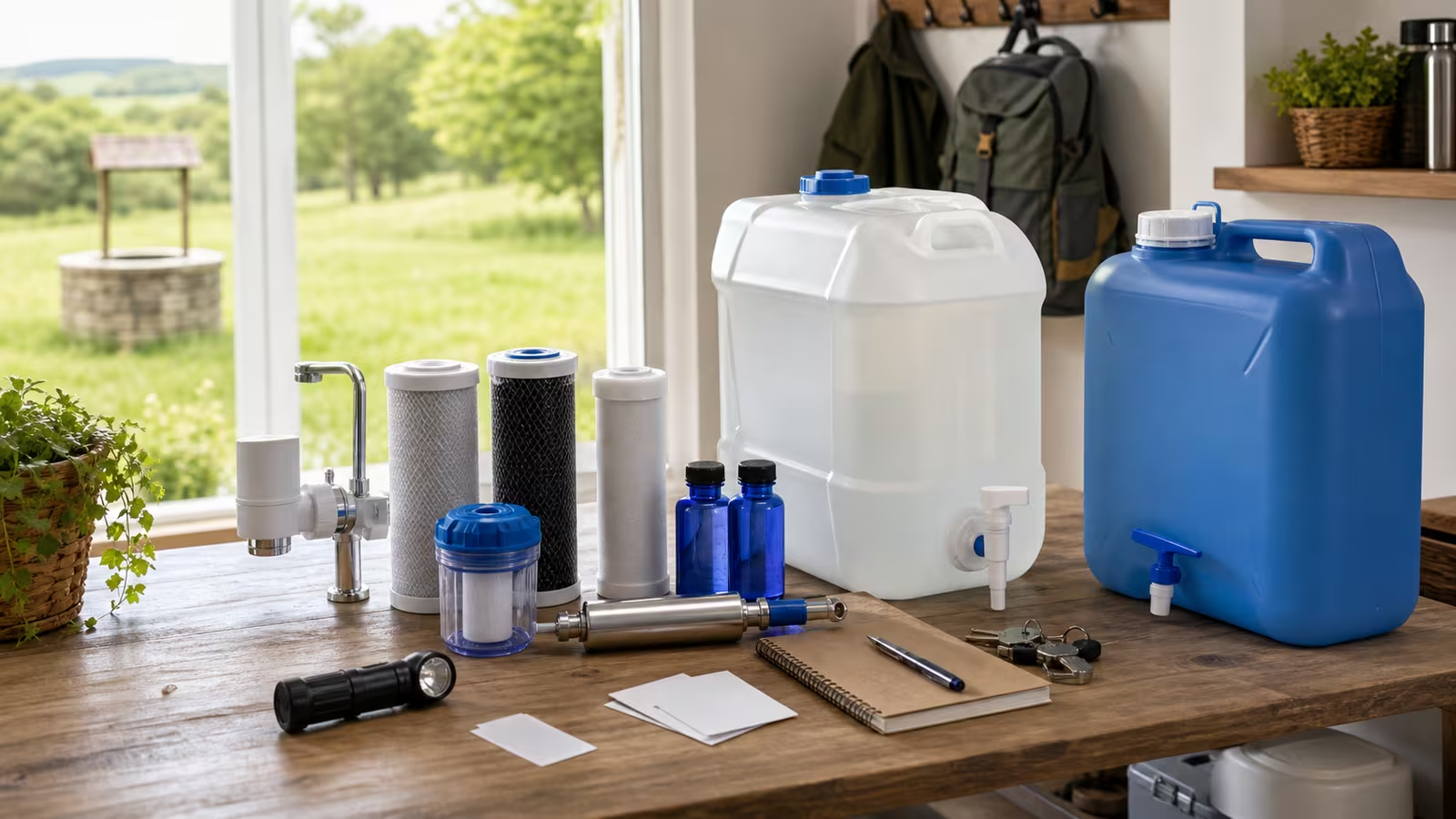
Many well homes have treatment equipment, and treatment without records is hard to trust. Write down sediment cartridge changes, carbon cartridge changes, softener salt and settings, UV lamp replacement, sleeve cleaning, RO filter changes, membrane replacement, pressure readings if available, and service visits. If a stage is bypassed, note the date and reason. If a device is removed or replaced, photograph the old and new model numbers.
The sequence matters. A UV unit after a sediment problem may perform differently from one fed by clear water. An RO unit after a softener may have different scaling concerns than one fed by hard water. A carbon cartridge used for taste does not create a nitrate treatment plan. Water Treatment Stage Order gives the broader frame: each stage changes what the next one receives, and the log is how you remember what was actually in service.
Do not confuse maintenance with proof. Replacing a cartridge on schedule is good, but it does not prove that an untested contaminant is absent. A clean UV sleeve is good, but it does not test for nitrate or arsenic. A normal TDS reading is not a bacteria result. The log should keep these categories separate so a neat folder does not become false confidence.
Use the log when something changes
The most useful time to open the log is before a decision. If a new stain appears, look back at iron, manganese, pH, hardness, and treatment notes before buying a cartridge. If a sulfur odor appears mainly on hot water, compare it with water heater service and raw-water notes before blaming the well alone. If a storm crossed the well area, write it down before calling local health guidance. If a real estate transaction is underway, the log helps show what is known and what still needs current testing.
A log also helps avoid repeated mistakes. A household may otherwise buy the same too-fine sediment cartridge that clogged last spring, forget that the UV lamp is due, or confuse an old seller’s arsenic report with a current lab result. The act of writing is not bureaucracy. It is how a private water system becomes manageable.
End each year with a quick review. Ask whether the latest lab results match local guidance, whether treatment equipment has current records, whether any event suggests retesting, and whether the household’s use changed. A new infant, medical need, long vacancy, tenant, irrigation change, or added treatment device can all change what questions deserve attention. The well is local. The record should be local too.