A water softener is best understood as a mineral-management device. It can make a hard-water house easier to live with, protect certain appliances from scale, and change how soap behaves. It does not turn every water concern into a solved problem, and it should not be treated as a substitute for testing, certified filter claims, or official guidance. For background, see NSF — Standards for Water Treatment Systems .
Clear Water Lab helps with everyday water decisions, reports, testing, certification checks, and maintenance. It is not medical advice, legal advice, or a substitute for local boil-water notices, certified lab results, utility instructions, or health department guidance.
A softener answers a mineral question
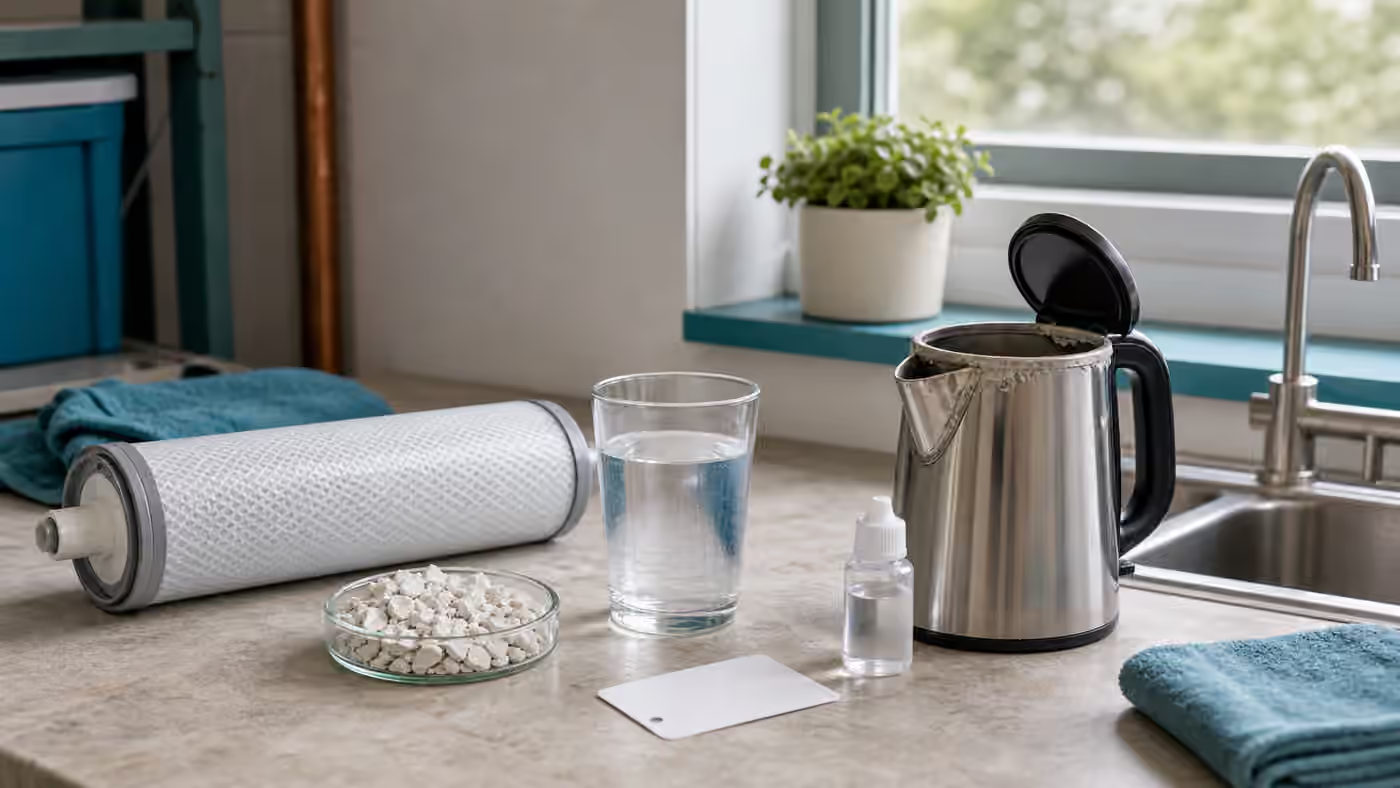
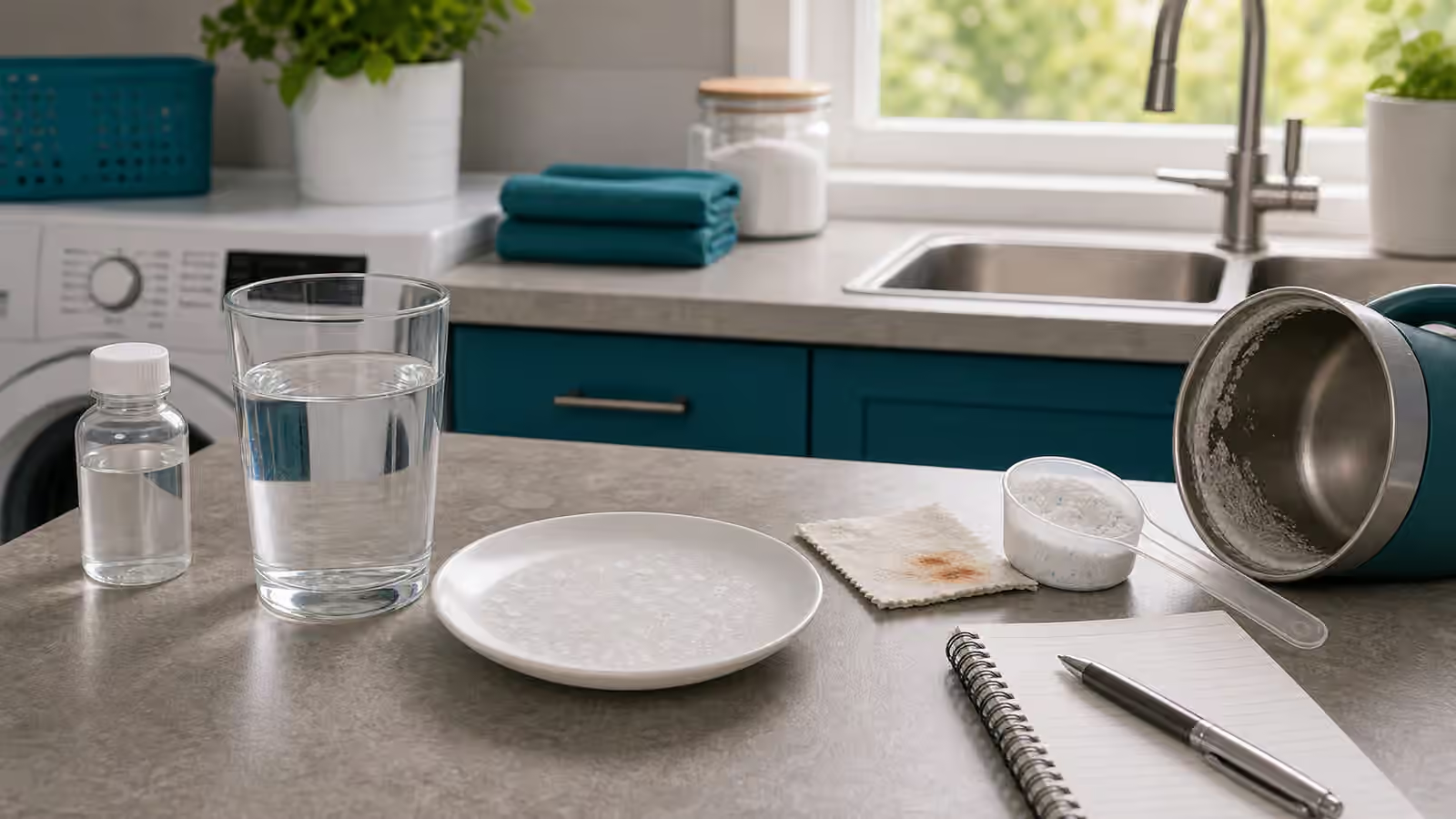
Hardness is mostly a calcium and magnesium story. Those minerals can leave white crust around faucets, build scale inside kettles, make soap feel stubborn, and add work for water heaters, dishwashers, humidifiers, and coffee equipment. That is why softeners exist. A conventional ion-exchange softener trades hardness minerals for sodium or potassium ions, so the water behaves differently in plumbing and cleaning tasks.
That trade can be useful, but it is narrower than many shopping conversations make it sound. A softener is not the same thing as an activated carbon filter, a reverse osmosis system, a sediment filter, a UV unit, or a lab test. It may reduce scale where hardness is the real issue, yet do little or nothing for many taste complaints, lead concerns, PFAS questions, nitrate results, arsenic results, bacteria concerns, or a public advisory. If the household has not separated hardness from contaminant questions, the softener can become an expensive symbol of action instead of the right tool.
The first useful move is to name the symptom in plain language. If the sink has white crust, the showerhead clogs, soap leaves film, and the kettle scales quickly, the evidence points toward hardness. If the water smells like chlorine, tastes metallic, carries orange particles, comes from a private well with old test results, or is tied to a specific news report, hardness may be only one small part of the picture. The broader sorting work belongs in Hard Water vs Bad Water , but the softener decision begins with that same discipline.
The drinking tap may need a separate plan
Whole-home softening feels tidy because one device changes water throughout the house. In practice, many homes are better served by separating appliance water, shower water, outdoor water, and drinking water. Softened water can be pleasant for cleaning and scale control while still being the wrong flavor or mineral profile for coffee, tea, plants, aquariums, sourdough starters, or a person who has been told to watch sodium intake. The exact significance of sodium or potassium exchange depends on the water, the equipment, and the household, so it should be handled carefully rather than waved away.
Some installations leave a cold kitchen tap, outdoor hose bib, refrigerator line, or other branch unsoftened. That does not mean softening failed. It means the plumbing was designed around different uses. A softened hot-water line may protect fixtures and appliances, while an unsoftened drinking line may preserve taste or reduce unwanted sodium contribution. A household that cares about coffee and tea may also compare softened water with filtered or blended water, since minerals that annoy a shower can matter in a cup. The Coffee and Tea Water guide is a better place for flavor tuning than a softener manual.
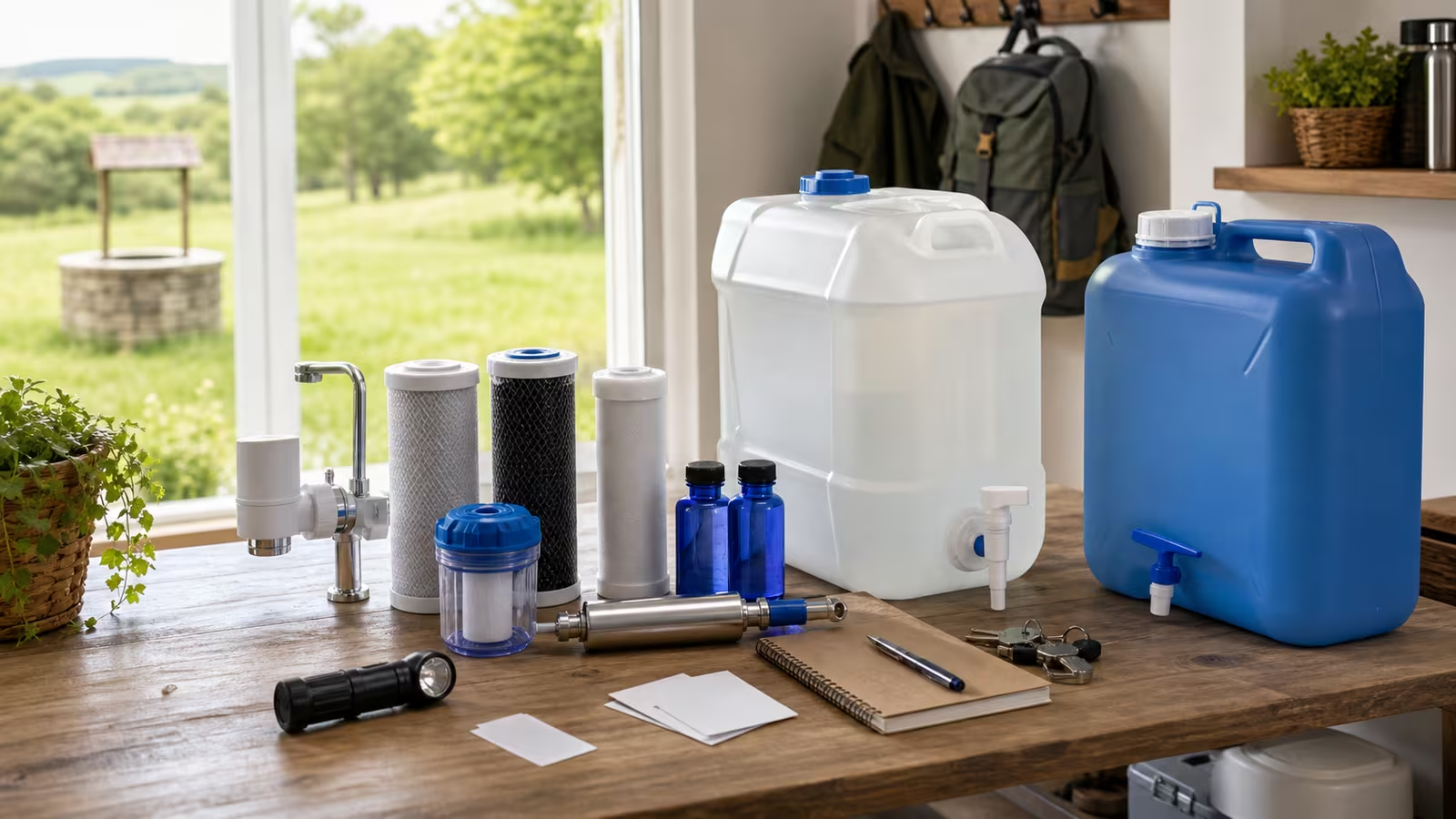
Point-of-use treatment can also sit beside a softener without duplicating it. If the goal is a verified lead, PFAS, VOC, or cyst reduction claim at the drinking tap, the claim usually belongs to a specific certified filter model and cartridge, not to the softener. If the goal is dissolved contaminants that call for reverse osmosis, the softener may be upstream protection in a hard-water home, but the RO system still has its own claim, maintenance, flow, drain, and taste tradeoffs. Pitcher, Faucet, Countertop, Under-Sink, RO, and Whole-Home Filters is useful here because it keeps point-of-use and point-of-entry decisions from being collapsed into one purchase.
Salt, bypasses, and what maintenance really means
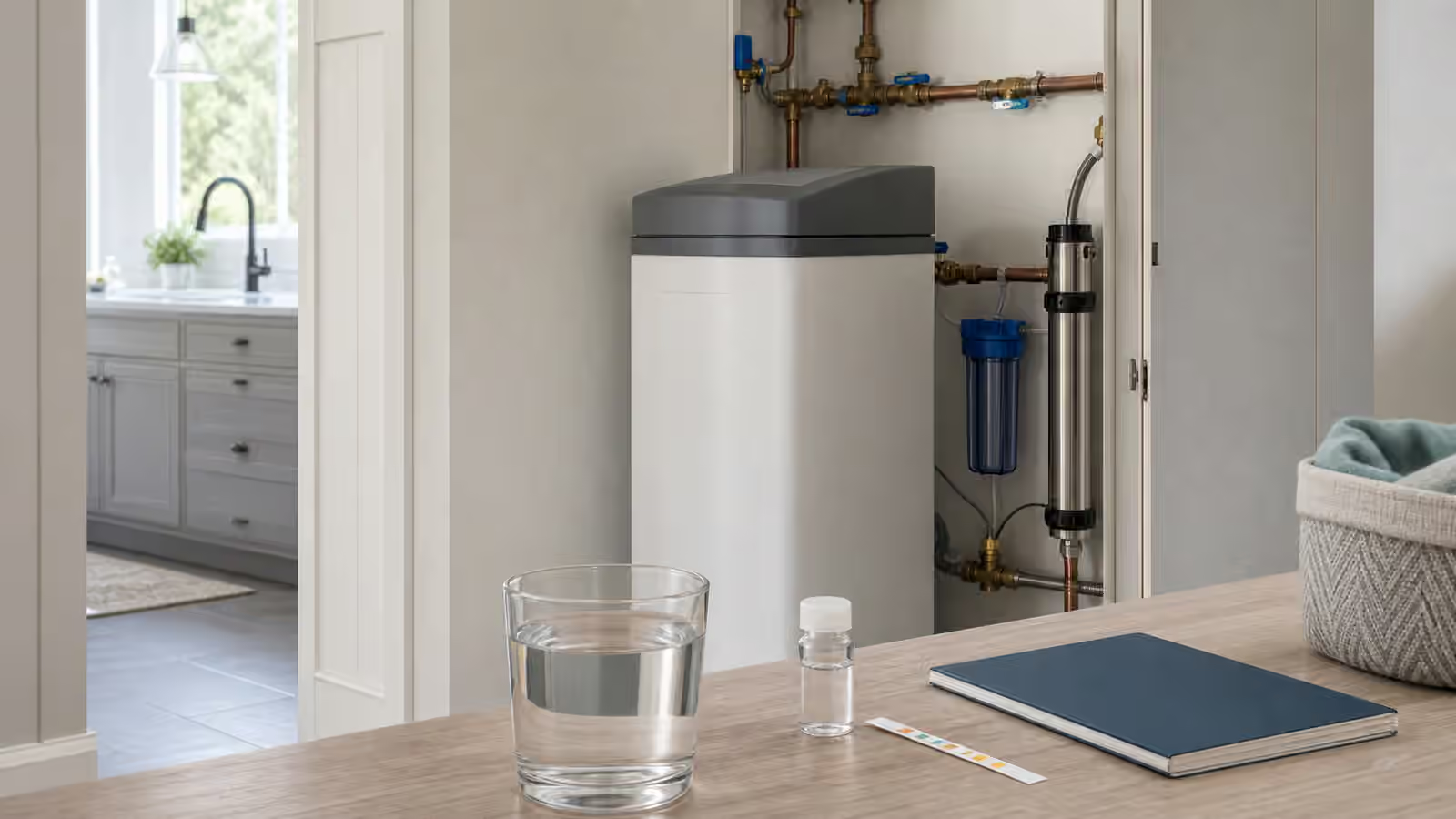
A softener is a machine with settings, salt or potassium supply, resin, valves, regeneration cycles, bypass positions, and drain behavior. It is not a passive filter you install and forget. The household needs to know where the bypass valve is, what normal sounds and cycles are like, when salt needs attention, and what changed after service. That knowledge is not just convenience. It prevents a common kind of confusion where water feels different for weeks before anyone realizes the system is bypassed, bridged with salt, mis-set, or overdue for attention.
Salt bridging is a good example because it looks simple from the outside. The brine tank may seem to have salt, but a hard crust can form above empty space, preventing the system from drawing brine properly. The result can feel like a mysterious return of hard water even though the tank never looked empty. Other issues are subtler: a clock setting may drift after a power interruption, a demand-based unit may be programmed for the wrong hardness, or a prefilter may clog and affect flow. These are maintenance problems, not proof that the original softener idea was wrong.
The same calendar discipline used for drinking-water filters belongs here, only with different details. Instead of only cartridge dates, the softener note should capture hardness setting, salt type, service date, bypass position, and any nearby sediment prefilter or downstream treatment. The Filter Replacement Schedules article is framed around cartridges, but its larger lesson applies: a water setup is a routine, not a trophy. If nobody in the home knows what to check, the system will quietly lose value.
Testing before and after installation
Hardness testing does not have to be dramatic. A simple hardness test can establish whether the problem is mild, moderate, or severe enough to justify whole-home treatment. Testing both before and after the softener can also show whether the unit is doing the mineral job it was chosen to do. That kind of modest home check is a reasonable use for strips or drop tests when the stakes are mechanical and the question is hardness behavior.
The line changes when the concern is a health-related contaminant, a private-well result, or a regulated question. A hardness strip cannot tell you whether a well is free of bacteria, arsenic, nitrates, or site-specific contamination. It cannot verify a PFAS claim. It cannot prove that old plumbing is not contributing lead at a particular tap. The Home Water Testing guide makes that distinction because kitchen-counter tests are useful only when their limits are respected.
After installation, pay attention to places that reveal scale slowly. A kettle, showerhead, dishwasher, humidifier, and water heater do not all respond on the same schedule. Existing scale may remain even after softened water begins flowing. Some fixtures need cleaning before the improvement becomes visible. A water heater may carry old mineral buildup for a long time. Judging the system too quickly can lead to unnecessary adjustments, while ignoring obvious signs can let a misconfigured system run for months.
Where softening belongs in a larger water plan
Softening is often most useful when it is placed as one layer in a plan, not as the plan itself. In a hard-water city home, the softener may handle scale while a drinking-water filter handles taste or a specific certified claim. In a private-well home, sediment, iron, sulfur odor, pH, bacteria concerns, and lab results may need to be understood before any equipment order makes sense. In an apartment, a whole-home softener may be impossible, and the practical answer may be descaling routines, a compatible point-of-use filter, or accepting that the landlord controls the building-level system.
That is why the purchase should follow the water route. Water enters the home, passes through treatment or storage, splits toward hot and cold lines, reaches fixtures, and sometimes passes through a drinking-water device. A softener belongs where hardness affects the household broadly enough to justify point-of-entry treatment. A certified drinking-water filter belongs where the drinking claim is needed. A lab test belongs before treatment when the source is uncertain or the contaminant matters. The order is boring, but it prevents a single device from being asked to solve every anxiety.
A good installer or plumber should be willing to discuss bypasses, drain requirements, pressure, service access, outdoor lines, drinking taps, and what happens during regeneration. A good household decision should also leave room for doing less. If hardness is mild and the pain is only a kettle, routine descaling may be more sensible than a whole-home system. If hardness is severe and appliances suffer, a softener may be a practical infrastructure choice. If the concern is a named contaminant, the softener conversation should pause until the evidence points to the right treatment category.
A calmer softener decision
The cleanest softener decision sounds specific. The home has measured hardness, visible scale, or appliance maintenance problems. The household understands which taps will be softened and which may stay unsoftened. The drinking-water plan is separate when it needs to be. The system has a maintenance owner, visible settings, service access, and a bypass everyone can identify. The purchase is not being used as a substitute for a report, a lab test, or a certified reduction claim.
That kind of decision will not make water feel mysterious. It will make the softener an ordinary piece of home equipment with a defined job. It reduces scale where hardness is the problem, respects the places where minerals and taste still matter, and leaves contaminant questions to the evidence and devices designed for them. For a water system, that is a strong result: not dramatic, not universal, just matched to the work it can honestly do.